On a recent sunny Saturday afternoon, my wife and I were rambling along the Highland Lakes in the Hill Country, driving northwest from Lake Travis toward Buchanan Lake. Naturally, I got hungry.
We made our way to a restaurant in Kingsland called Hooper’s, located in a restored Victorian farmhouse at 1010 King Court, just above where the Llano River flows into the Colorado. Everything was delicious, from the fried pickles and jalapeños to the grilled chicken sandwich to the chicken fried steak. It was one of those memorable places where each bite was better than the last. To top it off, our servers were friendly and charming, reminiscent of the kind of service you took for granted in Texas a few decades back. My iced tea never got below half in my glass, and they called me “Hon.”
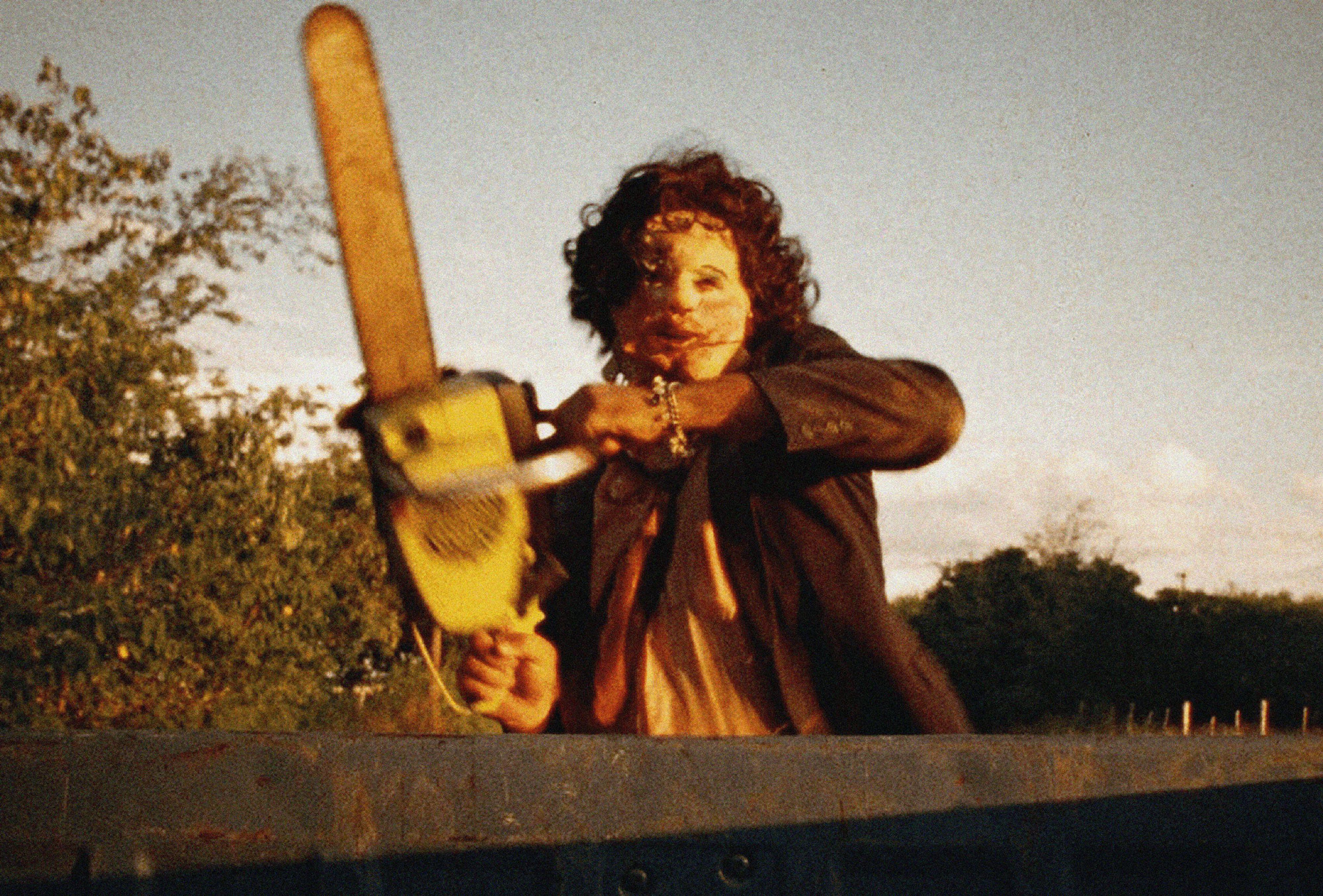
And it didn’t bother me one bit that less than 10 feet away from our cozy corner table was where homicidal maniac Leatherface made his first onscreen appearance, smashing unsuspecting Kirk in the head with a sledgehammer before hauling his body off to the “kitchen area.”
Hooper’s is named in honor of Austin’s Tobe Hooper (pronounced “TOW-bee”), the mad genius behind 1974’s The Texas Chain Saw Massacre. And the film made this house famous because it served as the main setting for all the bloody mayhem that freaked out audiences across the country upon its release.
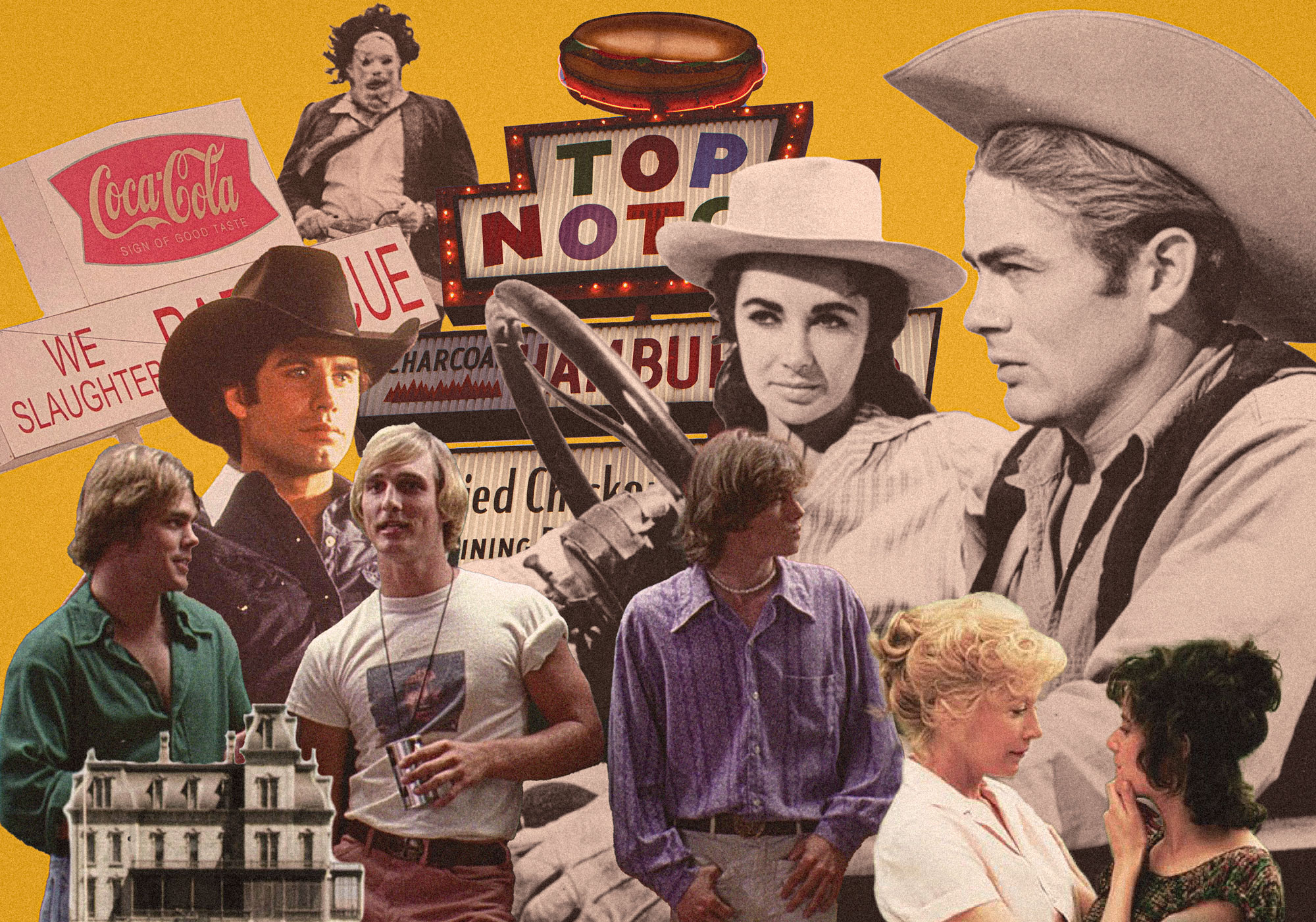
REEL TEXAS
We’re revisiting the classic films that shaped the mythos around the Lone Star State

No one would deny that the film is an acquired taste. Even if you haven’t seen it, you can guess what happens. I offer that observation as a compliment. Hooper’s vision helped define the genre for every slasher movie that followed: the likable group of students or young adults who unintentionally get mixed up in the bloodbath, the warning from a character for the group not to do whatever it is they are about to do, the masked villain wielding a signature weapon, the chase through the woods, and the so-called final girl formula, in which only one character survives to tell the tale.
The movie opens with a “disclaimer”: “The film which you are about to see is an account of the tragedy that befell a group of five youths . . . For them, an idyllic summer afternoon became a nightmare. The events of that day were to lead to the discovery of one of the most bizarre crimes in the annals of American history, The Texas Chain Saw Massacre.”
The plot isn’t based on a true story, but Hooper, along with his friend and co-writer Kim Henkel, was reacting to the lurid news reports on the radio and television. After their day jobs, Hooper and Henkel would meet in the evening at Hooper’s house on West 12th Street to work on the screenplay. The bloody tale they dreamed up felt like something they could read in the headlines.
Hooper and Henkel had both studied at the University of Texas at Austin, as did the “five youths” who get caught up in the mayhem: Sally Hardesty, played by Marilyn Burns; her brother Franklin, played by Paul Partain; Jerry, played by Allen Danziger; Pam, played by Teri McMinn; and Kirk, played by William Vail. Leatherface himself, played by Gunnar Hansen, attended both Austin High School and UT.
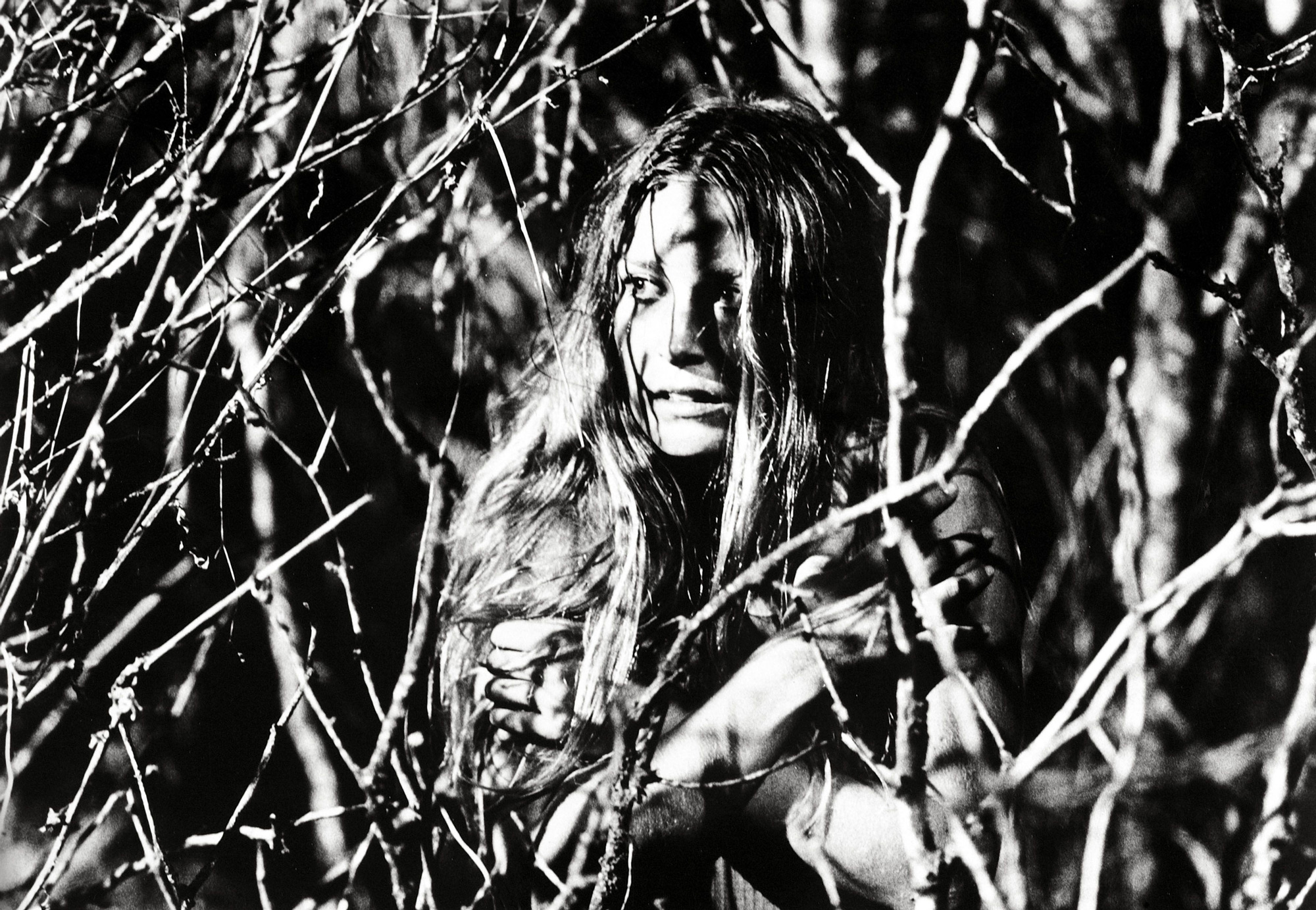
More than 50 years later, the film remains unsettling from its very first images, a shocking vision of the grotesque that builds tension and dread through contorted camera angles and jarring visuals and themes. Like Hitchcock, Hooper uses the expectation of violence to keep the audience vulnerable and off-guard. Hooper pushed boundaries that directors are still working around today.
The story opens in fictional Muerto County, where a breathless radio news story recounts a gruesome series of grave-robbings at a local cemetery. Soon our gang of five rolls onto the scene in their green 1972 Ford Club Wagon van, and the Hardesty siblings are concerned that their grandfather’s grave may have been desecrated. Eventually, they begin looking for an old house owned by their family—and talk turns to slaughterhouses and the graphic killing of cattle. If that weren’t enough, they stop to pick up perhaps the world’s creepiest hitchhiker, who eventually slices Franklin’s arm with a straight razor. The group kicks him out of the van before speeding away to supposed safety (among the many life lessons of this film: Do not pick up hitchhikers).
The group later stops at a Gulf station with a sign that reads “We Slaughter Barbecue.” There, a seemingly kind local issues a warning to the group not to go snooping around old houses. Obviously they push ahead, not knowing the events that have already been set in motion.
Lord, help what happens next: feathers and bones and head cheese and chickens in cages and animal hides and skeletons and corpses and cannibalism and torture and a fair amount of screaming. And that doesn’t even count the relentless pursuit by Leatherface, who gets style points for wearing a tie and whose face I still see every time I hear a chainsaw.
One measure of art is that it endures, and five decades after its release, the film’s popularity and critical acclaim has only grown, spawning a sequel in 1986 as well as a series of spinoffs and remakes (one from 1994 features Texans Renée Zellweger and Matthew McConaughey, who had appeared in Dazed and Confused the previous year). According to IMDB Pro, the entire Texas Chain Saw Massacre franchise has grossed around $250 million, and more films than I can count pay homage to it. Earlier this year, Scream 7 came out, the latest installment of the wildly popular slasher franchise that dates back to 1996. In the quaint downtown of idyllic Pine Cove, the local theater is promoting “Texas Chainsaw Massacre” on its marquee.
Hooper’s may be located in Kingsland, but the house was moved from its original location in Round Rock, north of Austin, in 1996 and meticulously rebuilt. (The house was originally purchased from the Sears, Roebuck & Co. Catalogue in 1909.) During filming, the area was farmland in all directions. Today, it’s the site of a massive development called La Frontera, and the house has been replaced by the Camden apartments at 1401 Hesters Crossing. As the friends are searching for their family home in the film, a road sign for FM 685 is clearly visible, which is about 7 miles to the east. In the climatic final scene, the road that Sally, the Hitchhiker, and Leatherface run onto is County Road 172, which has been upgraded from its days as a gravel road with no shoulder..
The cemetery from the opening scene is called Bagdad Cemetery and is located in nearby Leander, at 400 N. Bagdad Road. The Gulf gas station is still in business and called The Gas Station, complete with a barbecue pit operating under the name We Slaughter Barbecue at 1073 TX-304 in Bastrop.
And if you still have the appetite, you can experience a bit of The Texas Chain Saw Massacre in person. Hooper’s is hosting “Halloween at the House” from Oct. 30–Nov. 1, which includes a carnival, costume contests featuring more than a few Leatherfaces, and appearances by original cast members from the film, including Allen Danzinger and Edwin Neal, who played the Hitchhiker.
And no matter how creepy it gets, I’ll be back for lunch again soon. But I will offer a warning of my own: Brace yourself if you walk up the stairs to see the “memorabilia” on the second floor.