On a Wednesday evening in Center Point, a dozen singer-songwriters waltz into Central Provisions, shuffling beneath a glittery disco ball that shines on a marquee. They exchange hugs and handshakes as they amble past each other to find open seats among mismatched chairs. Guitar cases creak open and the room fills with the effortless chatter of familiar friends. Then the strumming and singing begins.
The musicians take turns starting tunes, and others join in as they get a handle on the chords. The song circle spans generations, from teenagers to silver-haired regulars, brought together by a shared love of music in an unlikely setting: a tiny Hill Country town whose beating heart is a former general store.

About 15 miles from Kerrville, Center Point is an unincorporated community with a historic downtown that spans only a handful of blocks. Despite its size, the strip includes a fine-dining restaurant, art gallery, bakery, and winery tasting room. Formerly known as Zanzenberg, the settlement grew into a bustling farming and trading hub by the late 1800s. Now, over a century later, local food and agriculture remain integral to the community thanks to Central Provisions’ owners, Justin and Kayte Graham, and their business partner Beth Bryson.
The Grahams’ path to opening the store began with Zanzenberg Farm, their regenerative farming operation just a half-mile away. There, they raise heritage-breed hogs and prioritize ways to improve soil health and pasture regeneration. After years of running nearby farmers markets and building relationships with local producers and loyal customers, they opened Central Provisions in late 2022 with the goal of creating a community space that offered food, drinks, and live music.
“It was really magical how it all transpired,” Kayte says. “We didn’t force it. It just happened—neighbors meeting each other for the first time despite living down the road from one another.”
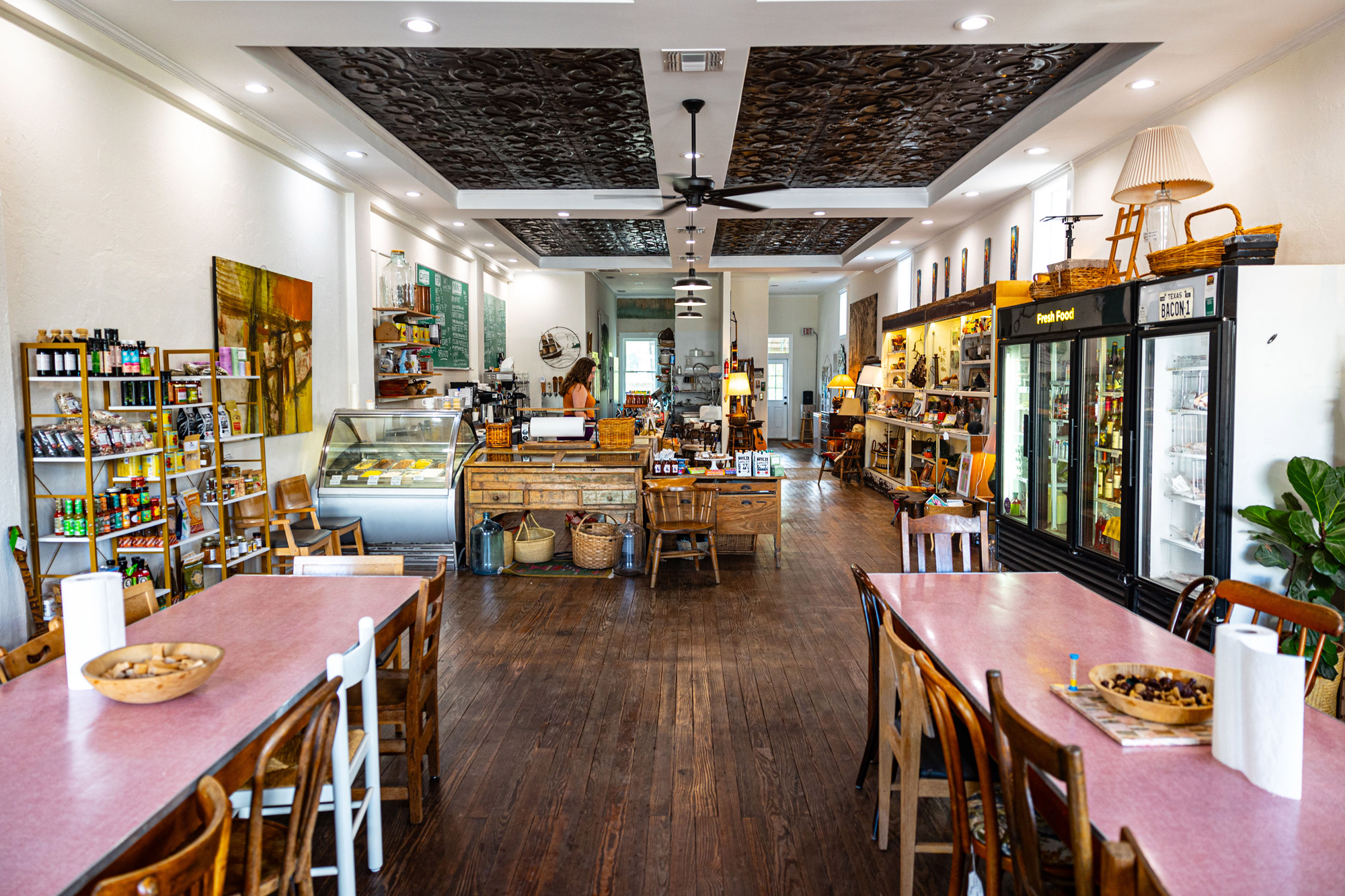
The building itself has a long history of bringing people together, too. Built in the 1930s, the space has served as a meat market, justice of the peace office, dry cleaner, post office, antiques mall, and ice cream parlor. It still retains its original floors, while the tin ceiling was salvaged from the town’s original 1906 mercantile, just two doors down, and repurposed in the space.
Hill Country denizens were quick to make the venue their own. Local sports writer Dan Beaver volunteered to roast the coffee and organize a book club, while musician Susan Herndon rallied fellow songwriters for a weekly music circle. “It became a lesson in saying yes and being open to what the community wants,” Kayte says.
The store’s packed calendar reflects that anything-goes spirit, including monthly pop-up dinners, cheeseburger Saturdays, and the annual Dip Olympics, now in its third year. The latter is an all-day competition featuring dips in various categories, with a surprisingly strict set of rules. Double dipping is grounds for immediate disqualification, and there’s one rule above all: The dip must be chip-dippable. Winners earn a spot on the Dip Wall of Fame. While many join for the good food and friendly competition, according to Justin, “it’s really about celebrating one another.”
The Grahams stock the market with regional goods, from Joju sourdough delivered weekly from Fredericksburg to River Whey cheese from Schertz and Skyline gelato from Comfort. Shelves of Zanzenberg pork products and Texas wine and beer sit alongside vintage art. Browsing the market, I’m reminded of the mercantile store my grandparents frequented in Tennessee, where I’d always find my grandfather playing the card game Rook with friends. It strikes me that these stores have long served a larger purpose beyond what they sell: building community. Over time, the relationship becomes reciprocal. The shop provides a physical space to gather, and the community’s engagement with it keeps the business thriving.
“Here is this cool little café/vintage shop/bar with live music out in the middle of nowhere,” says Herndon, who describes moving to Center Point from Oklahoma as nothing short of kismet. “But what makes it really special is the people who are attracted to the place.”