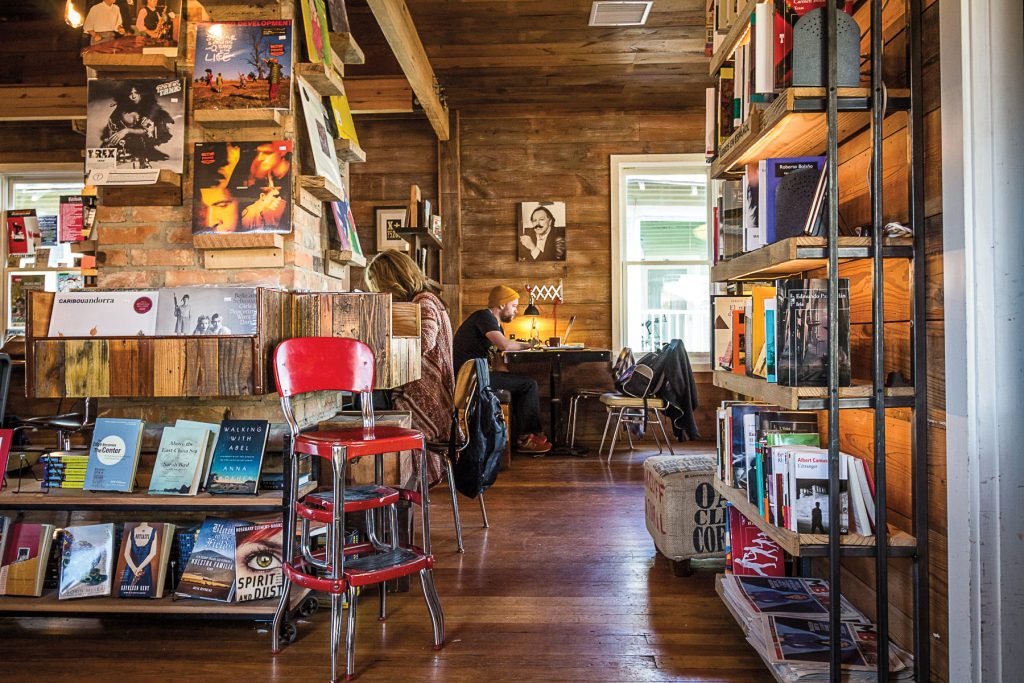

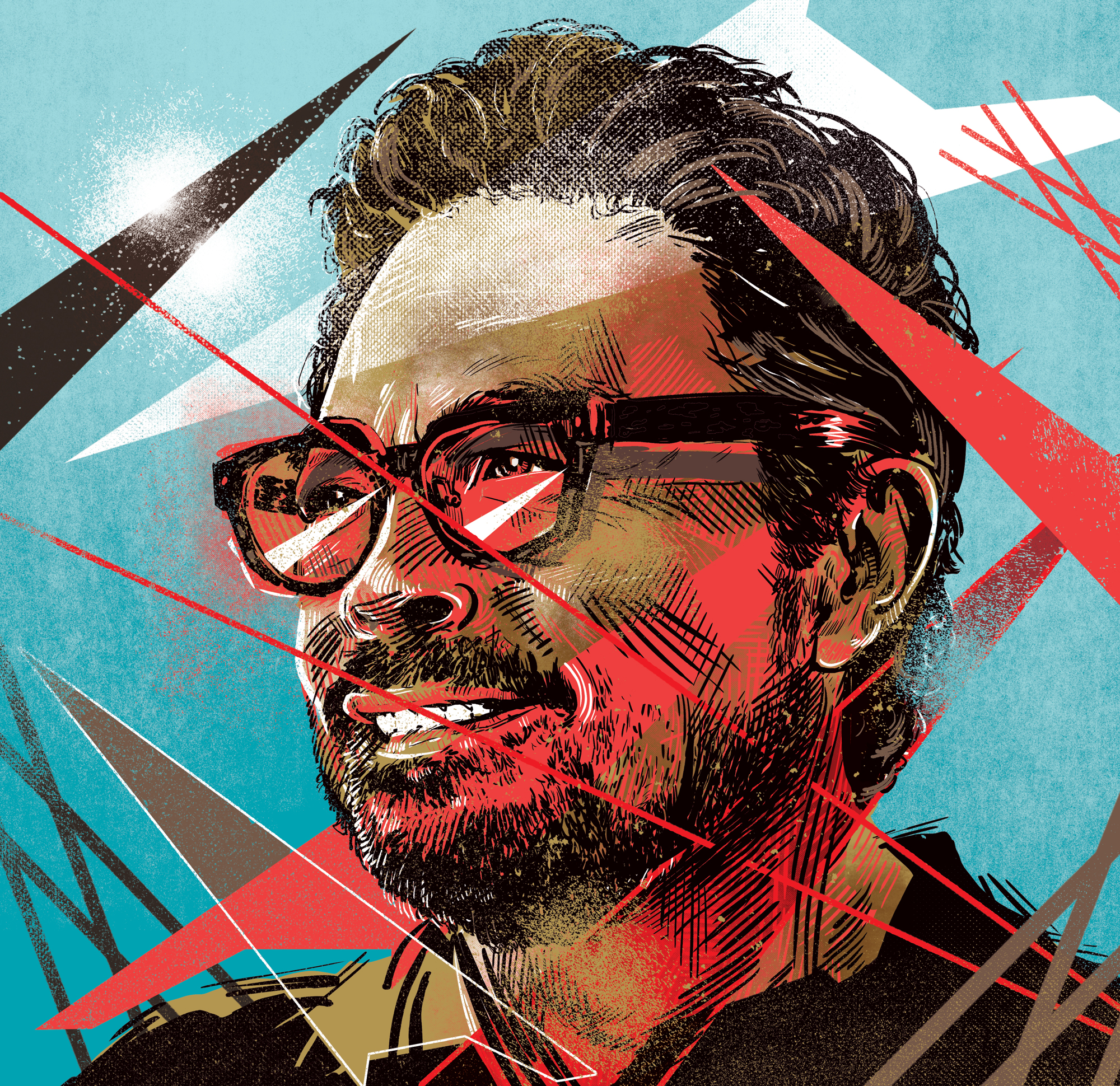
It’s been more than 20 years since architect Michael Hsu helped transform a red bungalow in South Austin into Uchi, the cozy, high-end Japanese eatery that would become the darling of the city’s culinary scene. Much has changed since then. In 2005, Hsu opened his own office and has been firmly planted at the forefront of Austin’s architecture and design wave throughout the city’s galactic growth. His firm has designed many of the city’s best-loved restaurants and hotels. Take a walk along South Congress Avenue and you’ll pass 10 of his projects, including South Congress Hotel, More Home Slice Pizza, and Tecovas boot store. While his imprint on Austin is deep, it also reaches statewide and beyond. He now oversees a busy Houston office and projects from Seattle to Miami.
Hsu and his family moved to the Houston suburbs from Taiwan when he was 3. He worked in Chinese restaurants, both in the Houston area and then as a student at the University of Texas at Austin, where he enrolled in the late 1980s. He started as an engineering student but graduated with a degree in architecture. After college, he stayed in Austin and, due to a lack of opportunities, he worked in landscape maintenance. These early experiences impacted his approach to architecture. He seeks to create pedestrian-oriented, community experiences that are not about the aesthetics but about how a space can make people feel.
These days, Hsu finds himself as an unofficial ambassador of Austin design. His firm is collaborating with the international architecture firm SOM on the expansion of Austin-Bergstrom International Airport, a project he describes as “the new front door for Austin.” When out-of-town clients hire Hsu, they seek his expertise on the city’s culture. What that culture is, however, is changing. While Hsu’s design both drives and embraces that change, it also remains true to a style that prioritizes authenticity.

Texas Highways: In your 30 years working in Austin, what changes have stood out for you?
Michael Hsu: The desire and interest in design has only increased, which is exciting. We’ve been so fortunate to be on this wave, both with the people from here and for those not from here who want to work with us because they see us as people who understand the Austin culture. They have a true reverence for Austin in a way that sometimes we, the almost-natives, forget. We’re good at telling the negative stories, or what it used to be, but outsiders think this is an incredibly special and unique place. They don’t say, “Hey, let’s do what we did in Los Angeles or Chicago.” They want to make sure their project suits the people here.
TH: You don’t ever lament the loss of the Austin that was?
MH: That Austin still exists; I still feel it. But now there is so much more opportunity to do new things, and the work culture here has gotten much better. I graduated from UT in an energy recession and there was no work. I had to work in landscape maintenance. Some of the fanciest restaurants were still the ones in little bungalows in the neighborhoods. That was the history. That’s what Uchi was, and those roots are super exciting—I think they’ve endured in many ways.
TH: How has that legacy come up designing the ABIA expansion?
MH: I find that these big, out-of-town firms, like SOM, admire Austin because we do have a quality that is hard to define and something special. They don’t want to go against it because the worst tag for anyone in Austin is to be inauthentic in some way. You’re expected to try to be yourself here, take it or leave it.
TH: You’re like an ambassador of Austinness for these projects.
MH: We try to think about what Austin is becoming as opposed to what Austin was. It’s easy to make a theme park version of Austin in any project: you do this mural, you do that Willie Nelson poster, you throw some guitars up. It may be those things, but it’s also a growing, thriving, dynamic city. We can’t both look back while also designing what the future could be, or we’re not going to be a creative place where people want to be in the future.
TH: Does growing up in Texas make you a more authentic ambassador?
MH: I think so. Texas has such a big presence and persona, but growing up here I can say, “Actually, Texas is more complicated than it looks from the outside.” My background is very much that of an immigrant family. I went to high school in Pasadena. There were farms near where I lived, and there’s huge ethnic diversity in all of Houston. Where I lived it was suburban, straight-up middle class. I remember my next-door neighbor owned a gas station. He wasn’t a software developer.
TH: Over your long career, what has been one practical change in how you design?
MH: Sustainability is a part of every project. Many sustainability practices are design elements that make people feel good, like not doing spaces too big. It takes more energy to heat and cool a big space, so it gives you a sense of intimacy, of scale, of humanness. That’s our office’s perspective. Yes, we want to save energy, we want to do resilient buildings, but our biggest concern is how people connect with the projects.
TH: You also have projects in Houston and Dallas. Do you feel like you’ve learned to navigate those different cultures, too?
MH: Yes, but even though our styles may shift from city to city, what everyone seems to want more of in Texas are the third places. The development community is now realizing this is where the value is. Because commercial real estate is essentially competing with digital worlds. Why should I go to a shopping place when I can buy everything I need on my phone? You have to give people a reason to be there, a place that builds curiosity and where you’re happy walking around looking at things. Maybe get a cup of coffee, hear some music, or walk through a little street market. These are timeless shared human experiences.
TH: Do cities like Houston want to make more public spaces that aren’t car dependent?
MH: In Houston, we are working on one near River Oaks—Autry Park off Allen Parkway. You get there by car, but then you’re quickly taken off the street and the street is given back to people. The Pearl in San Antonio is a great example of that. Houstonians want more walkable spaces. It’s why you see so much interest in the Heights because of its scale: smaller buildings, you can walk to a local restaurant, have a sense of community.
TH: You waited tables when you were younger. What did you get from that experience?
MH: I learned to interact with people and be a good observer of human behavior. There’s a field called neuroaesthetics, which studies that vibe quality. What is it about something that is making your brain react in a [certain] way? What is the effect that art or space can have on someone? I’m always trying to decipher that.
TH: What Texas buildings have had a big neuroaesthetic impact on you?
MH: The Menil in Houston and the Modern Art Museum of Fort Worth are both spaces I love. My fondest memories of UT’s campus center around Battle Hall, the architecture library. And some buildings I just learned about and love are the terra-cotta block buildings by Trost in El Paso.