
Nearly 100 years ago, the Piney Woods of East Texas were being clear-cut at an alarming rate, their timber shipped to mills as fast as trees could be felled. Back then, the lumber industry was one of the largest employers in the state. But in the 1930s—around the time that Texas created four national forests in the region—these “working forests” were mostly retired. The days of the Texas timber rush are behind us now, but you can still learn all about them at a small museum in Lufkin that celebrates a milestone birthday this year.
Carve April 11 into your calendar, because it marks the half-century notch for the Texas Forestry Museum, a nonprofit space dedicated to all things tree, where historical exhibits and outdoor adventures abound.
The anniversary event, from 10 a.m. to noon, will feature a retrospective of the museum’s history. The museum will serve cupcakes, and the Lufkin Zoo and other longtime partners of the museum will set up tables for visitors who want to take a peek inside this stalwart of the Piney Woods and count its rings.

The museum opened in 1976 as a repository for artifacts from the heyday of the lumber industry in Texas, which lasted from the 1880s to the 1930s, says Director Kendall Gay. The first full-time employee was hired in the mid-1980s; today the museum counts three full-timers and three part-time workers. The campus sits on two acres near Lufkin’s eastern boundary and has been renovated several times over the intervening years, gradually increasing its size, scope, and mission. There’s no other museum like it in the state. “We are a tiny museum with a lot of big things,” Gay says.
The indoor exhibits on Texas forest history are free to the public thanks to donors who keep the place afloat, she says. “We try to make sure that the history we tell, the activities we offer people, is not based on whether they can afford to come or not.”
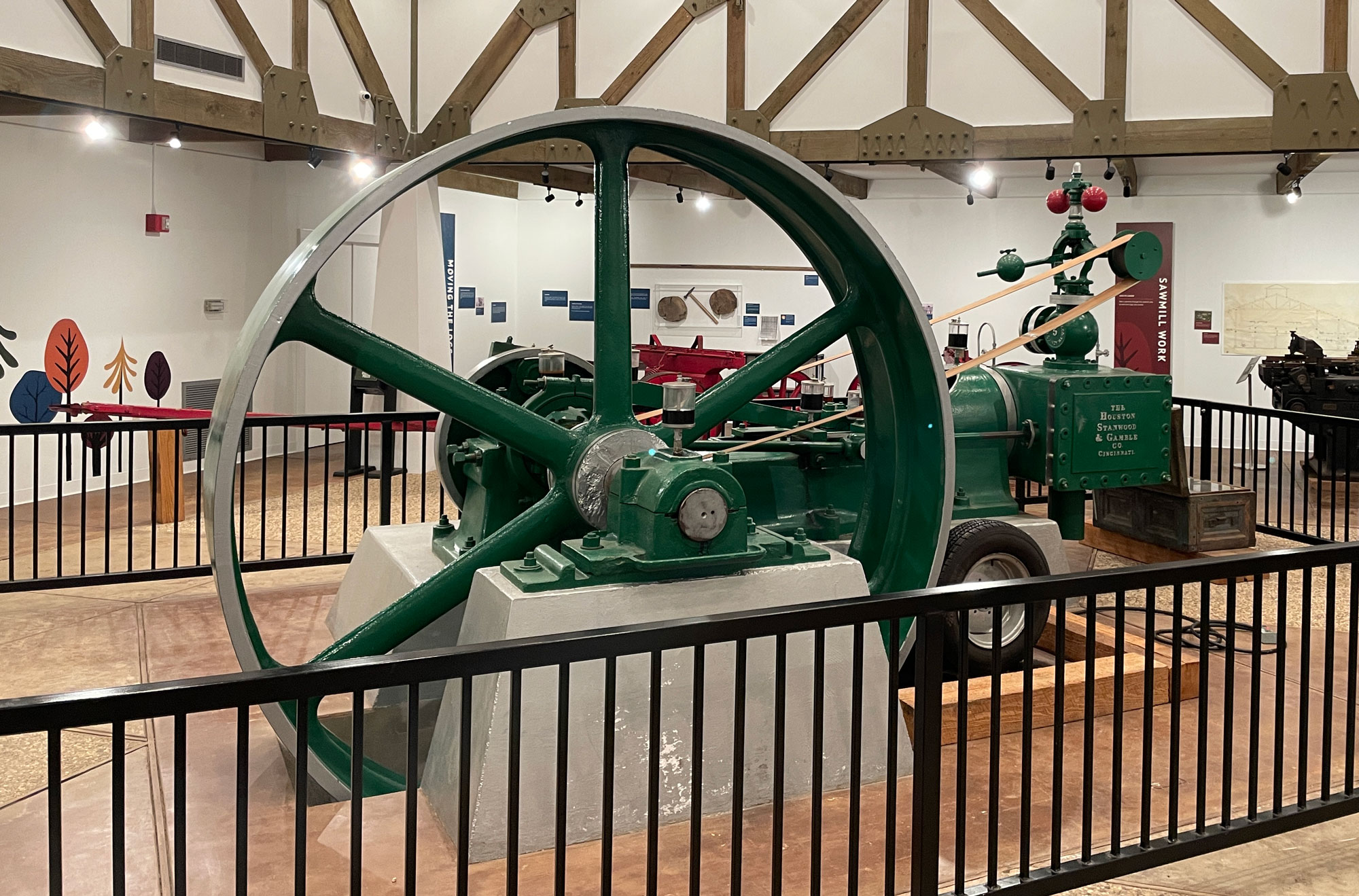
Mainstays include an exhibit on sawmill towns, where lumberjacks lived while they chopped and sawed a wide swath through the region a century ago. Another exhibit recalls Lufkin’s historic Southland paper mill and the processes involved in transforming trees into indispensable products for magazines such as Texas Highways. And yet another showcases the timbering technology of yesteryear, including a gleaming, antique U.S. Forest Service pickup and an oxen-powered, high-wheeled cart, designed to skid felled logs out of the woods and to waiting train cars.
“There were so many people who built this area through their work in the forest industry,” Gay says. “It’s such a large part of the culture of East Texas.”
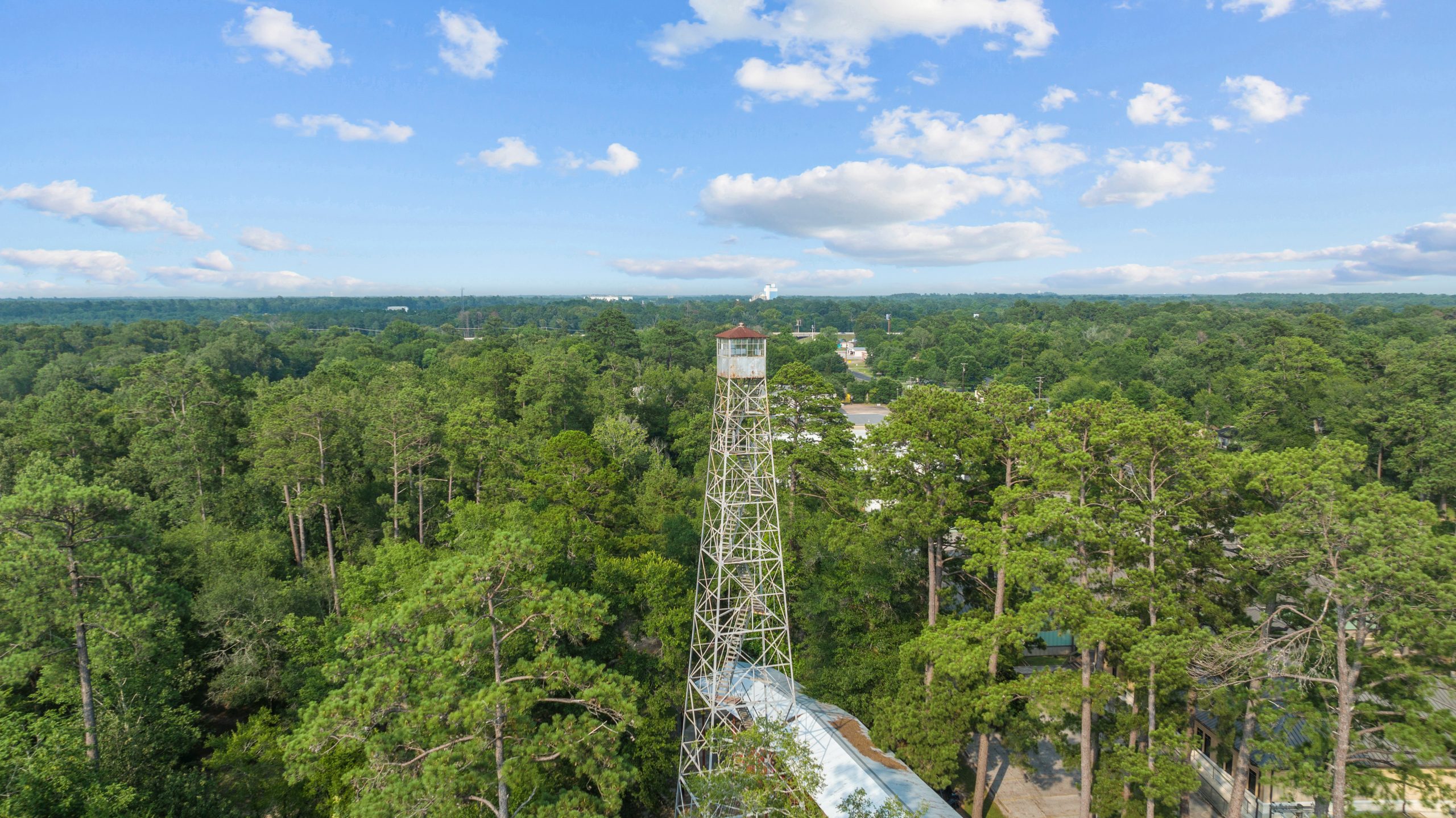
But what better place to gain a deeper appreciation of the East Texas forest than in the great outdoors, under the shade of loblolly and shortleaf pines? That’s where visitors will find the museum’s pint-size urban wildlife trail, which logs in at one-tenth of a mile, small enough that you won’t miss the forest museum for the trees. Gay says the trail is a hit with youngsters and the young at heart: Along the way there’s an “earth kitchen” for digging in the dirt, a nature playscape, weaving wall, and a gaga ball pit. A portion of the trail is wheelchair-accessible and accommodates strollers. Nearby, a 100-foot fire tower, which was built in 1936 and transported here from the Conroe area, overlooks the property. Visitors can also get an up-close look at a turn-of-the-century locomotive and depot.
And just as the Texas Forestry Museum is celebrating middle age in style, another East Texas museum highlighting regional woodsy history is sprouting up from the leaf litter. In January, the Tyler County Forest Museum, located in Woodville’s Heritage Village, held its grand opening. The focal point of this new facility is a replica of the long-gone Yale Summer Forestry Camp in Tyler County, where Aldo Leopold conducted early forest studies before becoming a legendary naturalist and conservationist. The museum also displays a replica of a historical marker honoring Gifford Pinchot, who served as the first chief of the U.S. Forest Service and mediated a landmark concord between environmentalists and the timber industry, eventually spurring the creation of the Texas Forest Service in 1926.
Taken together, these two Texas museums transport visitors back to a time when the forests of East Texas fell—preserving the past as the timberlands of the present reclaim their rightful realm behind the Pine Curtain.