
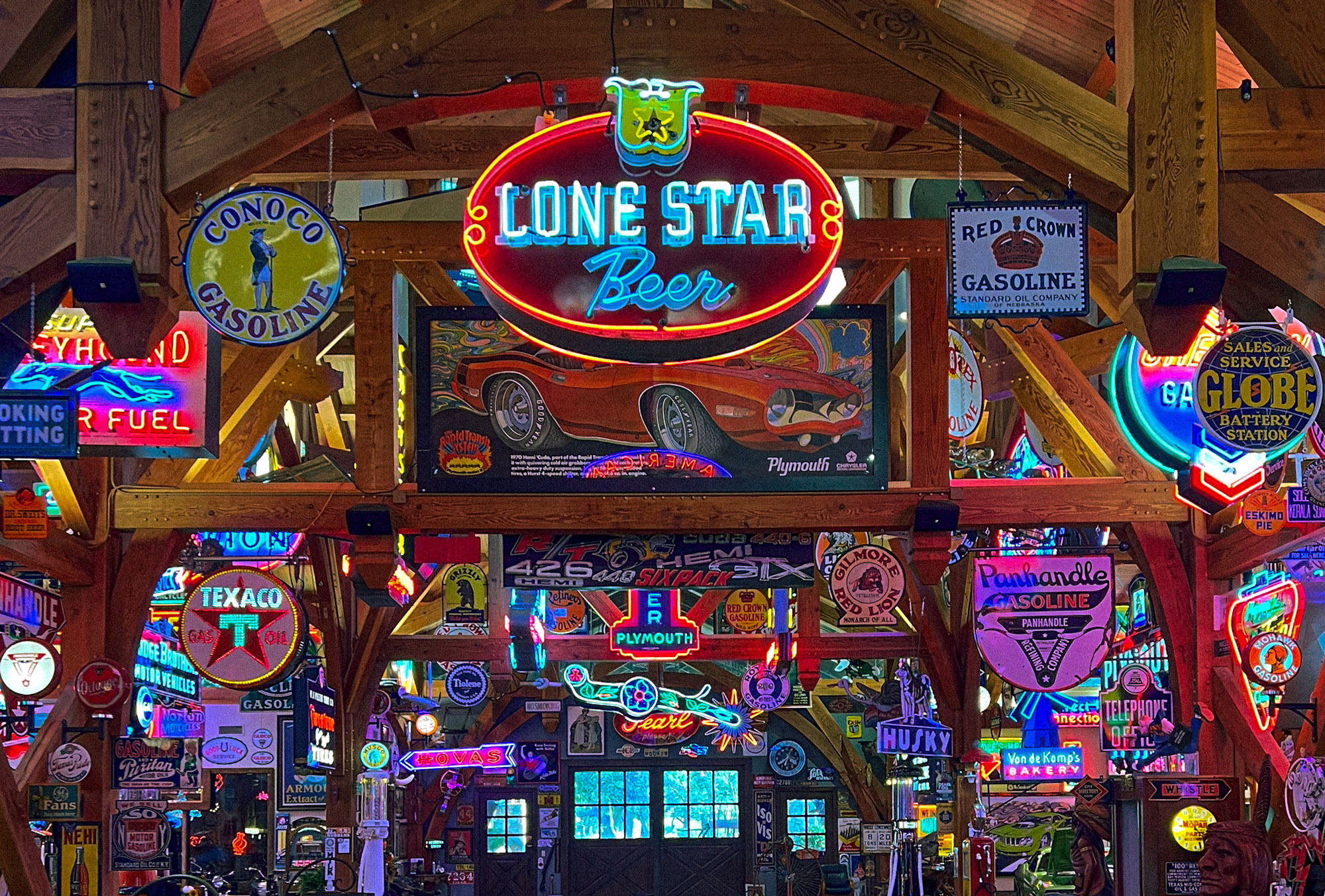
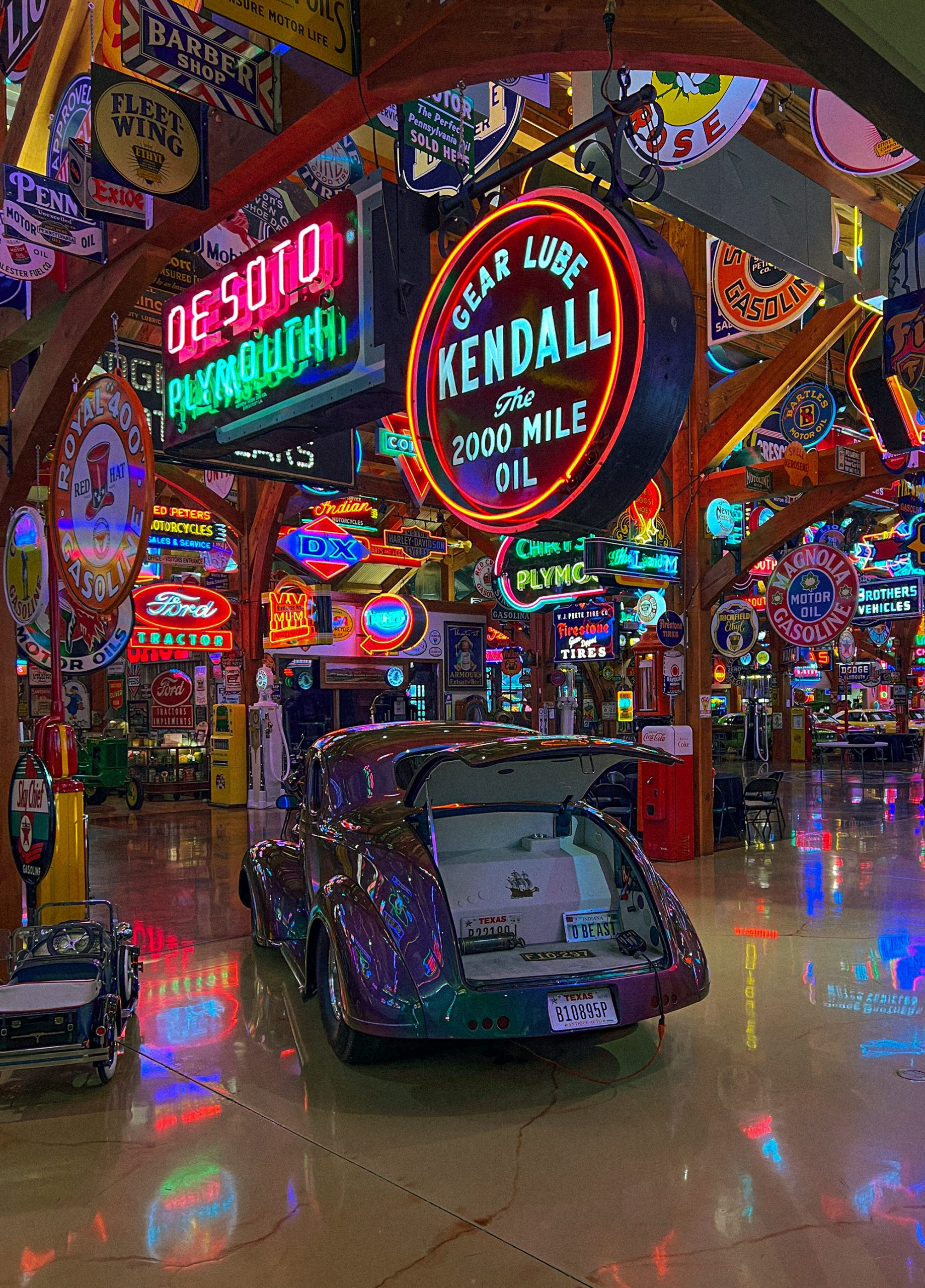
Hemi Hideout owner John Hovas is the first to admit the Brookshire event venue is a little over the top. The glow from hundreds of vintage neon signs bounces off of brightly colored 1960s and ’70s muscle cars and polished floors. Each wall is chock-full of signs, and antique gas pumps hide in every corner. To put it simply, it’s a Texas-size man cave.
“It’s beautiful when you walk in. It’s sensory overload, and it’s a big history lesson,” Hovas says. “Part of the fun and the aura that this place has is a little bit of the shock treatment when you walk in the door. It’s not something you see every day.”

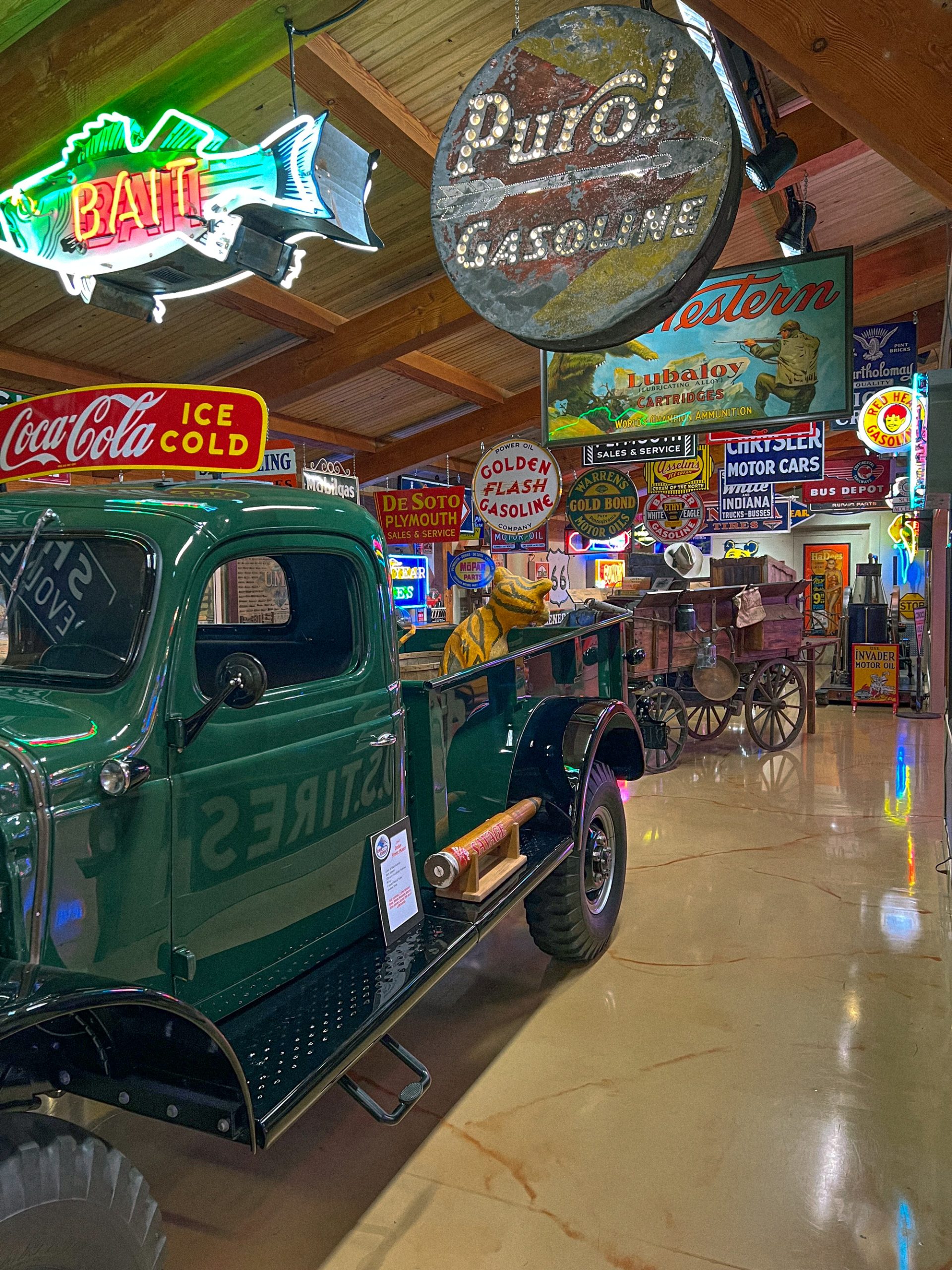
Located on the outskirts of west Houston, what became Hemi Hideout was originally meant to be a car barn. The 1968 Dodge Bumblebee—a sleek, yellow muscle car with a black stripe—launched Hovas’ lifelong love for cars, but he didn’t start collecting until he had the idea for Hemi Hideout. As the ideas for his barn grew, the venue started to take shape. Rather than just showcase antique vehicles, the space would be a tribute to classic Americana, with porcelain signs, tractors, and other antiques on view. Currently, the venue displays more than 4,500 pieces—a number just shy of Brookshire’s population.
“They all represent a good time in my life,” Hovas says. “The good old days slip right through your fingers, so that’s what these cars and signs represent to me.”
After two years of development, his collectors’ dream opened in 2012. Inside, 24 vintage muscle cars are on display as well as a 1950s-style diner set, while signs dating to the early 1900s fill the walls. Each piece has a story, from the first-of-its-kind 1918 Texaco sign to a giant neon spur from Wyoming, and visitors can hear about each of them on a tour of the property. For a $10 fee (which is matched by Hovas and donated to charity), guests can visit Hemi Hideout. Reservations are required.
Every piece in the venue is in working order thanks to Bill Prokopuk, the on-site restoration expert. Prokopuk, retired from a career in manufacturing, has traveled the country with Hovas to auctions and trade shows on the hunt for new pieces. Once a piece is added to the collection, Prokopuk’s handiwork ranges from a quick wipe down to part replacements to help get the additions display-ready.
“There’s just so many little tasks that go along with these signs and collectibles,” Prokopuk says. “You have to make a lot of the parts and trim. It’s everything from casting aluminum for trim to forming glass for light to pass through on signs.”
Hovas has always prioritized buying pieces that were in the best condition, but it’s an even larger consideration now. Over the 14 years Hemi Hideout has been open, the space has filled up. For a new piece to make the cut, it needs to improve what he has already amassed.
Like a time machine, the collection transports Hovas and visitors back to the “good old days” he remembers fondly. Lucky for him, Hemi Hideout means he’s never had to leave those days fully behind. Instead, the pieces that made up Hovas’ past have continued to shape his present.
“The fun I’ve had traveling around the country and the people I’ve met coming here to tour—I’ve got to pinch myself,” Hovas says. “It’s been the most wonderful journey that I can imagine anybody could ever go on.”