
During a 1990s renovation of Waco’s Artesian Manufacturing and Bottling Company, now home to the Dr Pepper Museum, workers noticed something unexpected in the building’s floor plan. A thick concrete seal on the ground floor hid a well that once supplied water for use in the bottling of the popular soda invented in Waco in 1885. Once running water became a more accessible option, it took on a different role.
“What do you do with a giant hole in the ground? It looked to them like a great trash pit,” says Joy Summar-Smith, associate director of the museum. So, when glass soda bottles—which were often refilled several times—had aged beyond their reuse, workers began to throw them into the old well.
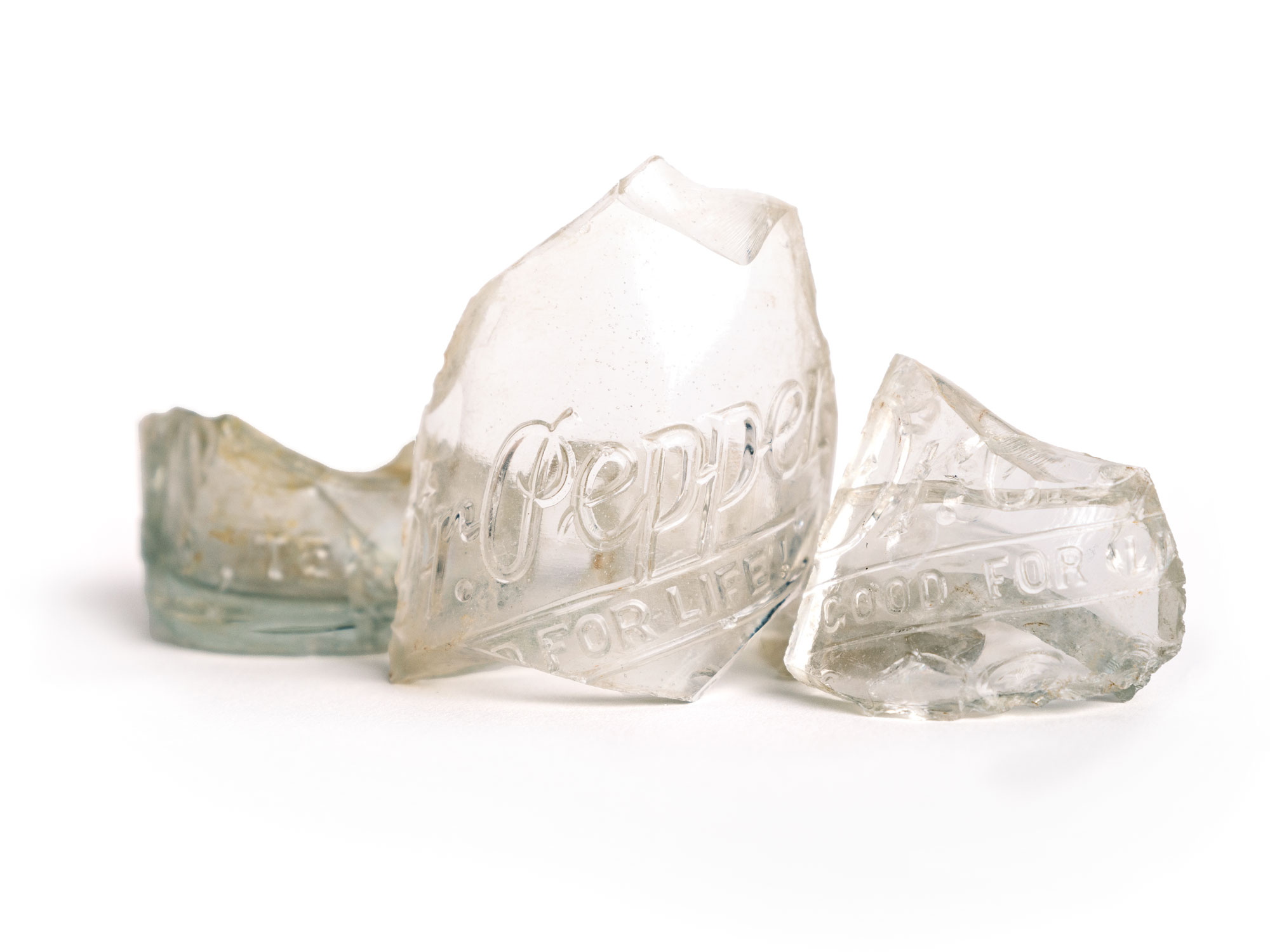
The ’90s renovation crew excavated the well down 27.5 feet, finding it filled nearly to the top with glass bearing various Dr Pepper logos. Rather than hold the massive supply in its collection, the museum now offers up the remnants as a souvenir—in safely sealed containers, of course. Collectors can find pieces of glass with classic slogans including “10-2-4” and “Dr Pepper King of Beverages,” though the museum encourages them to keep the jars sealed for safety. And visitors to the museum’s “People Who Made Dr Pepper” exhibit can stand atop a glass plate and peer into the well below. “I still tend to walk around with one foot on the ground and one foot on the glass,” Summar-Smith laughs.
Built in 1906, the Artesian Manufacturing and Bottling Company had no running water, relying instead, as many downtown Waco businesses did, on well water. A series of pipes brought water up from the ground to the third floor for storage, to the second floor for production, and to the first floor for bottling. This feat of physics lasted until the 1920s, when the climate rendered the well an impractical source of water for the growing company.
“Texas weather—you know what it can be like,” Summar-Smith says. “One year you get a torrential downpour all summer, and the next summer everything’s bone dry for months on an end.”
A particularly rough drought in the ’20s forced the well to run dry. And from there, the “trash pit” grew. At the time, customers would buy their sodas in glass bottles and return them to the grocer once they were finished, often for a small refund. After about 10 uses, bottles would begin to break apart. Those that cracked or showed too much wear were chucked down the well, ensuring the supply of glass bottles won’t soon run out, according to Summar-Smith.
Now in her 23rd year at the museum—which she calls her “Dr Pepper year,” in correlation with Dr Pepper’s alleged 23 flavors—her goal is to let visitors take home (alongside the glass itself) the knowledge that the soda and brand are inextricably linked with Texas’ identity.
“There’s not many states that can claim that they’re the home of a soft drink brand that’s so internationally recognized,” she says. “Texas itself is its own thing, its own myth, its own legend. Texas and Dr Pepper have just become intertwined. It’s a source of pride.”