

When Leroy Pehl enrolled at the Luckenbach School in 1948, he was one of four students in the first grade—but they weren’t the only kids in the classroom. Roughly two dozen other students in grades one through eight shared the one-room limestone building. They all lived within about 3 miles of the Gillespie County school, built in 1905 on land Pehl’s great-great-grandfather, a German immigrant, had sold to the community 50 years earlier. The school had a wood stove for heat and tall windows that let in plenty of natural light, but it didn’t have indoor plumbing. The children used out-houses 50 yards from the building—far enough from the teacher that, when an older student slipped Pehl his first cigarette, he was able to smoke it, undetected, in the boys lavatory.
When they weren’t being corrupted by their peers, Pehl and his classmates learned to read, spell, write in cursive, diagram sentences, solve math problems, and identify countries on a map. Eventually, Pehl went to high school at St. Mary’s Catholic School in nearby Fredericksburg, but he preferred the homespun atmosphere and individual attention he received at Luckenbach.
“It was ideal going to school here,” says Pehl, now 84. “You learned more. The classes were smaller.” When he and his classmates didn’t understand a lesson, his teacher explained it until everyone got it.

Pehl’s school days were typical of students who attended one-room schoolhouses in Gillespie County, about 70 miles west of Austin. As European settlers arrived in the late 1800s, they built schools that served the children in the immediate area. A council of trustees, primarily parents, maintained the building, hired the teacher, and collected fees from each family to pay the teacher’s salary. Although most students were of German descent, Black and Hispanic children also attended classes well before Texas public schools were integrated.
Until the 1960s, Gillespie County had more than 40 rural school districts, each of them consisting of a one- or two-room schoolhouse that served children in multiple grades. They were relics of an era when education for children who lived outside towns revolved around the agricultural calendar and when the state allocated scant resources to country schools, partly because the communities prized local control. Now, thanks in part to a nonprofit formed by alumni, 16 of those schools continue to serve the public, hosting open houses and tours that showcase the history of education in the state.
In multigrade classrooms like Pehl’s, the teacher called one grade at a time to a bench at the front of the room for the day’s lessons. The rest of the students theoretically worked at their desks until it was their turn. “But every time I was up there and I looked around, half of the students would be listening to the teacher,” says Atlee Lochte, who attended the Meusebach Creek School from 1942 to 1950. This allowed advanced students to start learning concepts intended for older grades.
Funding for rural schools, many of which stopped at eighth grade, had lagged behind that of town and city schools since the late 19th century. Still, “my dad always said it was the best education anywhere,” says Myra Klinksiek, whose father attended Grapetown School. “Teachers could do more for individual students.”
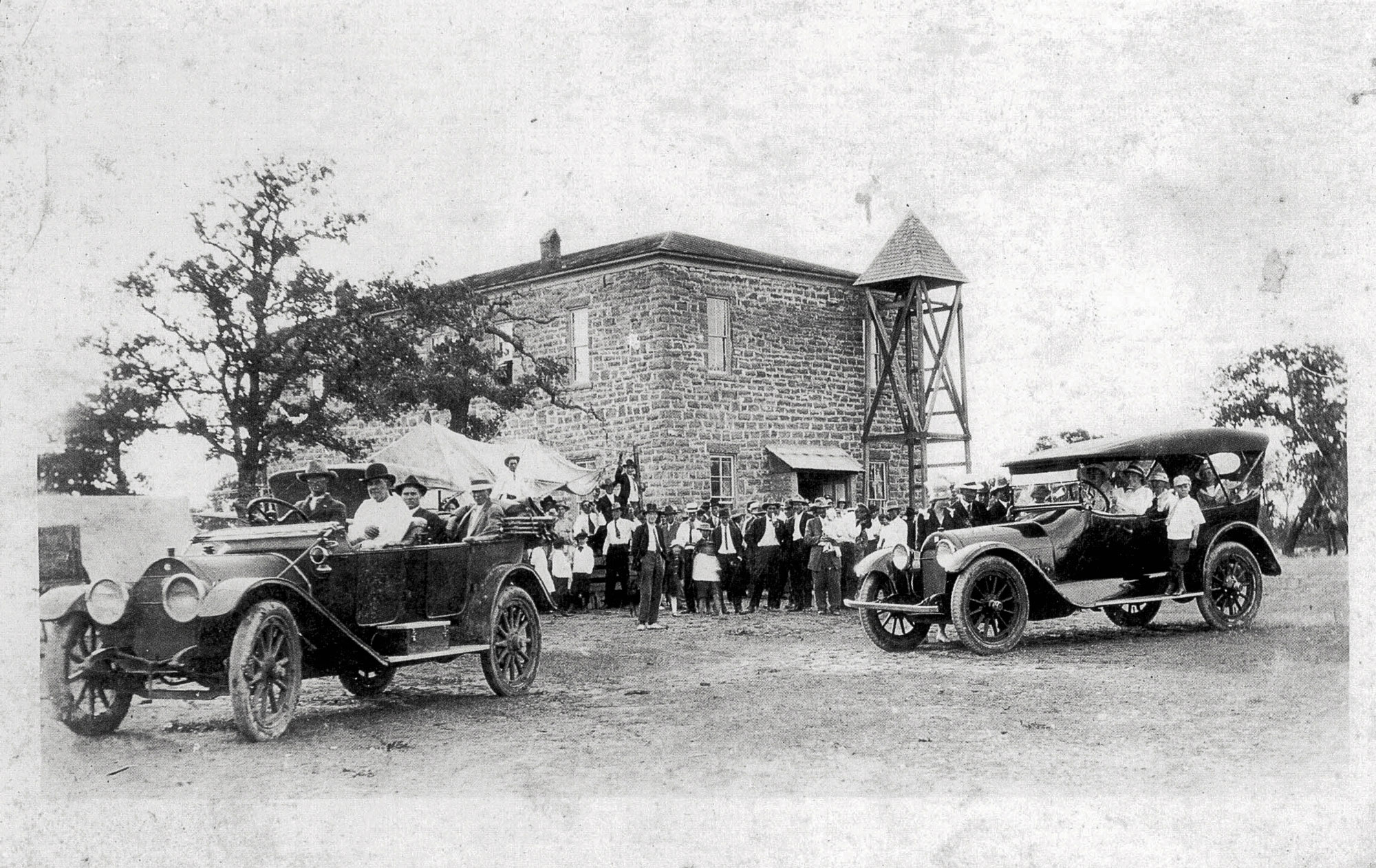
Before the state set educational standards, teachers at rural schools developed the curriculum themselves. By the 1940s, when Pehl and Lochte were students, some teachers had college degrees, but in the early days many had not completed high school. Lochte had two teachers at the Meusebach Creek School, one just out of college and the other with three decades of experience. The quality of education “kind of depended on your teacher,” he says.
For all their advantages, the rural schools had shortcomings that were revealed during World War II, says Gene B. Preuss, an associate professor at the University of Houston-Downtown and the author of To Get a Better School System: One Hundred Years of Education Reform in Texas. Nationwide, roughly half of the men drafted for service were rejected because they could not read at a fourth-grade level or did not pass the physical exam. Almost 23% of candidates from Texas were rejected for illiteracy, twice the national average. The problems were not limited to rural schools, but those schools had for decades operated with smaller budgets, fewer qualified teachers, and less advanced facilities. “The military said, ‘They need to have at least a basic level of knowledge so that we can get them through our military training to serve the country,’” Preuss says. States began pushing for a more rigorous and standardized curriculum.
In Texas, this movement culminated with the 1949 passage of the Gilmer-Aikin bills, named for the legislators who led the committee that proposed the changes. Aimed primarily at improving rural schools, the bills set basic educational standards, updated school funding, increased teacher salaries, and reorganized local systems—partly by consolidating the scattered country districts. By the mid-1960s, the country schools surrounding Fredericksburg had been consolidated into that town’s district. (The sole exception is the Doss School, in the northwestern part of the county, which still educates children in multigrade classrooms.) The Fredericksburg system sold some of the buildings for use as houses or barns.
As the schools closed, alumni who wanted to preserve them formed clubs to lease the buildings as community centers. Then, in the late 1990s, supporters of 12 campuses organized as Friends of the Gillespie County Country Schools. They campaigned successfully to change state law to allow the district to donate the buildings to the county government, which now leases the schools to the group. “The Friends formed so they could take care of the schools and keep them as museums so people would know what one-room country schools looked like,” says Frances Heimann, the group’s secretary and an alumna of the Willow City School.
Like other alumni, she feels a sense of loss over the school consolidations. “We felt like we really had a superior education, and then the powers-that-be thought we didn’t,” she says.
The truth depends on how you define “education,” Preuss says. Though students had a limited curriculum, the attention from teachers and interaction between grades built a community around learning. “In that respect, it was a better model of what true education might be,” he says.