
Landscape and marine painter Julius Stockfleth lived many lives on Galveston Island. Immigrating to the prosperous port city with his family as a boy from Wyk auf Föhr, a North Sea island off the coast of Denmark that later became a part of Germany, the ship joiner’s son delighted in painting the tall ships coming into port. But his world, along with the island’s, was upended when the 1900 Galveston hurricane hit, killing between 6,000 and 12,000 people.
His works directly following the tragedy reflect that grotesque reality. Before retreating back to Europe, his final period in Texas features works of renewal, a community banding together to patch together a broken island.
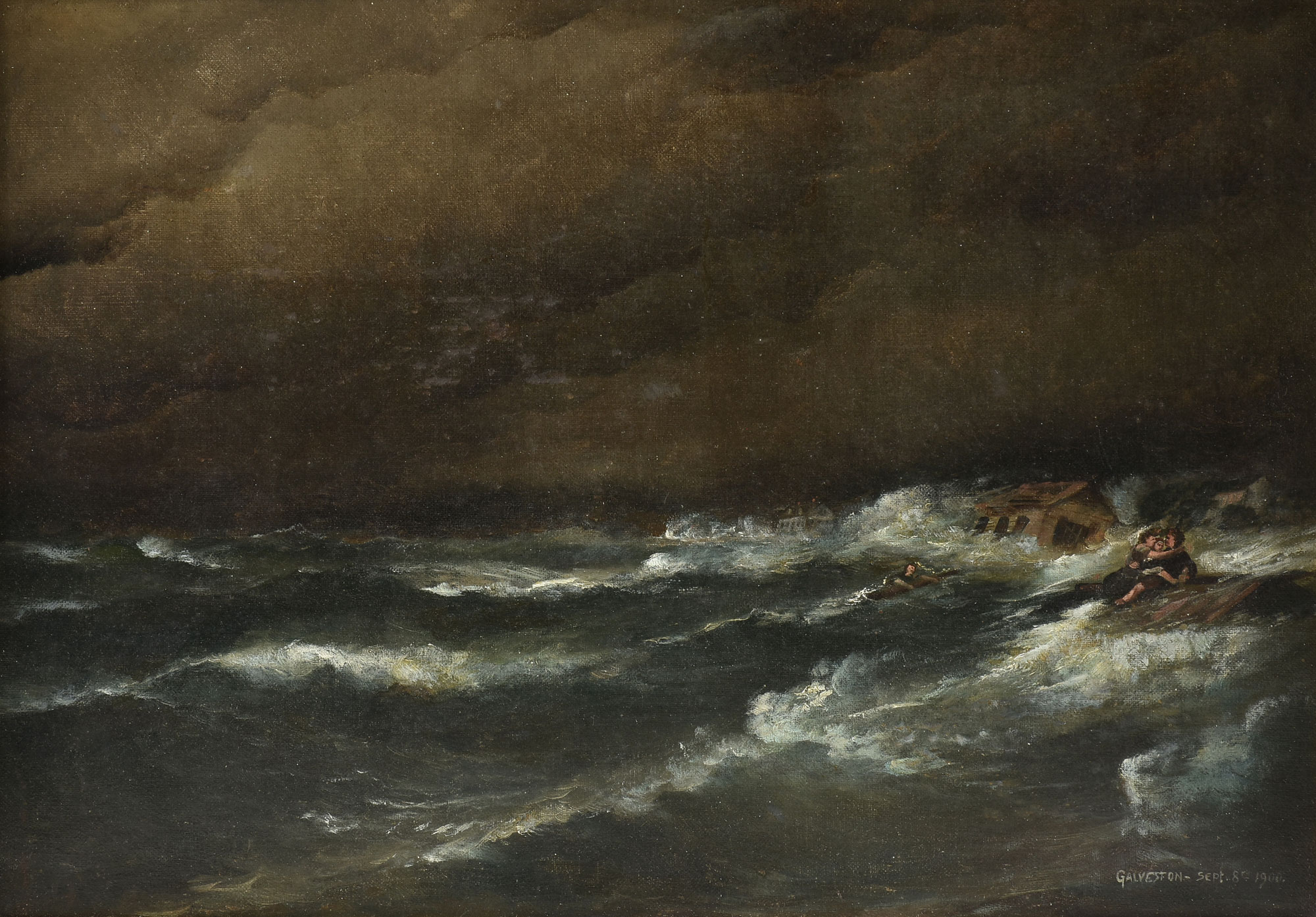
A new exhibition opening on May 5 at Beaumont’s Art Museum of the Southeast, “Julius Stockfleth: Dawn of a Century,” showcases the Danish painter’s documentation of Galveston before, during, and after the hurricane of 1900, the deadliest natural disaster in United States history.

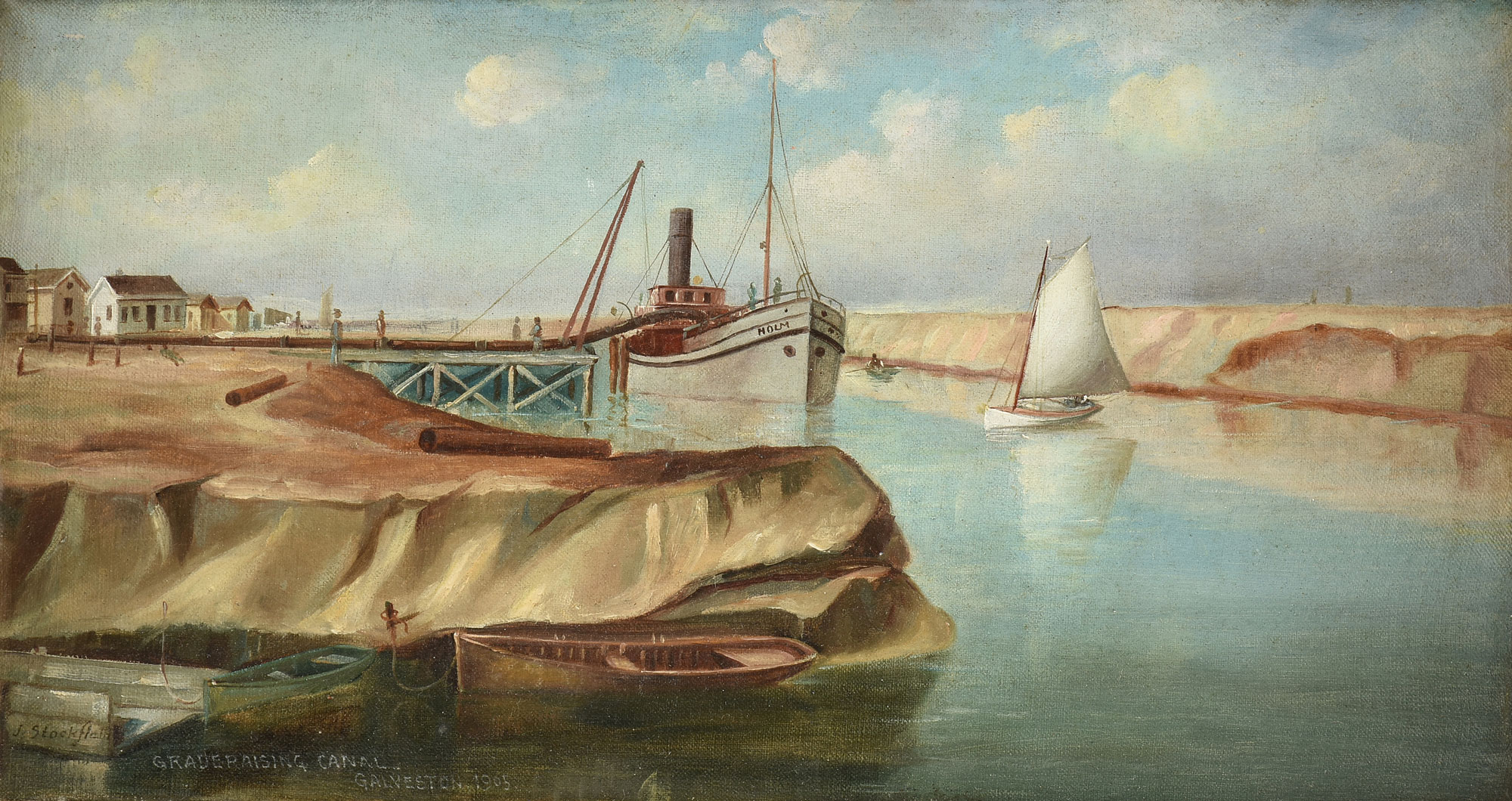
A majority of the paintings come from the collection of Ray and Glenda Simpson, with some additional works from Galveston’s Bryan Museum. Ray’s father was an early Stockfleth collector, and Ray has been writing an upcoming catalogue raisonné about Stockfleth, having discovered about 450 paintings from Galveston to Wyk. The exhibition will encompass three rooms in the gallery space, a representation of these many eras of Stockfleth: his paintings from before the storm, his works that serve as memories of the disaster, and his depictions of Galveston’s recovery.
While other painters depicted contemporary Gulf Coast seascapes, like the impressionist Paul R. Schumann, Stockfleth’s works are the complete singular surviving narrative of life on Galveston Island surrounding the storm. It’s because of this—and because of the personal tragedy Stockfleth witnessed—that his work is so essential for posterity.
“These paintings were important because there weren’t other artists at that time who lived through it and documented it,” says Caitlin Clay, curator of exhibitions at the museum. “They are first-hand accounts, through artwork, for people to understand the tragedy of the hurricane.”
In ”The Cemetery at Broadway,” one of the paintings in the exhibition, people are huddled on a small patch of dry land next to a small house, seemingly floating away, water encircling them. What’s striking—especially for those who know Galveston, Clay says—is that the cemetery isn’t all that close to the shoreline. The depiction reveals many truths, foremost the senseless, terroristic wrath of mother nature in an instant.
“It’s one thing to read those words in a journal or diary,” Clay says, “and it’s another to see the actual painting from the artist who lived through that tragedy.”
Stockfleth wasn’t formally educated; the self-taught painter just painted what he saw on the island, selling paintings to tourists, Simpson says. “He would draw little postcards in watercolor and sell them,” he says. “He sold things out of his window to people walking by.”
Stockfleth, who never married, painted through his grief after the storm hit.
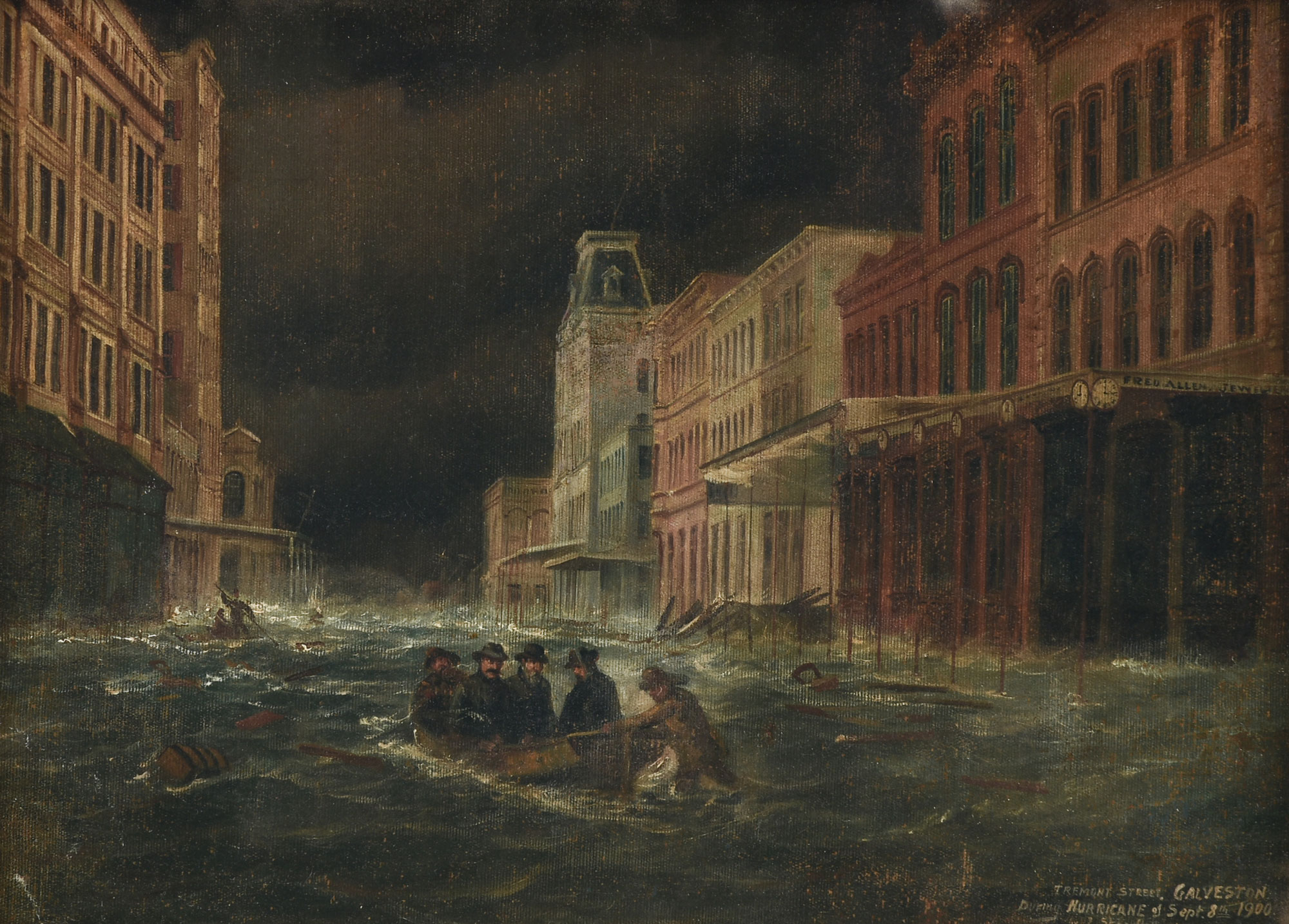
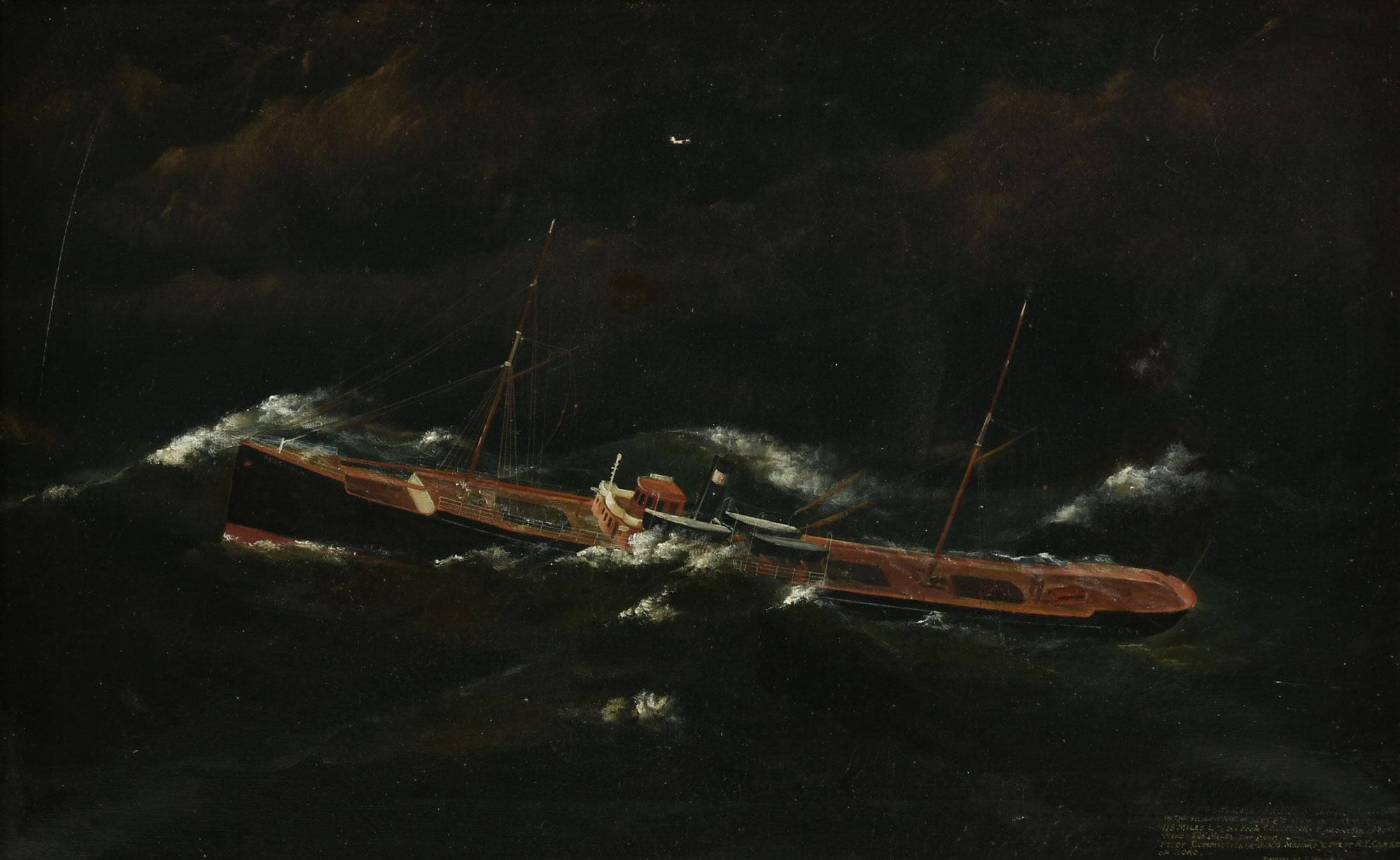
He painted a coal ship, the steamer Pensacola, gnashing against black waves after a narrow escape through the channel before the storm hit. He painted four men packed tightly in a rowboat, narrowly rescued by a firefighter as they navigate an alien waterway, the sea cutting a path through Tremont Street. He painted homes mashed together in a horrible wooden ruin. And he painted a community in pain as they struggled through a rebuild.
“It’s chilling to think about what he went through,” Simpson says, “and then to continue and stay on the island for the rebuild and the grade-raising and documenting all of that.”
But in the end, it broke him. Stockfleth lost at least 13 family members during the hurricane, and though the island moved on in the ensuing years, Galveston never returned to its pre-storm glory. The same can be said for the painter.
Though there isn’t much out there concerning Stockfleth’s personal life or motivations for moving back to his birthplace, to an island that was now part of an entirely different country, Simpson found a letter that describes the painter’s post-hurricane existence on Galveston Island.
“He would walk the seawall area in the daytime by himself, just staring with glazed eyes out to the sea,” he says. “I think he missed his family so much and there was so much tragedy on the island that I think he had enough.”
Stockfleth didn’t experience much success during his lifetime, which ended in 1935. And it wasn’t until the last few decades that serious art collectors scrambled to own his works.
When Simpson’s father started collecting Stockfleth more than 60 years ago, a 24-by-36 painting might cost $20. Once, he found a woman in Houston who thought she might have a Stockfleth in her attic. When the gallerist arrived at her home, he found the painting—one of Stockfleth’s better ones, Simpson says—shredded in a paper bag. “My husband let the boys shoot arrows at it,” she told him.
Today, “if a Stockfleth were to go up for sale,” Simpson says, it would go for “six figures real fast.”
Aside from the critical and commercial reappraisals, the museum extolls the educational value of Stockfleth’s works, when so few visuals of the great storm exist. Clay notes that Stockfleth is well-known in his former home of Galveston, but hopes that the people of Beaumont—also no strangers to hurricanes—get to know his work, too, much of which normally hides away in private collections.
“They are very moving paintings to see in person,” she says.