
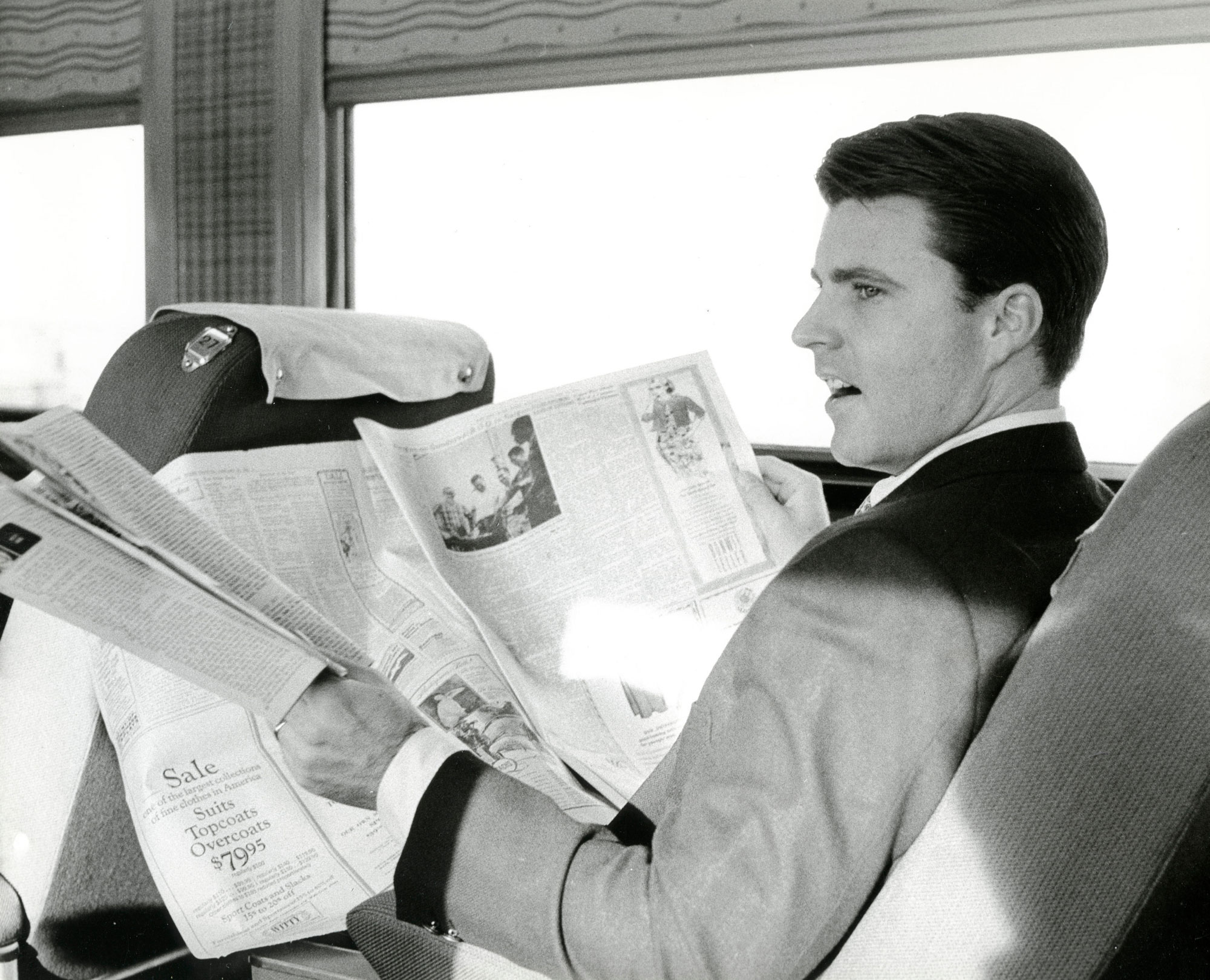
De Kalb, population 1,421, is a tiny town tucked away in the northeast corner of the state. But 40 years ago this New Year’s Eve, this town 35 miles west of Texarkana came to international attention when a private airplane crashed and burned in a nearby cow pasture. News organizations flocked to get the story, and not just because it was another crash on the final day of what was, at the time, the deadliest year in U.S. aviation. Inside that Douglas DC-3 was rock pioneer Rick Nelson, his fiancée, his road manager, four of his bandmates, a pilot, and a co-pilot. Only the two pilots escaped alive.
The craft was en route on Dec. 31, 1985, from Guntersville, Alabama, to Dallas—Nelson was scheduled to play a New Year’s Eve concert there—when a gasoline-fed cabin heater caught fire, filling the plane with smoke. The 41-year-old DC-3 descended abruptly and hit transmission wires, a utility pole, and a fence before slamming into a stand of sweetgum trees just off Farm-to-Market Road 990.

De Kalb resident Randy Barrett was the first person to reach the crash site after 5:15 p.m. He says only the pilot and co-pilot were able to escape the fiery wreckage, though both suffered burns.
“We ran up there and the pilot said, ‘Get back. You can’t help them,’” Barrett recalls. He says he was told later that every one of the seven passengers “was piled up against the back wall of the cockpit.”
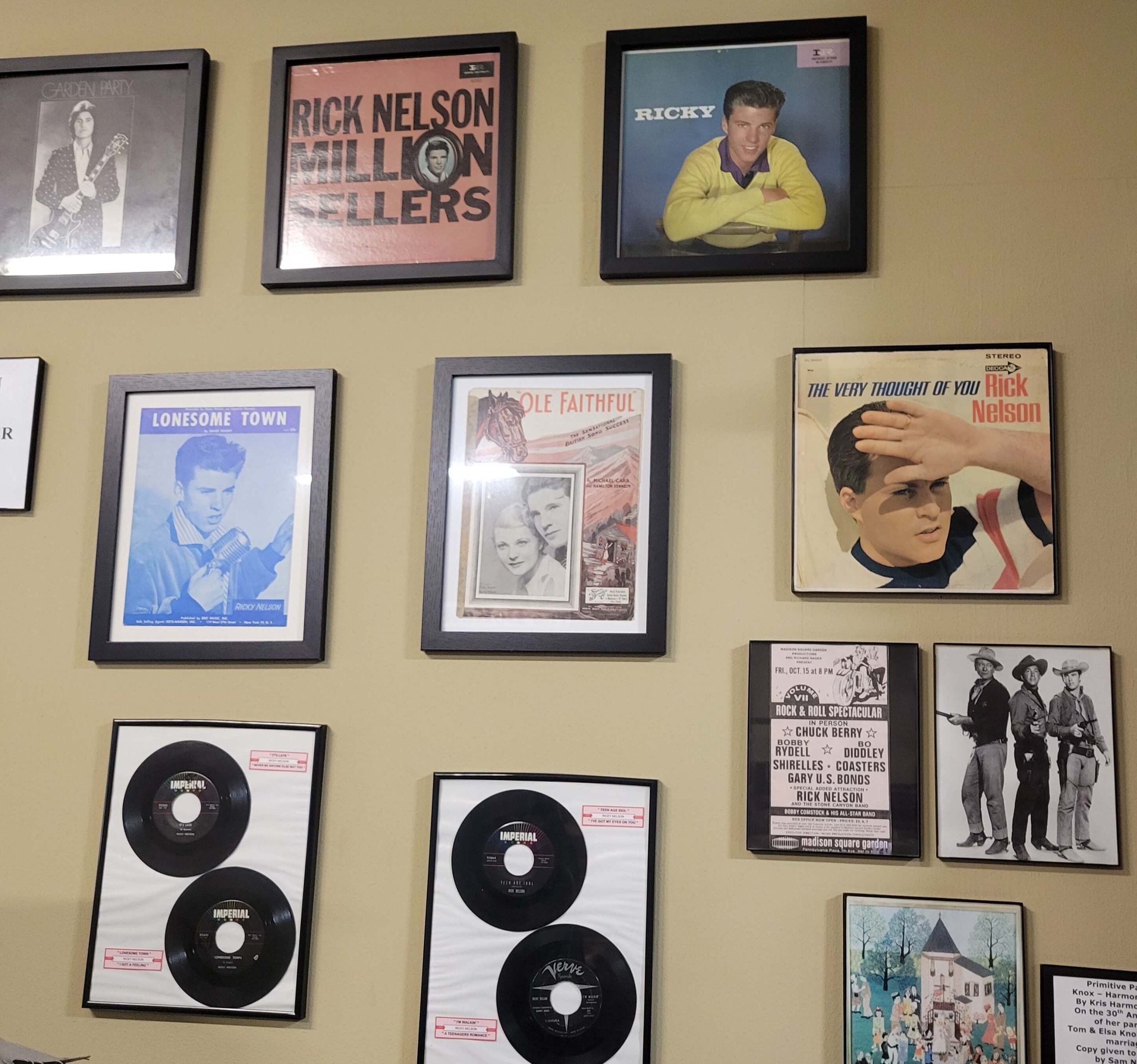
Forty years after the fiery crash, the “Travelin’ Man” singer and one-time teen idol is memorialized in an exhibit at the town’s Williams House Museum, an unassuming five-building complex that sits alongside US Route 82.
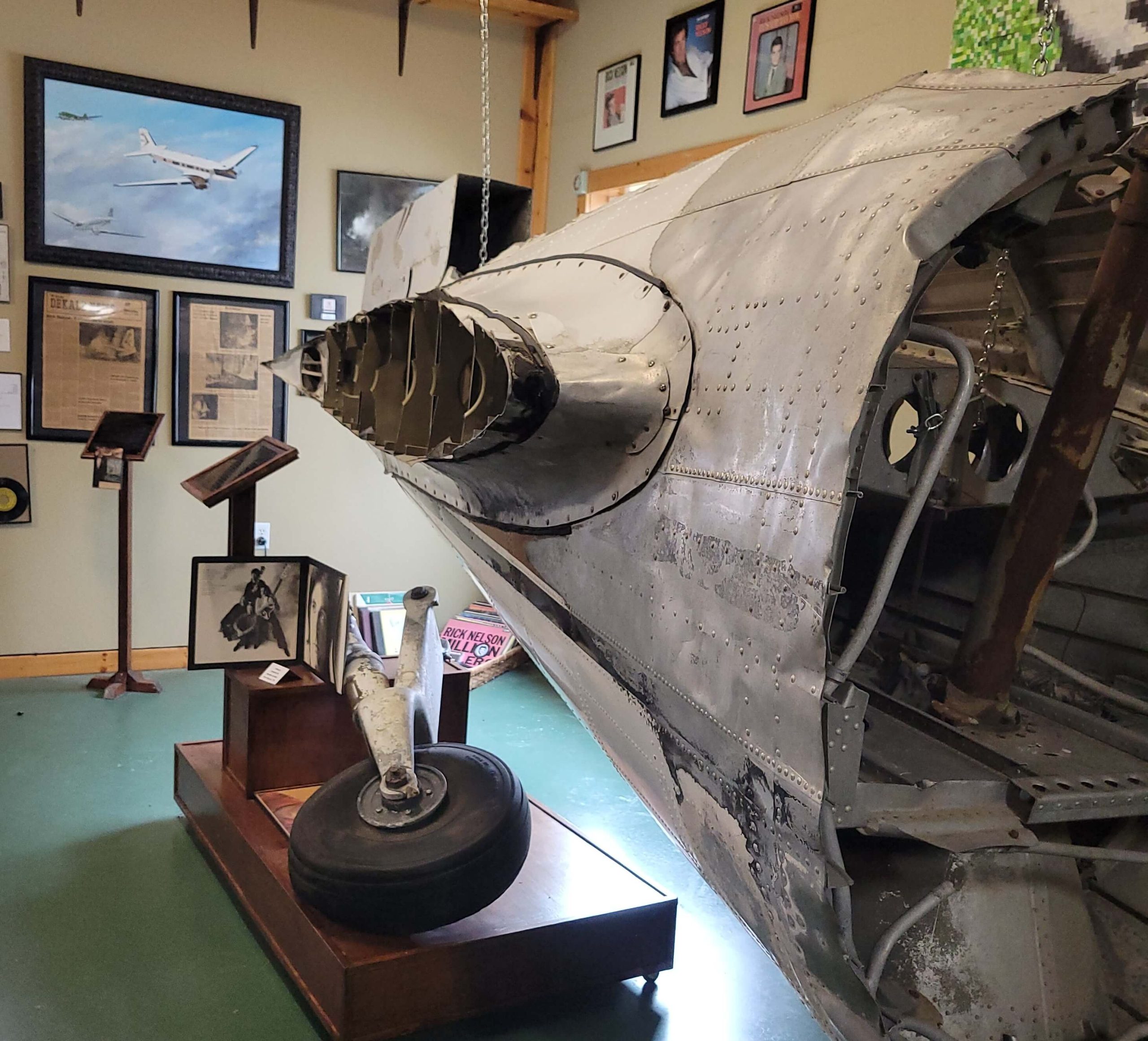
The exhibit’s centerpiece is the battered tail section from Nelson’s 14-seat plane, which the 45-year-old entertainer had only recently purchased.
Carolyn McCrary, one of the founders of the museum, says the Nelson exhibit is likely the No. 1 draw at the nonprofit establishment, which was founded in 1993 and mainly boasts town memorabilia.
Besides the plane’s tail assembly, the Nelson display includes framed photos of the singer, a number of his records, a painting of the white DC-3 with its distinctive black and gold trim, a Dutch candy tin adorned with Nelson’s face, and a ticket to the 1985 New Year’s Eve concert at the Park Suite Hotel in Plano. There also are newspaper, magazine, and video accounts of the crash and Nelson’s career.
The estimated 1,200 annual visitors to the Williams House Museum—its main building is an 1885 Texas and Pacific Railway section house named for rail foreman Jim Williams—have included Nelson fans from every U.S. state, plus countries like New Zealand, France, and Switzerland. Among those who have stopped by to pay tribute are James Burton, the lead guitarist for both Nelson and Elvis Presley and Burton fan Jerry Johnson, a rock ‘n’ roll enthusiast from Ohio who has supported the museum since 2008.
“That’s an important place to me,” Johnson says. “Rock ‘n’ roll history is important to me.”
Nelson is a key, if often underappreciated part of that history. He first rose to fame as a child actor on the sitcom The Adventures of Ozzie and Harriett. Starring the real-life Nelson family—bandleader Ozzie Nelson, his wife, singer Harriet Nelson, and their young sons “Ricky” and David—the popular show ran from 1952 to 1966 and, starting in 1957, often featured storylines that included musical performances by Rick.
Nelson would go on to enjoy a string of rock, rockabilly, and country-infused hits during his music career, charting more than 50 songs on Billboard’s Hot 100. He was inducted posthumously into the Rock & Roll Hall of Fame in 1987.
The Bowie County Historical Commission applied for a Texas State Historical Marker commemorating the De Kalb crash in October. That could only buoy the Williams House, which Rick’s son, Sam Nelson, toured in 2011.
Sam, who was 11 when his father died, says he found the museum “sweet” and “welcoming.” He adds, “I still can’t put it all into words—and cried for a good long while—but I deeply appreciated the effort they’ve made to preserve the exhibit and honor Pop’s memory.”