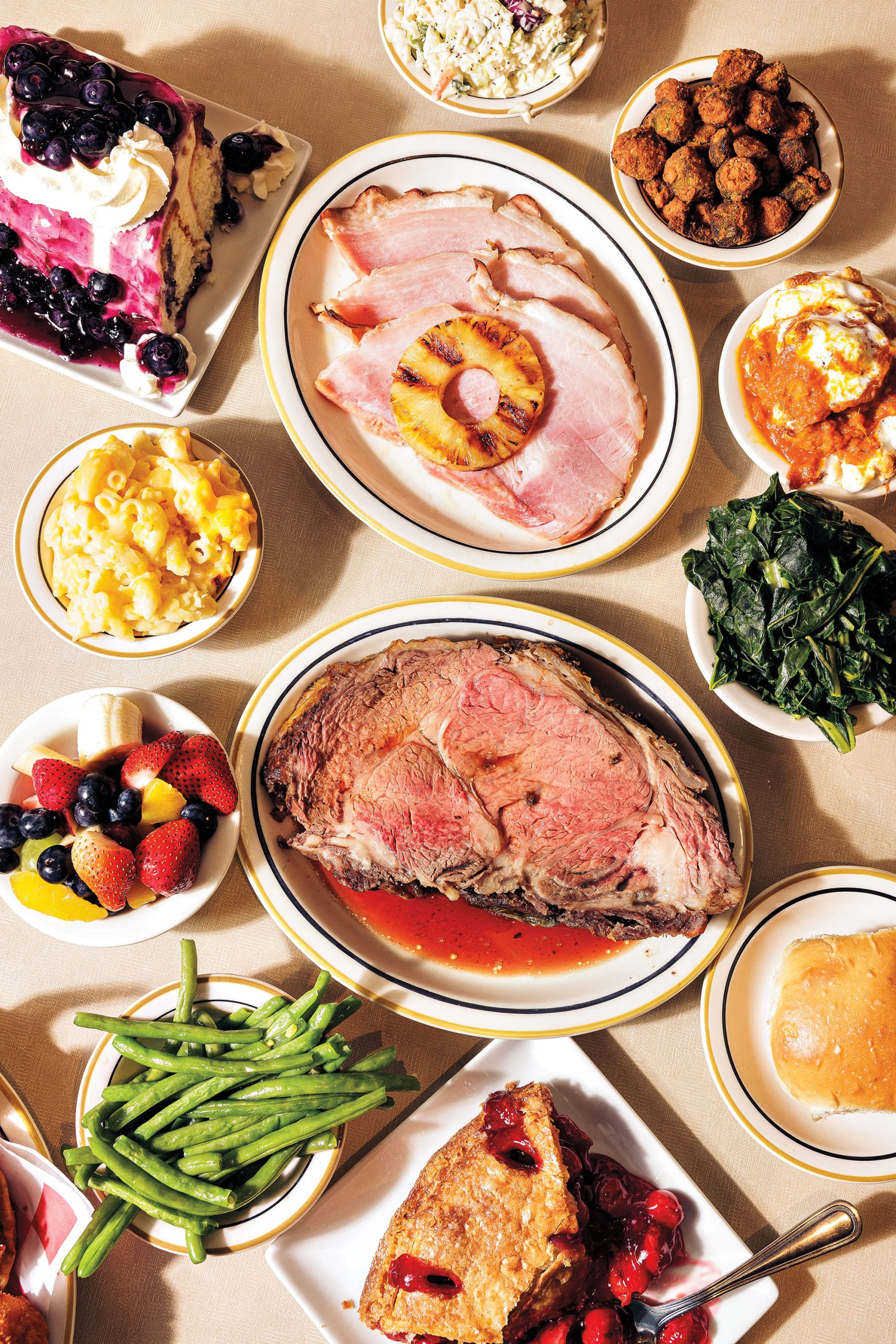

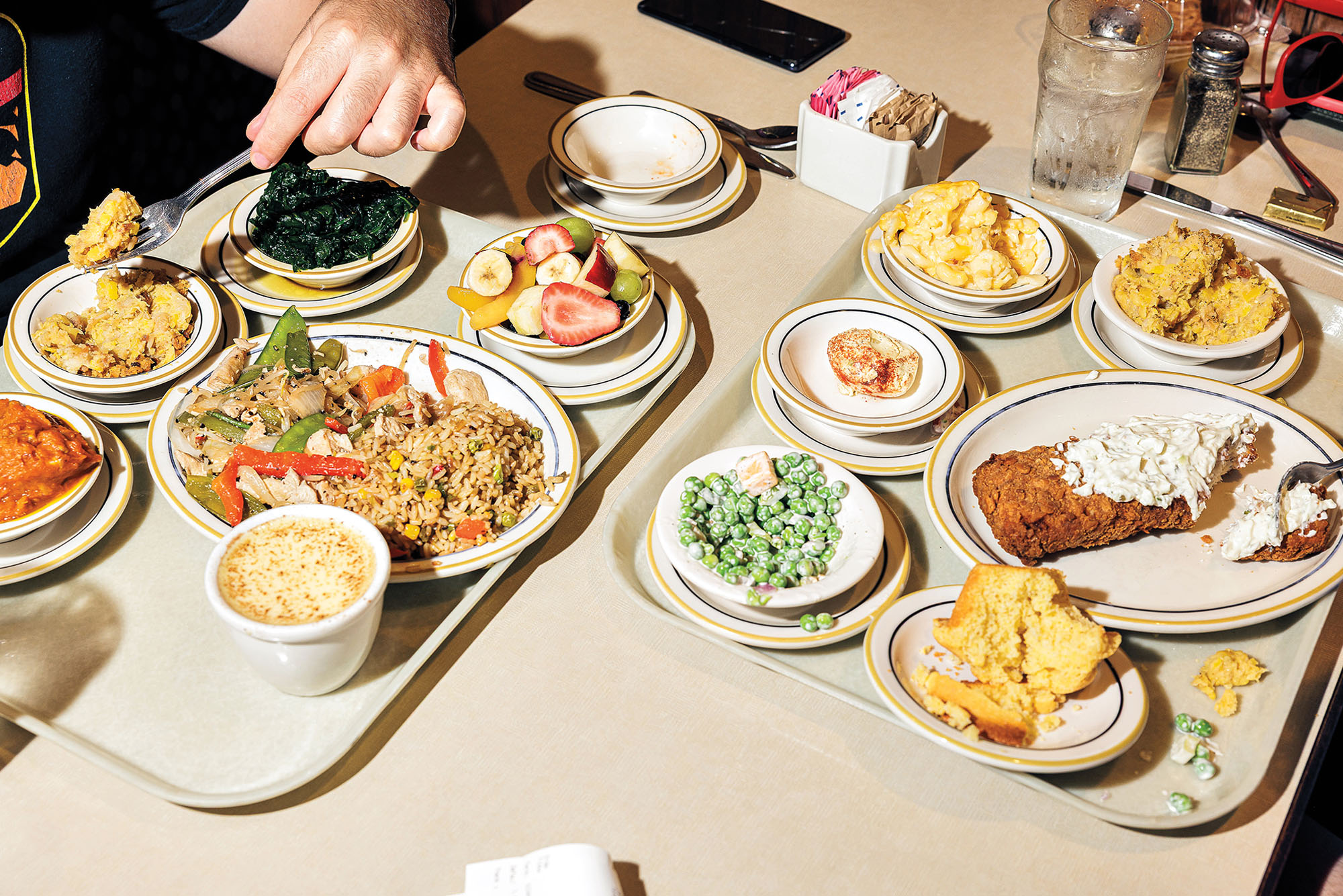
For six days a week, regulars like Ken Topping take a tantalizing stroll down Cleburne Cafeteria’s colossal serving line. Spanning the length of a bowling lane, it offers up nearly two dozen salads and a range of lavish entrées displayed behind glass partitions: pink-centered prime rib, baked hams spiked with pineapple rings and maraschino cherries, and pans of meatloaf draped in fresh tomato sauce. But on this spring Sunday in Houston, like his first visit 60 years ago, Topping has his eyes on the array of 16 vegetables, almost all organic and sourced from Texas farms. As a conscientious eater, he shares the impetus for his now daily patronage: “I wouldn’t want to cook all this myself. What a chore that would be!”
It’s a shared sentiment for the thousands who join Topping on busier weekends and holidays. Somehow, this 85-year-old institution appears immune to the endangered species status of most cafeterias—a model that emerged in the U.S. following its debut as the Swedish smorgasbord at the 1893 World’s Columbian Exposition in Chicago. By the 1920s, with the Ford automotive assembly line in Detroit well underway, the concept expanded from New York all the way down to Texas. And then it flatlined.

By the early 1980s, Dallas had 40 cafeterias in operation; today there are only two. “This is the last family-owned cafeteria in Texas that does a full-service camp,” says Cleburne Cafeteria owner George Mickelis, who took over for his late parents, Nick and Patricia C. Mickelis, in 1976.
Affordability and church attendance were major contributors to the cafeteria’s rise in Texas, as congregants in search of comfort food flooded into now-closed spots like Weldon’s in Houston and the Colonial Cafeteria in Fort Worth. Meanwhile, national chains like Furr’s and Morrison’s joined the booming market. “Everybody was into the cafeteria from the ’40s to the ’60s,” Mickelis confirms.
Today, Texas is one of a dozen states—including Alabama, Idaho, Illinois, and Ohio—with eateries that weathered the modernism that birthed, then nearly eradicated, the cafeteria model. Largely wiped out by fast food, rising labor costs, and inflation, outliers like Cleburne have managed to thrive due to exemplary quality and tradition. Outside of a few modern additions, every dish at Mickelis’ spot is prepared just as it was when the cafeteria was founded by Anabelle Collins and Martha Kavanaugh in 1941. “People like the fact they can come here and some things never change,” he says, pointing to offerings like the yeast rolls that occupy most every tray.
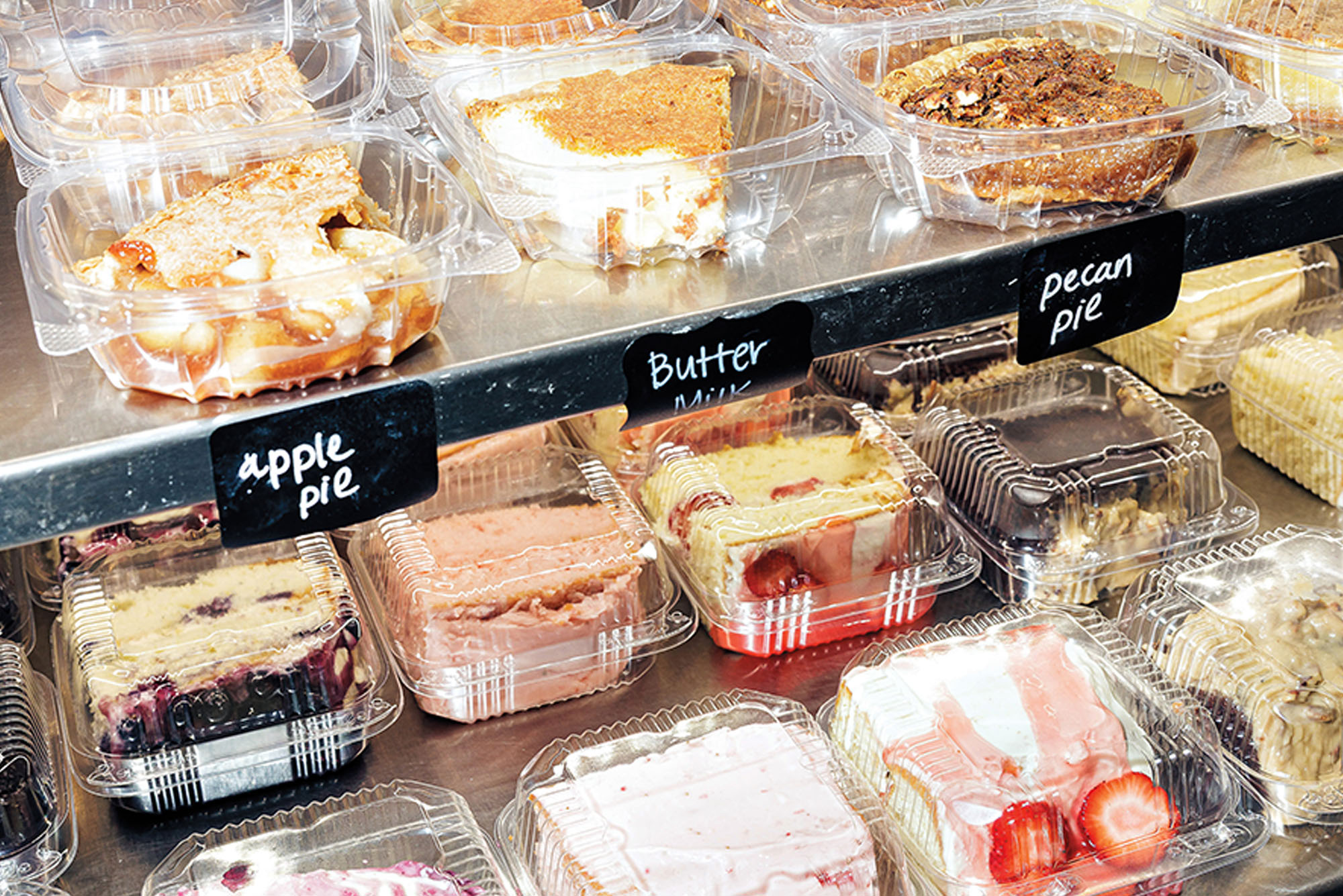
To maintain the cafeteria’s golden era standards, Mickelis’ 16 cooks, butchers, and bakers don’t cut any corners. Hormone-free chickens are delivered from Nixon, pasture-raised eggs from Boling, and ruby red grapefruit from the Rio Grande Valley. “We crack our own eggs. We grate our own cheese. We squeeze our own lemon juice,” Mickelis says. “We make everything from scratch, including the mayonnaise.”
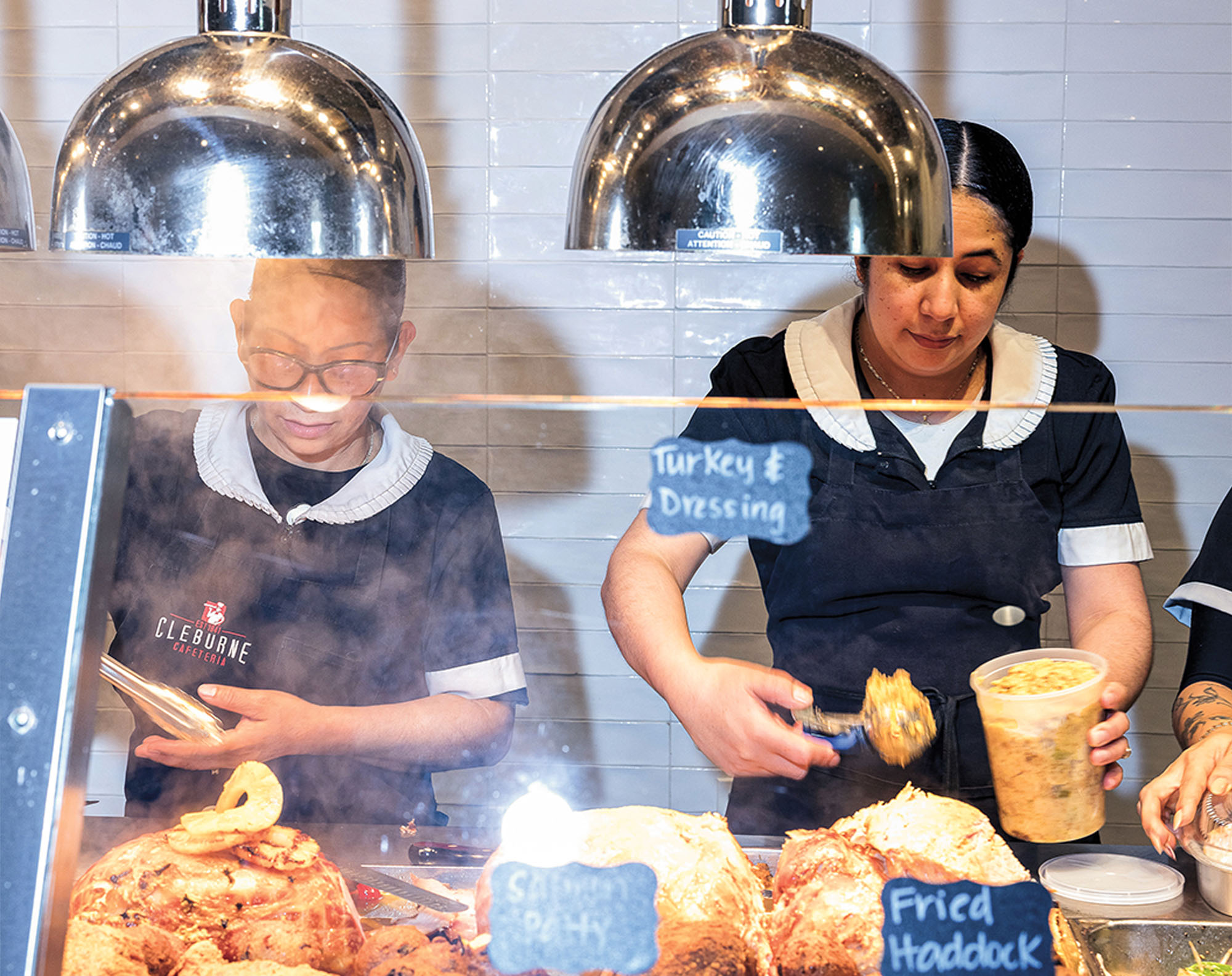
Even if cafeterias are expensive and labor-intensive, he believes people still hunger for the disappearing culinary model. In Mickelis’ estimation, as much as 75% of his clientele is composed of regulars—a group that runs the gamut of empty nesters, health-conscious folks, and families captained by working moms.
As tea cart attendants re fill cups with ice and top off coffee mugs, Mickelis divulges his lopsided work-life balance, which includes 95 hours a week and most major holidays so he can stay operational.
“The only reason you do this is because you’re a nut job,” he says. “And I love this place, and I love my family’s legacy, and I feel like I really am the only thing left.”