
Among our Texas summer sacraments is the moment when we desperately clasp a cold, sweat-beaded longneck to our foreheads. This is followed, of course, by swigs of beer straight from the bottle, fizzy and bracing and slightly astringent. Such blessed relief has inspired one of the state’s most cherished institutions: the icehouse, an open-air watering hole that doubles as an informal social club.
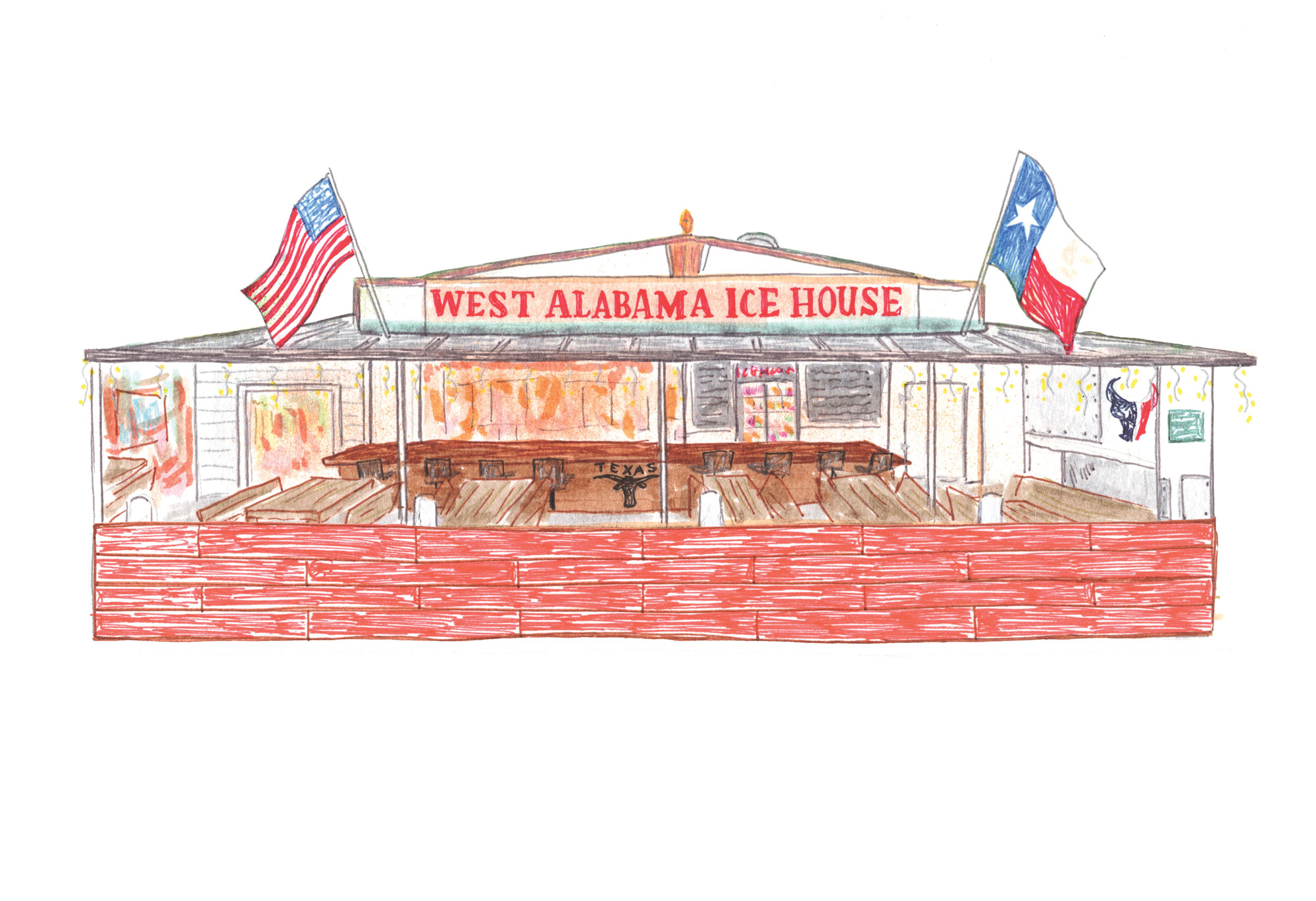
I wandered into my first icehouse on Houston’s West Alabama street in the early 1970s and have been fascinated by its brethren ever since. Back then, the West Alabama Ice House was just a motley open-front shed with a devil-may-care grit. Air conditioning? That was for sissies, the indoor-outdoor vibe seemed to say. It still does.

Opened in 1928, its early patrons would come to buy block ice for their kitchen coolers, then stick around for gossip and a cold one. You can still see the original ice locker, with its massive hinges, behind the bar.
Icehouses like this evolved from the block-ice depots that spread across Texas during the state’s railroad boom, from the late 1800s into the 1930s. These ad hoc gathering spots grew up in tandem with Texas’ brewing industry, as ice was crucial for brewing and storing the lagers that were key to the Texas-German beer tradition. Eventually, icehouses extended in a belt from the beer-brewing hotbed of San Antonio to the Gulf Coast, then south along the rail lines to the Rio Grande Valley.
The beer that once induced customers to hang around the ice depots is refrigerator-cooled now. Over the years, I’ve watched the West Alabama evolve from its mass-produced beer era to roll with modern imbibing folkways. The surrounding blocks of the West Alabama’s Montrose neighborhood have begun to gentrify, too, but the icehouse remains proudly scruffy. When I ducked in to escape a fierce downpour recently, I was amused to see a tin can poised to catch leaks in front of the bar.
In my half-century frequenting the West Alabama, the icehouse has grown like an unruly coral reef. A galvanized shade awning here. A pool table there. A cornhole game or two propped in the gravel. The clientele is every bit as varied, from lawyers and college students to a grizzled coterie of old-school hippies who call themselves The Montrose Beer and Gun Club. They have held their annual October cookoff there for more than two decades.
At some point, umbrellas sprouted above the picnic tables and a basketball hoop materialized. A taco truck pulled up alongside to feed the regulars. Through it all, the democratic come-as-you-are ethos remained sacrosanct. That’s a bedrock icehouse principle, even in an age where the form keeps morphing to suit current tastes. Yet something about the genre continues to speak powerfully to Texans.
“Icehouses are one of the state’s most enduring vernacular forms,” says David Richmond, a Houston designer who began photographing icehouses after graduating from Rice University. “As everything moves indoors [because of air-conditioning], there’s a certain sameness to our interior spaces. But icehouses still respond to the Texas climate. They keep us aware of the weather, the time and season we’re in. It’s almost a breathing thing, and the crowd breathes with it.”
Nowadays you might encounter icehouse-style sliding doors anywhere from a patio-centric Gen Z cocktail bar to a funky Tex-Mex restaurant. There’s even a new style I call “Icehouse Revival.” In Houston, Eight Row Flint bills itself as “a revisionist icehouse that celebrates whiskey mash and masa.” With its garage-style porticoes, giant swamp fans, and white paint job, the place looks far more orderly than the icehouses of old.
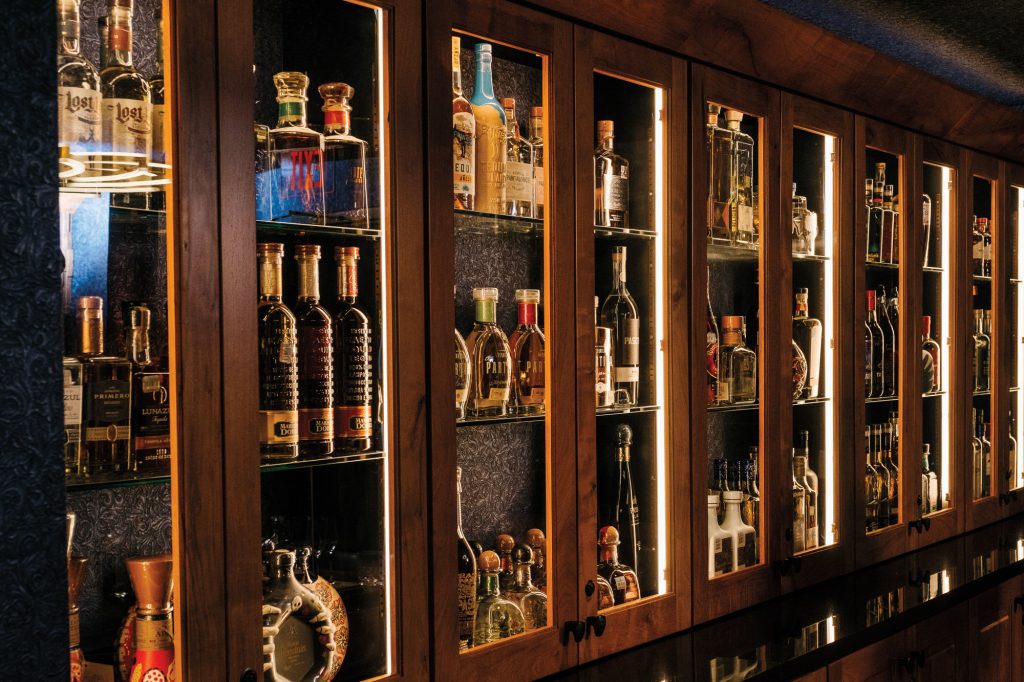
Yet when the garage doors roll up, and the joint fills with guests of all types, the icehouse feel kicks in. Yes, there’s beer. But along with local drafts, there’s the freewheeling michelada and agave cocktail menu. You can taste rare bourbons or dine on house-made corn tortillas stuffed with smoked beef cheek, and nobody will care about what you’re wearing.
Over in San Antonio, the handsome Otto’s has opened on the riverbank in the lively Pearl District. The place sprang fully polished from the brain of Levi Goode, who, as head of his family’s Goode Company hospitality group in Houston, is as much an impresario of Texana as he is a restaurateur. So, traditional features like a crushed gravel backyard with picnic tables are supplemented by a menu of “beer-tails” goosed with shots of liquor and an exceptional grilled redfish on the half-shell with a jalapeño toreada and lime butter.
Up near Stonewall, north of the traditional icehouse belt, the Albert Icehouse drowses by the side of Ranch-to-Market Road 1623 like some idyllic dream. From its clapboards and galvanized awnings to its red neon “Beer” sign, it screams icehouse classicism. But the Albert was built from scratch to sit alongside an 1892 wooden dance hall that’s still in operation. One of its defining features are windows near the bar that swing open to reveal an ancient live oak grove.
With its faux antiquity and Hill Country fairytale setting, can it truly be considered an icehouse? I don’t really care. I feel just as welcome there as I do at The Montrose Beer and Gun Club cookoff. And now on humid summer days, I long to sit under those oaks with a cold beer in hand, staking my stubborn claim on the Texas climate.