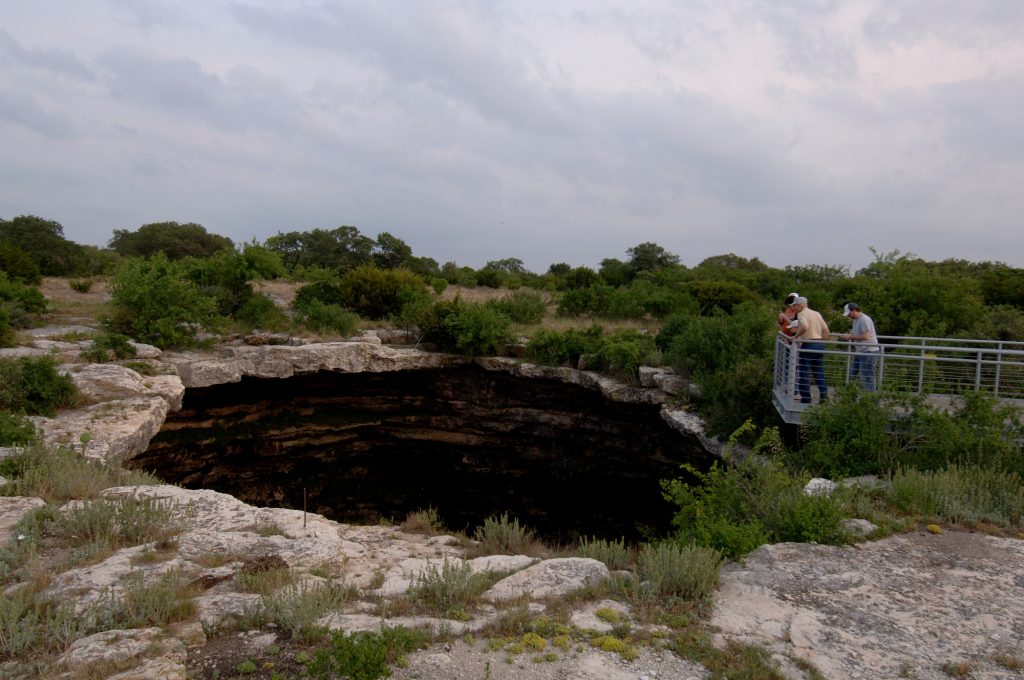

Roughly 65,000 years ago, a nursery herd of female and young Columbian Mammoths roamed the basin between the Bosque and the Brazos rivers. Grandmother Columbian Mammoths bestowed wisdom on younger females, exiled males ran amuck, and the herd consumed multiple football fields’ worth of grass per day.
Thousands of years later, in 1978, two young snake hunters, Paul Barron and Eddie Bufkin, discovered a fragment of femur bone in a dry creek bed. This led to the unearthing of a Columbian mammoth skeleton. Since then, 17 members of a nursery herd have been uncovered. These fossils’ proximity to one another raises the question: What force devastated this herd of giant beasts?
A decade after receiving its designation as a national monument, paleontologists continue to dig into the past at the mammoth site in Waco. Initially, the ubiquitous deaths of the nursery herd led paleontologists to suspect a sudden natural disaster, most likely a flash flood. But further examination of the bones and sediment suggests the mammoth nursery herd may actually have perished due to the opposite—a drought.

“As we’ve gone along, we’re finding more evidence—even within the bones—that there are long terms of environmental stress,” says Lindsey T. Yann, the National Parks Service Paleontologist. “Everything seems to be pointing at a drought being that long-term stress.”
In 2015, Baylor University graduate students researching the mammoth skeletons began to question the flash flood hypothesis. The bones betrayed signs of scavenging: rodent gnaw marks and a camel’s skull dragged away from its body. Whereas a flash flood would have rapidly buried the mammoths, the bite marks suggest that their carcasses lay exposed on a dry surface for a prolonged period of time.
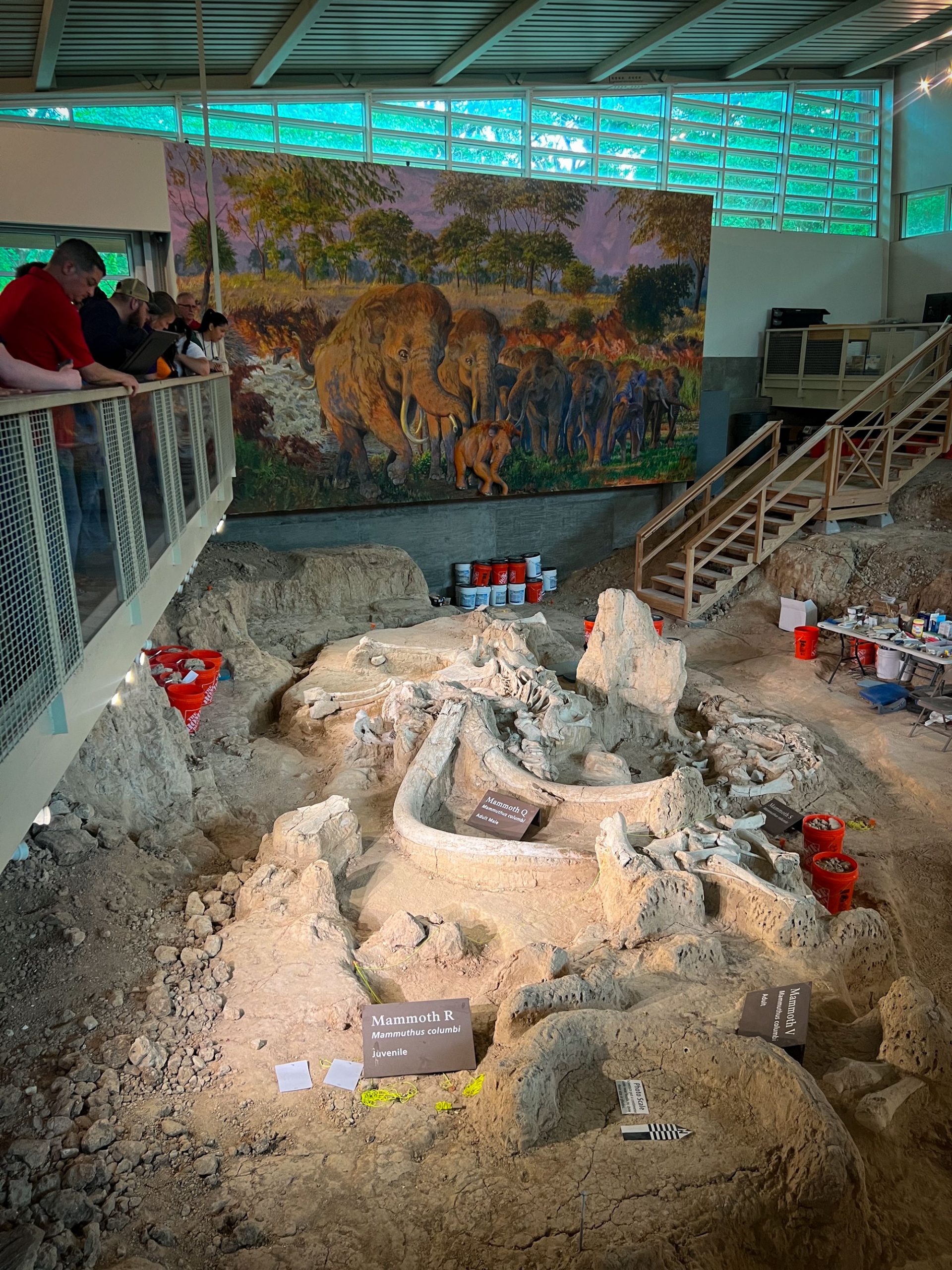
On the bottom tier of the dig site, where sediment immortalizes the nursery herd, 10 out of 17 mammoths show signs of starvation. The fossils reveal that some mammoths had even begun to reabsorb their own bones for nutrients such as calcium.
Although paleontologists have investigated the drought hypothesis for the last decade, a rigorous scientific process needed to be followed before announcing the findings to the public. As a result, tour guides only incorporated the new discoveries into their verbiage in the past year. “Changing a story can’t happen overnight,” says the site’s manager and superintendent Theresa Moore. “Scientific evidence needs to be shown and vetted.”
Although these signs of starvation don’t provide conclusive evidence of a drought, they implicate it as a potential cause of the mammoths’ deaths. Bone records and concurrent windblown sand deposits in West Texas also corroborate the hypothesis that Texas suffered from water depletion. Currently, paleontologists studying the dig site are investigating evidence of drought in surrounding states.
“Ultimately, what we want to do is understand what the regional environment and climate was like, and that gives us a better picture of what the whole United States looked like at this time period,” says Yann.
Although the cause of the mammoths’ deaths may seem arbitrary—buried under millenia of history and about 8 feet of earth—understanding their environment provides a sample of what Texas looked like 65,000 years ago. The tree-laden topography of the area impedes finding fossils, so the mammoth dig site provides a unique glimpse into what lies under the roots in these regions. The Waco site also fills a time gap in the scientific record of Colombian mammoths’ evolution: providing a sample between a younger dig site in Zumpango, near Mexico City, and older fossils in South Dakota.
“Throughout Texas there are individual sites with maybe a mammoth tooth here or a big bone somewhere else, but the fact [is that it’s] that it’s America’s only nursery herd of Columbian mammoths,” Yann says.