
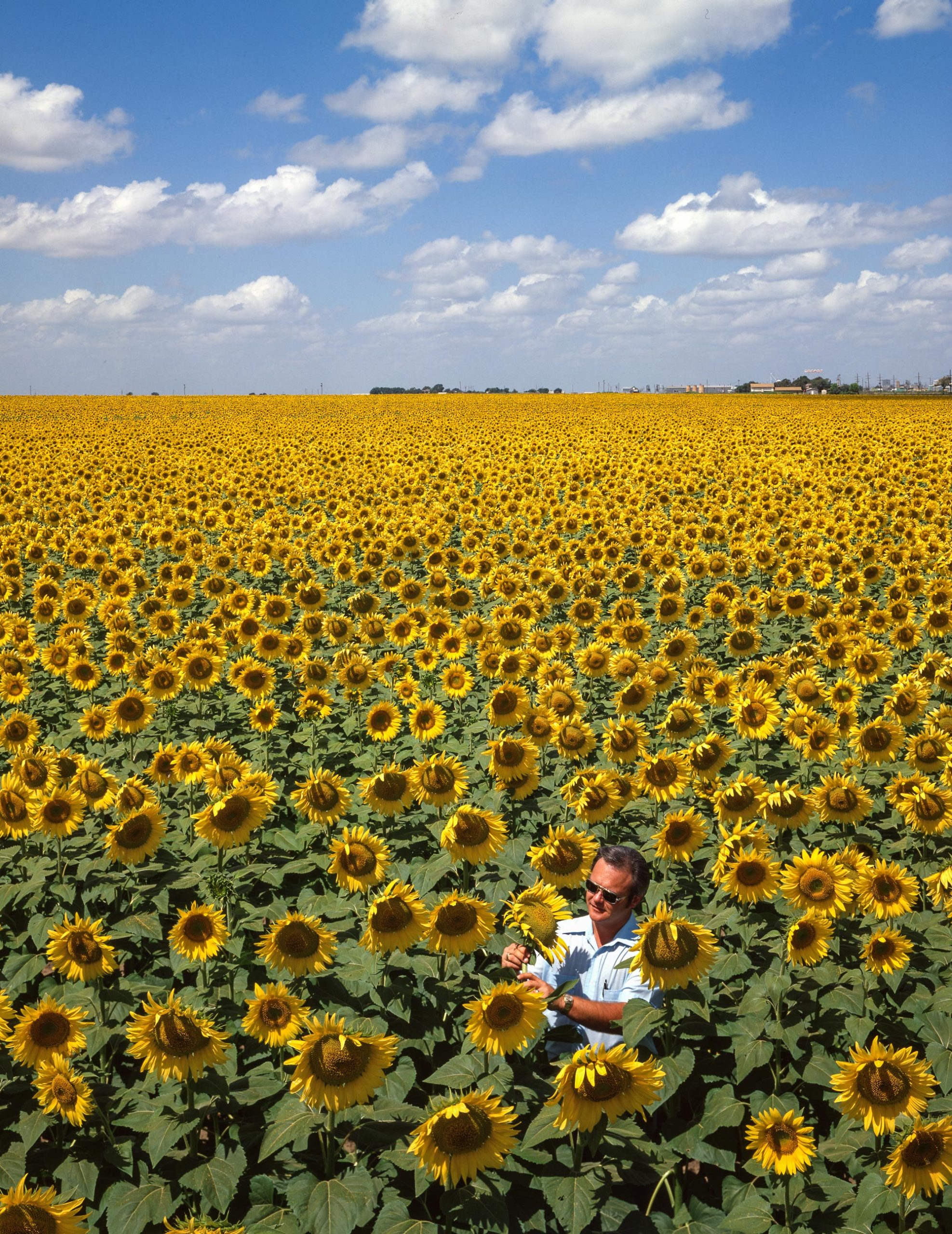
There’s no crop as golden as a sunflower. Initially cultivated on the East Coast 3,000 years ago by Mississippian Indians—who used them for food, medicine, dyes, and oils—the giant flowers were exported to Europe in the 1600s. There, they came to be particularly prized for the oils found in their seeds: twice the amount found in a soybean and far lower in saturated fats. In the 1980s, the Texas Panhandle Plains were full of the huge yellow flowers. The state clocked in as the fourth–largest producer in the country, yielding 2,000 pounds of seeds per acre—twice the national average. Today, the flowers remain a valuable cash crop, towering proudly over Texas plains and prairies.

From the March 2026 issue