
Nestled between the lush farmland and booming wineries along US 290 east of Fredericksburg, Wildseed Farms might have caught your eye as you breezed past; it’s that splash of brightness visible through the low brown wooden fencing. In the springtime, with its nearly 200 acres of blooming wildflowers stretched out like a lush quilt, Wildseed Farms is nearly impossible to miss.
And while it’s a treat to wander through those intoxicating blue and purple fields in the springtime, in my opinion the best time to experience Wildseed Farms is in the fall. That’s because fall is the season to sow wildflower seeds for a springtime bloom.
“When people see the beautiful colors in the spring, they think, ‘I want to plant some for myself,’” says John Thomas, Wildseed Farms’ founder and president. “But by spring, it’s too late. You’ve got to plant them in the fall.”
Planting for Butterflies
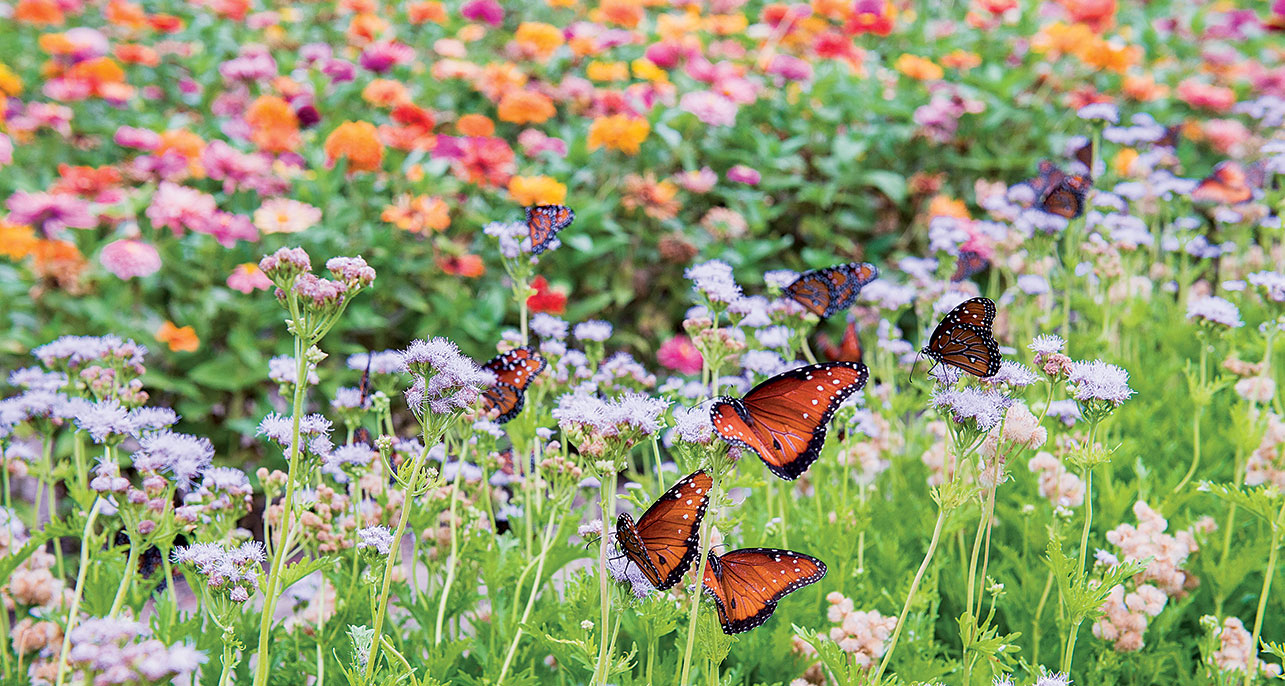
Except for in the dead of winter, the fields at Wildseed Farms bloom with seasonal wildflowers and attract pollinators like bees and butterflies.
Wildseed Farms is 7 miles east of Fredericksburg on US 290, midway between Stonewall and downtown Fredericksburg. Wildseed Farms offers free planting seminars Sep. 12-14 from 2-4 p.m. Call 800/848-0078.
John has been in the wildflower business for 38 years. A native Texan with calloused hands and a friendly drawl, John was running a small turf-seeding business when he realized that there were few sources to supply the wildflower seeds in demand by landscape contractors, the public, and government entities seeking to beautify the roadsides. So, in 1983 John and his wife, Marilyn, set out to create a business that over time has become the industry leader in wildflower seed sales.
Wildseed Farms has contributed seeds for planting thousands of acres in Texas, and hosts more than 350,000 people each year at the center. Despite its walking trails, butterfly garden and event space, it is not a botanical center. It’s a working farm, and that’s part of the experience.
In the fall, it is an especially busy farm, buzzing with the activity of planting season. Out in the production fields, you’ll see farmers hard at work alongside two pieces of equipment invented by John himself: the J-Thom 42 Wildseeder, which can plant up to 14 varieties of wildflowers at the same time, and the Vacuum Seed Retriever, which harvests ripened seeds. Both were instrumental in John’s commercial success, by making the seeds available in bulk quantities.
Except for in the dead of winter, the farm is in bloom throughout the year, and in September and October, yellow and orange flowers are the stars of the show. Tall rows of sunflowers and yellow cosmos line the walking trails, as do informative placards with details about each flower’s season and ideal growing conditions. Shaded wooden benches along the trails are placed strategically to offer quintessential Hill Country views. You can sit for a moment and gaze over the riot of color and then follow the expanse of farmland to the hills and the horizon beyond. You could bring a book, but why would you want to?
At the 7,000-square-foot outdoor marketplace, visitors load carts full of herbs, cacti, and succulents before moving on to browse the diverse selection of painted pots and planters. Fall colors dominate the vegetable rows, which overflow with gourds, squashes, and pumpkins—and where you’ll likely find a few of the two dozen farm cats lounging.
Inside, the wood-paneled gift and seed shop feels festive, with decorative orange and yellow wreaths, pumpkin accessories, and Halloween gifts offered for sale. There’s an old-timey, endearingly scattered feel to the shop—on one shelf, vintage Bingo boards are displayed next to a crooked, handwritten sign: “Play Old Fashioned Bingo!!!! With your Kids and Grandkids.”
Gardeners, take note: The back room is where it gets serious. Devoted entirely to seed sales, the semicircular room houses more than 90 varieties of wildflower seeds, plus several special mixes organized by region of the country. Wall-to-wall shelves hold small, paper seed packets organized by variety and labeled by thumbnail photographs of the flower in bloom. If you’ve got a big property, or a ranch, look for the 50-pound burlap bags of seeds; Wildseed Farms sells these to more than 28 different highway departments around the United States.
After planning and buying seeds for your own springtime wildflower garden, treat yourself to a beer, glass of Texas wine, or a frozen peach Bellini from the Brewbonnet Biergarten, an expansion of the gift shop that features soft-serve ice cream, specials like “German tacos” (sausage topped with sauerkraut and wrapped in flour tortillas), and rows upon rows of pickles and gourmet jams and jellies—all available for sampling.
And don’t stress about the planting: John promises it’s “real simple.” Wait until October or November, he says, then find a spot where the seed is sure to hit the soil (mow any tall grass) and will get plenty of sunlight, and then “just cast it out, and pray for rain.”