
“You are in one of the most special places in the hemisphere,” said guide Sergio Ayala in his introduction of the Gault Site to our tour group. He wasn’t kidding.
Situated in open fields just south of the Bell-Williamson County line near the Central Texas town of Florence, the Gault Site was discovered nearly 100 years ago by University of Texas anthropologist J.E. Pearce. Decades of excavations revealed evidence of human activity dating 20,000 years, some of the oldest ever found anywhere in North America.
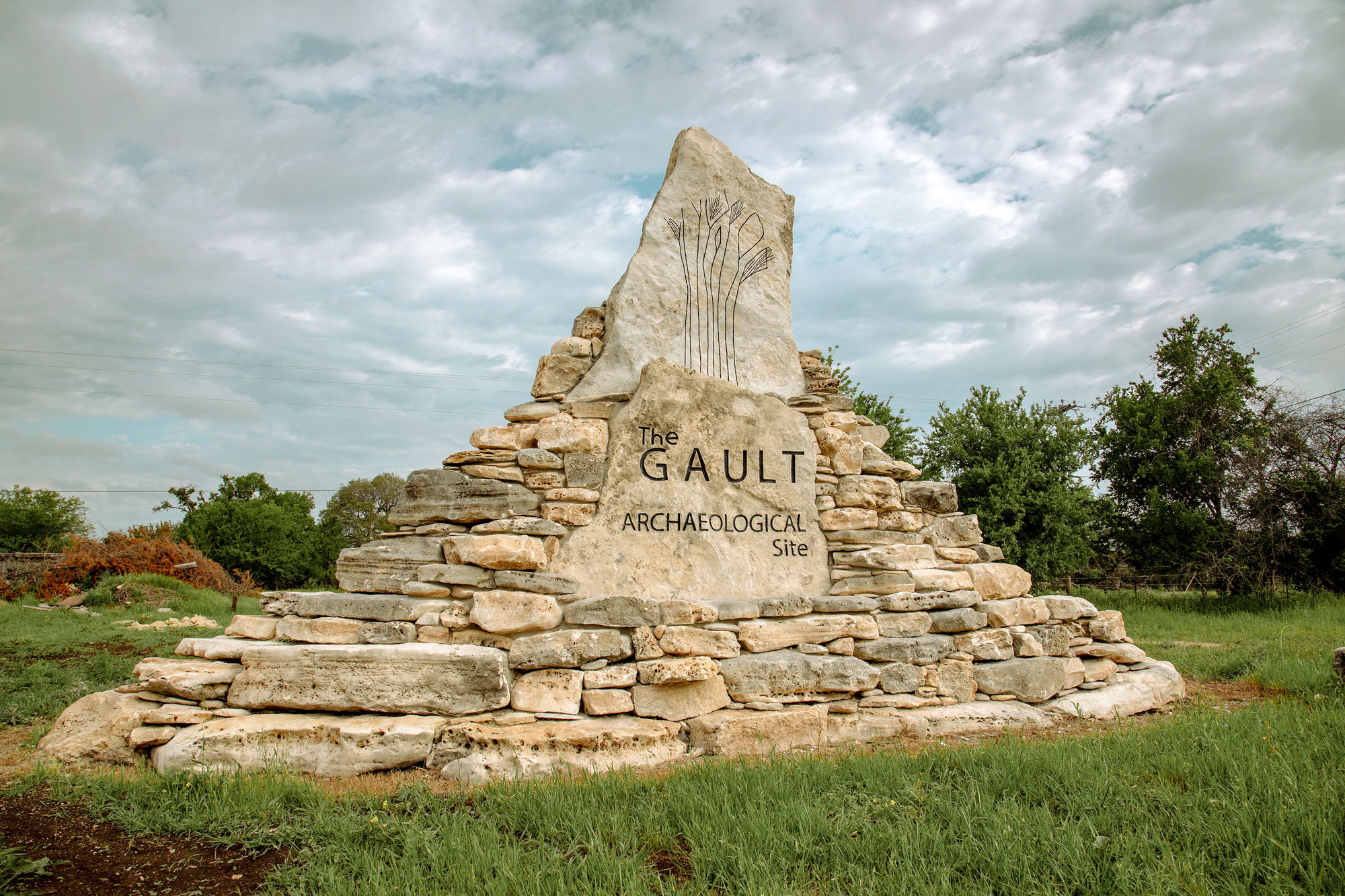
In honor of October being Texas Archeology Month, I decided to take one of the semimonthly tours offered by the nonprofit Gault School of Archeological Research. Looking like typical ranchland with a few black Angus grazing in one pasture, the site has a large rock sign at the gate to let visitors know they’re in the right place for the two-hour, mile-and-a-half guided tour.

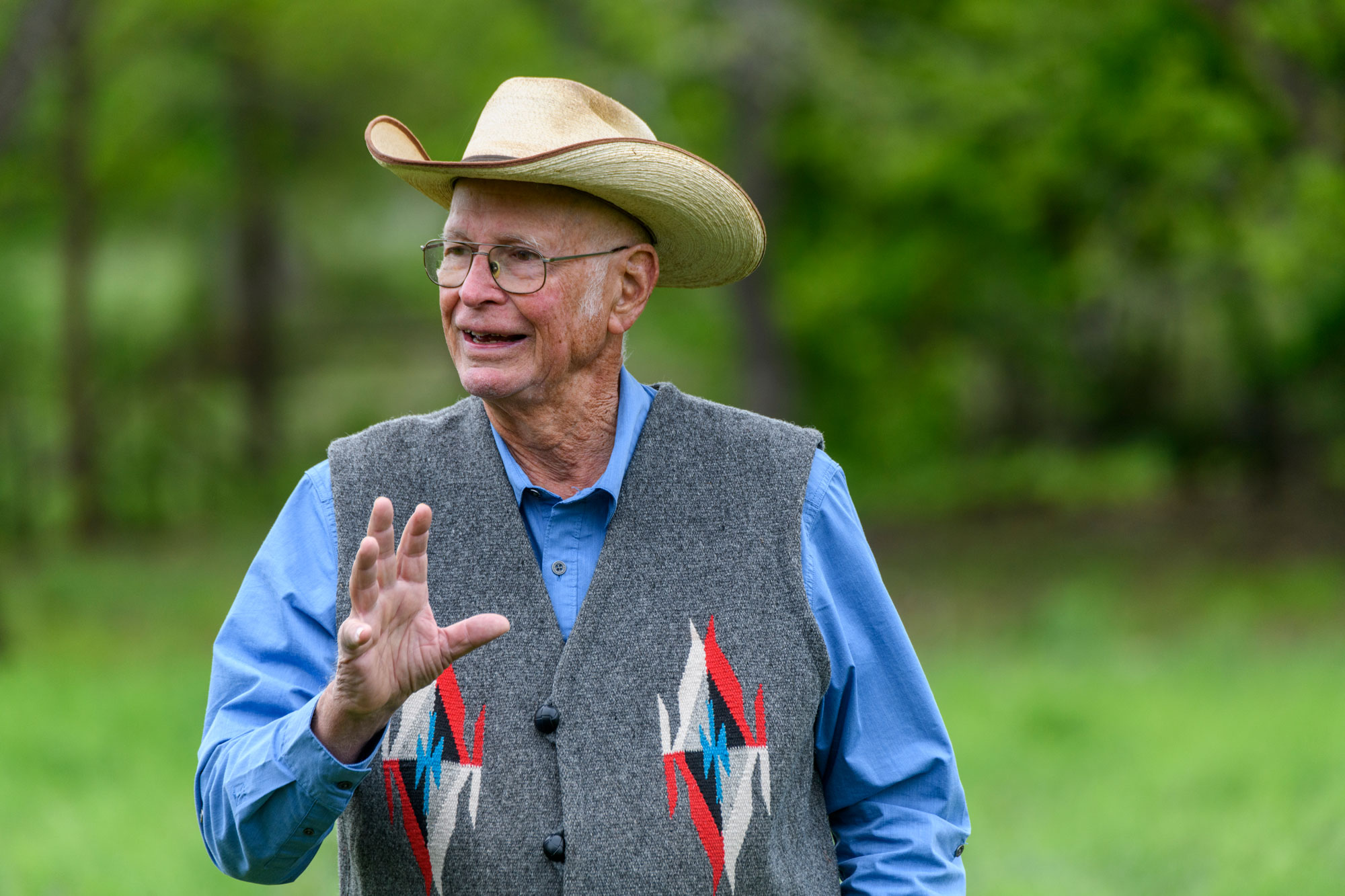
One hundred people showed up on the day I went. We were split into four groups, mine led by Ayala. A former director of the Gault Site, Ayala was a protégé of archeologist Mike Collins, the Gault School’s founding director, and part of the team that worked on the last round of excavations in 2016. Now, Ayala does archeological work in the private sector when he’s not volunteering to give tours. “It kind of feels like home every time I’m there,” he told me. Dressed in a straw cowboy hat, ironed Oxford shirt, and pressed denim jeans covering the tops of his work boots, the 53-year-old looked more like a rancher than an archeologist.
Prior to my trip to the site, I prepped by watching The Stones Are Speaking, the award-winning feature documentary about Gault and the efforts to preserve and protect it. Filmmaker Olive Talley dives into how the discoveries made at the site pushed back the timeline for humans in the Americas, and how Collins’ patient, long-game effort to save 30 acres of heavily looted land for deeper study led to him purchasing the property in 2007.
According to Ayala, before Collins got involved in protecting Gault, it was a pay-to-dig site. “This [was] the honey hole for artifact collectors,” he said, explaining that this went on for decades and provided a source of income for ranch owners. “The scientific community wrote off the site due to the looting, but Collins knew the site was still precious and that lots of data could be collected.” The area containing artifacts was so big and so deep, academics and amateurs had only scratched the surface.
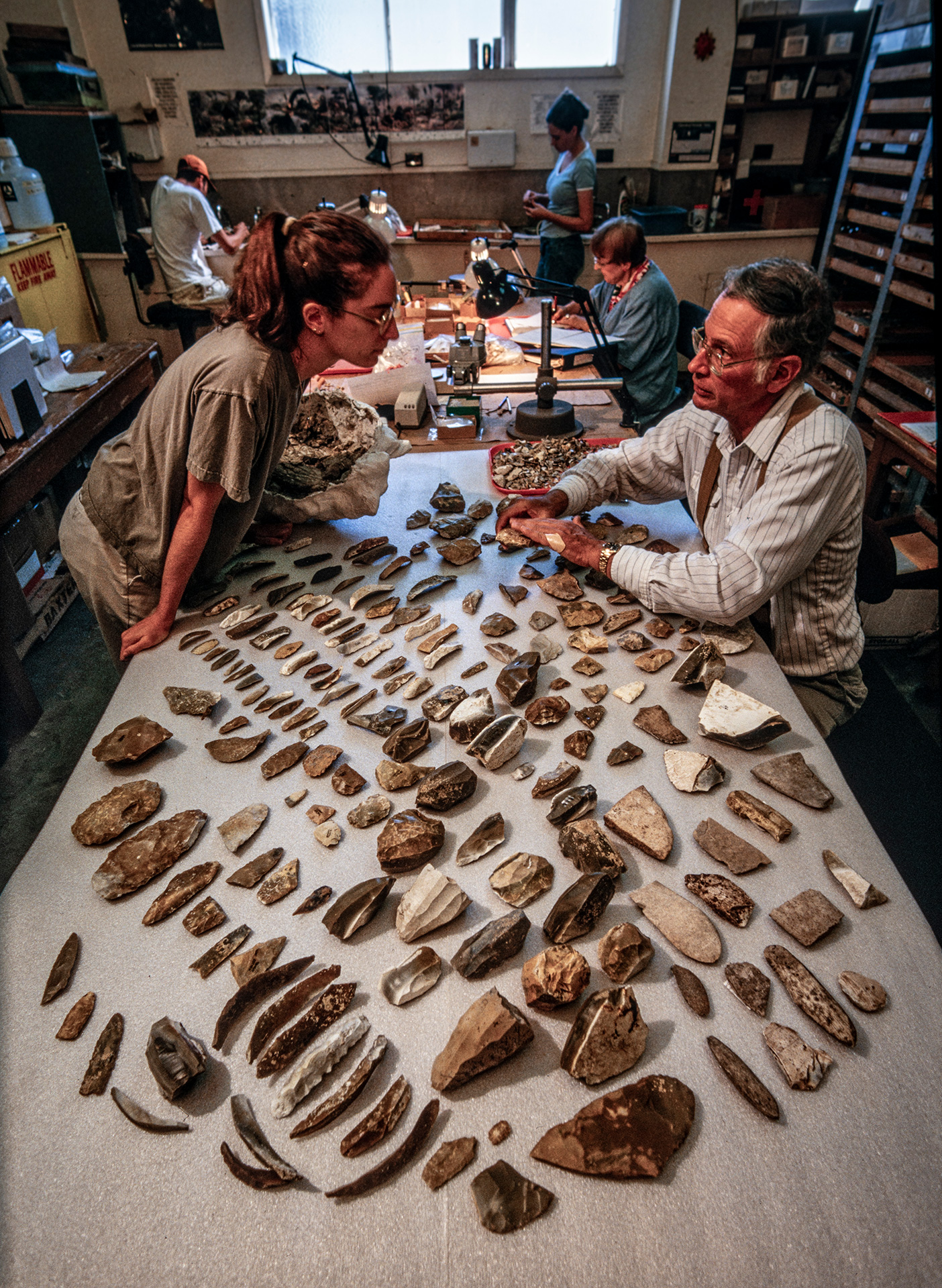
In 1991, 60 years after Pearce led the first scientific investigation of the site, Collins and a team of archeologists started to unearth hundreds of thousands of artifacts—mostly points and projectiles of chipped stone fashioned into tools and weapons such as knives, arrowheads, and spearheads from the Clovis people going back 13,400 to 12,800 years. Then they found OTC (older than Clovis) points and projectiles, indicating an earlier presence of humans in the Americas that effectively reshaped archeology’s understanding of human history. (The previous held belief was that humans arrived in the Americas 12,000 to 14,000 years ago. Recent excavations in South America have unearthed artifacts thought to be more than 30,000 years old.)
Surrounded by upland savannah and exposed limestone bluffs, the Gault Site sits in the Buttermilk Creek valley, where bands of roaming hunters and gatherers found shelter, wildlife for hunting, and plants, nourished by a springs-fed creek. Most of all, this grassy riparian corridor studded with mottes of oak, elm, pecan, and Ashe juniper was a hub of toolmaking.
Millions of years before humans arrived, this land was seabed, most recently around 60 million years ago. The limestone left behind after the water receded, particularly the Edwards limestone found in and around Buttermilk Creek, contained chert, the kind of sharp, glassy material that people who made and used stone tools would walk thousands of miles to obtain.
An exhibit about these artifacts was set up in the creek bottom shaded by elm and pecan. “Some of you may have noticed all those artifacts on the ground and picked them up,” Ayala said. “Come on, you can admit it.” Indeed, fragments of exposed chert were scattered wherever I looked or kicked at the dirt—the throwaways, leftovers, shards, and shattered debris from the process of making tools. “This is all over the place for miles. Four to five feet down, it’s the same,” Ayala said. “Gault was a manufacturing site.”
As our walk continued, we learned about the chronology of time periods, with each layer revealing information about how humans lived and the kind of climate they lived in—from petroglyph lines etched into a limestone bluff to midden from thousands of years of cooking at one specific location to a stone floor dating 15,000 years.
At the conclusion of the tour, we looked at more displays of collected points and projectiles inside the site’s headquarters, a metal barn near the parking area and entry gate. Outside, Ayala demonstrated how to throw an atlatl, the preferred game-hunting weapon of ancient people around these parts. Under the shade of a nearby tree, he also showed the group how points were made by hammering and cracking a chunk of limestone and refining the exposed chert into a rough approximation of a pointed tool with a sharp edge.
So much is still left to be discovered at Gault, but there are no current plans for further excavations, according to Talley. “Scientists want new technologies to evolve and new questions to emerge before they re-open a site like this,” she explained when I spoke to her by phone a couple weeks after the tour. This echoed a sentiment voiced by Ayala on the tour, that when technology improves to better see what’s beneath the surface of land and seabed, artifacts can be more thoroughly analyzed and understood. “There’s still plenty to study from what they’ve already excavated,” Talley said. Research of Gault materials continues at the Texas Archeological Research Laboratory at the University of Texas at Austin.
In the meantime, Talley is spreading the word about Gault through The Stones Are Speaking, which has specials screenings at the Bullock Museum in Austin from Oct. 11-25. “This place and this man, Mike Collins, helped change what we thought we knew about the earliest people in the Americas,” she said. “That is valuable and worthwhile for understanding where we came from. Gault offers tantalizing insights and mysteries, like those engraved stones, that surely make you wonder how people lived in the past.”