
For Vickie Armstrong, Sunday morning often includes freshly baked biscuits, maybe dotted with butter, before adding the critical ingredient—dark, thick, and smooth ribbon cane syrup. “It’s my ritual,” she says, honoring an East Texas culinary tradition with roots in the 19th century.
Since 1988, the town of Henderson has celebrated the legacy of the distinctive sweet topping every November at the Heritage Syrup Festival. This year’s event, taking place Nov. 8, has even more reason to celebrate: The 2025 Texas Legislature designated Rusk County, of which Henderson is the county seat, as the official Syrup Capital of Texas.
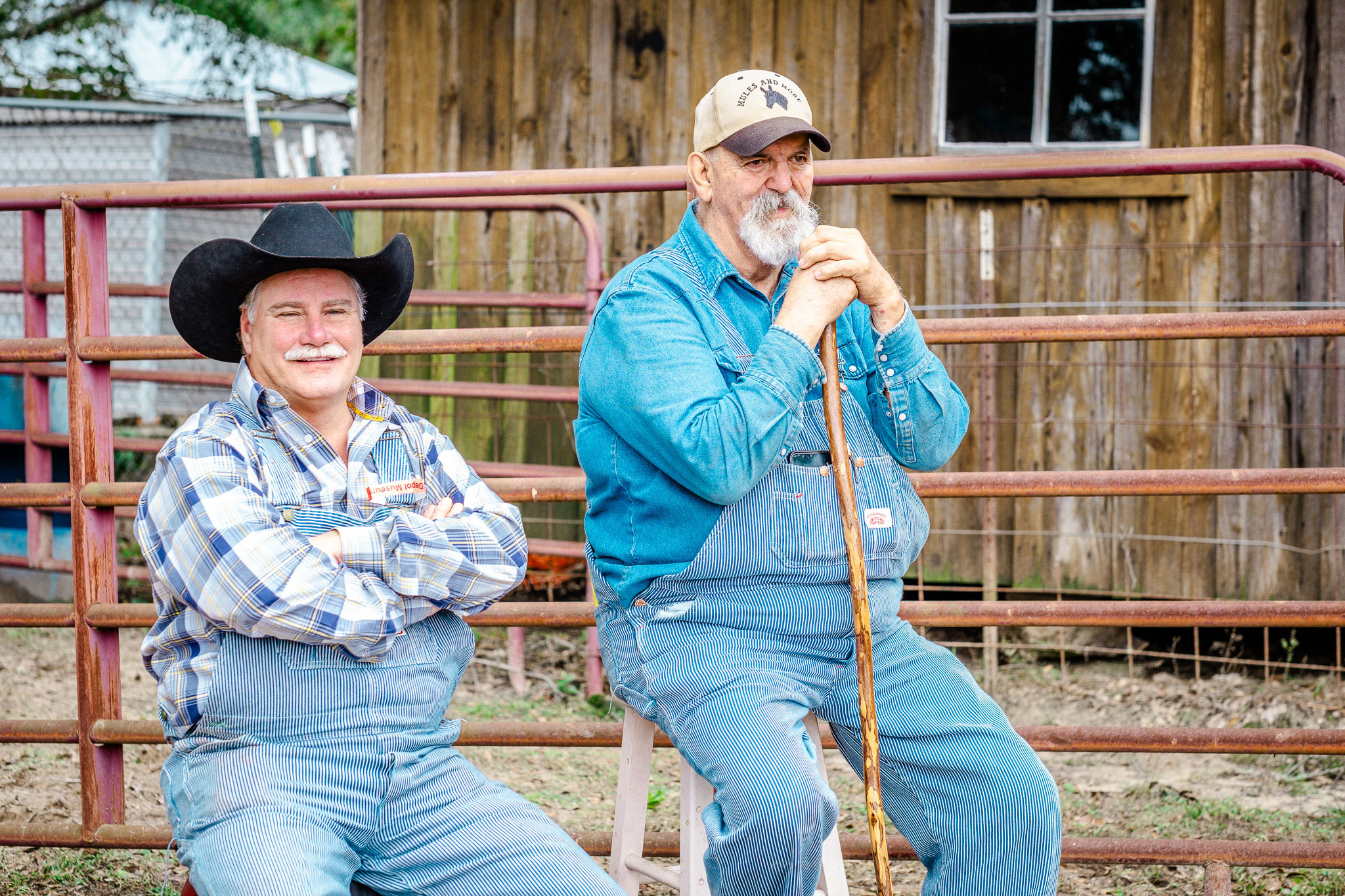
“We are elated about this,” says Armstrong, director of Henderson’s Rusk County Depot Museum and History Center, one of the hosts of the festival. The museum’s 5 acres is home to the event’s main attraction, an authentic small-batch syrup mill that is activated for the festival by a team of 26 trained volunteers.

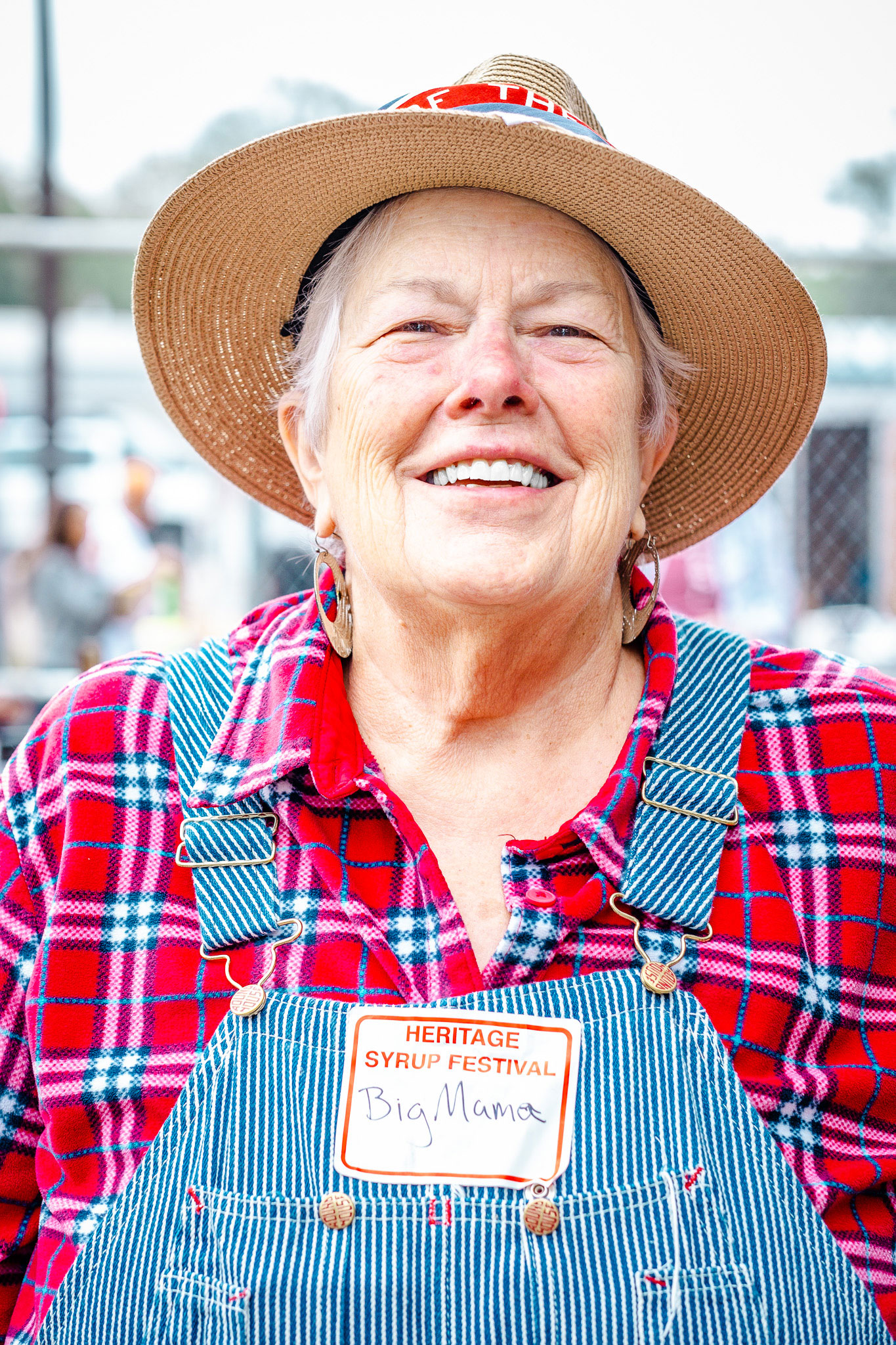
Along with syrup making and folk art demonstrations, the museum will have a petting zoo, folk singing, food, and beverages. Downtown’s Heritage Square will feature 300 vendors, antique cars, live music, cloggers, and square dancers. The event attracts 35,000 to 40,000 visitors, according to Alexa Duke of Henderson’s Department of Tourism, who says the Syrup Capital designation “reinforces our long-standing claim that our hometown festival is the ‘sweetest festival in Texas.’”
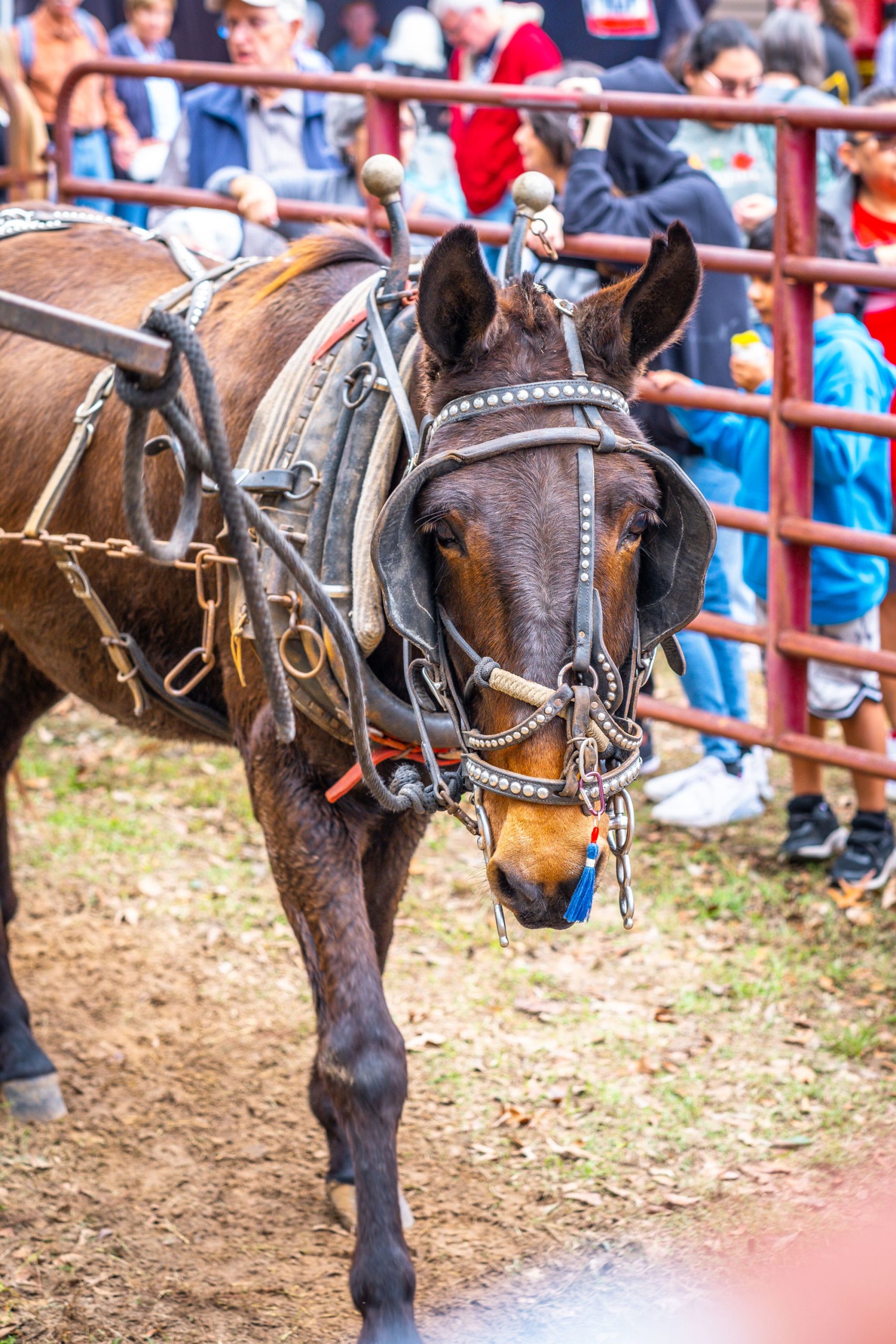
Freshman state Rep. Joanne Shofner of Nacogdoches introduced the resolution to make the Syrup Capital of Texas designation official. In it, she promoted the role of the museum’s mill at the festival, explaining that visitors “have the opportunity to observe the full production method, with beloved mules who power the crusher playing a featured role.”
Mark Wheat, a retired coal miner, is the festival’s syrup master and long-time team leader. “We volunteer for a full day—not easy. It’s hard work but we’ve got it down pretty good,” he says. Sugar cane, harvested by local farmers, is fed into a mechanized crusher to extract the juice, which drains into baffled boiling pans heated by a small wood furnace. Powering the crusher are two mules named Easter and Bunny, who rotate the rollers in the crusher by following an old-fashioned sweep pole.
When is the syrup ready? “It’s how heavy it is boiling. You don’t want to take it too far,” Wheat says. “Some might use a temperature thermometer, but we don’t do that. We just go by the look of it and how heavy the bubbles are.”
Over the years, festivalgoers have tasted authentic Rusk County ribbon cane syrup from the mill’s demonstration by dipping wooden sticks or plastic coffee stir straws into the brew. Alas, health regulations prevent the sale of the day’s bounty because of the presence of live animals—e.g., Easter and Bunny—but cans from a local source who uses the same historical process just without animals are for sale in a festival vendor booth. Year-round, the Depot Museum’s Country Store has a supply for purchase as well.
“When attending last year, watching the process of old-time syrup making was the highlight,” recalls Shofner, who will read her resolution at the upcoming festival. The Rusk County Syrup Capital designation is one of six successful state capital designations she introduced this past session, the most of any state representative—the other five are County Music Capital (Carthage), Bass Fishing Capital (Hemphil)l, Gateway Capital (Milam), Sawmill Capital (Pineland), and Garden Capital (a redesignation for Nacogdoches). “I hoped to highlight the unique charm of rural East Texas,” she says. In all, there are 94 current official State Capital designations, which are listed on the website of the Texas State Library and Archives Commission.
Recounting Rusk County’s agrarian past, Shofner’s resolution notes “one of the area’s most popular cash crops was sugarcane, the primary ingredient in ribbon cane syrup, which is named for the distinct bands of color that run along the stalks of some varieties of the plant.” The cane was cut and stripped from late October to mid-December for the rigorous syrup-making process involving entire families and fellow residents.
The East Texas oil boom of the 1930s and large-scale commercialization of sugar production in the South diminished the need for families to have their own sugarcane patches and small-scale local syrup mills, but the practice survived through local families.
“My grandfather cooked syrup until a few years before his death in 1980,” says Joan Smith, the county’s eminent historian, having served as chair of the Rusk County Historical Commission. “He raised ribbon cane, crushed the cane in his own mill on the farm, and boiled down the juice into syrup for his family and a few neighbors’ use.” She donated parts of the mill “that weren’t rusted” to the Depot Museum.
The state capital resolution addresses the local commission’s priority of preserving traditions, according to Smith. “We hope that we are training the next generation of syrup makers and that we can pass along our secrets,” she says. “So many folks are interested in self-sufficiency and that is how our ancestors in Rusk County lived.”
Of those forebearers is Vickie Armstrong of the Depot Museum. “They had to do a lot of hard work to make that wonderful taste,” she says. “I think about that when I have that special taste on Sunday morning.”