
More years ago than I care to remember, when my daughter was still young enough for me to hoist on my shoulders, I set out to paint her new bedroom in a brilliant shade of purple that only she could have chosen. No streaming back in those heady days, so to pass the time I popped a DVD of Giant into my laptop. With a 3-hour, 21-minute runtime, it was a practical choice, but as an amateur film buff, I was also trying to answer the eternal question: What is the greatest film ever made about Texas?
Released in 1956, Giant is the definition of the Hollywood epic, reminiscent in its ambition and scope of Gone With the Wind and a precursor to David Lean’s monumental films like The Bridge on the River Kwai. Shot west of Marfa off U.S. 90 and in the town of Valentine, Giant captures the delicate harshness of far West Texas with stunning cinematography—the limitless vistas that are pummeled by the wind and thirsting for water. In this daunting landscape, the members of the Benedict family carve out a ranching empire called Reata that sprawls across 500,000 acres as their old-time values collide with the realities of a changing world.
And with that story of empire comes the age-old themes: power and the powerless, race and class, gender and inequality, and the colliding values of one generation over the next. In short, the very themes that Texas struggles with today. Giant remains one of the most influential portrayals of our state on the big screen, and fans can still visit many of its historic locations today.
Of course, part of Giant’s enduring fame is that it brims with Hollywood royalty: directed by George Stevens (not a Texan); starring Elizabeth Taylor (not a Texan), Rock Hudson (not a Texan), and James Dean (not a Texan); and based on a novel of the same name by Pulitzer-prize-winning author Edna Ferber (not a Texan). I point that out not to be flippant—I’ve simply been around long enough to know that Texans and non-Texans alike have equal opportunity to misunderstand or misrepresent our state.
But it does explain the initial reaction to Giant. Consider how New Yorker writer John Bainbridge summarized the novel in his 1961 book The Super-Americans, a de Tocqueville-like study of the singular culture of Texas millionaires: “Few documents since the Emancipation Proclamation have stirred as much commotion in Texas as Edna Ferber’s novel Giant. . . Ever since the work was published, in 1952, Texans have denounced it like sin.”
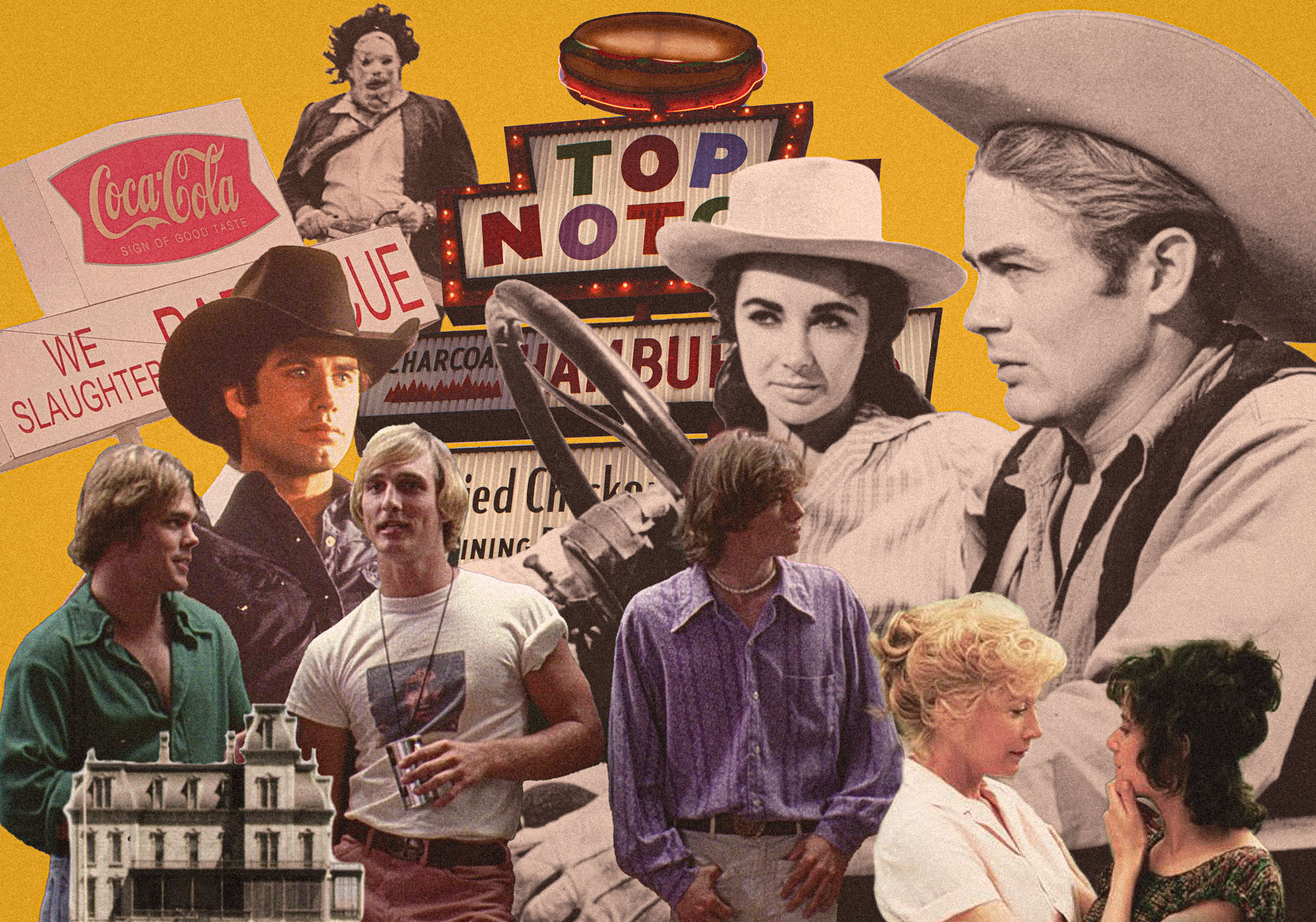
REEL TEXAS
We’re revisiting the classic films that shaped the mythos around the Lone Star State

This was in how she described our culture, our dress, our attitudes, our history, our . . . well, you get the idea. Texans bristled then, as Texans bristle now, at the thought of an outsider coming in and telling us about our business. One joke at the time stated that as Ferber was flying across the state, she sent a note to the pilot. “Please fly a little lower,” it read. “I want to write a book about Texas.”
But then a funny thing happened on the way to the Academy Awards. Texans fell all over themselves to buy the book, and they lined up in droves to see the movie. A full year after the film’s release, movie palaces and drive-ins and “second-run theatres” were jockeying to show Giant. “Again, Texans flocked out for their beating in the guise of entertainment,” wrote Jim Mathis of the Houston Post in 1957. “They even laughed as the knife operated.”
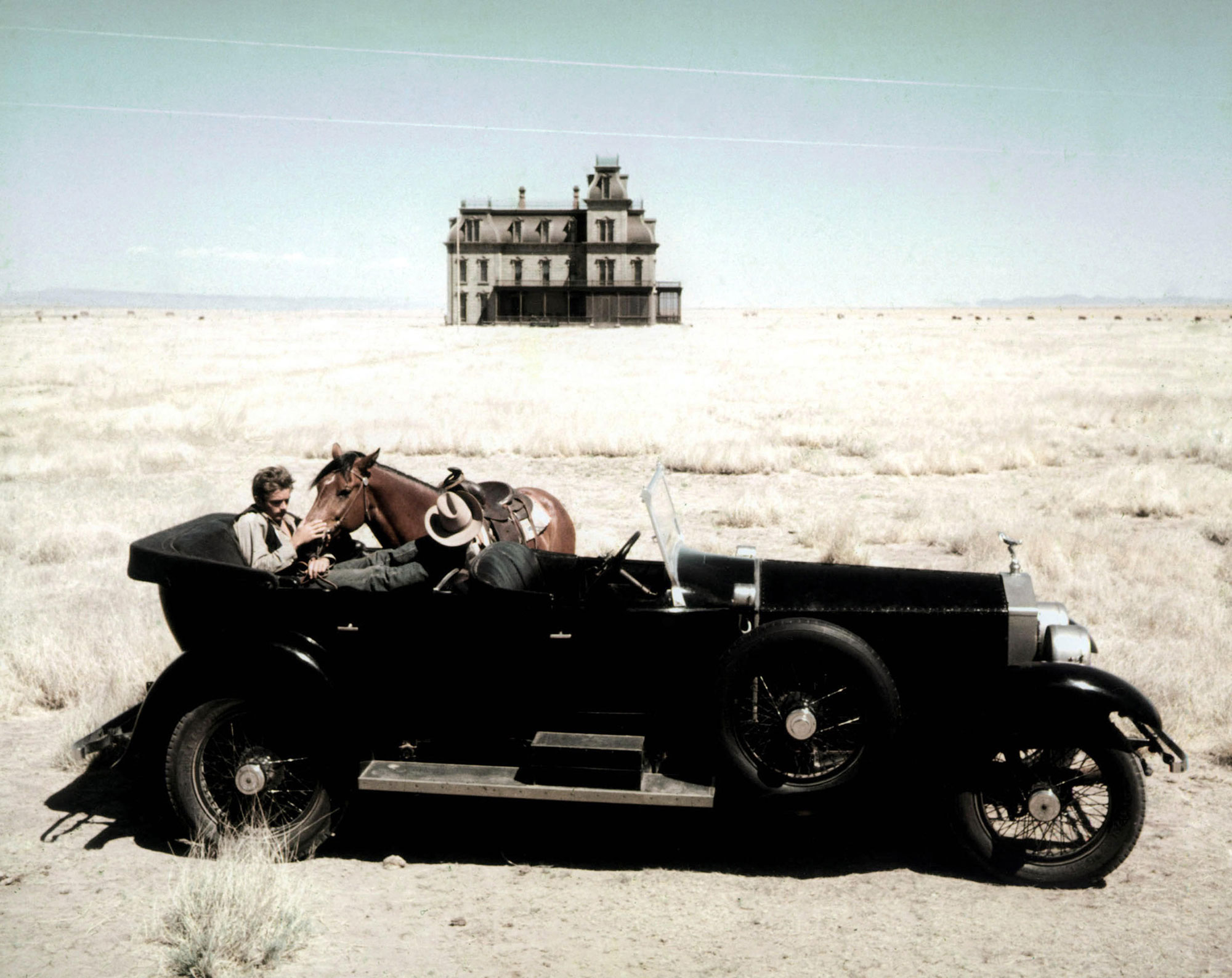
The film opens (after an homage to cattle) with Rock Hudson’s character, a young bachelor named Jordan “Bick” Benedict, traveling by train from Texas to the lush, green pastures of Maryland to buy a darn-near-unbreakable stallion named War Winds. What he also finds is Elizabeth Taylor’s character, a darn-near-unbreakable woman named Leslie who is set to marry a British gent and move to England. It’s all very East Coast; at a white-tablecloth dinner at the Lynnton estate Bick refers to Texas as “almost a different country.” But the point is obvious enough: All eyes are on Bick to explain what his home is really like. Here, Texas is a strange and exotic location.
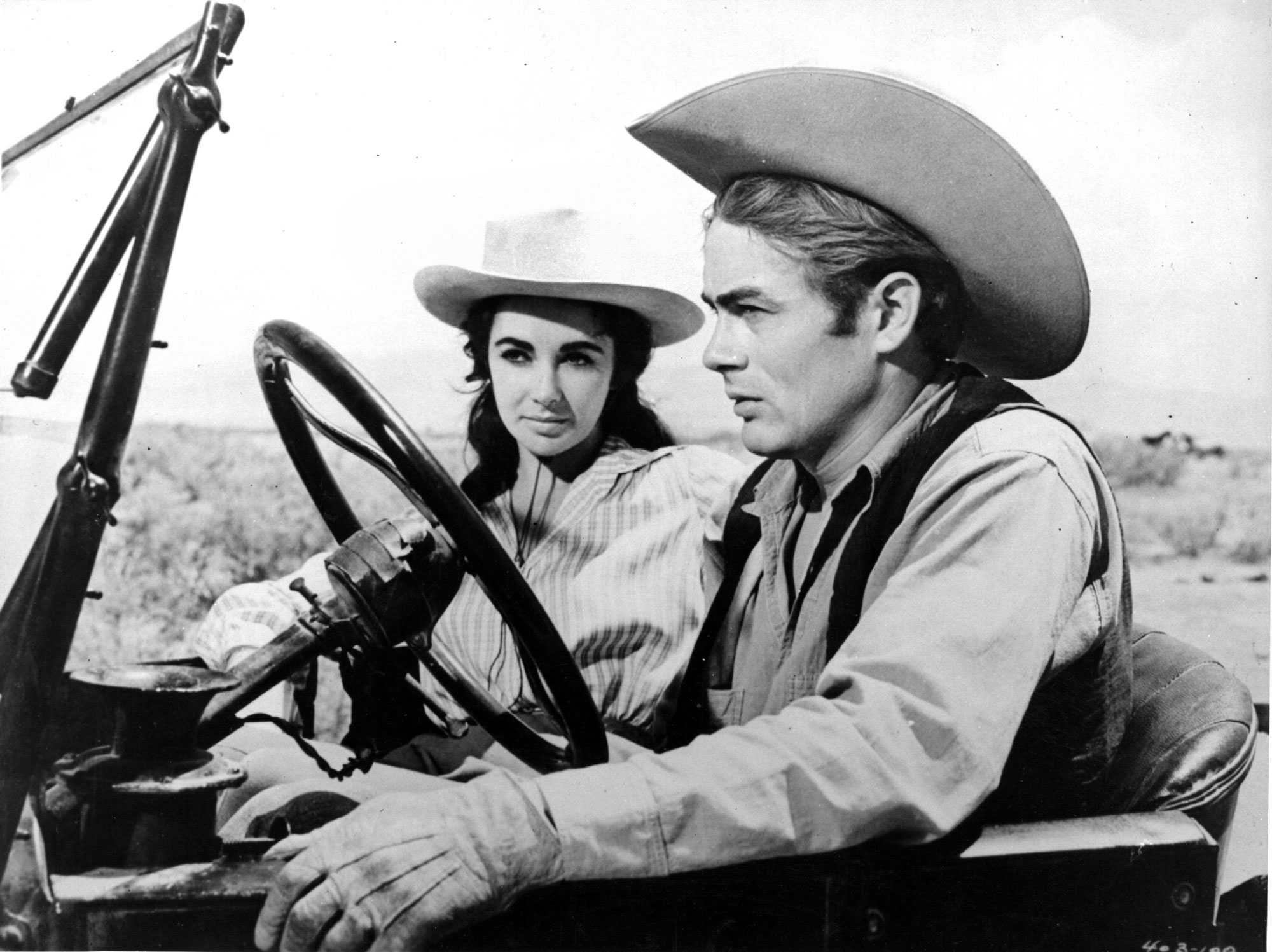
Shocking as it might be, it’s love at first sight for Bick and Leslie, and soon the newlyweds are on the train back to Texas; it might as well be Mars. Hudson, with his imposing size and singular looks, shines as the heir to Reata whose sacred duty it is to grow and protect it. Taylor is stunning and luminous, both independent-minded as a woman and compassionate toward the poor, neglected Mexican ranch hands and workers who keep Reata running but are relegated to their own village and their own survival. Her husband, at least at the outset, is not so enlightened.
And then there’s James Dean, who plays the role of the pushed-around, picked-on, perpetually aggrieved Jett Rink, a lowly laborer at Reata who can’t gain Bick’s respect (and, no surprise, falls hard for Leslie). It’s a curious choice by Stevens that he shoots so many of Dean’s scenes from the side or with his hat tipped down or his face obscured in shadow, all of which is designed to add an air of mystery to the character who will become the film’s villain. And though Dean has some of the most iconic scenes in the movie, I find him to be—as I do in Rebel Without a Cause—too moody, too withdrawn, too weak to be inspired by the force of his character.
What I do love about Giant is that it pivots off a watershed moment in Texas history: the transition from the Cattle Kingdom to the Age of Spindletop. Land and cattle helped propel the Texas economy after the Civil War, but the discovery of oil brought an unimaginable level of wealth and influence that still drives the power elite today. So when Bick’s iron-willed sister Luz, who manages the day-to-day operations of Reata, is thrown from War Winds and dies, her soft spot for Jett had prompted her to include him in her will, leaving him a “little ol’ piece [of land] we used to call Buffalo Wallow.” It’s a kind gesture, but it becomes the film’s inciting incident. Bick doesn’t want Reata broken up, and he certainly doesn’t want part of it owned by Jett. Bick offers to buy Jett out and send him on his way, naming an amount far more than the land is worth.
But if there’s one thing that any true Texan knows, it’s this: Land is the state’s most valuable currency, not money. Jett refuses before learning that there’s oil on Buffalo Wallow. Now the real race for money and power begins, one that will lead to a final confrontation between Bick and Jett, but one that will open wide the more important tension in the movie: the fraught relationship between white Texans and Mexicans.
There are so many memorable moments of dialogue and staging in the film, but what is remarkable to me is Stevens’ restraint. There are no gun fights on Main Street, no dramatic chases on horseback, no lost calves saved at midnight during a torrential downpour. In the film’s climatic fight scene, Bick tangles with the owner of a diner who refuses to serve a Mexican family—and loses. And the final triumphal scene doesn’t end on a spasm of violence that brings swift justice; it’s the camera lingering on Bick and Leslie’s grandchildren sharing a crib: one Anglo, one Mexican.
It’s easy to make too much of a film based on its reception at the Academy Awards. Giant received 10 nominations, including best picture, best director, and best actor for both Hudson and Dean (who died before the film was released and received a posthumous nomination). It’s notable and unfortunate that Taylor was overlooked, and in the end, only Stevens won.
So what to make of Giant today? It may be dated in all the ways you would expect of a film that will celebrate its seventieth anniversary later this year. Yet it remains a film you have to see, even if it’s not one you’re likely to watch over and over again late on a Friday night. Instead, it’s closer to that college volume of Shakespeare you keep on your bookshelf. You rarely take it down and read it, but you’re glad to know it’s there.
Regardless, Giant’s lasting cultural appeal is hard to shake. In Jett’s final scenes, in which he throws a lavish party in his own honor at his own hotel (modeled after the famed Shamrock in Houston), the initials “J.R.” appear everywhere. Yes, you guessed it—that inspired the name for J.R. Ewing, the oil baron your parents loved to hate in the television show Dallas, a character who has routinely been ranked as the greatest television villain ever.
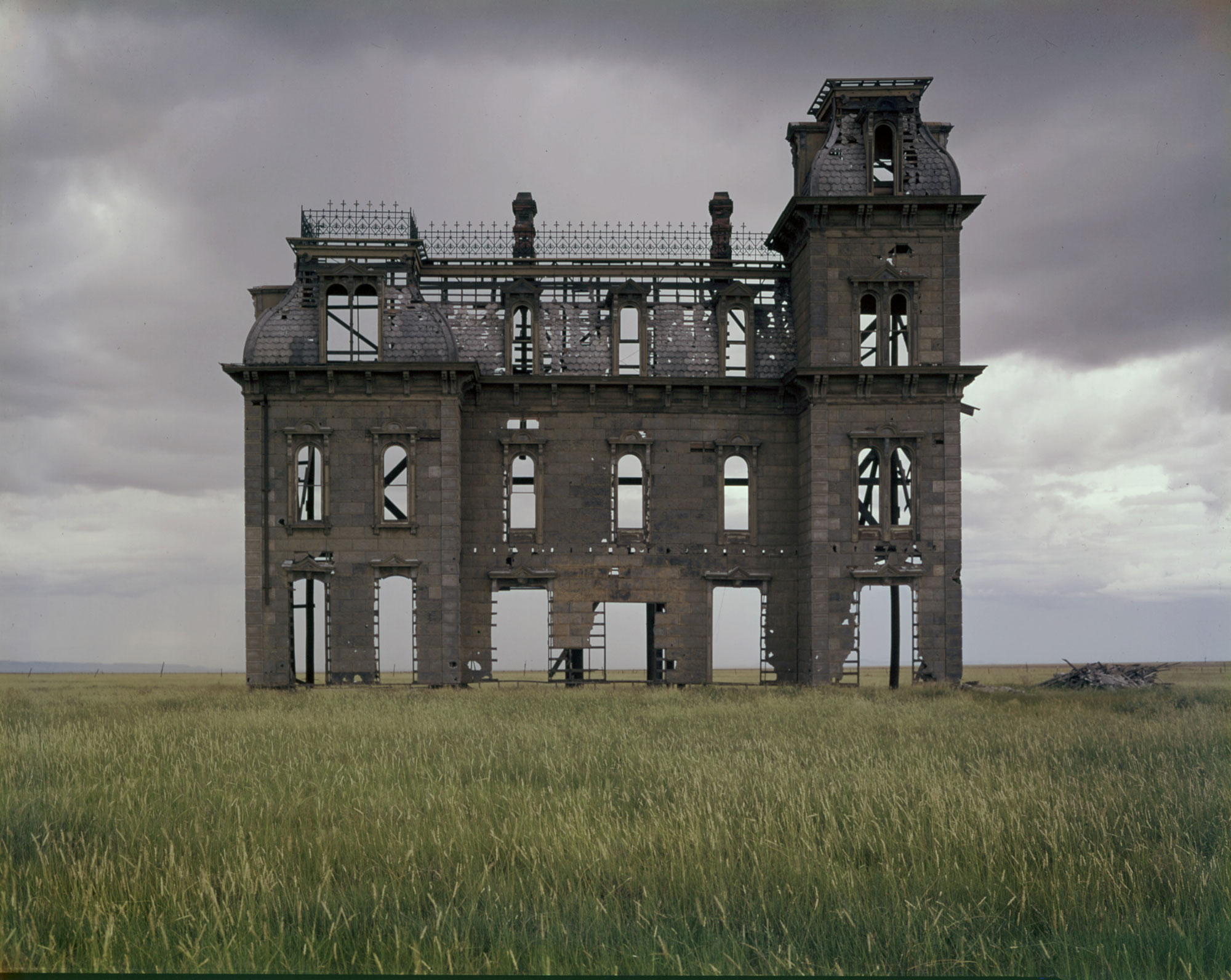
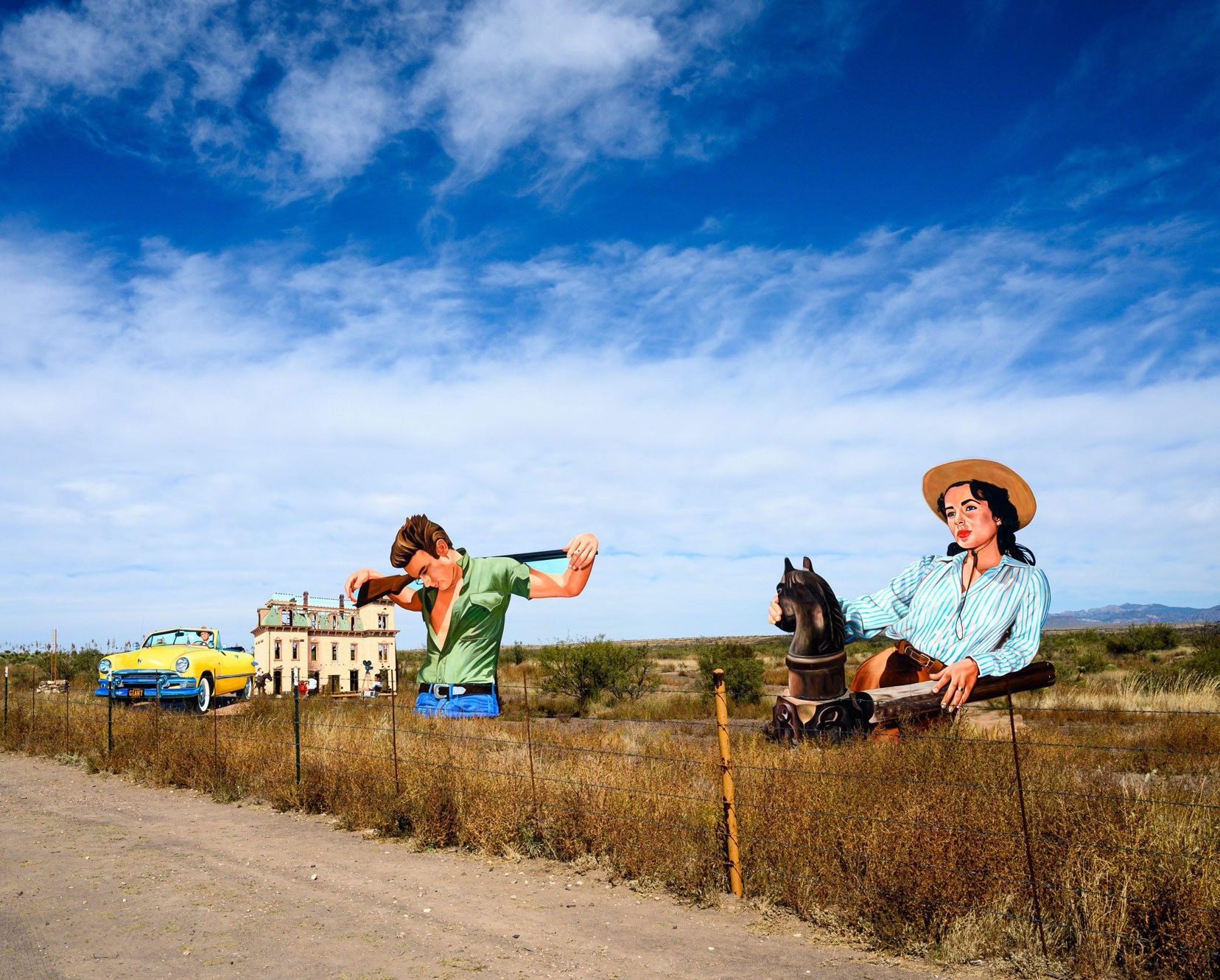
The old façade of Reata, which was erected approximately 20 miles west of Marfa on the way to Valentine, stood for decades after filming until, like the monument to Ozymandias, it crumbled away. An iconic image of not only the movie but Texas culture in general, it pops up in all kinds of places, from Billy Lee Brammer’s 1963 novel The Gay Place to the 1985 roadtrip movie Fandango. But there’s plenty of places left to experience Giant first-hand. Marfa’s elegant Hotel Paisano, which served as a home base for the cast and crew, is filled with photos and memorabilia from the movie, and you can reserve the “James Dean Room” or hang out in the lovely fountain patio where the stars would gather in the evenings. And just seven miles west of town on U.S. 90, a new monument has been erected. In 2018 the artist John Cerney installed a roadside mural that stands as a worthy tribute to the stars of the film. Cerney added new pieces in 2024, bringing fresh life to the classic film and making a fitting destination the next time you’re roaming across this giant part of the state.