
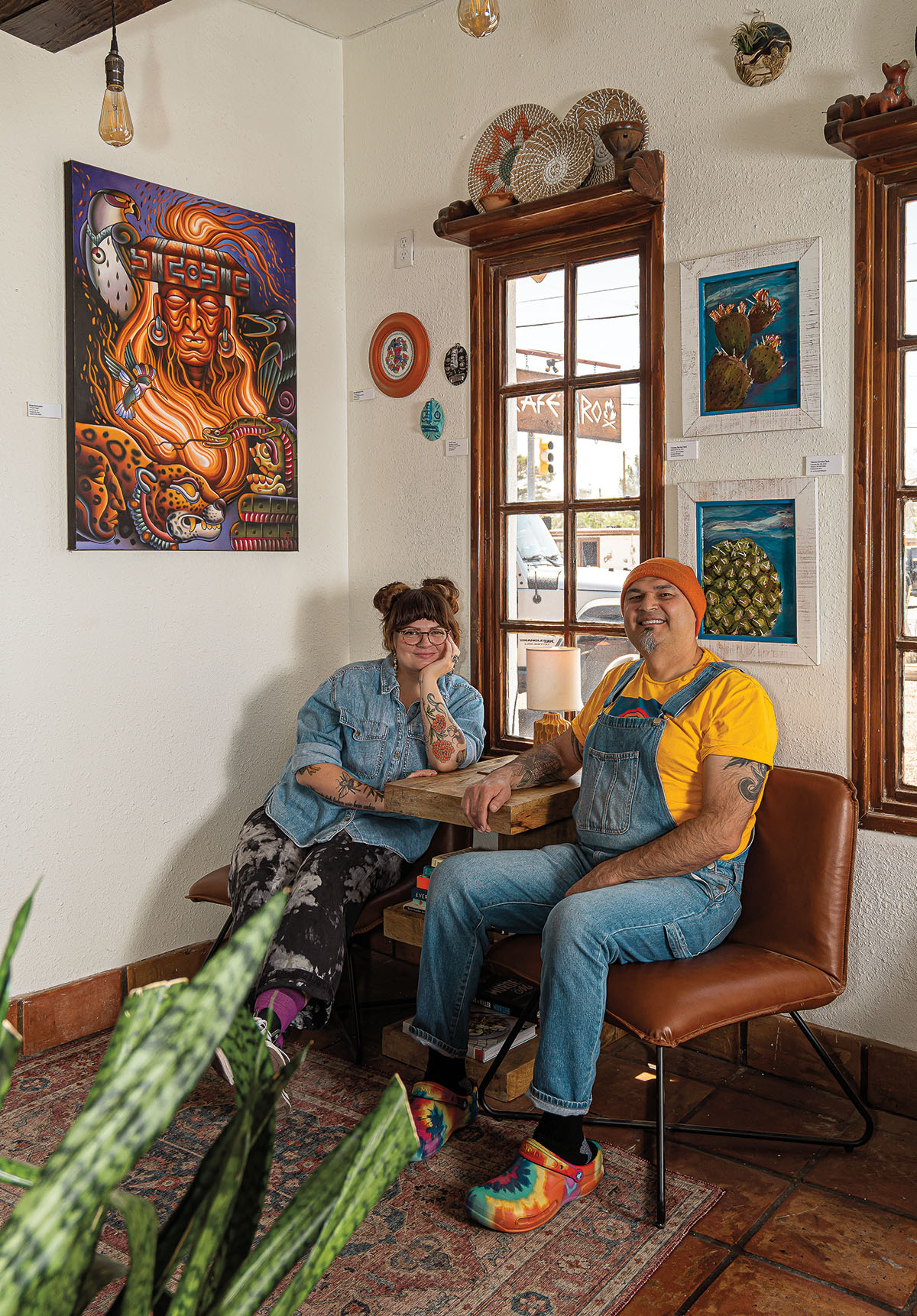
There isn’t much commotion in Socorro, a dusty, quiet cove on the El Paso Mission Trail, 18 miles southeast of the city. Outside of a Vatican-authorized replica of Michelangelo’s Pietà and a sign lionizing the 2009 state high school baseball champions, the town of nearly 40,000 residents remains fairly quiet. But with only about a dozen restaurants, Socorro has reason to celebrate a striking newcomer. Located across the street from one of the oldest continuously operating missions in Texas, Café Piro functions as a different sort of sanctuary. Opened in 2023 by Gabe and Melissa Padilla, the restaurant inside a “fauxdobe” structure is helping to preserve Gabe’s Piro lineage, as well as the town’s Indigenous roots.
A self-proclaimed “black sheep” for not speaking Spanish as a child in his hometown, Gabe began rediscovering his heritage in 2016, when his grandmother became ill and began sharing stories of a background she’d kept secret most of her life. A Piro who descended from the Pueblo tribes of New Mexico, her late ancestral lessons became a spark for the Padillas to look to the past for their upcoming restaurant. Additionally, the couple was inspired by a Spanish maxim painted on multiple buildings in Socorro: ni de aqui, ni de alla, neither from here nor there. It captures a frontera worldview
and the spirit of the food served at Café Piro, which is neither Mexican, Texan, or New Mexican. As Gabe says, “El Paso is a whole different beast.”
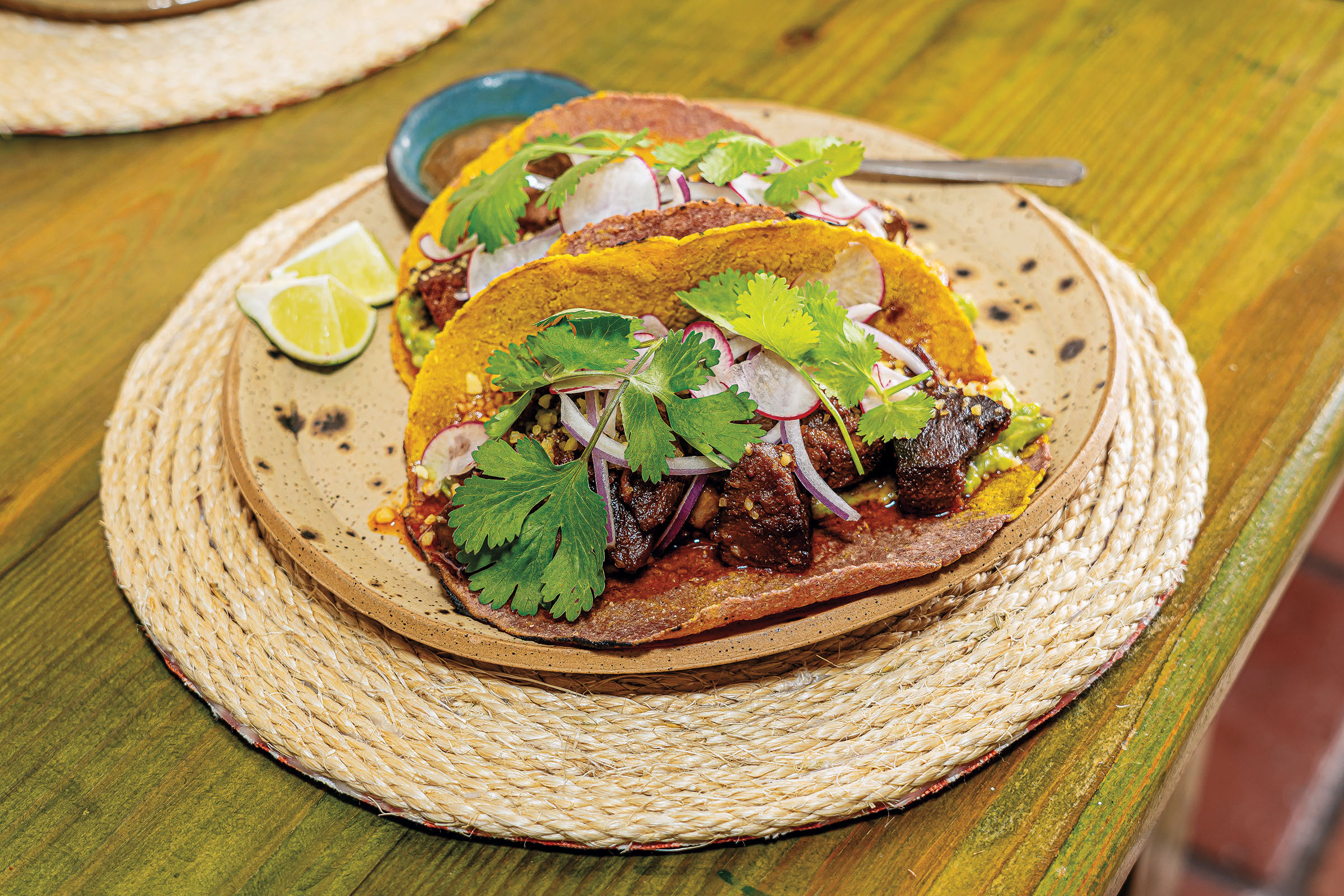

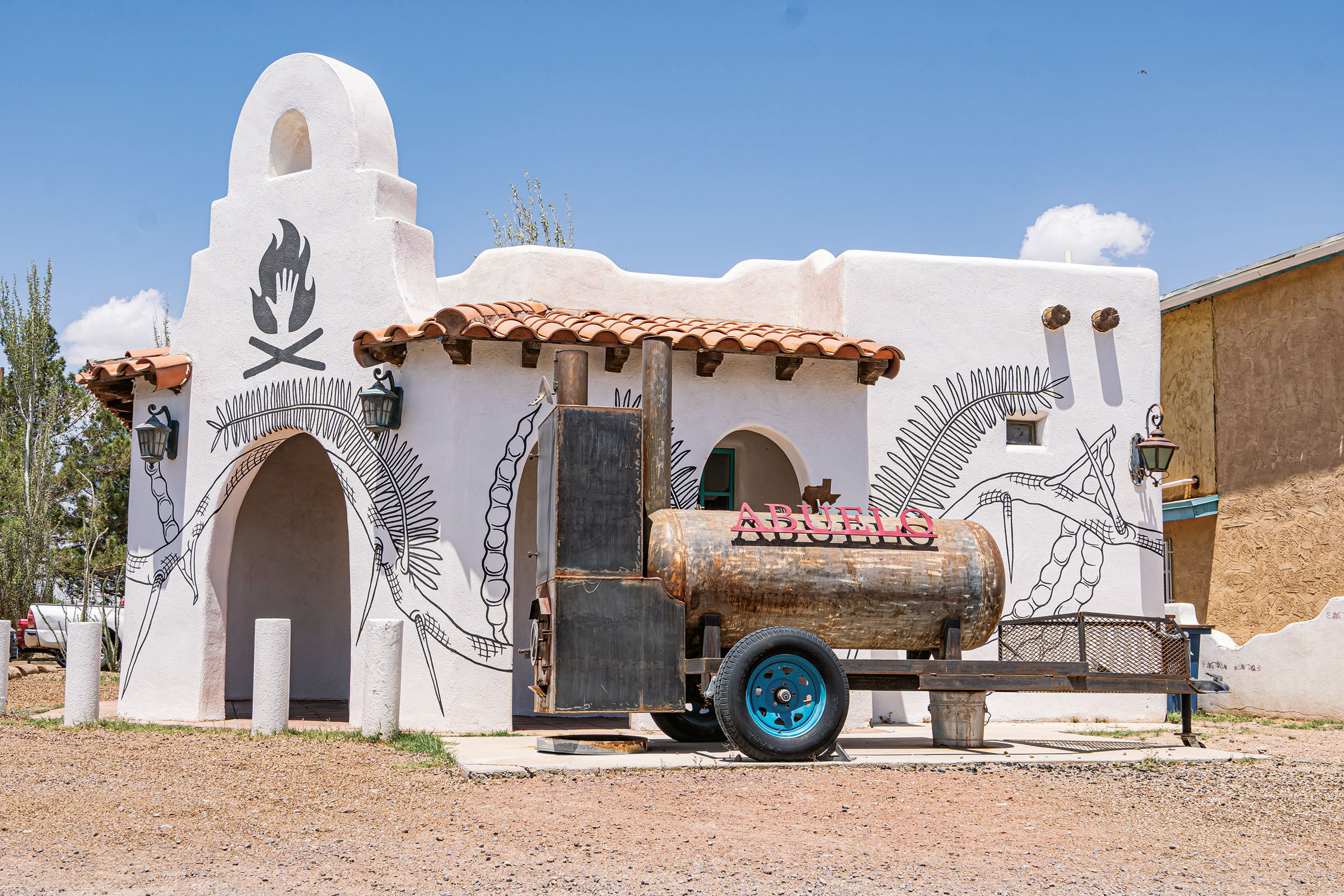
While Melissa focuses on the coffee and pastry programs, such as crafting the pig-shaped Mexican cookies known as marranitos, Gabe stays busy in the kitchen making freshly pressed heirloom tortillas—like a beet-infused red corn variety—that are the foundation of an inspired vegetarian menu. A smoker in front of the restaurant, embossed with the nickname “Abuelo,” might be misleading to the casual observer. Forged from the propane tank that powered Gabe’s grandparents’ house for 40 years, the device has almost nothing to do with slow-cooked meats. Instead, the chef utilizes the pecan wood smoke to enhance the flavor of salsas and dishes like a papaya mole. The couple determined that their café would better serve the community with healthier fare that starts with seasonal fruits and vegetables from nearby purveyors and the pomegranates, pecans, and figs they grow at their home.
Regulars like Sheri Sainz, who visits Café Piro weekly, say they appreciate the menu in an area where kids are welcome and vegetarian options are scant. Desserts like Melissa’s brownies with beet-cream cheese frosting and smoked peanut butter mole burritos are particular favorites. Another loyal customer, Annie Perez, sees the café as a crucial addition to an often overlooked community. “For so long, this area was neglected,” she says. “People just don’t think to come over here, except for the trails. Now, the restaurant is bringing people to our history and our culture.”
Even though Socorro was founded by Piro refugees, along with the Spanish, in 1680, there hasn’t been much organized effort to preserve that heritage in its dining options until now. Taking to heart traditions like seasonality, Gabe prepares unique options like his mole flights, including a fall tulaé. Named after the Tiwa word for “autumn,” the sauce is made from plantains, yellow jalapeño, and squash. There’s also the chef’s kiaé, named after the Tiwa word for “mother,” which bears remnants from every mole he’s made since opening the café. “It easily has more than a hundred ingredients,” he says, citing pepitas, figs, black cherries, beets, and smoked peanuts, as just a few of the components.
Because most Piro records were lost during the 1680 migration from Socorro, New Mexico, or destroyed in floods and fires, no one truly knows why the Piros avoided joining other tribes in the Pueblo Revolt to resettle in present-day Texas. Gabe suspects it had to do with self-preservation. Whether it’s educating guests on his native language or joining related tribes for friendship dances in celebration of Piro Pueblo Guadalupe Feast Day, the Padillas are putting history back together and preserving nearly-lost traditions. “When we opened the café, it was like, ‘What are we going to open here that’s for the people, from the people who were here first?’” Gabe says. “We have that connection, and we are going to proudly display it.”