

When she was 6 years old and peeling and deveining shrimp for a penny a piece in the back of her parents’ San Antonio restaurant, The Conglomeration, Jennifer Hwa Dobbertin could’ve never imagined a future as a chef. Or at least a happy one. While other kids her age were off having after-school fun, Dobbertin was either doing her part to keep the business afloat or stuck in a back office doing homework.
“It wasn’t a fun childhood,” she recalls. “I was a latchkey kid of the ’80s: If I wasn’t at home being tortured by my brother, I was at the restaurant being tortured by boredom.”
Today, Dobbertin has overcome that early anguish to become a three-time James Beard Award semifinalist and one of the most celebrated culinary figures in South Central Texas. At her restaurant in San Antonio, Best Quality Daughter, she’s conjured joy by combining the influences of her Chinese American household, the South Texas cuisine she grew up eating, and even lessons learned from the inner turmoil that began to snowball when The Conglomeration ultimately failed and tore her family apart.

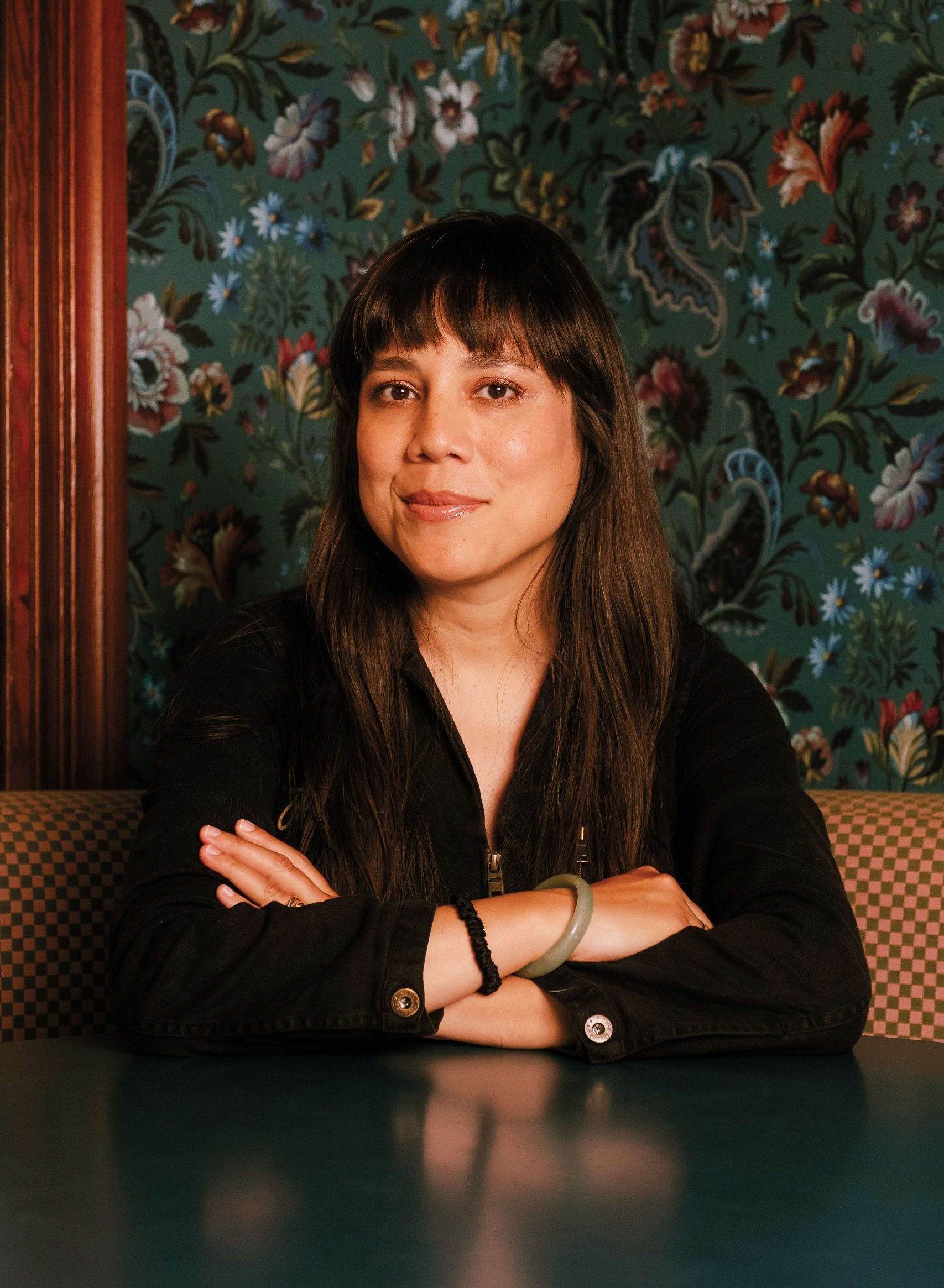
Following the restaurant’s closure and her parents’ divorce when she was 10, Dobbertin tried to distance herself from the industry and her family, going to the extremes of moving to Bangkok to teach after graduating from Texas A&M University with a psychology degree. But some ties simply run too deep. Dobbertin’s maternal grandfather was a Chinese pastry chef, her grandmother a cook, and her uncle a noodle hawker who she helped during her childhood summers in Taiwan. Food was also the ever-present olive branch in an otherwise challenging relationship with her mother.
“My mom was a great cook,” she says. “It’s her love language, which is very typical of Asian mothers. Nourishing their children is their way of reaching out—even when they’re hard in so many other ways.”
As much as she attempted to fight it, the cooking gene was firmly ingrained in Dobbertin. Drawn out by the native cuisine of Thailand and her efforts in the kitchen abroad, she returned to San Antonio in 2011 and immediately took a job as a line cook at the now-shuttered Monterey in Southtown. Against her mother’s objections, she excelled in the restaurant space, filling her scant downtime by creating a catering company that focused on soup, as well as several dining pop-ups like the Riff Raff Supper Club. Her subsequent involvement as a cook at Hot Joy, a Bon Appétit Best New Restaurant of 2014, caught the attention of the owners of The Pearl, who entrusted her with creating one of the food hall’s first concepts: Tenko Ramen.
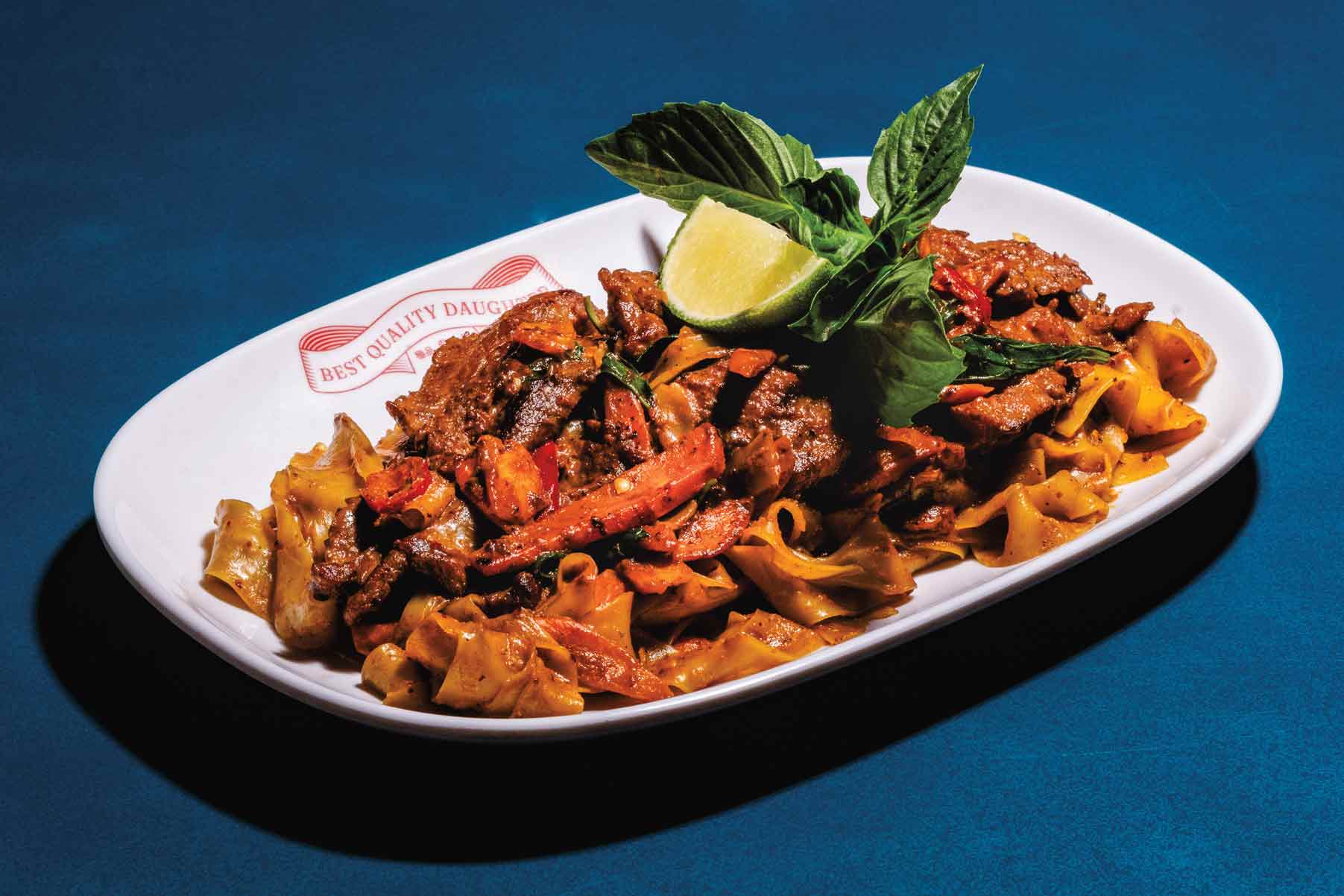
When finally given the opportunity to open a full-fledged restaurant in 2020, Dobbertin approached it with her trademark moxie and attitude. Hiring architect Vicki Yuan and visual artist Jennifer Ling Datchuk, she created a more feminine space, heavy on pinks and jewel tones, that emphasizes the contributions of Asian women artists. Named after a line in the novel The Joy Luck Club, Best Quality Daughter is like a memoir in culinary form. Lessons she learned from her mother are present on the menu, albeit with a sense of Texas spirit and youthful rebellion. Pot stickers are stuffed with chorizo, egg, and cheese to mimic the flavors of a breakfast taco. The typical Asian spices present in dan dan noodles are joined by wagyu carne guisada braised with cumin, Mexican oregano, soy sauce, and Shaoxing wine. There are also vestiges of her formative years in Thailand, funneled through the prism of her San Antonio roots, most apparent in the drunken noodles with a red curry mole featuring deep-fried sunflower seeds, pasilla peppers, fish sauce, and coconut cream.
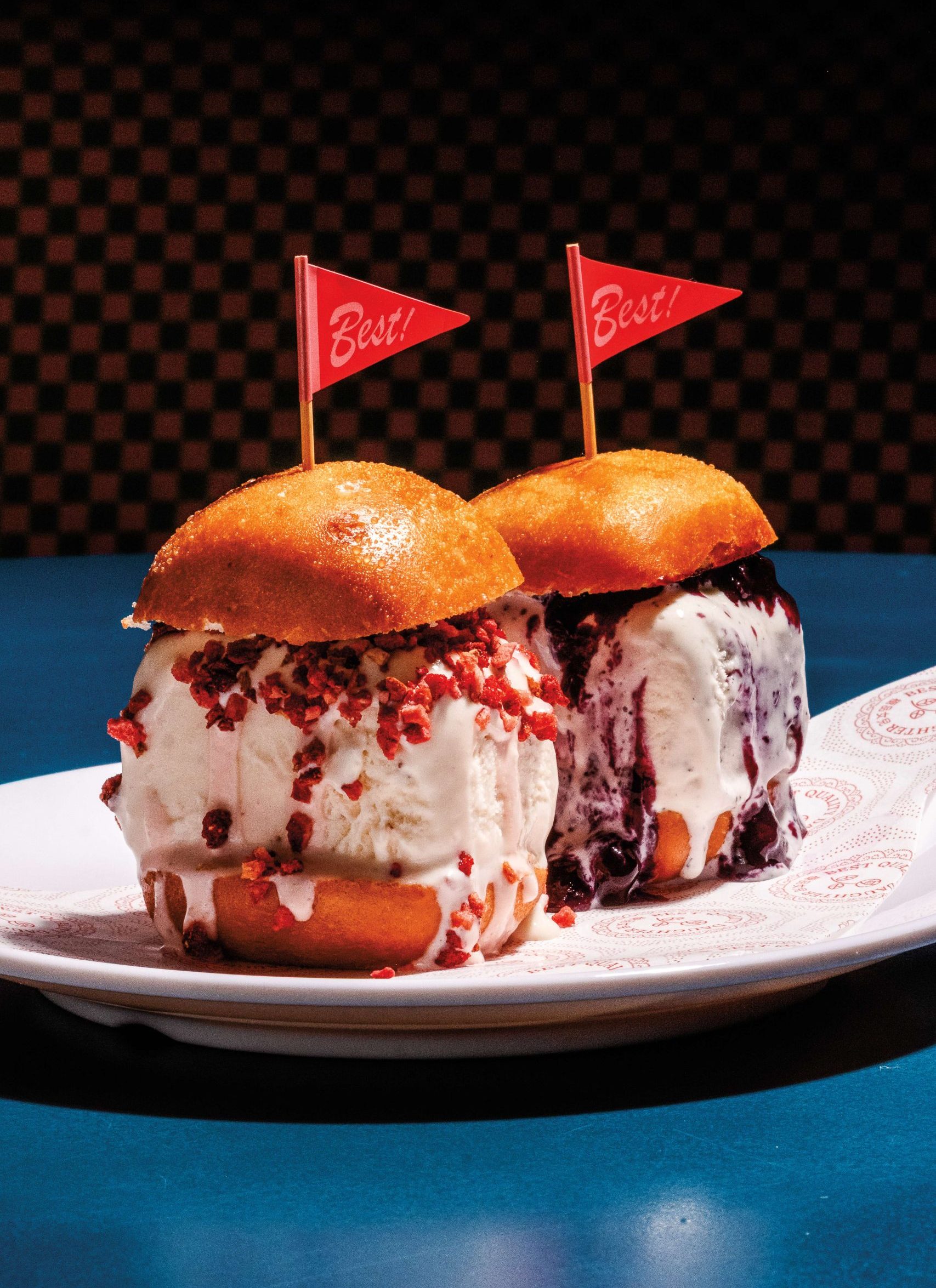
Best Quality Daughter embodies a perspective so singular to Dobbertin, it’s almost unfair to call the cuisine fusion. The food is simply the chef personified—an approach she’s taking into her follow-up effort at Pearl: Jue Let. A cocktail lounge with retro-inspired bites like Crab Louie onigiri and pizza-flavored bao dumplings, it’s christened after the Chinese nanny and cook who helped raise James Beard.
“I knew nothing about James Beard until I was nominated [in 2023] for an award named after him,” she says. “So, I bought all these books and did a deep dive on his life. One of the first things I learned was that he credits his love of food to Jue Let. It’s incredible to think that James Beard would not have been what he became if it weren’t for a Chinese immigrant.”
Like the Amy Tan book that inspired the restaurant appellation, so much of Dobbertin’s career has been influenced by the sometimes contentious relationship between Asian mothers and their first-generation American daughters. But that has softened over the years for Dobbertin. Her mom often stops by for takeout from Best Quality Daughter, and Dobbertin turned to her for advice when developing Jue Let. One fortuitous thing that came out of those conversations was the realization that Let’s name hints at the emotions elicited by her own cooking. “According to my mom,” she says, “his name means ‘to experience joy.’”