

Despite its name, The Hotel Ritchey is not in fact a hotel. There is no neon, no grand lobby, no concierge—just a modest wooden sign and a rumbling bass line spilling into the street. Gravel crunches underfoot as you approach, and the porch steps creak like they have for over a hundred years.
the hotel ritchey
102 E. Murphy Ave., Alpine.
theritchey.com
Step through the weathered doors, and you might find a bartender chatting up a regular while pouring a margarita, the gentle hum of a guitar being tuned in the corner, or a group of friends playing cards.
It’s an unlikely centerpiece for Alpine, the largest town in the tricounty region—albeit one considered a tourist afterthought when compared to Marfa or Big Bend National Park. Despite Sul Ross State University’s presence, Alpine has struggled to establish itself as a destination in its own right. Yet that perception is starting to shift.

A new chapter in this far West Texas town is being written by a group of locals who came together not just to revive a building, but to energize their town with music, food, and community. Built in 1886 as an adobe railroad hotel, The Ritchey once catered to cowhands driving herds to the Southern Pacific line. A wraparound wood-frame addition came in 1908, and at its peak, The Ritchey boasted a saloon and six rooms on the ground floor, with nine more upstairs.
By the mid-20th century, as Interstate 10 replaced the rail line, the hotel transitioned into a boardinghouse before slowly falling into disrepair. In 2012, local resident Mattie Matthaei bought the crumbling structure and began restoring it, reopening the building as a wine saloon and beer garden in 2018. Despite initial enthusiasm for the project, it suffered in the aftermath of the pandemic and was soon foreclosed on.
That’s when local philanthropist and former Front Street Books owner Anne Callaway stepped in. Teaming up with David Keller, a historian known for restoring adobe buildings across the Trans-Pecos region, the duo purchased the property in 2022. Working with the architecture firm MUDLAB Marfa, they reengineered the leaning, rickety structure, taking particular care to highlight the exposed adobe and clean white trim.
“You don’t impose your own aesthetic on a place like this,” Keller says. “You just serve good cocktails and let the building do the rest.”
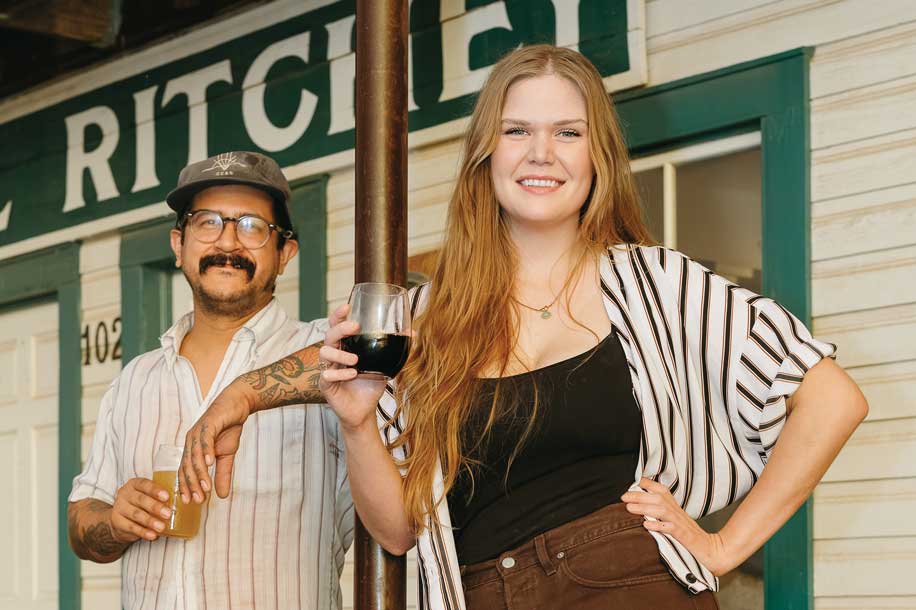
To spearhead the cocktails and hospitality part of that equation, Callaway and Keller approached Cedar Coffee owner Mateo Mares and Sam Stavinoha, known around the area for transforming the French Co. Grocer in Marathon into a dining destination in the unincorporated town. These conversations began at a Monday night jam session at Mares’ Alpine home—fitting for a project where live music has become such a focal point.
“In Alpine, the only underground music scene in town was at Sue’s Inn,” Mares says, alluding to a venue named after a black mouth cur where musicians might occasionally host a house show. “We wanted to create something that felt like a living room—A space where you come in for happy hour, end up staying for three hours, and run into someone you didn’t expect to see. Something our small town could be proud of.”
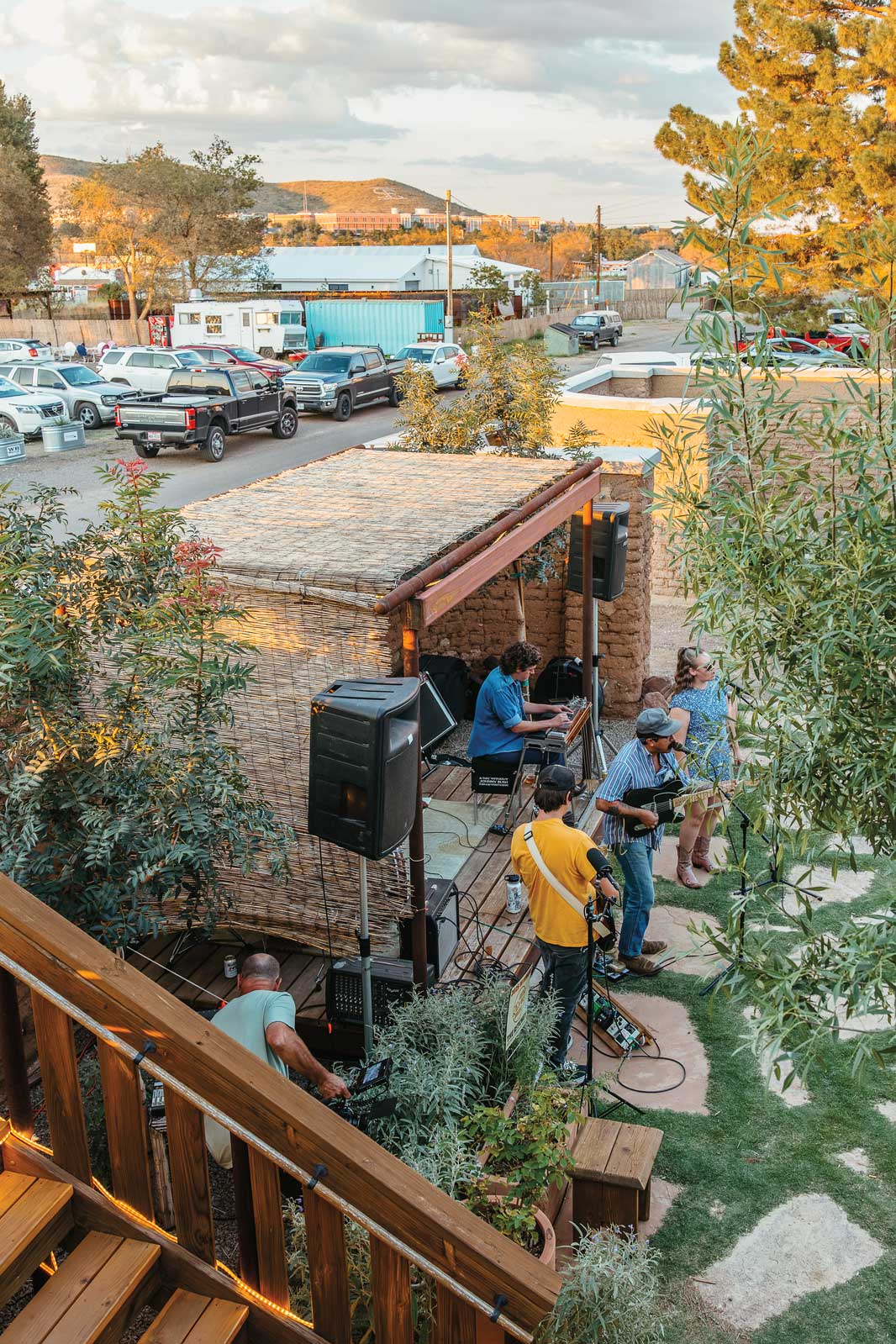
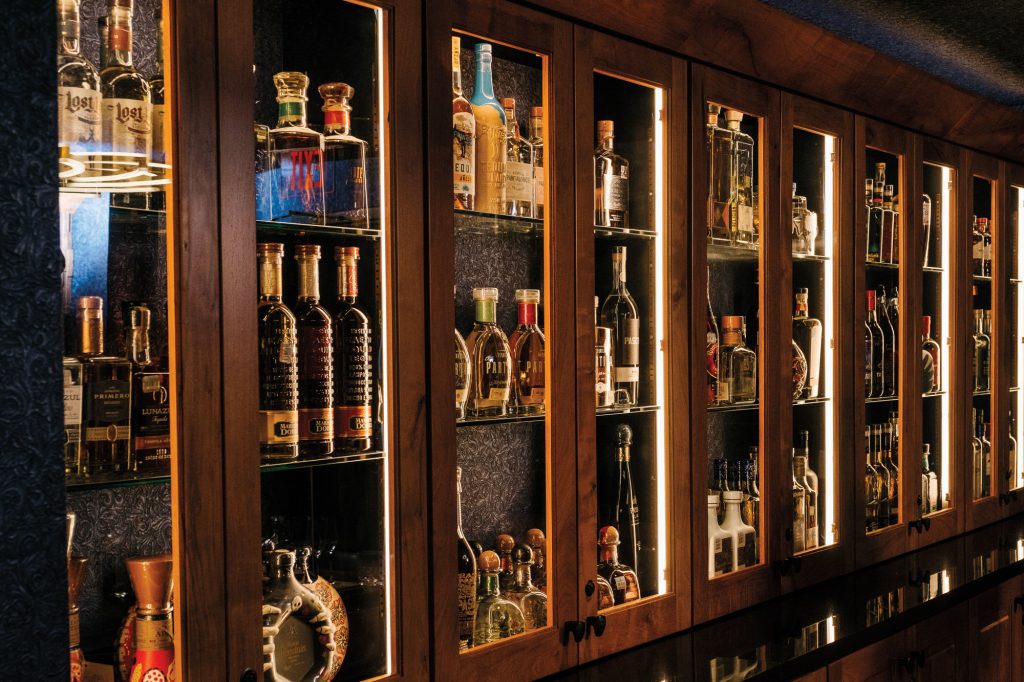
Now, on any given night, you might find a classical trio playing cello and violin, a folk duo from Austin, or a Canadian honky-tonk group whooping it up and rattling the glinting menagerie of bourbon, mezcal, and Japanese whisky bottles behind the handcrafted wooden bar. In service of its eclectic spirits collection is a beverage menu that implores at the bottom: “Support Live Music.” Sandwiched between classic cocktails are in-house creations like the spicy, mezcal-forward El Diablo and the ginger ale and vodka blend fittingly named John Prine’s Tears. But make no mistake, the bar will accommodate any request, even if the staff must crowdsource the recipe. That’s The Ritchey, where growth and progress is valued over any ideals of perfection.
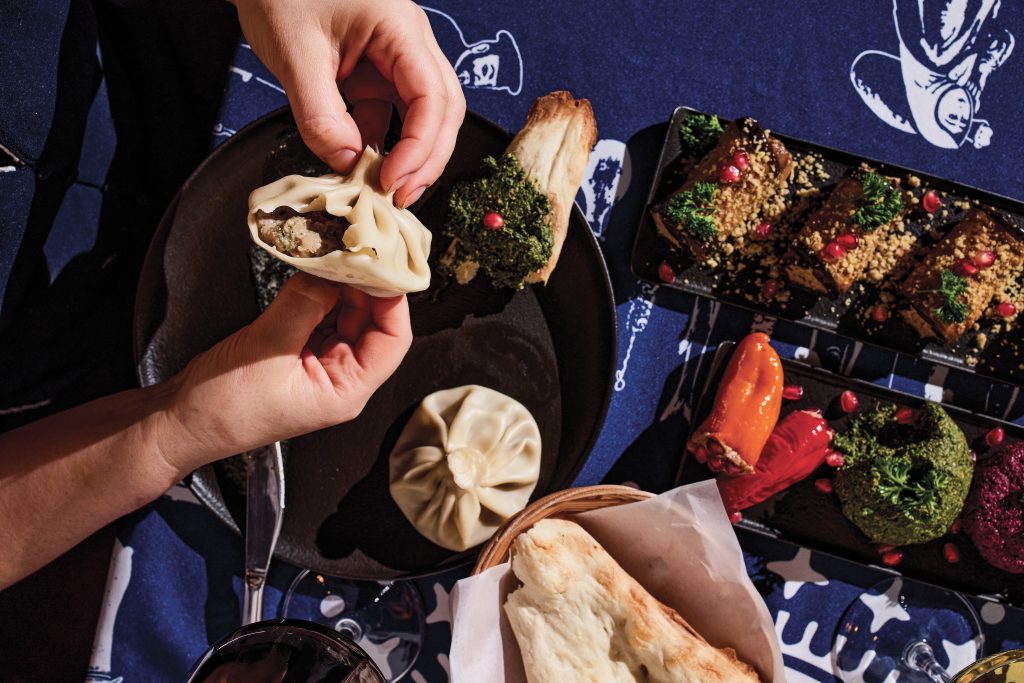
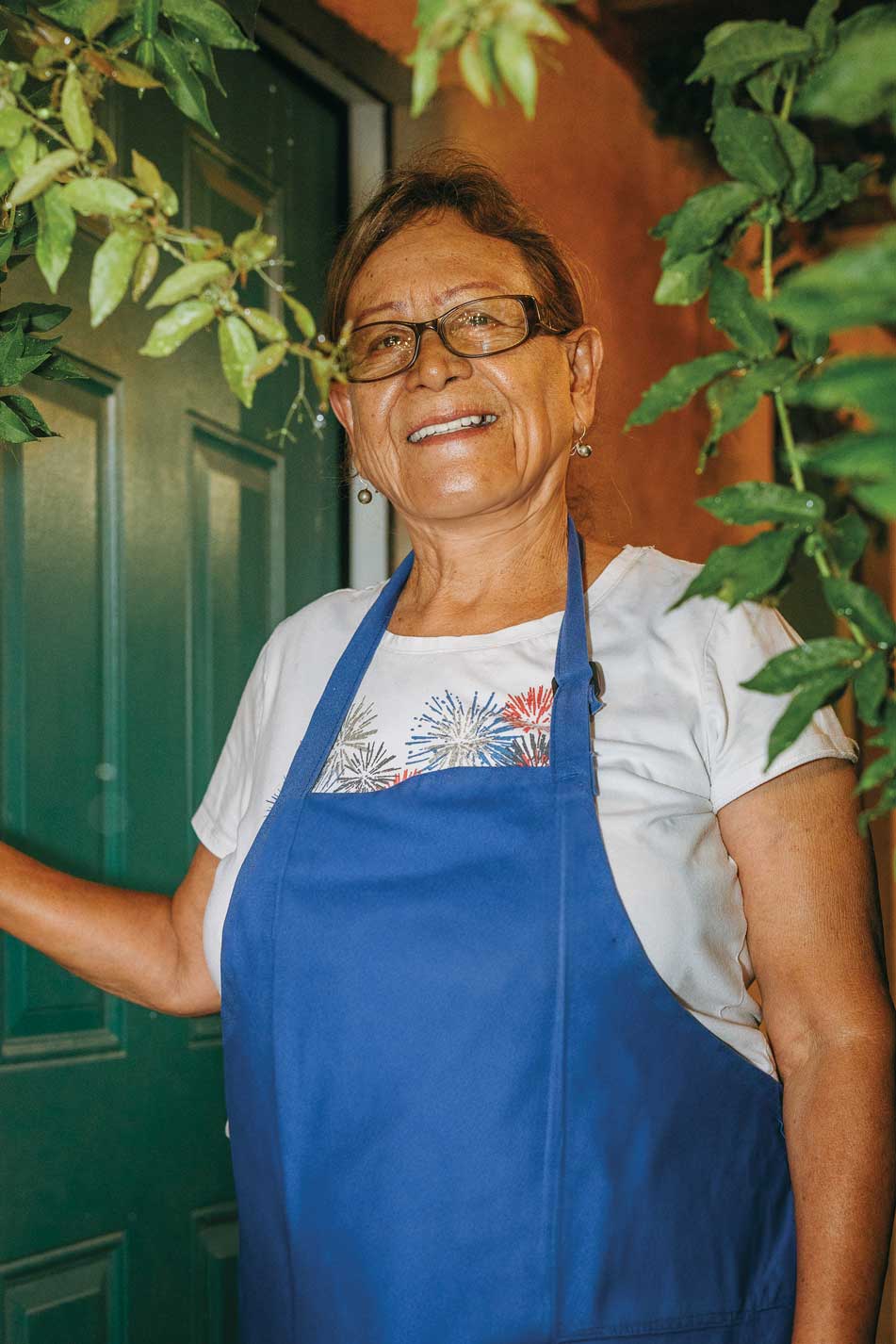
That extends to the food offerings as well. Most recently, Stavinoha recruited Gloria Page, a veteran tricounty area cook who’s widely known as “the tamale lady” by locals. Stretching her culinary chops beyond the popular tamales she sells at shops like French Co. Grocer, she now prepares dishes like enchiladas juantadas that are stacked and smothered in creamy queso and smoky red chile sauce. Flanked by fluffy Spanish rice and a mound of stewed pinto beans on an enamel camping plate, crispy tacos are stuffed with seasoned ground beef, shredded iceberg lettuce, and chopped tomatoes—a throwback to old-school border-town flavors.
“She’s the grandmother I never had,” Mares laughs. “Always trying to feed me.”
Perpetually in a state of renovation, The Ritchey exudes a laidback charm that feels lived-in and layered. Recently, Stavinoha sold his lease shares to Alpine locals Hailey Hannis and Adam Daley. The two newcomers are helping to preserve the original adobe walls and the old floors, worn smooth in places by spurs, bar stools, and dancing feet. Their customers come in for a drink and stay for hours. Some work on laptops. Others drop by just to hear the music drift from the stage.
“You can go there on any given night, there will be some entertainment, a drink, and it feels like you’re in a different part of the world instead of the desert,” says Tony Curry, an Alpine native of 35 years who says the bar has filled a gaping social void.
The Ritchey doesn’t try to be a destination. And in its nearly 140 years of history, it never has been. It just so happens to be one today.
“You can’t Google this kind of place,” Mares adds. “You’ve gotta walk up, see if the lights are on, and hope there’s a band playing.”
Most nights, you’ll find it.