
By the age of 5, Sugar Land native Simone Manuel was already “swimming up” with the 7- and 8-year-olds. Even at that young age, she was a swim star in the making. So much so, another parent started calling her “Swimone”— and the nickname stuck.
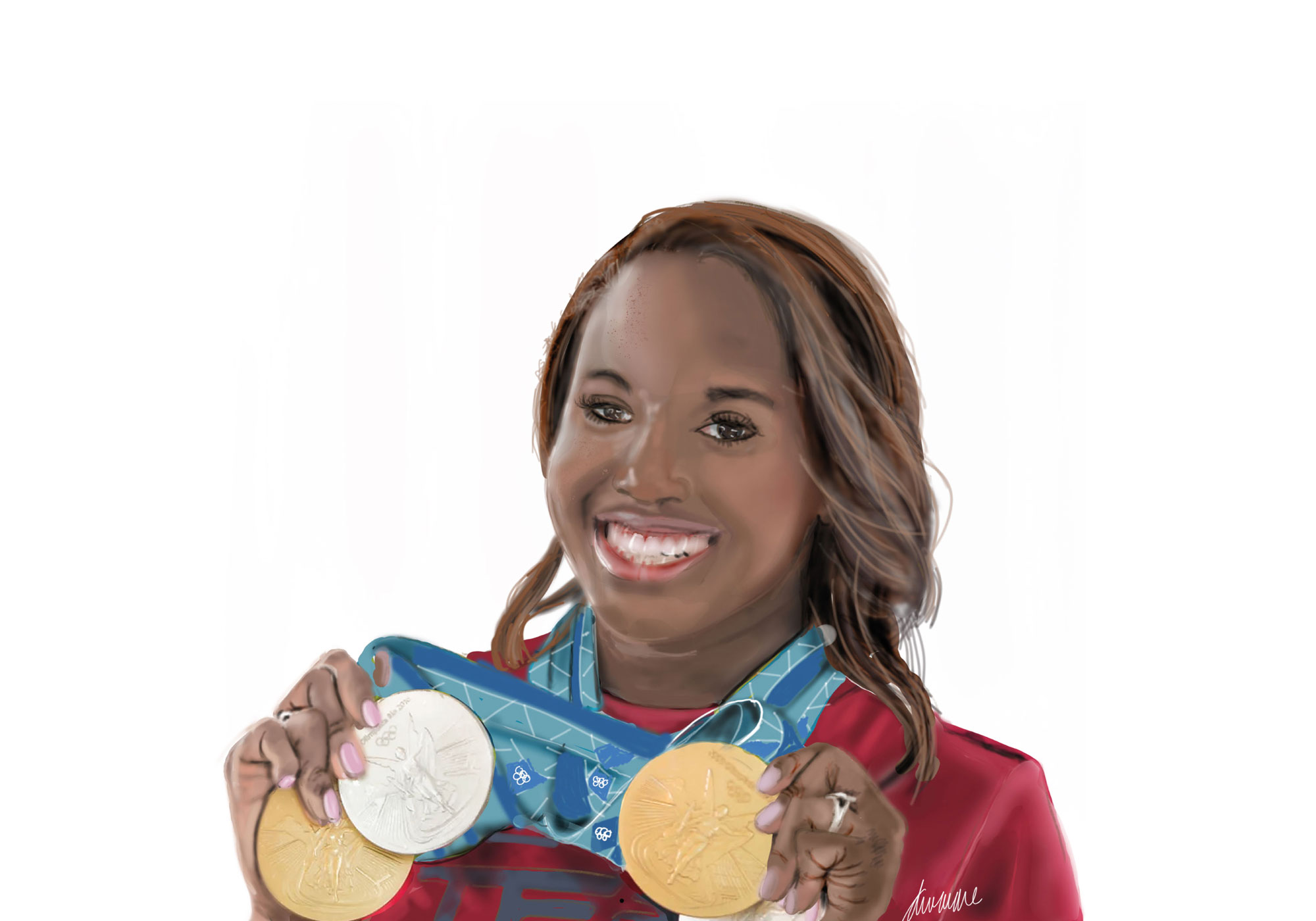
At the 2016 Summer Olympics in Rio, Manuel, then 20, became the first African American woman to win an individual Olympic gold in swimming. But her path to the podium wasn’t easy. Not only did she endure the grueling training necessary to become an elite athlete and injuries that temporarily derailed her, but Manuel also experienced racism. Every obstacle drove her to push harder, and she went on to become a star swimmer at Stanford University. The freestyle sprinter is now a three-time Olympian who has won two golds, four silvers, and one bronze, plus more than 20 World Championship medals.
Five years ago, along with soccer star Alex Morgan, Olympic snowboarder Chloe Kim, and WNBA legend Sue Bird, Manuel cofounded the media and commerce company Togethxr, which empowers female athletes by providing a platform to share their stories, shatter stereotypes, and inspire the next generation. Not that she has much spare time between long practice days at the pool in Austin, where she now lives and trains, but she also founded the Simone Manuel Foundation, which aims to provide education and resources for young people of color to have positive swim experiences. “It’s still in its growth phase,” she says. “I think a lot more will happen when I retire. I’m working through ways to grow it and make more of an impact.”
The 29-year-old is not on track to retire anytime soon, as she’s currently training for the Pan Pacific Swimming Championships in August and working toward the 2028 Summer Olympics in Los Angeles. She tries to stay in the moment, though, and focus on each lap. “It’s always been important for me to think of my swimming journey in bite-size pieces,” Manuel says. “I’m taking it day by day.”

Texas Highways: How old were you when you first started swimming?
Simone Manuel: I started swimming at 4 years old, and my earliest memories are going to the neighborhood pool in the summers. My parents wanted my two older brothers and me to have an activity that would cool us off and get our energy out. Those summers were so much fun for me that I told my parents I wanted to swim competitively. At age 5 they put me in formal swim lessons.
TH: When did it start to click for you that swimming could be more than a summer pastime?
SM: I was pretty good at a young age, but I don’t think I realized my full potential until I started swimming year-round at age 9. At first, I wasn’t the big fish in the pond, but around age 10 or 11 I got my groove. Then when you start making national teams and start winning, you start to feel good about your potential.
TH: How did growing up in Texas inform your relationship to sports or approach to training?
SM: First Colony Swim Team was the club team I was on, and there were so many elite athletes, Olympic trials qualifiers, and national team members in the club team I was on. Texas had a huge influence on me because of the talent pool.
TH: You’ve spoken many times about the discrimination you’ve faced as a Black swimmer, starting when you were a kid. You’ve said that fueled you to work even harder, but were there moments when it put doubts into your head?
SM: There definitely was a time when I was uncertain whether I wanted to continue to swim. I’m not sure I got to the point where I wanted to quit because I believe that when you have a passion for something, you’re always going to have highs and lows and obstacles you have to overcome. But when you are 11 or 12 and everybody on your swim team is invited to the birthday party but you, it becomes clear that you’re not as welcome as you would like. If those instances stack up, it can make you doubt if you belong in a specific space. I dealt with that on one end, and on the other end were comments from the Black community.
TH: Like what?
SM: I could be working out in the gym or out and about and someone sees my athletic build and asks what sport I play. I tell them I swim, and I’ve gotten laughed in the face. I’ve been told I’d be better off in track.
TH: When you started training for the 2016 Summer Olympics, did anything surprise you about the regimen?
SM: The work I put in over the years as a club swimmer and a collegiate swimmer all built on each other, so I don’t think there were too many surprises. It’s always about going to practices and working as hard as you can and being devoted to your recovery and your nutrition. The biggest surprise for me was dealing with my first major injury-slash-illness. That was a really jarring experience.
TH: How did you handle that?
SM: I had to modify my training. I wasn’t able to go to practice and give the effort that I was used to giving. I was going to multiple doctor appointments instead of going to the weight room. It’s tough, but I think the work I had done and the lessons I learned allowed me to have the courage, perseverance, and determination to keep going despite the injuries and illnesses.
TH: Do you remember winning that first gold medal, or was it an out-of-body moment?
SM: It’s such a dream. I can go back and listen to the postrace interview after my swim, and I don’t even know how my mind was there to answer the questions. To have it be gold and to have the moment be historic was overwhelming in the best way.
TH: What’s your training schedule like now?
SM: Training now is full throttle. I do nine swims a week and three weight room sessions. In the middle of a professional season, I’m hammering away in terms of intensity, and we have pro swim series competitions in between.
TH: When you say “swims,” how long are we talking?
SM: My coach has been joking with me about a recent interview where I told them I do 7,000 yards. Those are the long days, so that’s not every day. Maybe once or twice a week I’ll hit that, but it depends on the expectations for the practice. If it’s a sprint day it might be a little less, so 5,000 yards, and a recovery day might be under 5,000 yards.
TH: How do you endure that mentally?
SM: Honestly, I don’t really know. Sometimes it’s just shutting your brain off and letting your body do what it’s supposed to do. It can be meditative at points.
TH: You’ve accomplished so much already, but what’s your ultimate goal going forward?
SM: The ultimate goal for me is to make the 2028 Olympics, but I also know it’s important for me to do what I need to do each day to hopefully make that a possibility. So that’s the focus for this year. Once the year is over, I’ll take a break, reevaluate my goals and how I performed over the year, and that will ultimately lead me to doing the right things to be successful in 2028.
TH: How do you relax when you’re not training?
SM: I love to cook. That is something that refills my emotional tank. I have to eat well nutritionally, so part of it is for training and recovery. But it’s fun for me to get in the kitchen and be creative.
TH: Five years ago, you cofounded Togethxr, which became a huge movement in women’s sports. What does the platform mean to you now?
SM: The other cofounders and I can celebrate that we have helped build a movement that means a great deal to female athletes. Women’s sports weren’t lacking in talent or compelling stories—they were lacking in investment, visibility, and belief. Togethxr was built to close that gap and change the narrative around women’s sports. We’ve proven that women deserve to be in the center and not on the margins.
TH: What’s your favorite place to travel in Texas?
SM: My favorite place in the state is my parents’ house. I love sleeping in my bed, eating my mom’s home cooking and my dad’s barbecue. That is soul-filling for me.
TH: And outside of home?
SM: San Antonio is a good spot; Kemah Boardwalk is always fun. I’ve been in Austin for a year, and I’ve been told I need to go to Barton Springs.
TH: You’ve never been? You’re a swimmer!
SM: That’s my hesitation. Being around water is not that fun for me because I’m around it all the time. But maybe one day.