Crouched on a gravel bar in the middle of Pipe Creek, in the farthest corner at the new Albert and Bessie Kronkosky State Natural Area, I can hear water trickling from a crevice at the base of a high limestone bluff. I swish my hand in the clear, cold stream and admire the rugged surroundings, then set off again. I’ve got a lot more to explore at this new park, which covers nearly 3,800 acres between Boerne and Bandera.
ABK, as some call it, is the latest addition to Texas’ state parks system. Inside its borders, visitors can find four meandering creeks, woodlands and ravines, travertine formations, and grassy clearings. It’s pure Texas Hill Country.

A state natural area rather than a state park due to its fragility and need for more protection, the property remains focused on conservation rather than recreation. Therefore, amenities are limited. Visitor capacity is also limited, and those who want to stay overnight must pitch a tent or book a mini cabin or screened shelter, because RV camping is not allowed. I received special permission to stay overnight before gates officially open for day use on Dec. 1 and camping on Dec. 15.
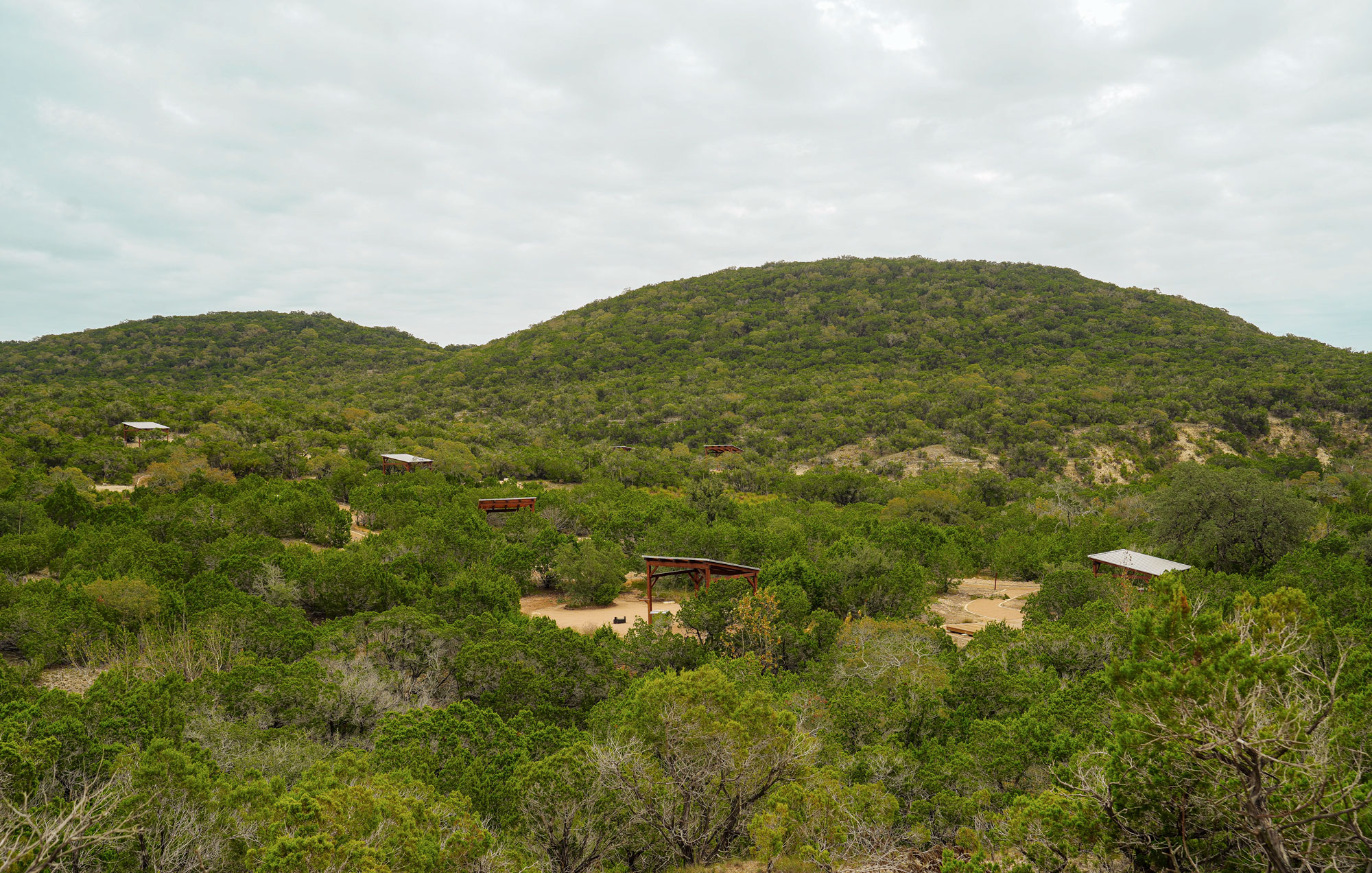
Hiking and mountain biking are encouraged, and ABK is a trail user’s dream. Paths chug up steep hills, dive into canyons filled with bigtooth maples and wind through fields of thigh-high grass. In places, you can spin in a circle, ringed by hills in all directions.
The Kronkoskys, philanthropists with ties to San Antonio and Pipe Creek who made much of their money from family investments in the pharmaceutical company Merck & Co., started buying land around Boerne in 1946, adding to what Albert’s father already owned. They willed the ranch to the Texas Parks and Wildlife Department, which acquired it in March 2011. Park construction started in late 2023, using money from the state’s sporting goods sales tax.
“Development in the Hill Country is growing rapidly, and I think it’s more important than ever to have outdoor spaces like this,” Superintendent Steph Kwiatkowski tells me as we walk along Pipe Creek in the park’s remote backcountry. Much of that land is unincorporated, with limited land-use and zoning to regulate the changes.
Infrastructure is concentrated on the parcel’s east side, where a day-use area includes an interpretive center with exhibits about local plants, wildlife and geology; an elevated viewing platform; and picnic tables. The Rancher’s Rest Campground features screened-in tent sites, including some with wooden platforms, several of which are wheelchair accessible. A separate primitive campground (with no water) is located a 4-mile hike away. Through it all stretch 26 miles of trail crisscross ridgelines and creeks.
“We’re going to keep this area as a textbook example of what the Hill Country used to be,” says assistant superintendent Brit Blasingame, referring to the park’s undeveloped rugged canyons and steep hills when I met him the next day of my visit.
The parkland’s limited infrastructure is concentrated in a small area and designed to protect unique species that live here, including the endangered golden-cheeked warbler and sycamore leaf snowbell. More than 400 species of plants and 50 species of reptiles and amphibians have been documented, including a species of moth, Dryocampa kendalli, discovered during construction surveys. Madrone trees, whose peeling, rust-colored bark looks like the aftermath of a bad sunburn, are scattered across the landscape.
“It is one of the most pristine preserved acreages you can find in the Texas Hill Country,” says Steve McKenzie, a board member of the Friends of ABK State Natural Area.
Before I leave, I take one more hike to an overlook, where I soak up the view of the rolling, tree-covered hills around me. Here at the top of Bean Mountain, named for a rare species of vine called the Boerne bean, hillsides covered in shrubs and chunks of limestone spill away around me.
Heading toward the entrance gate, I spot something hairy in the road. It’s a tarantula, tiptoeing over the pavement. It reminds me that this state natural area is a habitat for all Texans, not just the two-legged ones.