
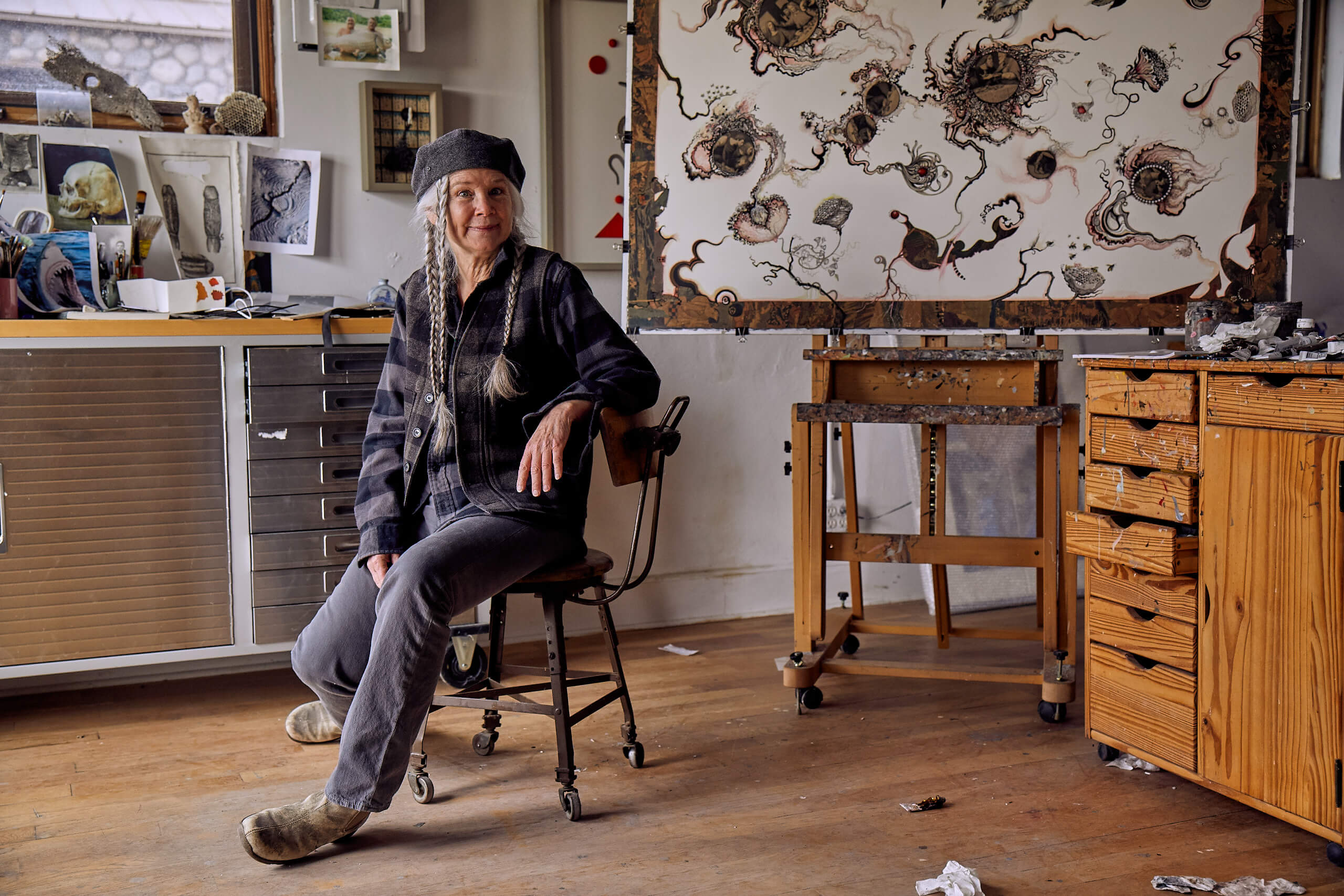
Inside Julie Speed’s Marfa studio, sunlight streams through the large picture windows, casting golden rays onto tubes of colorful gouache and tables laid with rulers, X-Acto knives, and clippings of archival paper. Her studio is a treasure trove of wonders: There’s a printmaking room onsite with an etching printing press, and cabinets overflow with her collections and curiosities foraged over decades, be it clock parts, nail heads, Japanese woodblock prints, or papers salvaged from damaged books.
For almost 20 years in this reimagined workspace and gallery adjacent to the Chinati Foundation’s 340-acre property just south of town, Speed has created her prolific and varied mixed media portfolio, including collage, paintings, etchings, and assemblage. Luckily for discerning collectors and new fans curious about her work, she regularly offers open studio hours, along with tours for groups by appointment via her email. This fall, they’ll be able to see her latest creations, a series of 31 original paintings and collages colored with blooming flowers, floating hands, and dark, starry skies, when they go on view during Marfa’s annual Chinati Weekend, held on Oct. 11-12, as well as over Thanksgiving weekend, Nov. 28-29.

Much like her work, Speed’s own story is deeply nuanced and full of depth. Born in Chicago in 1951, her family moved frequently, and the young artist turned to painting, drawing, soldering, and sewing as an early means of self-expression. “I came from a family that wasn’t artsy, but if you wanted something or thought of something you felt like making, then you made it yourself,” she says.
Over the years, the self-taught artist has lived a well-traveled life, spending stints everywhere from Connecticut to Michigan, Rhode Island, Massachusetts, Kentucky, California, and Nova Scotia before ultimately settling in Austin in 1978. Enticed by the quiet and humbling horizons of Far West Texas, she and her husband, the drummer Fran Christina, migrated to Marfa in 2006. She found her studio, part of the Fort D.A. Russell complex before becoming offices for the Texas Land Bank, through an advertised flyer tacked up at the local real estate shop.
Over 100 years old with 14-inch cast concrete walls that overlook Donald Judd’s 15 untitled works in concrete, she says the building was once a fortified food depot, plus a hoosegow, or a jail, for “drunk soldiers during World War II.”
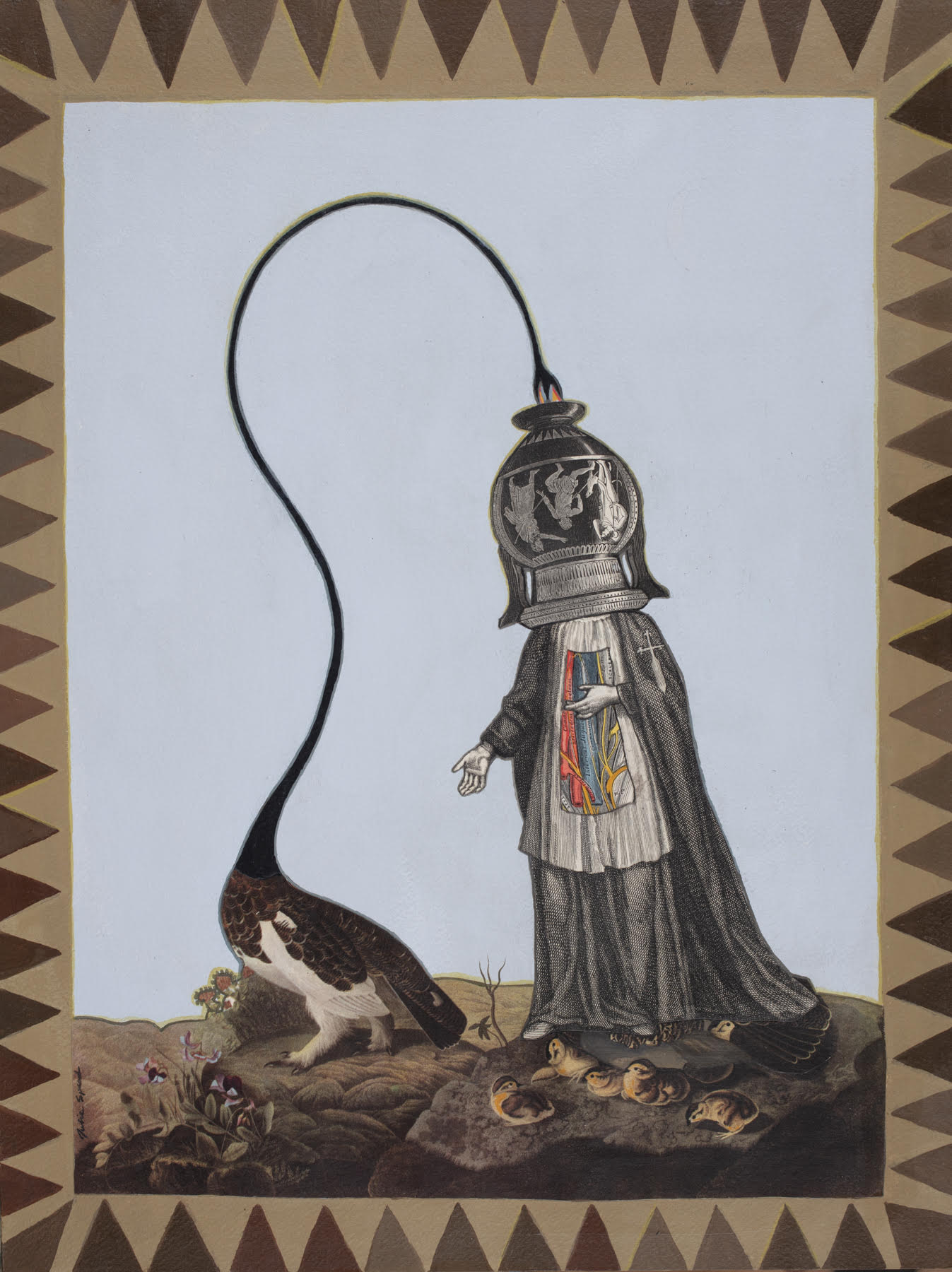
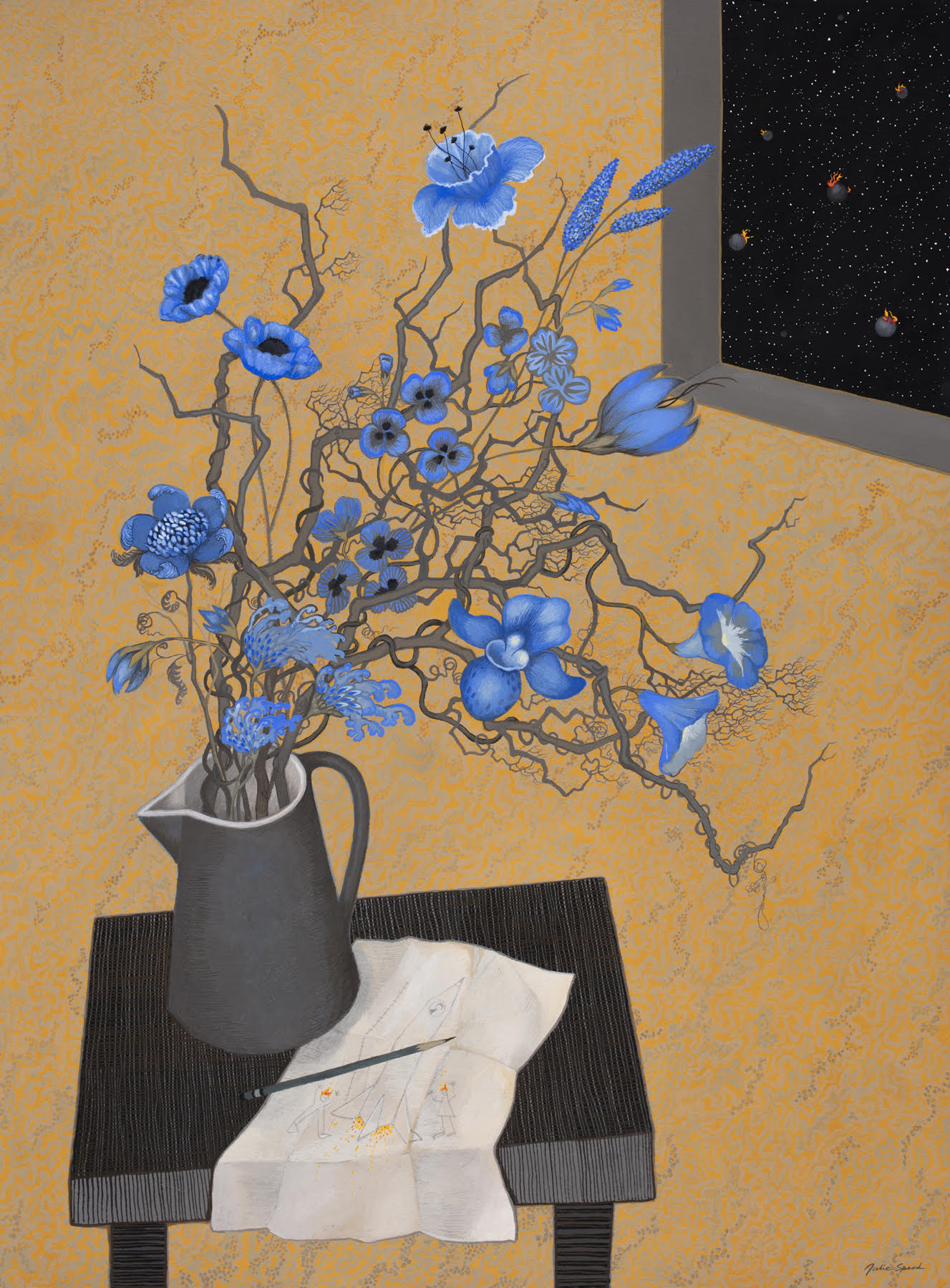
Like her other collections, Speed’s new works build upon an aesthetic and a Renaissance-like quality that combines both surrealism, realism, and a folkloric lure. Despite the works’ emotive energy and representational style, however, her paintings are notably not driven by themes or ideas but rather shapes and forms, with compositions coming together like a puzzle. “People always think I must have an idea first, but I’m making compositions, and if I move one thing, it might change the body language, and that changes the story,” she says.
Speed describes her process as mathematical in nature, and not unlike writing songs or poetry. Everything from what she’s thinking, reading, or doing in her garden “gets mixed in,” she says, to her brushstrokes, which connect the myriad breadcrumbs and strands of consciousness that have colored her life memories. “After a while the whole emerges, but it doesn’t work unless all the shapes and colors are in exactly the right place.”
As for inspiration, it’s always come from a wide-ranging mix of storytellers, creatives, myths, and religions. Byzantine icons and stitched quilts are but two influences, as well as the illustrations of Edward Gorey and Wanda Gag, along with artists including Pieter Bruegel the Elder, Sandro Botticelli, Kazimir Malevich, and Édouard Manet. Even building the dry stack stone wall that fronts her studio and neighboring home was a meaningful path opener for her, particularly within her medium of collage. “The feeling you get finding the right stone,” she says, “is the same feeling as finding the right piece of old paper.” You can see the process in one of her new mixed-media works, Immaculate Conception, which incorporates old anatomical clippings from Grey’s Anatomy along with an illustration of a Greek urn she’d been saving for upwards of 20 years.
Often, she balances humor with political commentary. One of her newest creations, a work of gouache and collage entitled Emptyman, is a mashup of Open AI’s Sam Altman and Velazquez’s Portrait of Pope Innocent X, while Rocketman addresses earth’s fragility and man’s exploitation of the universe, with its vibrant flowers, rocket ships, and views of the night sky pocked with blazing planets. “We have this incredible, beautiful world that amazes me every day and we keep wrecking s—,” she says, sadly. “We don’t learn.”
These days, the artist finds joy tending to her garden when she’s not sticking to her strict work schedule. “I’m usually working on more than one piece at a time and try to never finish both before I get another one started,” she says. “Starting again once you’ve come to a full stop is really hard—that’s why I hate vacations.”
In the nearly 20 years since leaving Austin for the high desert of the Trans-Pecos, Speed has strengthened Marfa’s beating heart, while adding to its pulse with her own passion and creativity. Now, as she prepares to show fresh work this fall, visitors old and new will have the opportunity to confront her evocative portfolio, and the emotions it conjures—both complicated and beautiful—much like life itself.