

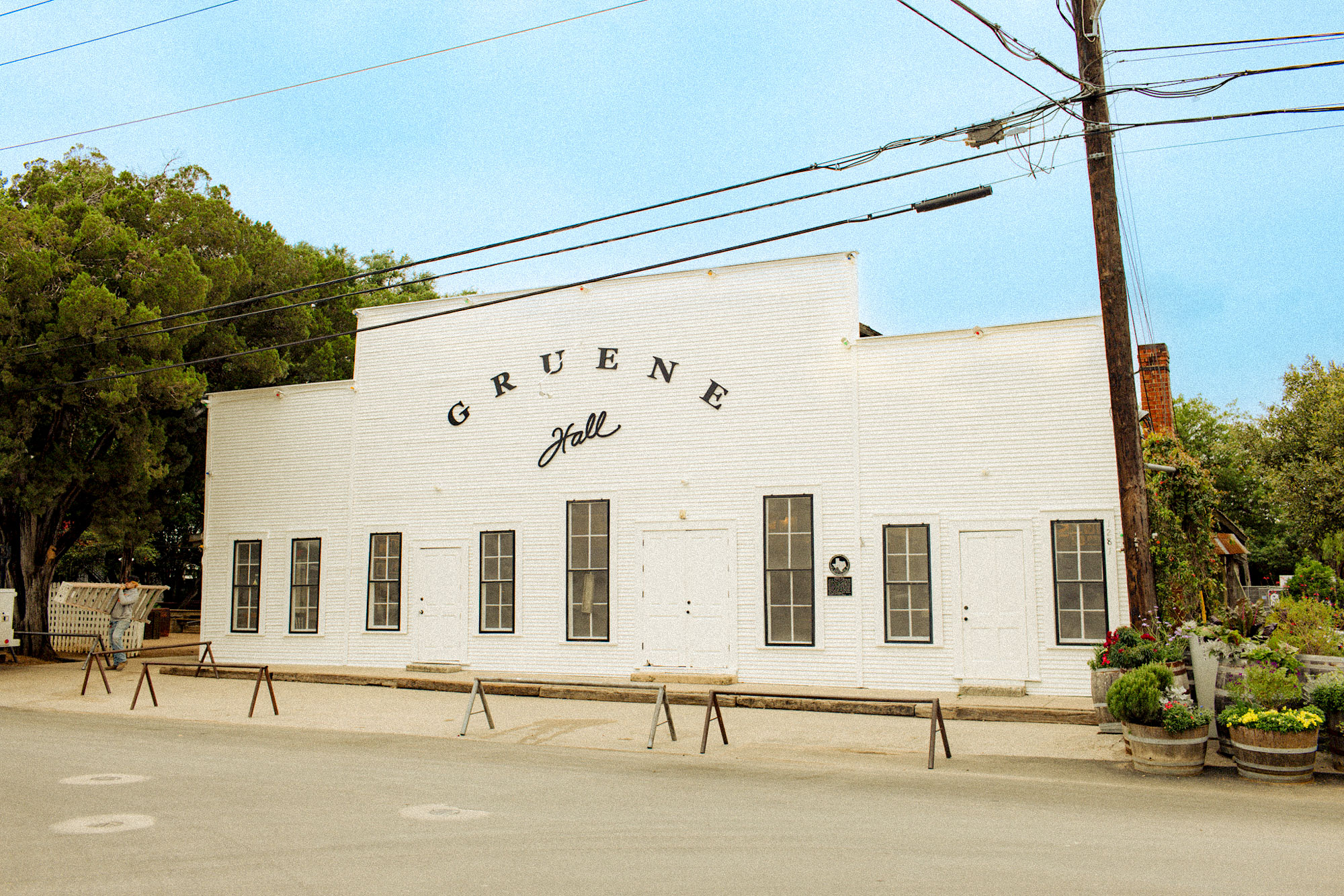
Before I met with Gruene Hall owner Susie Molak on an unseasonably cool morning in early May, it had been exactly four years since I stood in the oldest continually operating dance hall in Texas. On May 7, 2022, I went with my soon-to-be-husband and our families to a Patty Griffin concert at the dance hall built in 1878. We rented a house for the night on the nearby Comal River, which we kayaked the afternoon before the show. I remember this detail because it was pretty hot that day and, as often happens in Texas, remained hot that evening. Standing in the crowd at Gruene Hall was sticky. We took respite outdoors, out beyond the hall’s big, open windows, and watched a chunk of the set from the comparatively cooler yard.
As of this summer, conditions inside Gruene Hall will be a lot less steamy. In early April, the hall announced it would be adding an air-cooling system after nearly 150 years of no real climate control, beyond a few ceiling fans, some swamp coolers, and sporadic breeze blowing through the windows. But as Texans who’ve stood and sweated inside the hall know, you can’t always count on that breeze. Especially in the dog days of summer, when any errant wind merely transports hot air indoors.

While adding climate control is necessary to keep people from overheating in the hall, Molak adds that it was also important to keep evidence of the new air-cooling system completely hidden. The historic hall hasn’t gone through many aesthetic changes since it opened, and Molak adds that, when she ran an informal poll before adding the new system, respondents overwhelmingly said, “don’t do it.”
“I didn’t want it to change. No one wanted it to change at all,” she says. “And that was really what we considered the biggest deal. It took a couple of years to figure that out.”
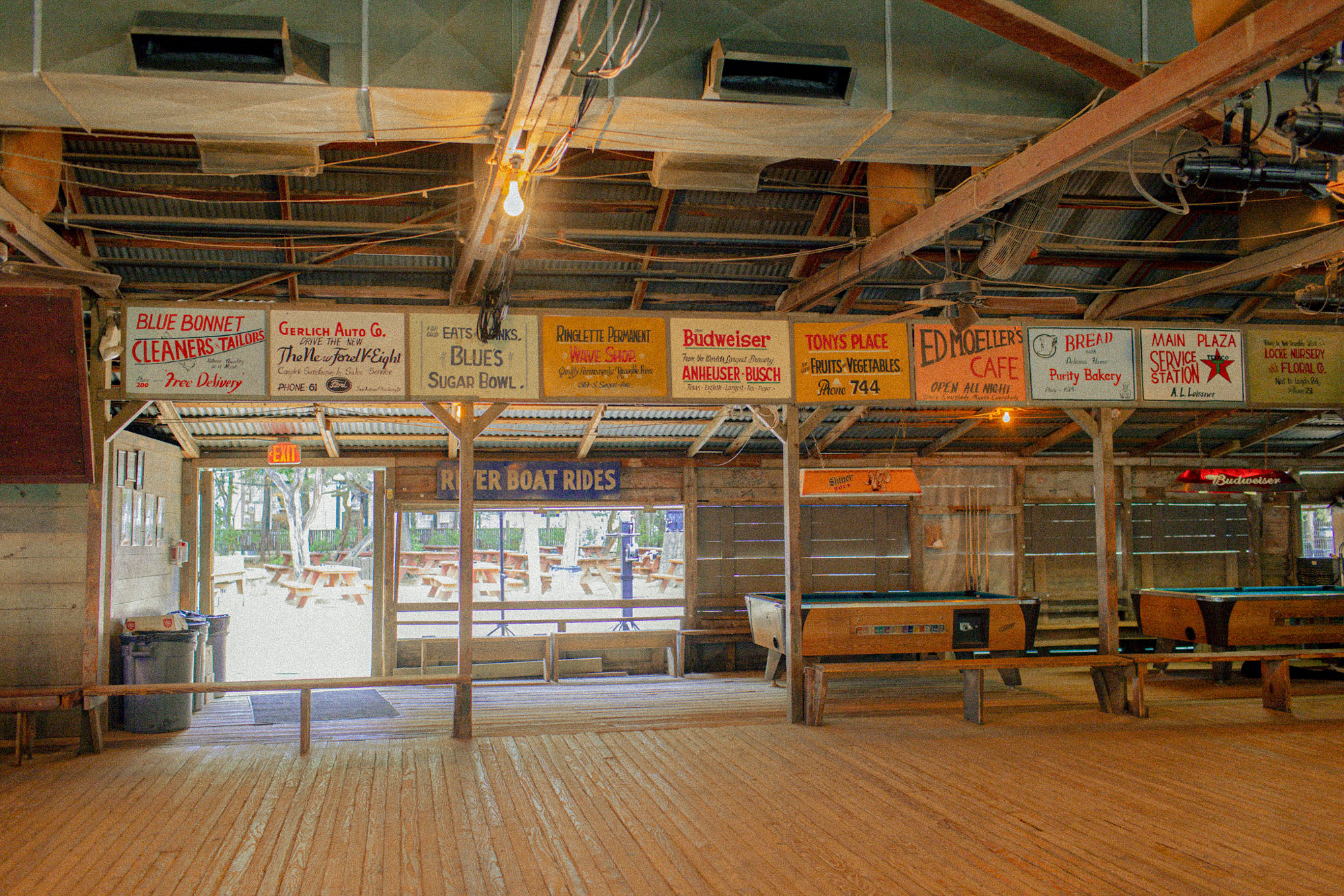
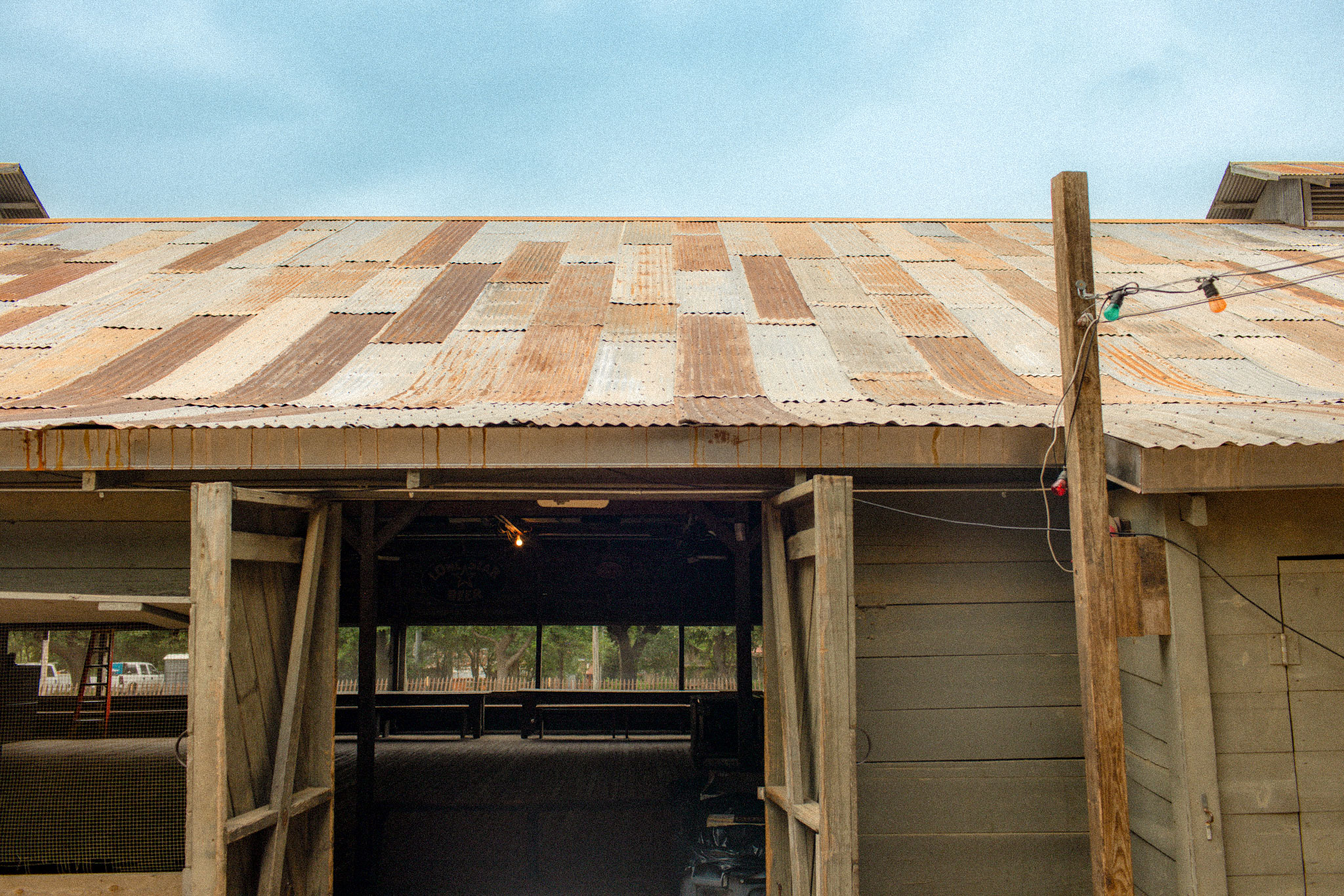
To maintain the integrity of the hall, and to please patrons who’ve been coming for decades, Gruene Hall hired local consultants to plan and build a climate control system that is altogether invisible. They pulled it off by installing the system in existing ductwork and by adding a second roof to the building. But you wouldn’t know it; the new roof is built from old, pre-weathered tin, and sits just four inches above the original roofline. Between the old roof and new roof is inches of insulation to keep the cool air indoors. Tim Conway, director of operations at Gruene Hall, says that the first time Molak pulled up to the hall after the new roof had been added, she didn’t even notice it.
Gruene is one in a line of Texas dance halls to add a version of climate control in recent years. Jean Spivey, executive director of Texas Dance Hall Preservation, says that a number of historic halls throughout the state have modernized, including Turnverein in Bellville, which is round in shape. To add air-conditioning there, workers installed vents beneath the floor and in the benches that line the hall’s perimeter, so that ducts and vents wouldn’t be on full display.
“The halls are part of our culture and history,” Spivey says about the convoluted task of hiding AC units in the old buildings. “To be able to experience them as they mostly were back in the day is an experience you can’t find anywhere else.”
Of course, halls have modernized in other ways over the years. Most didn’t have kitchens or bathrooms when they were initially built. Adding climate control is just the next step in helping bring the historic buildings into the future and ensuring they’re enjoyable for decades to come. It also means halls are more comfortable during the state’s hottest months, which, as we all know, can stretch well into the so-called fall.
Sweating inside Gruene Hall, or any Texas dance hall, for that matter, is effectively a rite of passage. In a 2024 Facebook post, the late musician Joe Ely wrote that, during his set at Gruene in 1986, it was “about 125 degrees on stage,” conditions compared to “the Amazon jungle.”
It won’t exactly be cold inside the hall these days, though. Molak said the big windows will remain open all summer long, and that the air-cooling system will only chill the air to about 85 degrees. It’ll still be warm, but much cooler than the Amazonian conditions Ely described. Or, in other words, it’ll still be hot enough inside to work up a proper sweat, especially when the dance floor calls.