
Six weeks after my mother passed away, I made a pilgrimage from my home in Austin to the museum dedicated to the memory of Selena Quintanilla-Pérez, located in the northwest outskirts of Corpus Christi. My connection with the Queen of Tejano Music goes back three decades, before I immigrated to the United States. I was the rare Mexico City kid who worshipped Selena as if I’d been born in South Texas, or at least in northern Mexico, where she was as revered as she was in the U.S.
I was editor-in-chief of La Buhardilla, the newspaper at my college, Universidad Iberoamericana, when Selena rose to fame in the early 1990s. Every Friday, my aspiring journalist friends and I would pull an overnight at the newsroom, putting together that week’s edition. Exhausted after long hours finalizing stories, we’d pop Selena’s iconic fourth album, Amor Prohibido, into a CD player and dance the stress-inducing deadline away, oblivious to our futures and hers.
One of those friends who now lives in Houston, Elena Vega, recently reminded me it was my mother who broke the news of Selena’s fate to us. “We were at your house, getting ready to head back to campus to start working on La Buhardilla,” Elena told me, “when your mom came into the kitchen and told us Selena had been shot.”
I didn’t recall that moment, the same way it took me months to remember the exact day my mother died, June 16, 2024, without having to look up her obituary on my phone. Of Selena’s passing, I only remember everyone on campus expressing their condolences to me as if I’d been her friend, her cousin. I wasn’t the only fan of hers who felt that way.

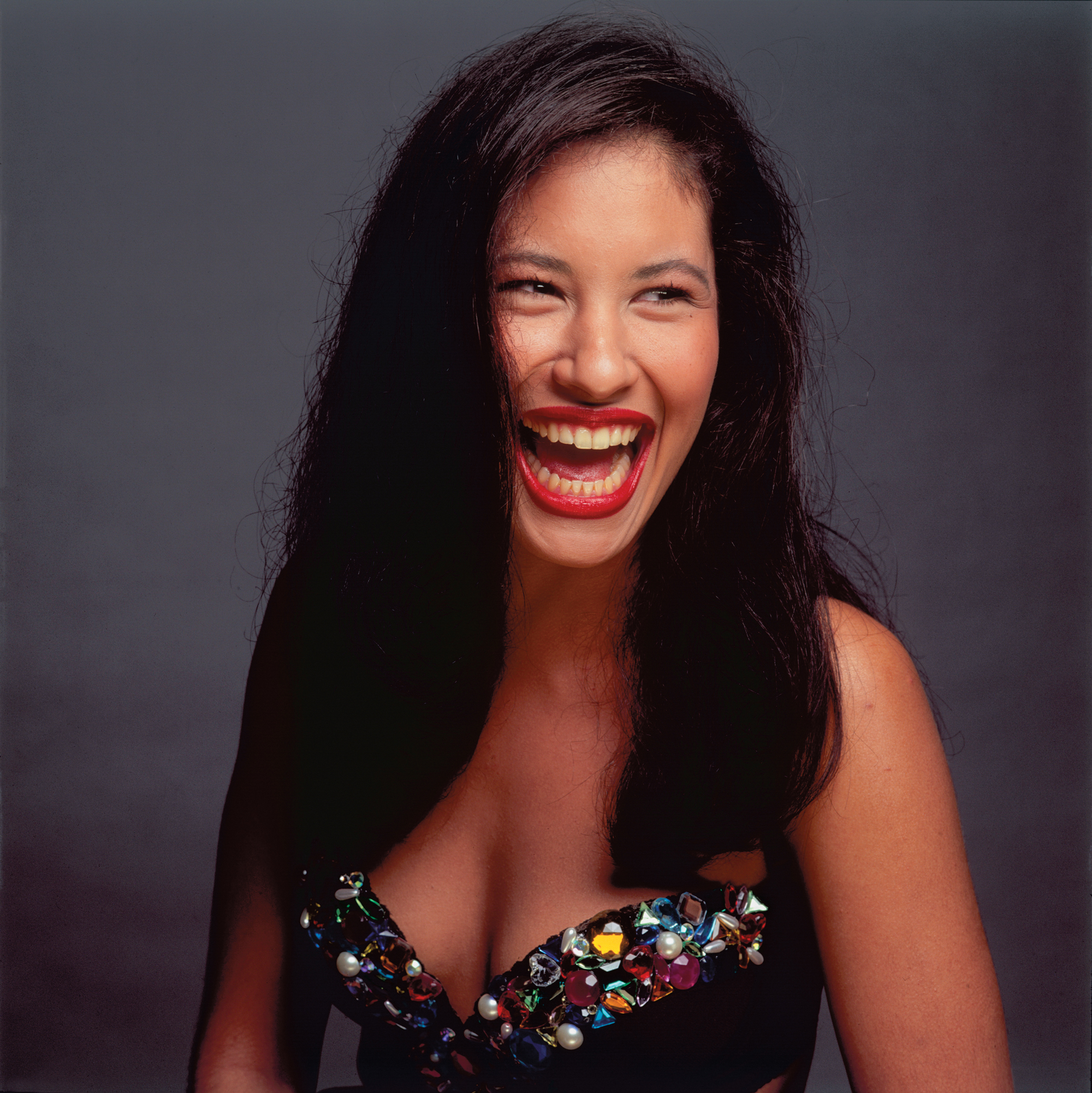
The Selena Museum, which originally housed her recording studio, opened in 1998 and includes a gallery of memorabilia and a gift shop. The lobby resembles a regular office from the ’90s. The space seems frozen in time—because why wouldn’t it? Selena’s life and trailblazing music career both came to a halt in March 1995, when she was murdered by the founder and president of her own fan club. The confrontation took place in a Days Inn motel room, not too far from where the museum is now located. She was only 23.
In the museum lobby one melancholy Thursday last year, a brewing cohort of Selena devotees gathers for the start of a guided tour. The crowd’s anticipation is palpable, but there is an undercurrent of sorrow I can’t shake. I’ve been to Selena’s statue on the seawall of the Corpus Christi Bay a few times before, but the profound sense of closeness to her at the museum tingles my heart. I thought I’d cried everything I could after burying my mother a few weeks before, and yet here I am, holding back tears and the visit hasn’t even begun.
After paying the $5 admission, I roam around the minute lobby and admire the pictures and fan art that decorate the walls. The floor is carpeted in that bright, almost liturgical purple hue that has become synonymous with the Queen of Tejano Music, a title she earned well before her passing and which now feels trite—too reductionist to hold what she’s come to represent for Latino identity and her millions of fans across the world.
The informal tour begins in earnest with the recording studio, which Selena used only briefly between December 1994 and her last day on Earth. She was working on what many consider her first solo English album, Dreaming of You, a crossover debut anticipated to catapult her to a global stardom of Whitney Houston proportions.
“Most of her music prior to that was recorded in Los Angeles,” explains the tour guide. Nearby, visitors take selfies and hum Selena anthems around the dimly lit expanse dominated by a grand piano and a single portrait of the singer hanging from one of the salmon-colored walls. Out of her entire meteoric career, Selena only recorded five songs in this place. “The last song she recorded in the studio was ‘Dreaming of You,’” the guide continues. “The morning of her passing, she was in the studio putting on some finishing touches while she stood at that mic,” she says, pointing at a lone stand positioned in front of the mixing booth.
There is a moment of pause, a fleeting shift of energy across the studio, as if we all have grown aware of the presence with whom we are sharing the space.
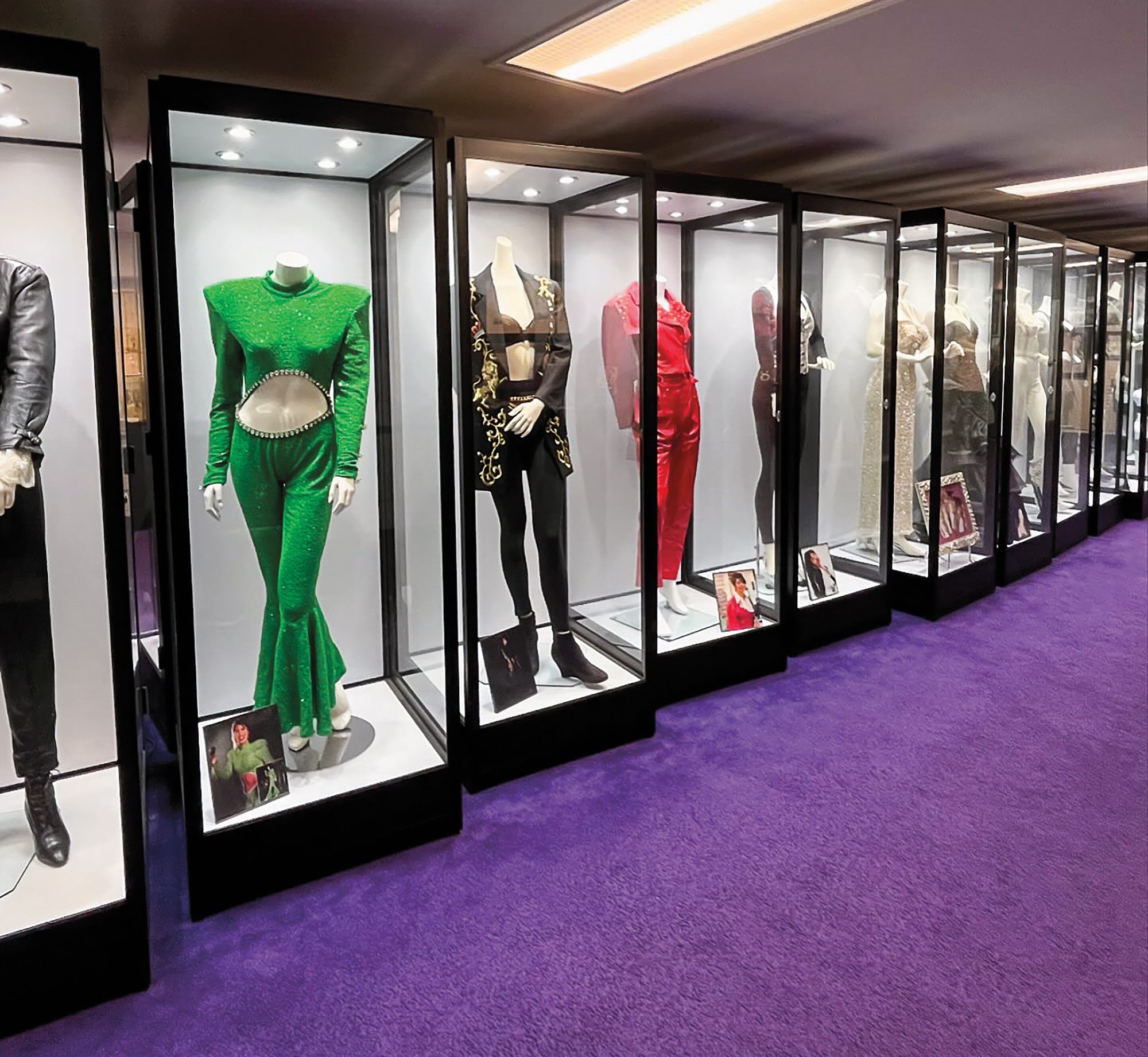
The tour guide then leads us to the gallery area. The exhibition is divided into several rooms packed with posters, pictures, and glass cabinets displaying mementos from Selena’s artistic and personal life, and her afterlife. This includes her Fabergé-like egg collection, the dolls she played with as a kid, the countless awards she’s received over the last four decades, and sympathy letters from entertainment moguls from both sides of the border addressed to her father, Abraham Quintanilla, following her death.
The object that strikes me most is a sheet of forever stamps USPS issued in 2011 to commemorate Latin music legends, featuring Selena with other giants like Tito Puente, Carmen Miranda, Carlos Gardel, and Celia Cruz. Along with the red 1986 Porsche 911 Targa she drove around the Corpus streets, many of the outfits Selena wore in her live shows, displayed in full-size glass cabinets, are the crown jewels of the exhibit.
One of them stands out—the glittering purple jumpsuit she wore onstage at the Astrodome on Feb. 26, 1995, during her memorable Houston Rodeo performance. It was the last concert she ever gave, only four weeks before her murder. The enduring influence of that outfit is hard to overstate. I bet that jumpsuit is as iconic as the red leather jacket Michael Jackson wore in the “Thriller” video.
Seeing it in person feels electric, like déjà vu, but I can’t look at it for too long because I think about my mother. As an only child, I had to go back to her house the night she died and look in her closet for the outfit we’d dress her in for her funeral. I settled for something I thought she’d choose for such an occasion—a black knit pantsuit with purple details.
Almost every museum visitor I talk with mentions the purple jumpsuit as their favorite outfit. Among them is Gisell Segura, who begged her mom to come from Houston for a visit. Segura is 10 years old. The first time she heard of Selena, she was in third grade.
At the gift shop, you can buy all kinds of souvenirs—key chains, T-shirts, jackets, tote bags. If you’re a Selena fan, the store is like Disneyland. Nearly everyone is holding a shopping bag in their hands. Madalyn and J. Ryan, a young couple from Austin, decide on a pullover and three T-shirts.
I’m not planning to buy anything for myself; my heart and my memory are sore. But as I head out, I notice a 30th anniversary picture disc of Amor Prohibido on display. Not only is it considered Selena’s White Album—Rolling Stone included it in its 500 greatest albums of all time—it’s also the one record I’d play in college every weekend, back when I had my whole life ahead of me.
It’s past 4 p.m., the museum’s doors have just closed, and the parking lot sizzles under the blazing sun. Little by little, the Selena parishioners emerge into the summer heat, heading for their cars, raving about their visit, singing the chorus of “Como la Flor”— arguably the singer’s most popular song. It’s a Tejano cumbia torch tune from her third album, Entre a Mi Mundo, that conveys heartbreak and loss in a way that now, more than 30 years after it was released in 1992, still lands like a gut punch—like the memory I have of the last time I talked with my mother on the phone.
I sing to myself: Como la flor / con tanto amor / me diste tú / se marchitó / me marcho hoy / yo sé perder / pero ah-ah-ay ¡cómo me duele! Like the flower / that withered with so much love / that you gave me / I’m leaving today / I know how to lose / but, ay, ay, ay / how much it hurts.