
Pop quiz: How many characters wear cowboy hats in the Larry McMurtry adaptation that has won the most Academy Awards? The movie is Terms of Endearment. The number of Oscars is five. And the number of characters wearing cowboy hats? Zero.
Few American writers are so closely associated with the modern mythos of the American West as McMurtry, but Terms of Endearment is a world away from the land of Hud (1963, with three Oscar wins), The Last Picture Show (1971, two Oscar wins), and Brokeback Mountain (2005, three Oscar wins). The film’s primary setting is River Oaks, the wealthy neighborhood west of downtown Houston that is often cited as the most exclusive in the country. And, yes, eagle-eyed viewers will point out that there is a cowboy hat, but we will come back to that later.
The novel Terms of Endearment was published in 1975, the final book in McMurtry’s Houston trilogy, which was inspired by his time at Rice University as a graduate student and lecturer. I could write a separate column on all the ways that the movie diverges from the book, but that’s besides the point. The film Terms of Endearment was released in 1983 to critical and commercial success, and despite its “creative independence,” it retained the most important aspect of the novel: the complicated, maddening, and sincerely loving relationship between Aurora and Emma Greenway.
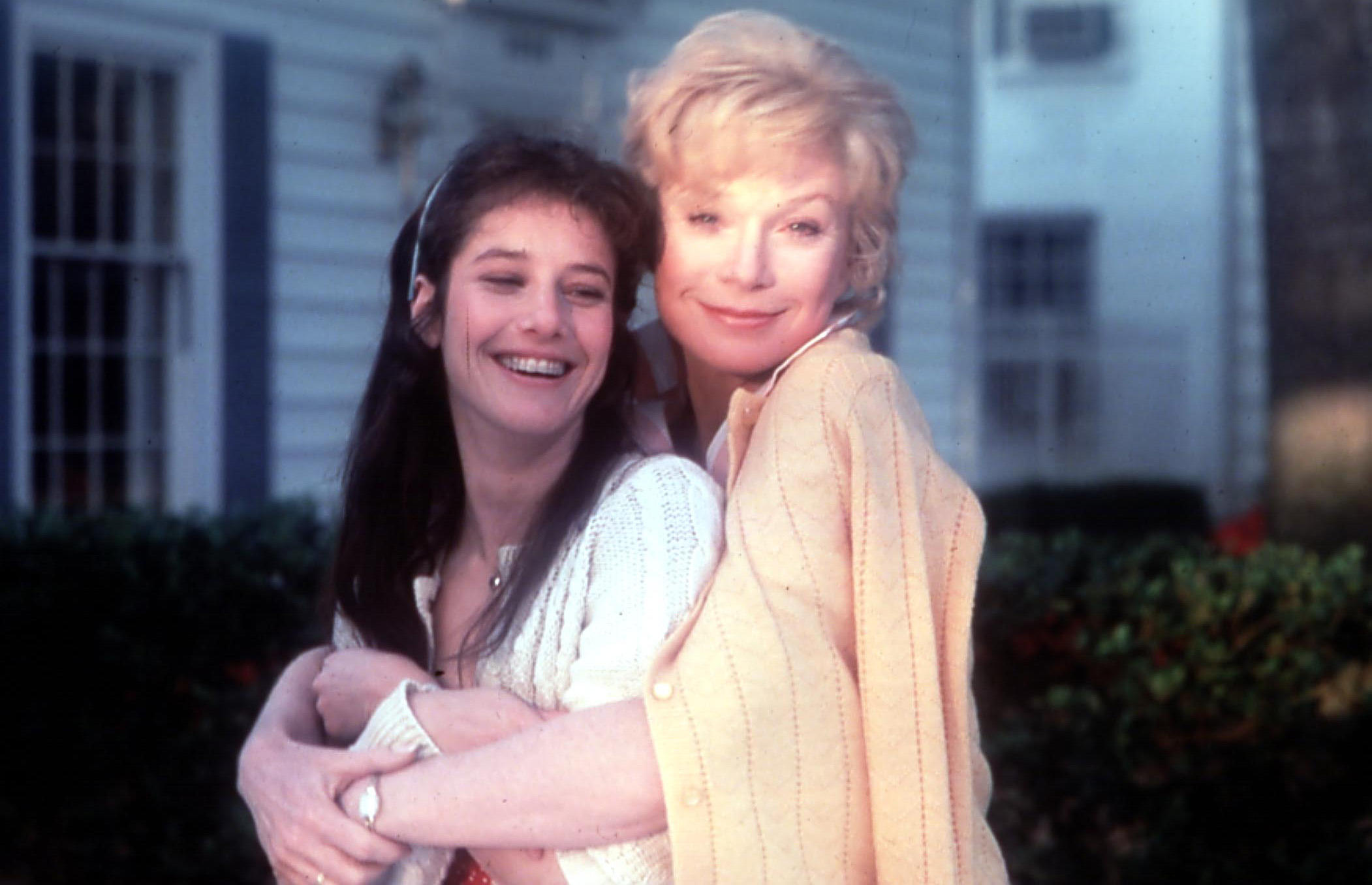
Aurora is a lifelong widow and Emma is her only child. There is a certainty to Aurora’s character, played by Shirley MacLaine, that makes her icy distance and hyper-criticism funny; there is an expressiveness to Emma’s character, played by Debra Winger, that makes her wonderfully charming and accessible. If Aurora represents the practical, self-centered side of managing life’s endless risks, Emma is the optimist who assures you that everything is going to be alright.
In a plot that is marvelous at telescoping time and shifting easily from scene to scene, men come and go in each of their lives, generally causing more trouble than they are worth. The one genuine relationship that remains is that of mother and daughter.

REEL TEXAS
We’re revisiting the classic films that shaped the mythos around the Lone Star State

Not that it’s easy.
Early in the film, on the night before her wedding, Emma is still living with her mother when Aurora initiates a conversation that goes something like this: “You wouldn’t want me to be silent about something that’s for your own good, even if it might hurt you a little, would you?” That “something” is Aurora’s belief that Emma’s marriage would be a mistake of “gigantic proportions.” Not content to leave it there, she plunges the knife deeper, telling Emma: “You are not special enough to overcome a bad marriage.” In the end, Aurora boycotts the wedding.
But despite Aurora’s objections, Emma is determined to marry Flap Horton, played by Jeff Daniels, a not-so-ambitious, not-so-talented English professor. Emma is tough and wise, and of her many talents, managing her mother—and letting many of her arrows land harmlessly—is one of her greatest. Whether Aurora is right about Flap is a different story entirely.
There is only one place for Aurora to be, and that is at the center of attention. She is delighted to command the affections of any number of seemingly suitable gentlemen callers—among them a millionaire oilman named Vernon Dahlart, played by Danny DeVito—if only to insist on keeping them at arm’s length. Proper and prim, she is searching for someone so suitable he’s not likely to exist.
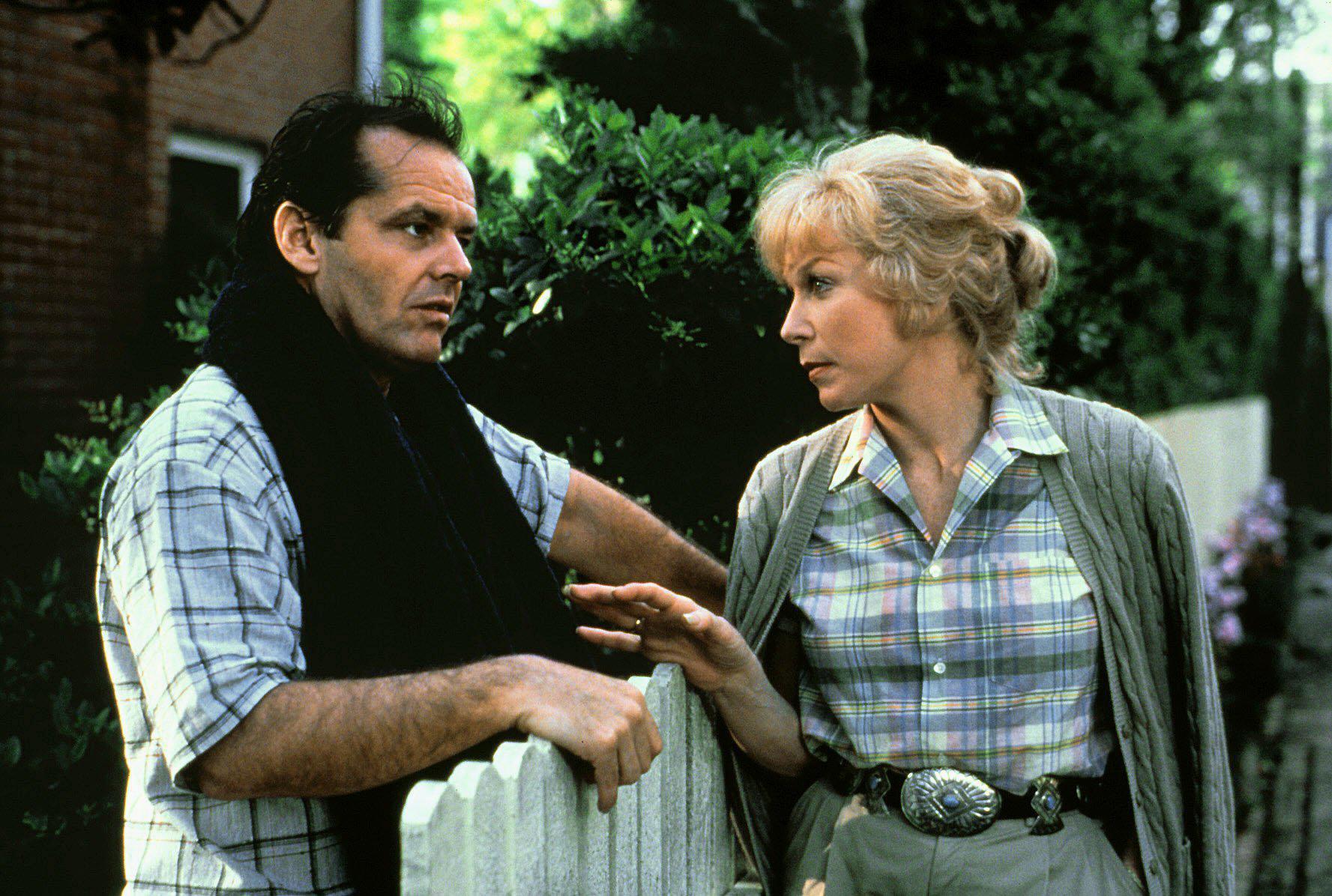
And that’s then we meet Garrett Breedlove, a former astronaut who moves in next-door and stays for the better part of 15 years in an on-again, off-again romance. Played brilliantly by Jack Nicholson, Garrett is the kind of supporting character who lifts a plot to a different height.
One of my favorite exchanges is at a dinner party hosted by Aurora with Emma, Flap, and at least two of Aurora’s suitors:
Aurora: What’s wrong with you?
Emma: I got some good news.
Aurora: What’s that?
Emma: I’m unofficially pregnant. I mean, we haven’t gotten the test results back yet, but you know me, I’m never late.
Aurora: Well, I don’t understand.
Emma: Um, if you’re not happy for me . . . I’m going to get so mad if you’re not happy.
Aurora: [screaming] Why should I . . . why should I be happy about being a grandmother?
Before long, Flap takes a job in Iowa because it’s pretty much all he can get. Emma’s distance leaves Aurora in the uncomfortable position of having to worry more about her own life. At this point, she can only interfere with Emma through long distance phone calls.
Over time, life continues to deal its unexpected hand. Flap begins an affair with a graduate student, he and Emma struggle with money as they have more children, and Emma meets Sam Burns, played by John Lithgow, a banker who has already turned her down for a second mortgage. They begin a relationship that is tender and real and awkward for them both. Like all of the characters in this film, they are searching for connection.
It’s fair to ask how “Texas” this particular Texas movie really is. Certainly, there are nods to the state’s identity. Winger’s expressions are one of the most skillful parts of her acting, and you see her emotions clearly in her face as the family passes a Texas state line sign on their drive to Iowa. Later, Emma tries to build up Iowa to her young son, Tommy, who is having none of it. He responds, “Texas is the best.”
But I like the subtle moments that show this is a different kind of Texas movie for McMurtry. Toward the start of the film, there’s great anticipation that an astronaut is moving in next-door, but Aurora’s housekeeper dismisses the excitement, saying, “Oh, they got one on every corner in Houston.” In modern, urban Texas, the cowboy has been replaced by the astronaut, though this astronaut happens to be a drunken playboy with too much time on his hands. It’s true, too, that despite his clear flaws, he pulls Aurora into his orbit. (It’s worth noting that the astronaut character doesn’t appear in the novel.)
Oh, and about that cowboy hat: DeVito’s Dahlart is the only one in River Oaks who wears Western clothing. In one scene he’s sitting in Aurora’s house, his cowboy hat resting on the dining room table. It appears as merely a prop, present but not worn. It’s a visual symbol that indicates this is not that kind of McMurtry movie.
It’s easy to forget that Terms of Endearment is such a funny movie, primarily because the characters are so honestly written. No one is cracking jokes here, and there are no self-consciously slapstick moments. It is the kind of movie where the moments are so real, you forget that you are watching actors perform and instead feel like you are watching people live their lives, as messy, imperfect, and loving as they can be.
Which brings us to the turn in the story. The slow reveal that Emma has terminal cancer is a plot point handled so realistically that it hits in nearly the same way the news would in real life.
As Emma’s situation grows more dire, one night at the hospital, Aurora—who stays by her side—bursts into the nurse’s station, pleading for her daughter’s pain medication. “Excuse me, it is after 10, give my daughter the pain shot!” Aurora says, desperately. As the nurses try to placate her, Aurora grows more frantic. “Please, it’s after 10. It’s after 10! I don’t see why she has to have this pain! GIVE MY DAUGHTER THE SHOT!” When the nurses finally snap to, largely out of fear, Aurora smooths her hair and says calmly, “Thank you very much.” The scene is funny despite the circumstances, but for anyone who has been through this awful situation, it strikes an honest, familiar chord.
Terms of Endearment marked Debra Winger’s third starring role, the first being in another Houston-based film that you may remember, the second for 1982’s An Officer and a Gentleman, for which she received her first Academy Award nomination for Best Actress. She was nominated again for her portrayal of Emma, but the award instead went to MacLaine.
Both actresses are so good it’s no surprise that they faced each other in the same category. But MacLaine shines so brightly and with such range that she deserved to win that year—and honestly every year after that. Similarly, both Nicholson and Lithgow were nominated for Best Actor in a Supporting Role. Nicholson prevailed, rightfully, in that category.
Years later, McMurtry wrote about Emma, “Though often praised for my insights into women, I’m still far from sure that I know what women are like; but if my hunches are anywhere near accurate, and if I’m not idealizing her, then Emma is what women are at their best.” Terms of Endearment may have seemed like a departure, but the truth is that this story showed that McMurtry had a different kind of range.