
During a photography exhibit at the Wittliff Collections at Texas State University in San Marcos three years ago, Texas music curator Hector Saldana was taken by surprise when droves of young students flocked to photographs of Selena Quintanilla-Perez, the Queen of Tejano who died over three decades ago.
“These kids weren’t even born when Selena was alive,” Saldana says. He wondered what attracts younger generations to the late pop star. “Can we consider Selena purely in the present tense? And can we try to get at what that connection is?”
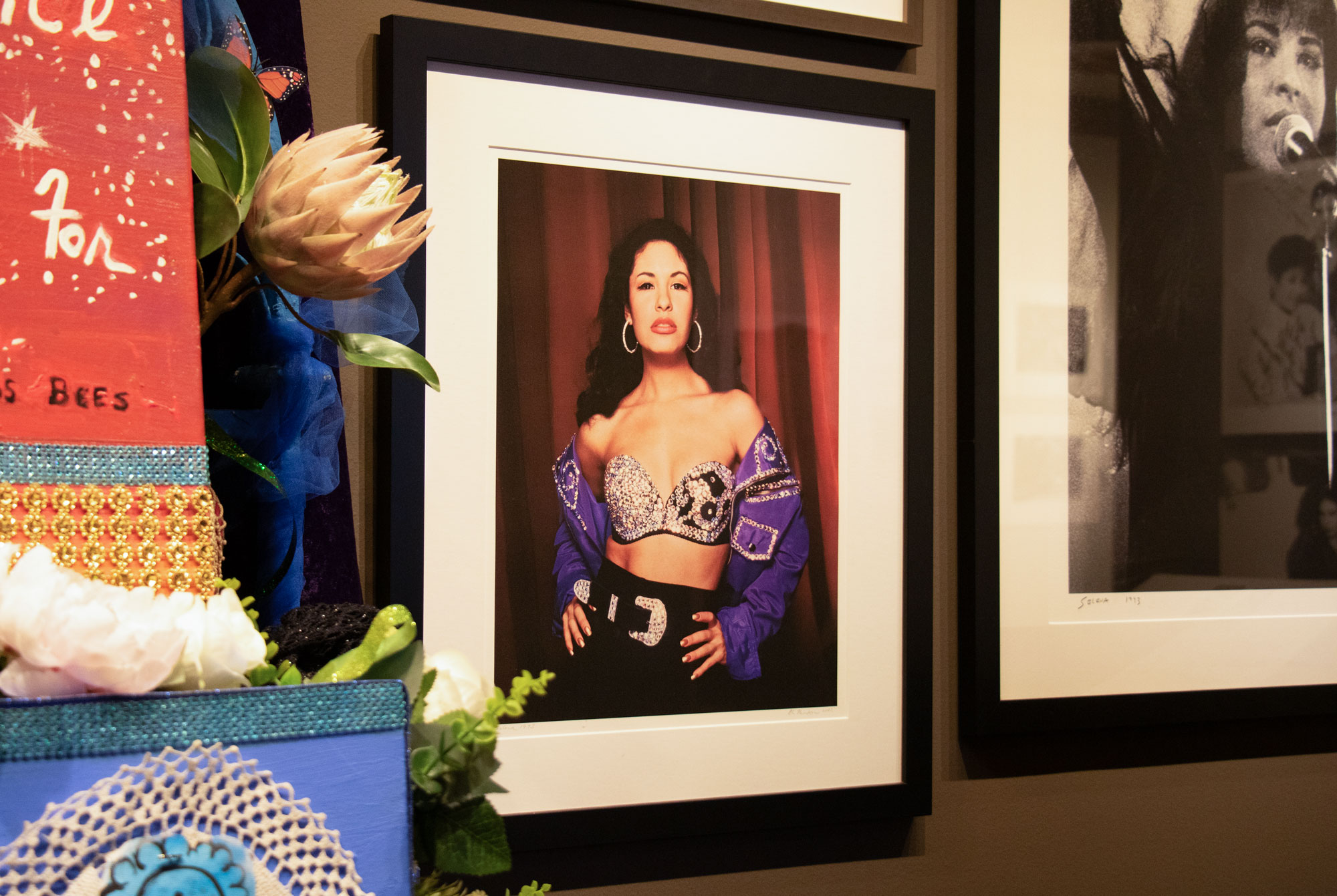
That became the genesis for The Selena Effect, which opened in September at the Wittliff Galleries that runs through December 2026. The exhibit explores Selena’s prevailing legacy as a cultural touchstone and her relevance to future generations.

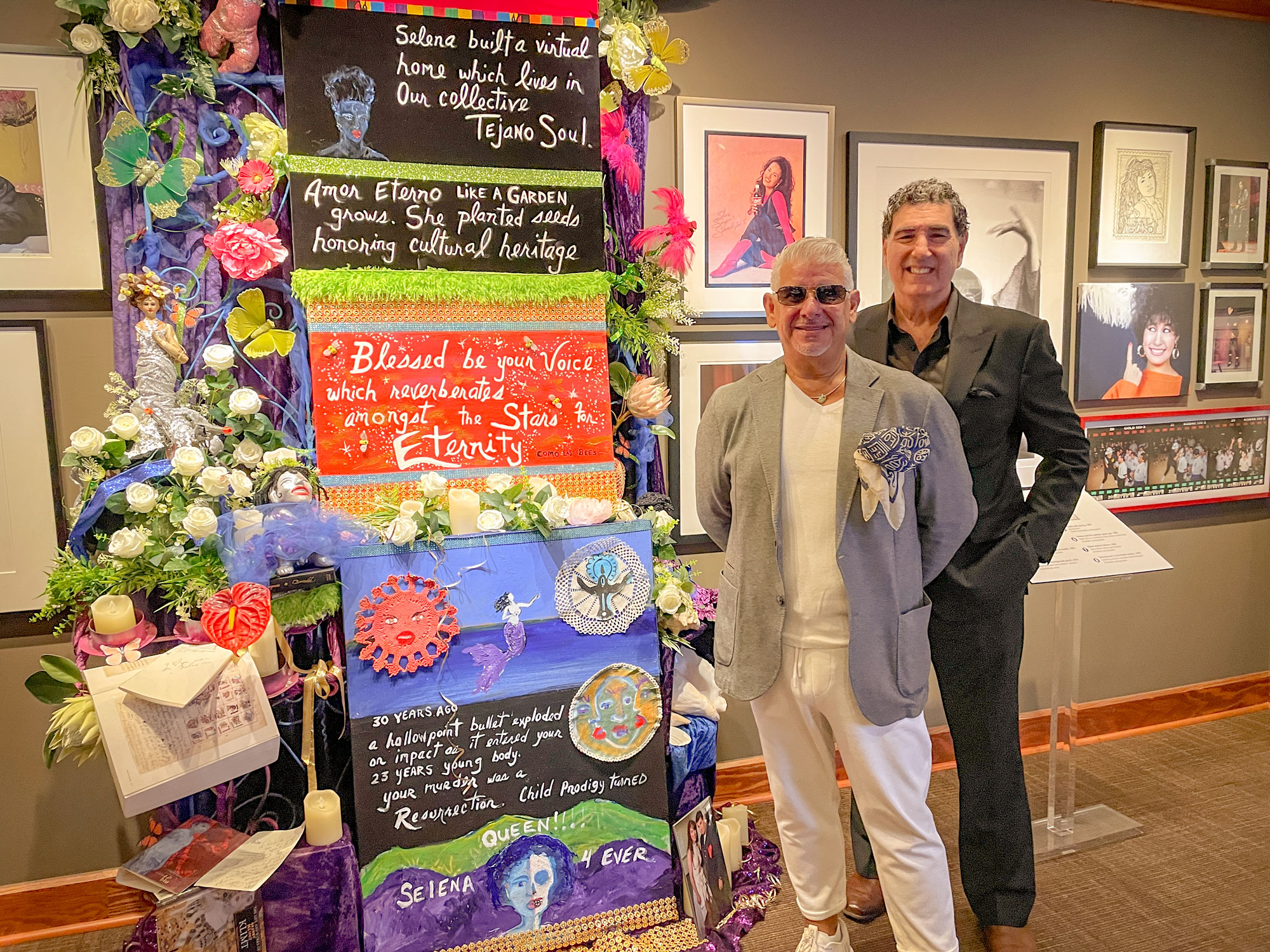
There’s an ofrenda, or altar, built by artist David Zamora Casas of San Antonio; photographs of Selena by John Dyer, Al Rendon, Scott Newton, and Sylvia Reyes; and the centerpiece, two outfits designed for Selena by her collaborator and San Antonio native Martin Gomez, along with his fashion sketches, fashion accessories, notes, and diary. On public display for the first time is Gomez’s original sketch for an outfit that Selena wore when she was laid to rest.
As the author of the 1996 biography Selena: Como La Flor, I was just as curious how young people today see Selena. (Full disclosure: Some items from research materials in my archive at the Wittliff appear in the exhibit.)
In late September, I attended Gomez’s talk about styling Selena at the Alkek Teaching Theater on the Texas State campus. His segment, part of the programming for The Selena Effect, was preceded by the university’s Nueva Generacion mariachi doing a compelling interpretation of “Bidi Bidi Bom Bom” and a snippet of “El Toro Relajo,” that recalled Selena’s rendition from her cameo in the 1994 film Don Juan De Marco.
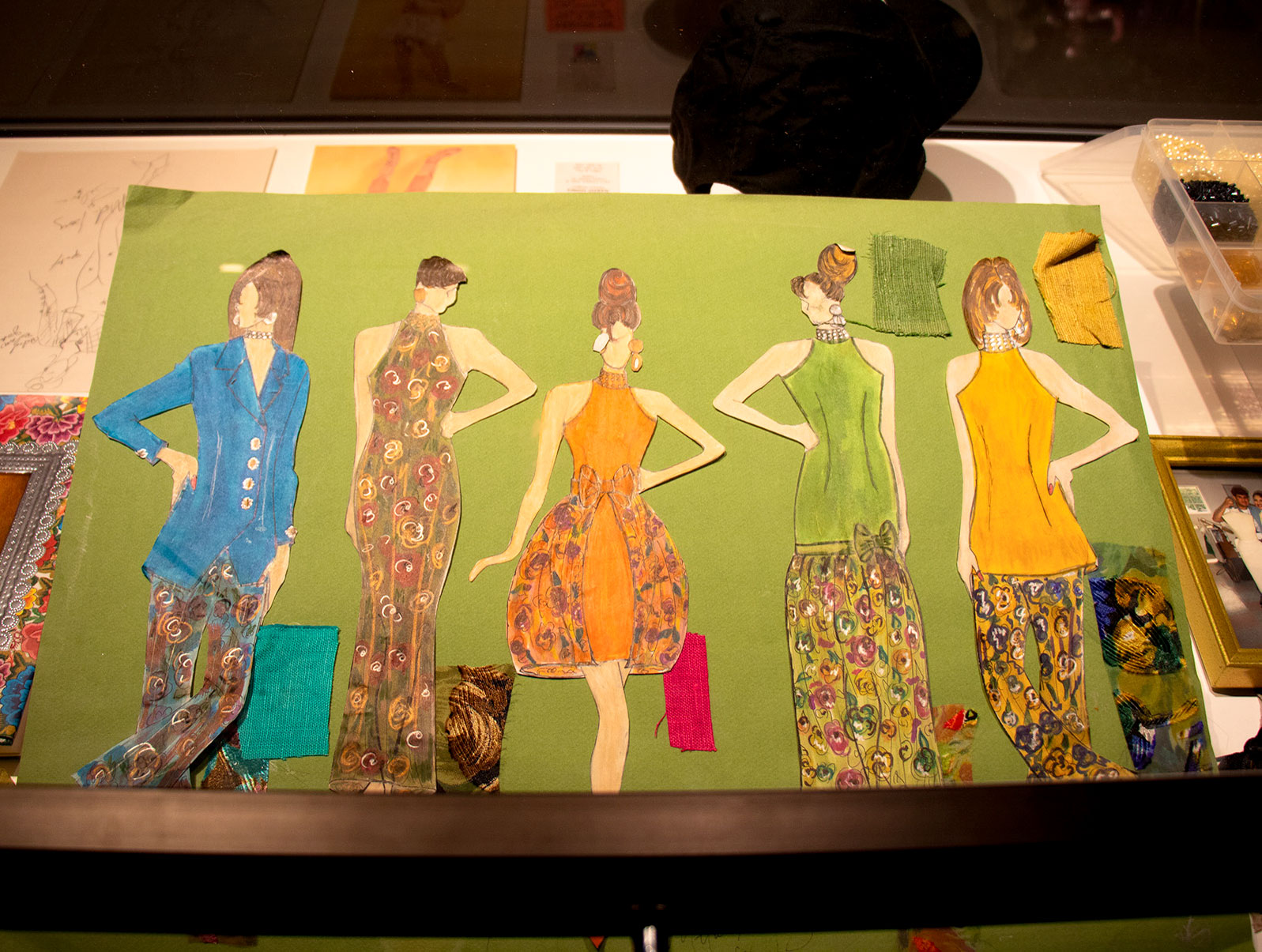
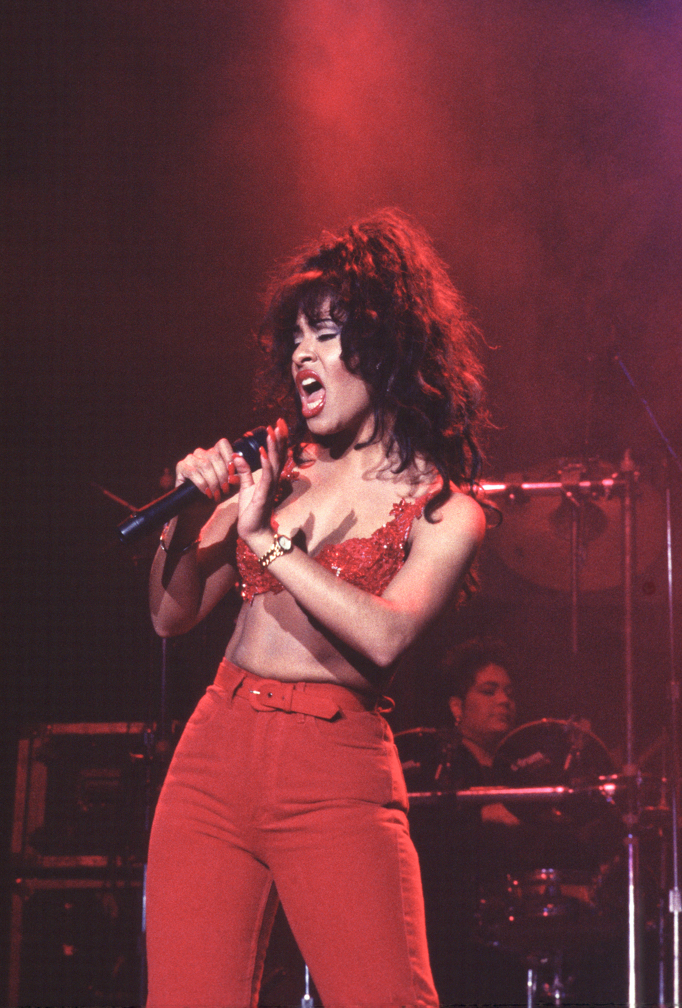
Gomez detailed how he met Selena and found an instant friend with fashion as their common bond. He spoke about how this friendship became a professional relationship, as he helped design her stage wear and pieces for her boutiques in San Antonio and Corpus Christi and for her envisioned fashion line.
Selena may have been a superstar entertainer, but her passion was fashion, he said. That squares with my experience. During my one interview with her, she wanted to talk about her boutiques and design line. Music seemed secondary.
One student, a senior in fashion design named Camille Swann, attended Gomez’s lecture as part of a class assignment. Swann and her classmates also designed two outfits for an imagined Selena appearance at the 2025 Grammy Awards. She took pains to capture Selena’s spirit in her designs: glam but grounded to her roots, youthful and vibrant yet timeless.
“She seemed like such a light,” Swann says. “I wanted to get that same energy.”
Several people had an emotional experience during Gomez’s talk. “To hear somebody who actually knew her, and knew her spirit, it was touching,” Swann says.
Gomez says he was struck that so many people wanted to connect with anyone who was close with Selena. Even he, after three decades of largely avoiding the subject as he worked his way up the executive ladder at the women’s clothing chain Maurices, is diving back into his connection to Selena. Gomez is donating his sketches, designs, notes, and other papers to the Wittliff Collections, which plans to publish his autobiography through Texas A&M University Press.
“I wanted to forget about it,” the 61-year-old says. “It followed me through everything I did. That was always clouded by [the thought], ‘She would’ve loved this. This is what we should have done.’”
Thirty years after her murder, the idea of Selena has evolved. Once a superstar entertainer, she is now an all-purpose icon. In death, Selena is as powerful an inspiration as she was in life. As The Selena Effect demonstrates, perhaps she means more now than ever before.