

“Over the Rainbow” is a song of yearning. Even versions without Judy Garland’s mezzo-alto, leads the listener to dream of endless possibilities within its first two notes. A full octave rests between the C of “sooome” and the higher C of “whereee,” an ascension to a new world.
Recently, I heard an instrumental version played by a young man seated behind a colossal gold organ inside El Paso’s Plaza Theatre. Not much can move me, especially musically, but I felt my eyes fill with mist. My phone buzzed in my pocket. “Gonna get emotional,” read a text from my colleague, seated across the aisle.
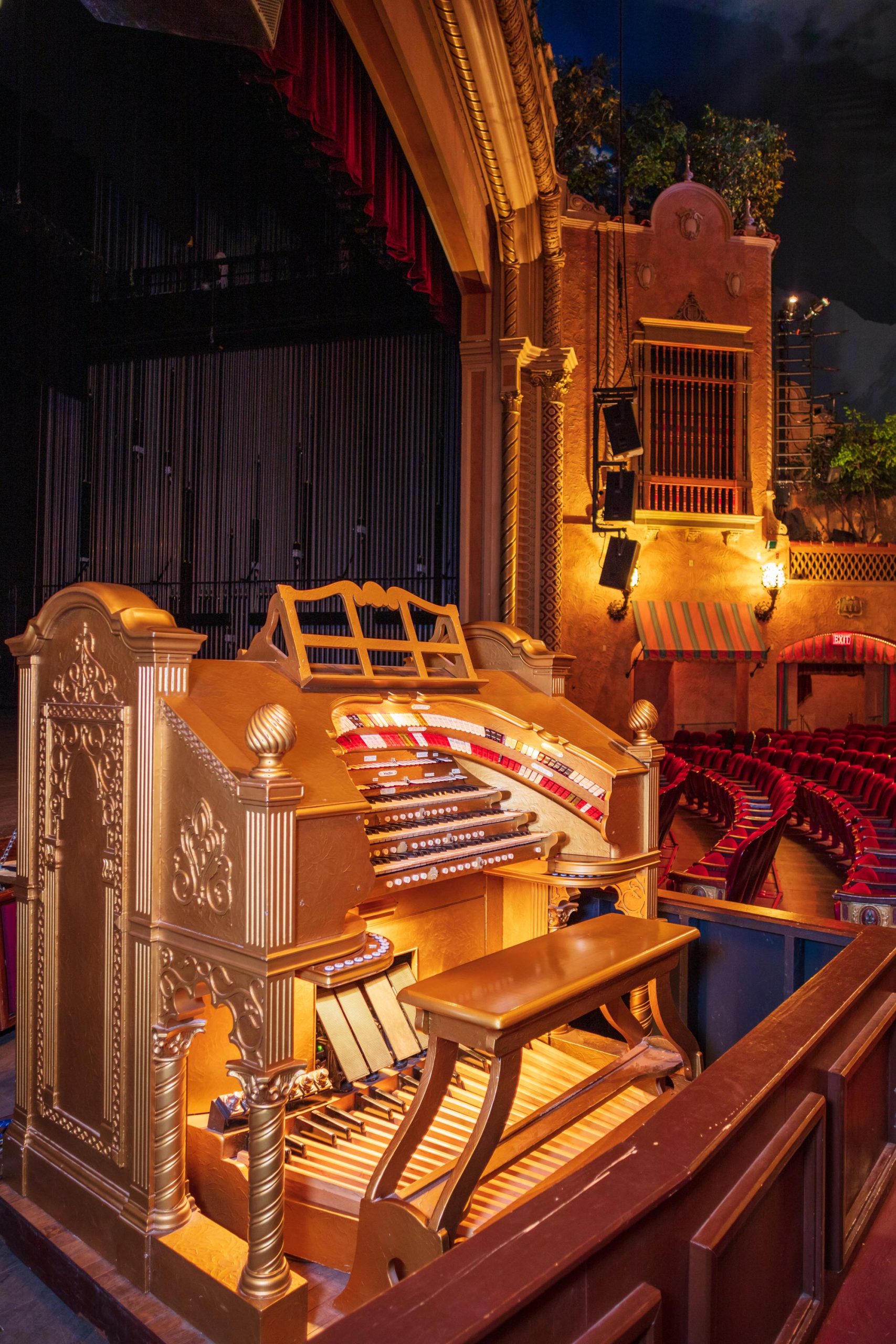
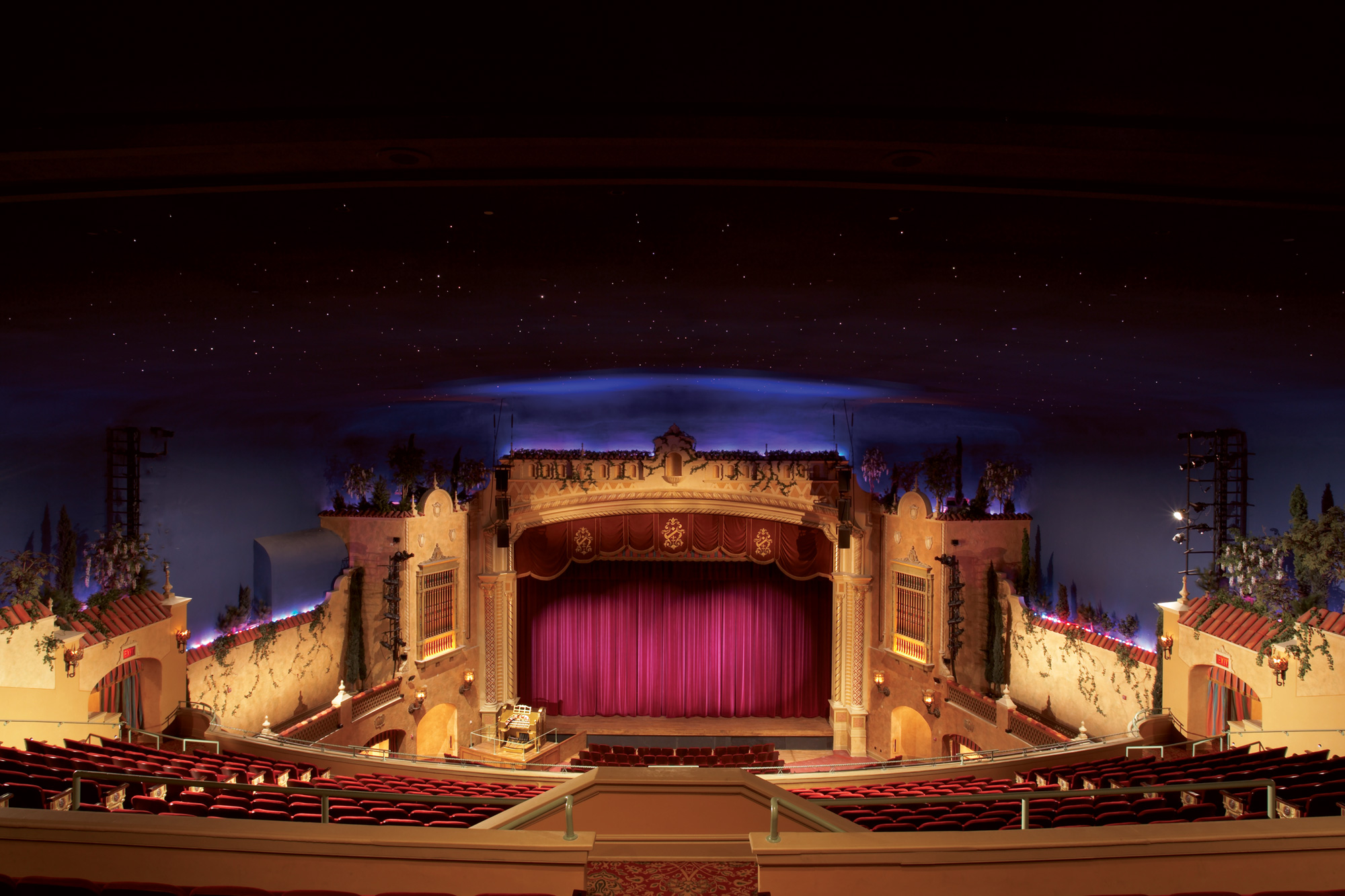
It wasn’t just the song, although the moving rendition didn’t help. It was the setting; the architecture inside the Spanish Colonial Revival theater emulates that of an Iberian courtyard and the ceilings are painted like the night sky. And, it was the magnificent instrument on which he played: the rare, ornate Wyler Mighty Wurlitzer pipe organ, one of only six of its kind in the world.
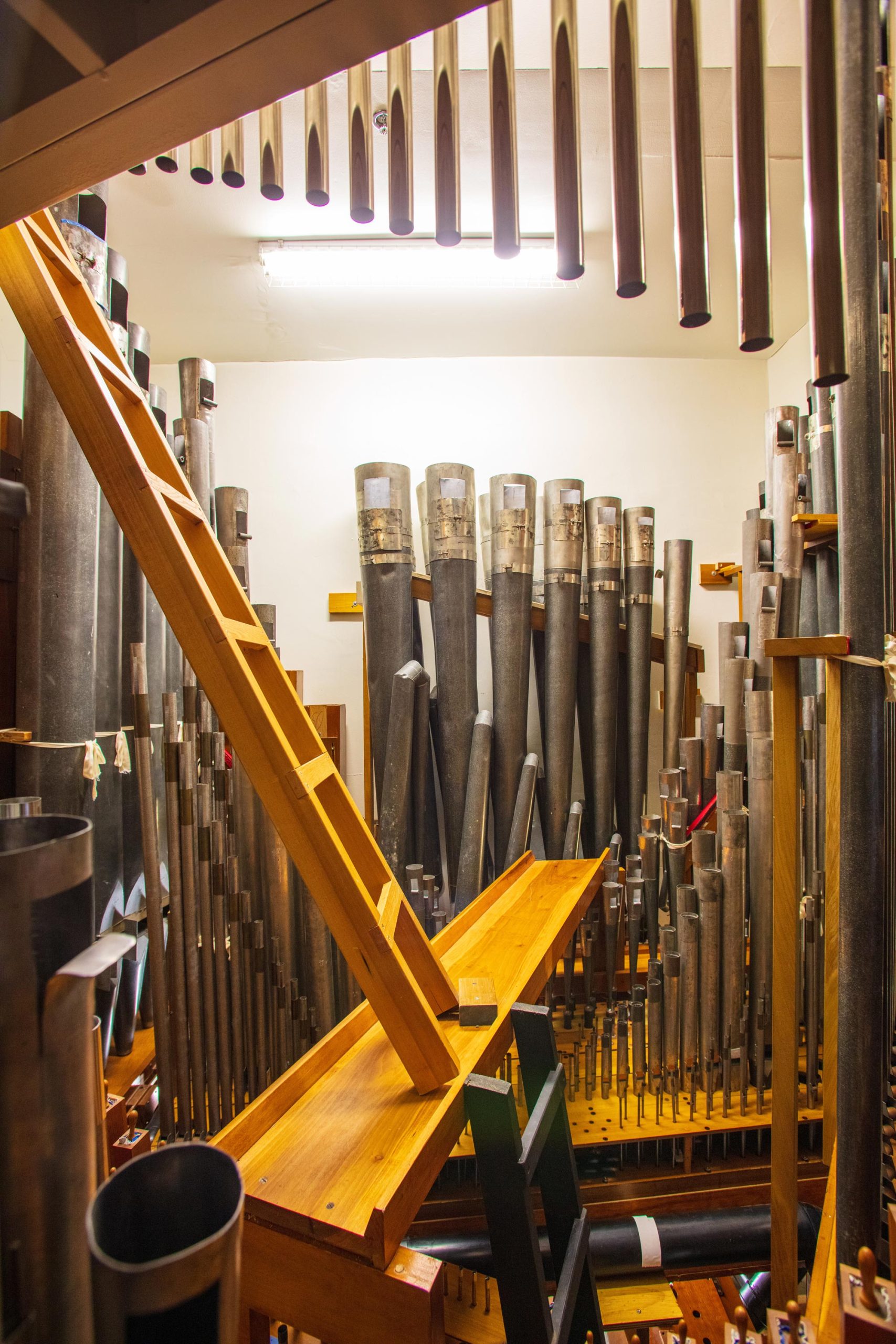
According to the El Paso Community Foundation, which saved, restored, and now owns the organ, it “started life with a rare Moorish-style key desk painted a gold gesso finish,” 1,071 pipes (it has since expanded to 1,914), and a whole slew of other stats and acronyms that won’t mean much to the layperson but rest assured are very impressive.

Shipped from the Wurlitzer factory in North Tonawonda, New York, on July 30, 1930, the $60,000 Cadillac of theater organs found its home inside a jewel designed by the master architect of Texas movie theaters of his time, W. Scott Dunne. As integral as it may seem to the Plaza, nestled stage right on a wooden platform, the organ and its home in downtown El Paso have spent sorrowful time away from each other, even in recent history.
Wurlitzers like this one were created to accompany silent films, but the Wyler Mighty version was anachronistic at its inception. Installed in 1930 in the newly built Plaza Theatre, the organ was about three years late to the supposed death of the silent film era. The Jazz Singer, released in 1927, kicked off the “talkies,” as they were called, and on opening night of the Plaza, on Sept. 12, 1930, the all-color, all-talking picture Follow Thru was screened.
“They were warming up the house, intermissions, they would make it a lively part of the experience,” says Gary Williams, senior program officer at the El Paso Community Foundation.
The Wyler Mighty Wurlitzer did just that for decades, until World War II meant folks that played the organ and technicians found themselves overseas. By all accounts the Plaza thrived for much of the 1940s and 1950s, but eventually the theater—like many of its kind—began a long, slow slump into irrelevance. Television, drive-in theaters, and the suburbs meant less exposure to El Paso’s downtown and the Plaza. As the Plaza Theatre went, in the early 1970s, so did its organ. The Plaza briefly reopened once in the ’70s and once in the ’80s, but largely remained shuttered. Once the El Paso Community Foundation saved the Plaza Theatre in 1985 and later donated it to the city, they also wanted its most important component: the Wurlitzer.
Getting the organ back wasn’t easy. The owner, an airline pilot in Dallas, purchased it in 1972 when Karl Hoblitzelle of Interstate Theaters sold the Plaza. He didn’t want to part with it. He had built a house in his backyard for the Wyler Wurlitzer, where he would play it from time to time. Still, the El Paso Community Foundation was undeterred.
“It was the beating heart of the theater,” Williams says. “We wanted it back.”
Eventually, the owner died in the 1990s and the foundation worked with his partner to purchase the organ for around $50,000, partially restoring it. But they had another problem: there was nowhere to put the Wyler Wurlitzer as the Plaza wasn’t ready to reopen yet. The organ needed to be in a safe place where it would be played often enough to keep it in working shape. So it landed, naturally, at the mall until the Plaza reopened for good in 2006.
One of the organists who played the Wurlitzer at the Sunland Park Mall was a man named Walt Strony. A veteran silent film accompanist, his mentors and friends included Gaylord Carter, who at 21 was hired as the organist at Sid Grauman’s Million-Dollar Theatre and Lee Erwin, who re-scored every Buster Keaton silent film.
Strony, who comes to El Paso every summer for the Plaza Classic Film Festival, is one of six organists who accompany silent films like Keaton’s The General and It, starring Clara Bow. “When you watch Walt, he’s doing this with no musical score, for a two hour film,” Williams says. “I don’t know how he does it.”
Strony utilizes the entire instrument, which is equipped with sounds like whistles, bells, and what Williams refers to as “awoogah horns,” improvising and turning on a dime if need be. “It’s my job to create a musical backdrop that helps the actors emote from the screen,” Strony says.
While Strony says that the Wyler Wurlitzer isn’t too difficult for a trained organist to play, he is so adept at his craft because he breaks down film like Tom Brady preparing for the Steelers on Monday Night Football. Williams says that Strony will sit with his laptop and practice in his hotel room, and the organist himself notes the care he takes in creating a score. “My goal is to be as historically accurate as possible,” he says, “meaning that I never play music that was written after the film was released.”
Williams acknowledges the difficulties in ensuring that this niche skill—and thus, the organ itself—continues to thrive, but that some younger people are interested in playing it. “There is hope,” he says, that the tradition will be carried into an uncertain future. In fact, Strony helped train a 21-year-old neophyte named Joshua, the same musician who played “Over the Rainbow” for our tour group.
Today, the Wyler Mighty Wurlitzer Pipe Organ is used, in addition to silent film accompaniment each summer, for high school graduations, before talkies to warm up the crowd, and to enhance the space for visitors to the Plaza Theatre. And on a random Wednesday in April, to make some out-of-town visitors, for a moment, well up and imagine a better world beyond this one.