

Although it now sits motionless, the green Model T truck housed in Waco’s Dr Pepper Museum once sputtered loudly as it trekked across the narrow dirt roads that characterized American travel in the early 20th century. As automobiles became more widely accessible, those dirt roads were paved over and expanded into the vast network of highways and interstates we know today. Convenience stores followed soon after, providing Americans with much needed rest during their travels and supplying food and beverages that could be brought on the road.
The story of these stores and the people who use them are on display in the newly renovated Wilton’s Landing exhibit, which reopened in December 2024. The second-floor exhibit now sheds light on the history of road travel and convenience stores with an emphasis on shops owned and frequented by Black, Latino, and Jewish Americans during the Jim Crow era. Named after the museum’s founding president, Wilton A. Lanning Jr., the exhibit features interactive elements like a checkout counter with replicas of vintage products that visitors can use to simulate working and shopping at a 20th-century store.

“The convenience store is a really important part of the soft drink industry, but it’s also an important part of the American way of life,” says Joy Summar-Smith, the associate director of the Dr Pepper Museum. “Cars are uniquely American, and because of that, convenience stores have become an important part of our lives.”
While travel increased for many and became easier with the aid of convenience stores, gas stations, and hotels, these amenities weren’t available to all. Especially in the South, non-white Americans had to carefully plan their routes to find stores that would serve them and to avoid sundown towns, where they could potentially face violence.
“It was pivotal to have gas stations and stores that Black travelers could stop at,” says Gavin Porter, a former intern with the Texas Historical Commission who worked on additions to Wilton’s Landing. “You had to be extremely strategic in the ways that you planned your travels.”
Black travelers needed to know when and where it was safe to stop. In 1936, Victor Hugo Green, a U.S. Postal Service worker from Harlem, New York, established The Green Book, a travel guide with the purpose of giving Black travelers “information that will keep him from running into difficulties, embarrassment, and to make his trips more enjoyable.” The book was inspired by travel guides of the time, including The Jewish Vacation Guidebook that catered to Jewish Americans. Initially intended to focus on New York City, Summar-Smith says The Green Book grew thicker with each edition as it filled with submissions from readers across the country.
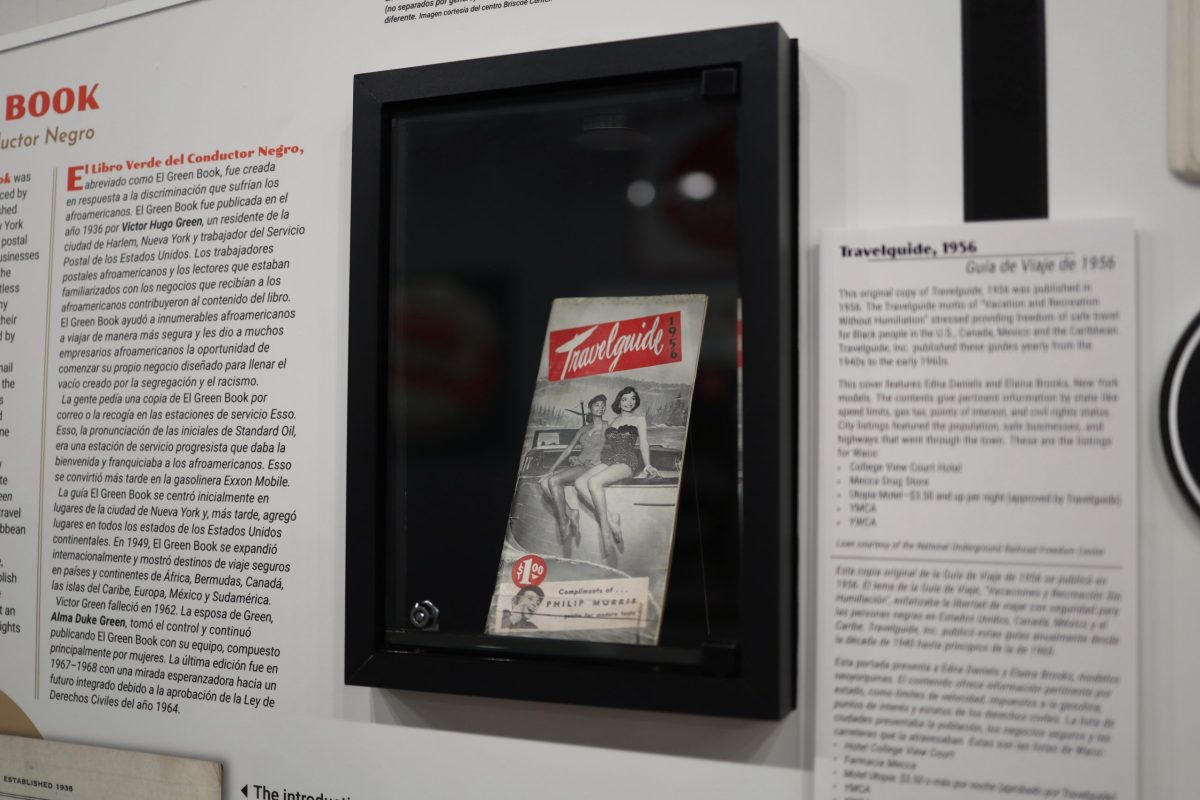
Wilton’s Landing now has an interactive map that features locations from Waco that were mentioned in The Green Book, as well as a copy of the 1956 edition of Travelguide on loan from the National Underground Railroad Freedom Center. Travelguide, while in circulation for a shorter time period than The Green Book, included a variety of Black-friendly sites and points of interest like national parks.
Leslie Wolfenden, the Historic Resources Survey Coordinator with THC, worked with Porter on the African American Travel Guide Survey Project to document businesses and sites in Texas that were mentioned in The Green Book. She says that only 25% of the sites mapped by THC for the project are still standing; in Waco, there are only three. Most of the other sites in town, like the Ebony Motel, were demolished. Opened in 1951 by David Hoppenstein, a Jewish man, the hotel was managed by African Americans for African Americans. It was listed in The Green Book from its opening in 1951 until the book’s last publication in 1967 and was last advertised in a 1976 edition of the Waco Tribune-Herald.
Many of these sites were demolished as a part of the Urban Renewal Program, which cleared areas around downtown Waco and along the banks of the Brazos River where marginalized communities resided. The expansion of Baylor University and the construction of Interstate 35 also displaced the neighborhoods that were previously there.
“When they were putting in interstate highways, because that coincided with the Jim Crow era in the 1950s, the planning for those interstate highways often went through the minority neighborhoods and basically demolished the area,” Wolfenden says.
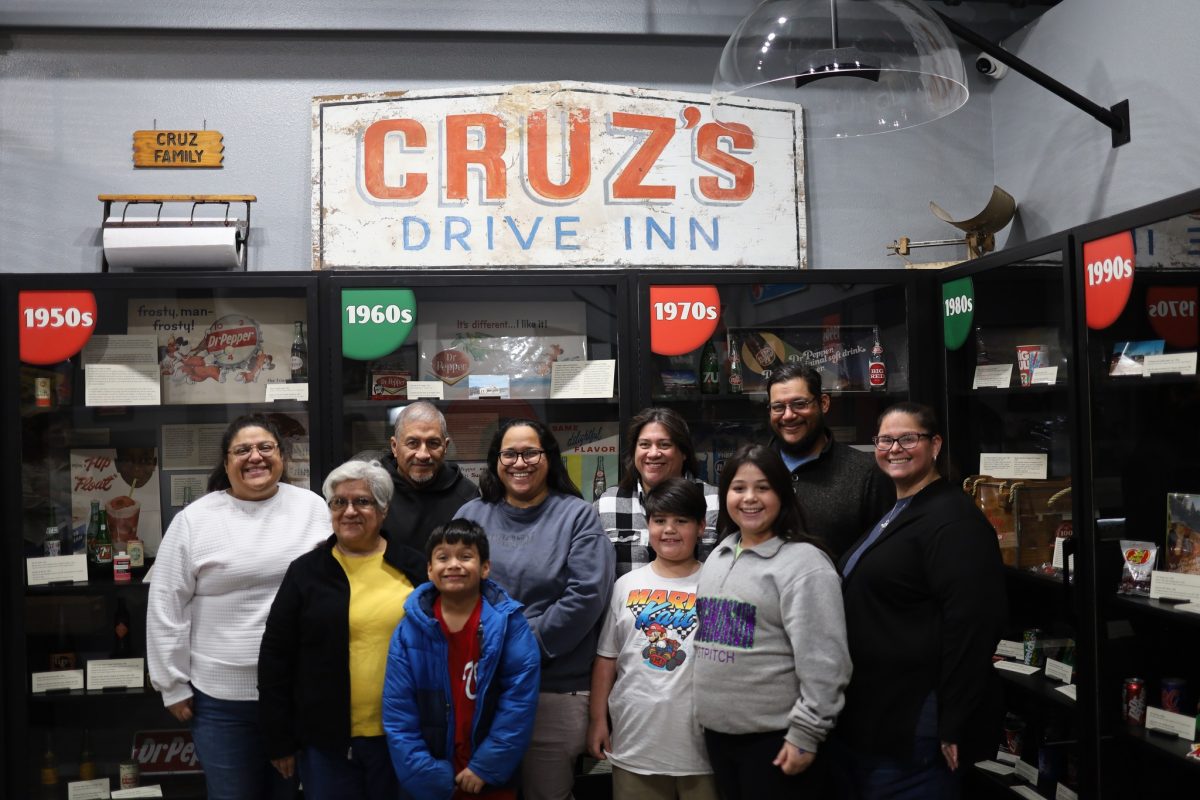
Two of the neighborhoods that were uprooted by the Urban Renewal Program in Waco, and which visitors can learn about from Wilton’s Landing, are Waco’s Sandtown and Calle Dos, both predominantly Mexican American communities along the river. Located in present-day downtown Waco and parts of the Baylor University campus, the neighborhoods were home to businesses that served the needs of the Mexican American community who called the area home. One of these sites was Cruz’s Drive Inn, who served customers for 42 years and whose photos and newspaper clippings are on display at the exhibit.
While many of these businesses are no longer standing, Porter says it’s important to understand and know the history exhibited in Wilton’s Landing and mapped by the African American Travel Guide Survey Project. “History’s real. It’s important,” says Porter, a PhD student in community and regional planning at the University of Texas at Austin. “African Americans have had a trying and long history in the United States while, at the same time, we have a great history. We’ve done amazing things here.”