
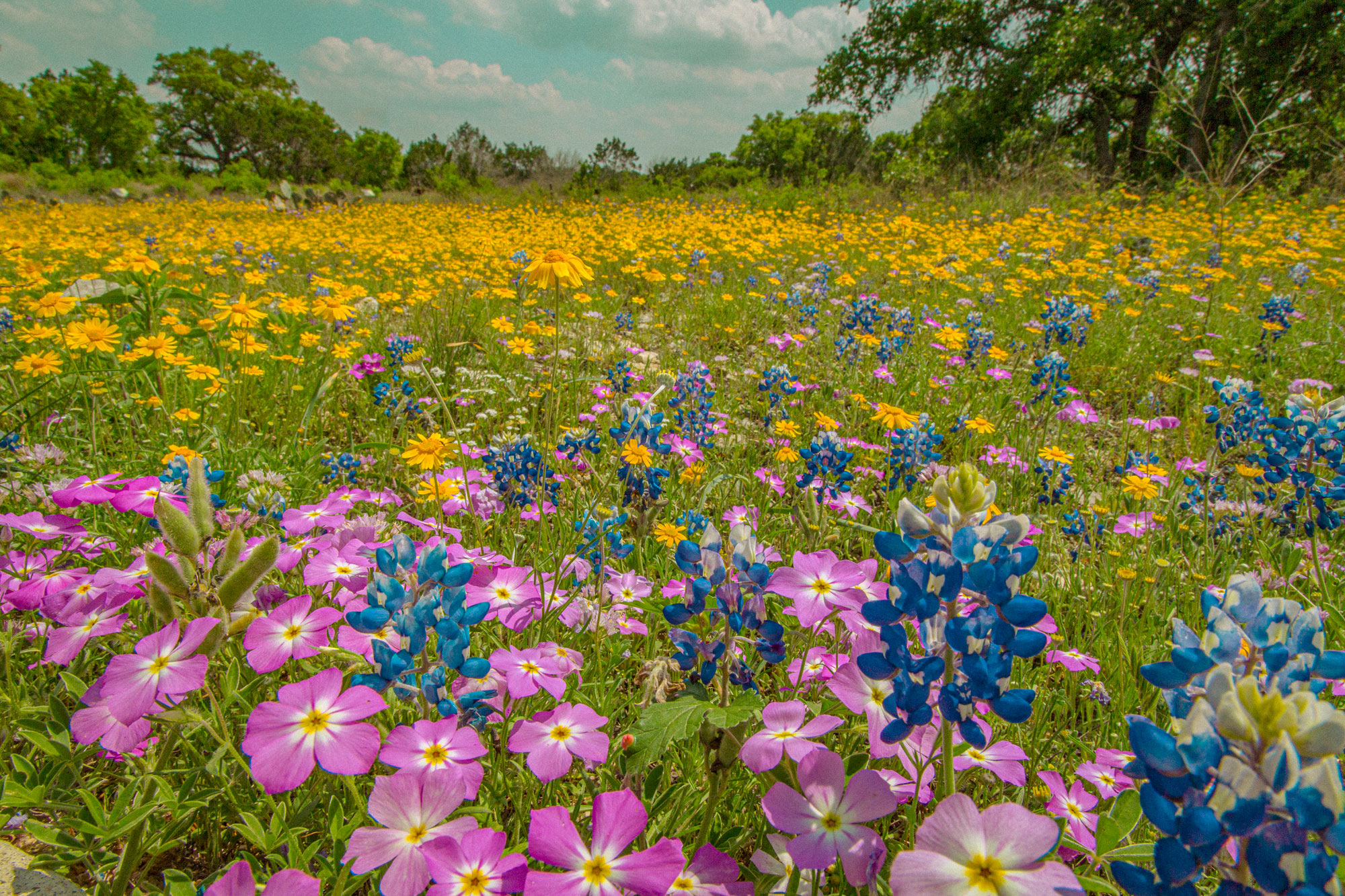
Watching wildflowers in Texas is like a game of hide-and-seek on a statewide playing field.
The first half of the game is already afoot: annual wildflower seeds germinated last fall in ditches, fields, and highway easements, sprouting and somehow surviving through the frigid winter months. Between then and now, they’ve hunkered down, hiding in plain sight from all but the keenest of observers. But in two weeks, give or take, as the spring season warms our state from brim to bootheel, Texans will once again open their eyes, take out their smartphones, and start to seek—whether the flowers themselves are ready or not.

The game may be more challenging in 2026 than in some past years due to abnormally dry soil conditions and rapidly accelerating high temperatures in February, says Larry Stein, a professor and state extension horticulturalist of Texas A&M’s AgriLife Extension Service. Currently, in his stomping grounds of the Winter Garden Region west of San Antonio, the wildflowers that have cropped up so far are mere “skeletons of what they should be” for lack of sufficient precipitation.
“We just need some water and the water needs to come soon, or the bloom is going to be very sparse and sporadic, except in areas where people actually got some rain,” such as in portions of East Texas, far West Texas and the upper reaches of the Hill Country, Stein says.
Wildflowers require ample rainfall not just to grow their stems, leaves, and root systems but also to produce the prodigious blooms that prompt passing motorists to fawn over the multicolored flora. According to the Texas Water Development Board, 74% of the state was in drought as of late February. One-quarter of the state is considered “abnormally dry” and is liable to slip into drought in the coming weeks if the trend of relatively high temperatures and low rainfall totals continues.
In some parts of the state—such as in my hometown of Abilene—snow and ice draped the landscape for days on end in January. There, wildflowers may have responded to the cryogenic conditions by “bushing out,” as Stein puts it, meaning they produced more leaves to capture more sunlight, which could result in more prolific blooms if the drought subsides soon. If it doesn’t, plants suited for drier, poorer soil may fare better than others: Indian paintbrush, prickly poppy, bee balm, eryngo, thistle, Mexican hat, and prickly pear among them.
Spring has already sprung in South Texas and the Rio Grande Valley, where primrose and mountain laurel are already starting to bloom by the roadside; in East Texas, where rainfall is usually plentiful, blooming azaleas and flowering dogwoods will mark the shift in the season.
Bluebonnets, the state flower of Texas, “look really pitiful right now” in Stein’s swath of the state, but he’s holding out hope that we may reap a bounty yet. “If we would get a two-inch rain in the next week, 10 days, I think we’d be amazed at what comes out,” he says. “There are more plants out there than we know about. And the only way we’re going to see them is if it rains. I’m hoping we’re going to be pleasantly surprised.”
It’s not looking ideal for the Instagram set, but Stein doesn’t rule out a last-minute miracle. “I see doom and gloom because of the weather,” he says, “but I think other people see spring as a new beginning.”
The prognosis for summer-flowering plants is still up in the air—or, perhaps, down in the soil.