
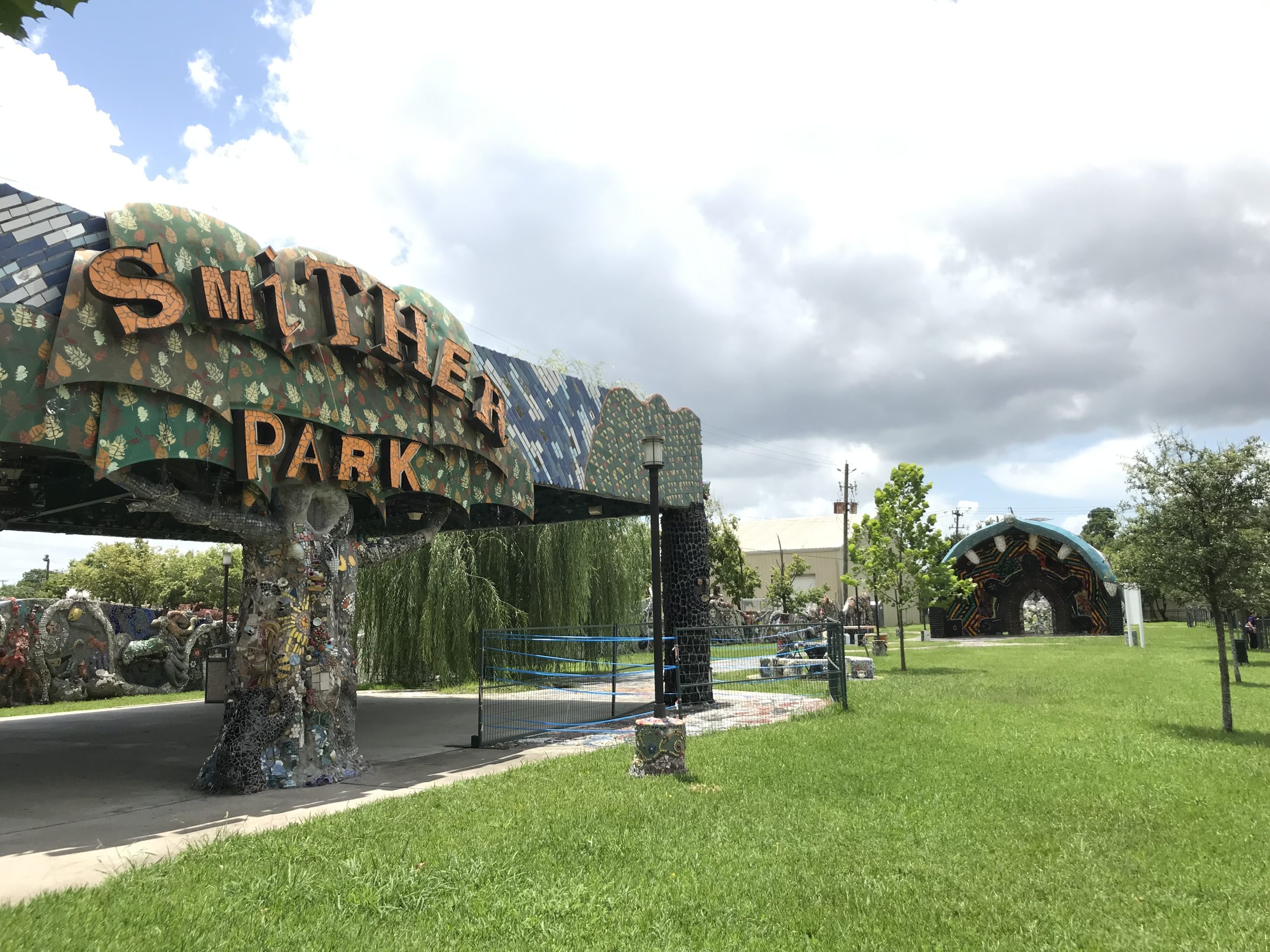
Smither Park is a feast for the eyes. Towering tigers and trees of life stand frozen in time. Mosaicked tire swings, trash dragons, and sea monsters shimmer next to technicolor tulip gardens.
Located in Houston’s trendy East End, the city’s first folk-art inspired green space is completely covered in mosaics and part of the neighboring Orange Show Center for Visionary Art. The latter is temporarily closed as it undergoes an ambitious, multiyear expansion project, though Smither Park, still open and free to the public, is well worth a visit in its current form. The park celebrates the 10th anniversary of its dedication with a weekend festival Sept. 19-20.

For first-timers and veteran visitors alike, stepping foot on the grounds feels both transportive and sensorial. “It’s like a visual cacophony,” says Pete Gershon, the Orange Show’s programming director. “There’s so much going on, and for a second it’s hard to parse, but after a while, you see there’s logic and consistency to it.”
The three-quarter acre venue is home to an amphitheater for musical programming, a covered pavilion, a meditation garden, swing sets, and a 400-foot memory wall, all of which are densely decorated with elaborate mosaic works by local and visiting artists.
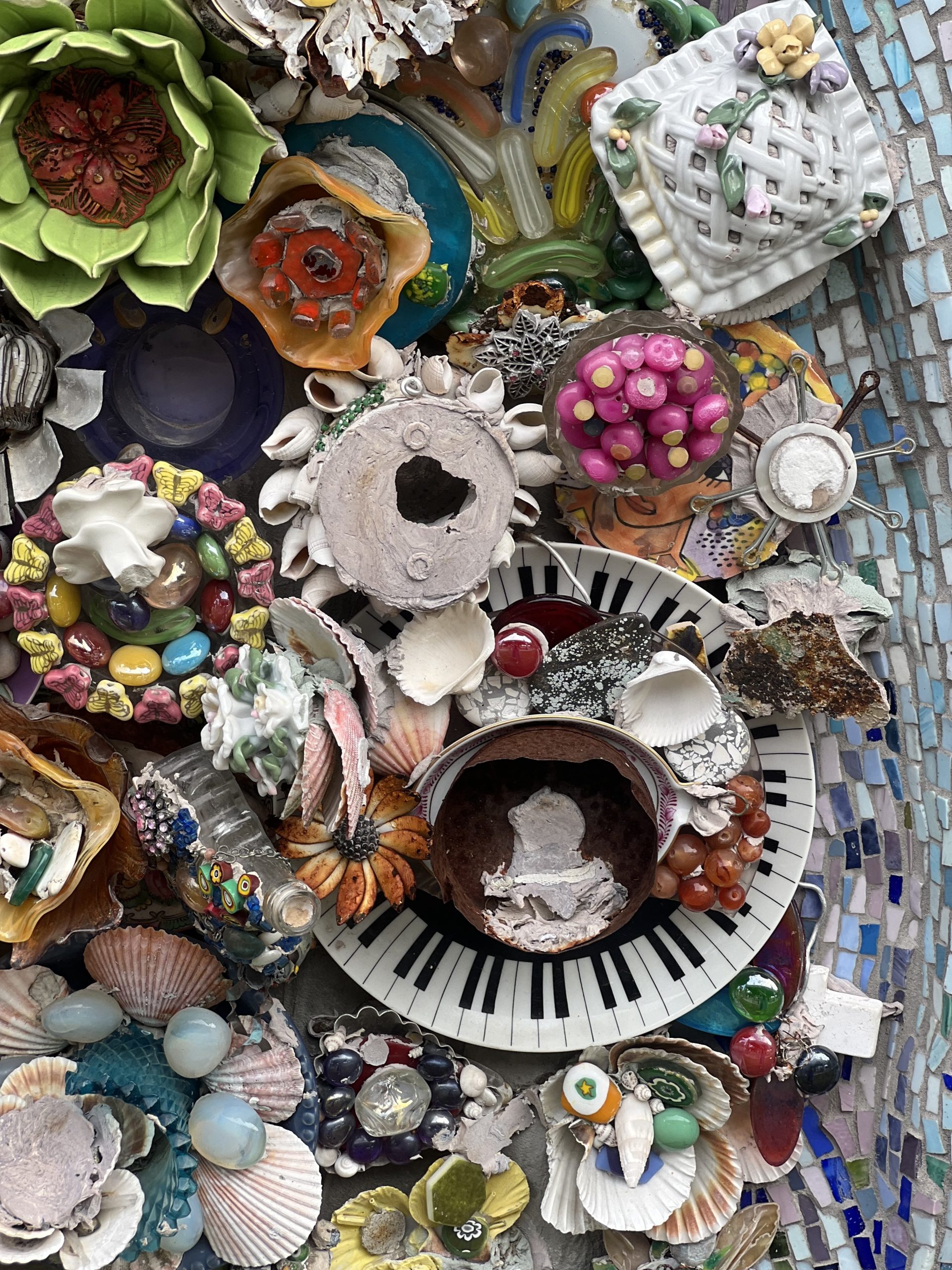
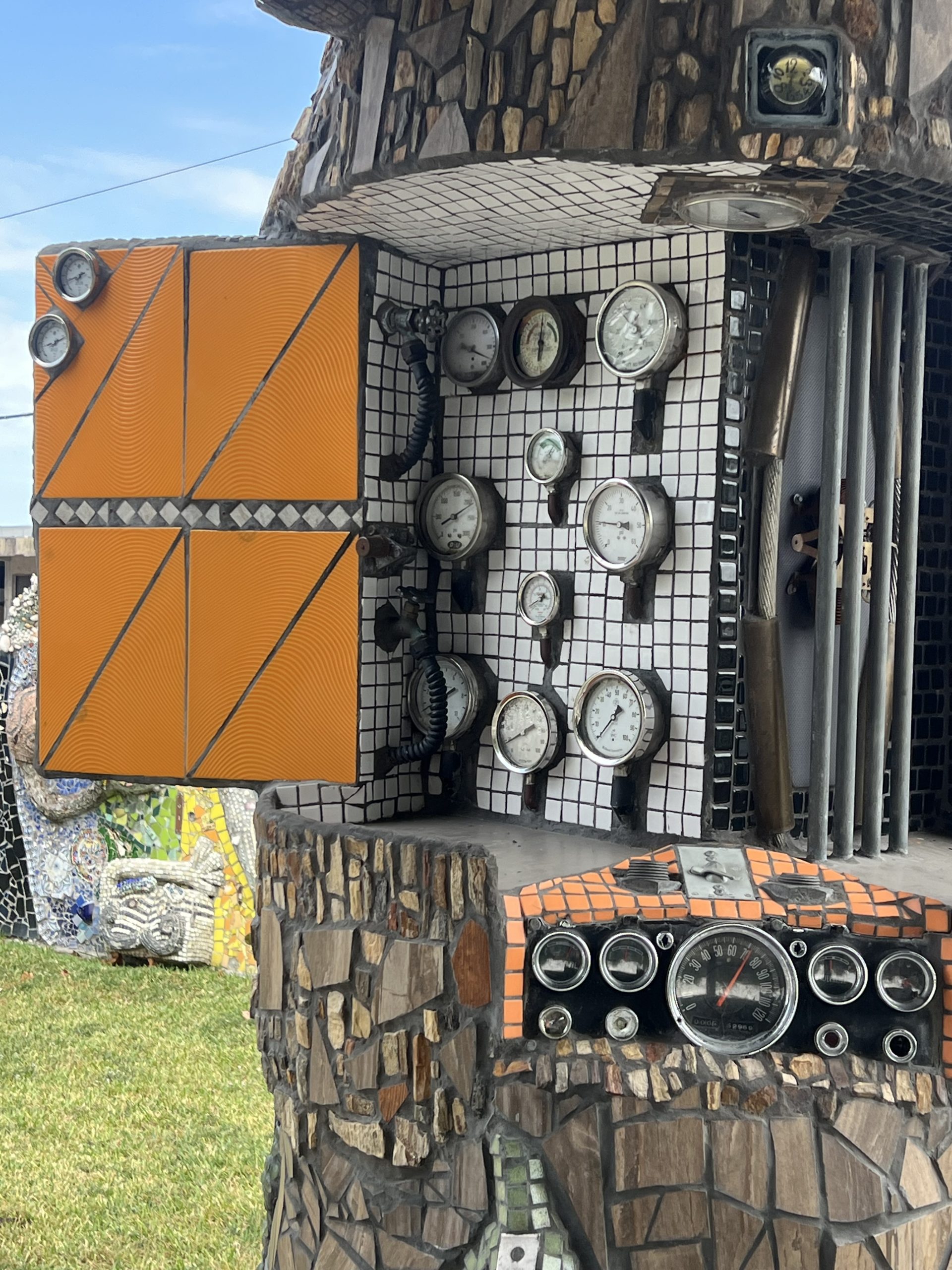
More than 300 artists have contributed to date, using found or recycled objects like broken plates and coffee mugs, shells, and speedometers, all of which have been donated by the public or sourced directly by the artists themselves.
“Something that makes this a unified artwork is people are dipping into troves of chips and bits of repurposed things that’ve traveled through time and space, which gives it a certain look,” Gershon says. After a few minutes of strolling alongside the undulating surfaces, geometric patterns, animals, and characters appear from the fragmented wonderland, with its landscape of beads, brooches, and bits of broken porcelain.
Today, the park is actively recruiting and onboarding new talent, while welcoming self-trained artists of all ages and experience levels to submit an application. With each proposal, applicants are encouraged to avoid religion and politics, along with words or slogans, leaning instead into figurative designs with stories to tell. That could mean a frosty snowman and a scarlet-colored octopus, for example, or a raccoon plucking the guitar, all of which have their moment in Smither Park’s sun.
Behind this quirky destination is the late artist and builder Dan Phillips, who worked alongside Stephanie Smither to design the park in honor of her husband, John. The Smithers were board members of the Orange Show as well as longtime supporters and collectors of self-taught art. The close friends developed all the concepts together, while creatives like Nek Chand and his recycled Rock Garden in Chandigarh, India, helped inspire Smither Park’s mosaic focus.
“When we say the Orange Show Center for Visionary Art, we’re thinking of visionaries like Dan,” Gershon says, noting Phillips’ unusual professions as both an army intelligence officer and a syndicated cryptogram puzzle maker, among other things. “He had a unique and encouraging view of what art could do and he welcomed anybody to get involved, de-emphasizing technical ability and emphasizing imagination, determination, and the desire to create.”
In the 10 years since its dedication, the venue has become a mirror of Houston’s creativity and collaborative community spirit, as well as a hub for seasonal programming, offering workshops, craft activities, markets, and live music. Currently, artists are working on the memory wall’s “sunrise side,” aptly named for its eastern orientation, with the hope that younger generations will add to its ever-changing façade.
“We want the park to be more and more reflective of the makeup of Houston,” Gershon says. On Saturdays especially, visitors are encouraged to come see the artists in action and learn more about the layered, living legacy that glimmers in every salvaged piece and sustainable shard. They may even let you add a piece on the wall, Gershon says. “If you can spread peanut butter on a cracker, you can easily make one of these mosaics.”