
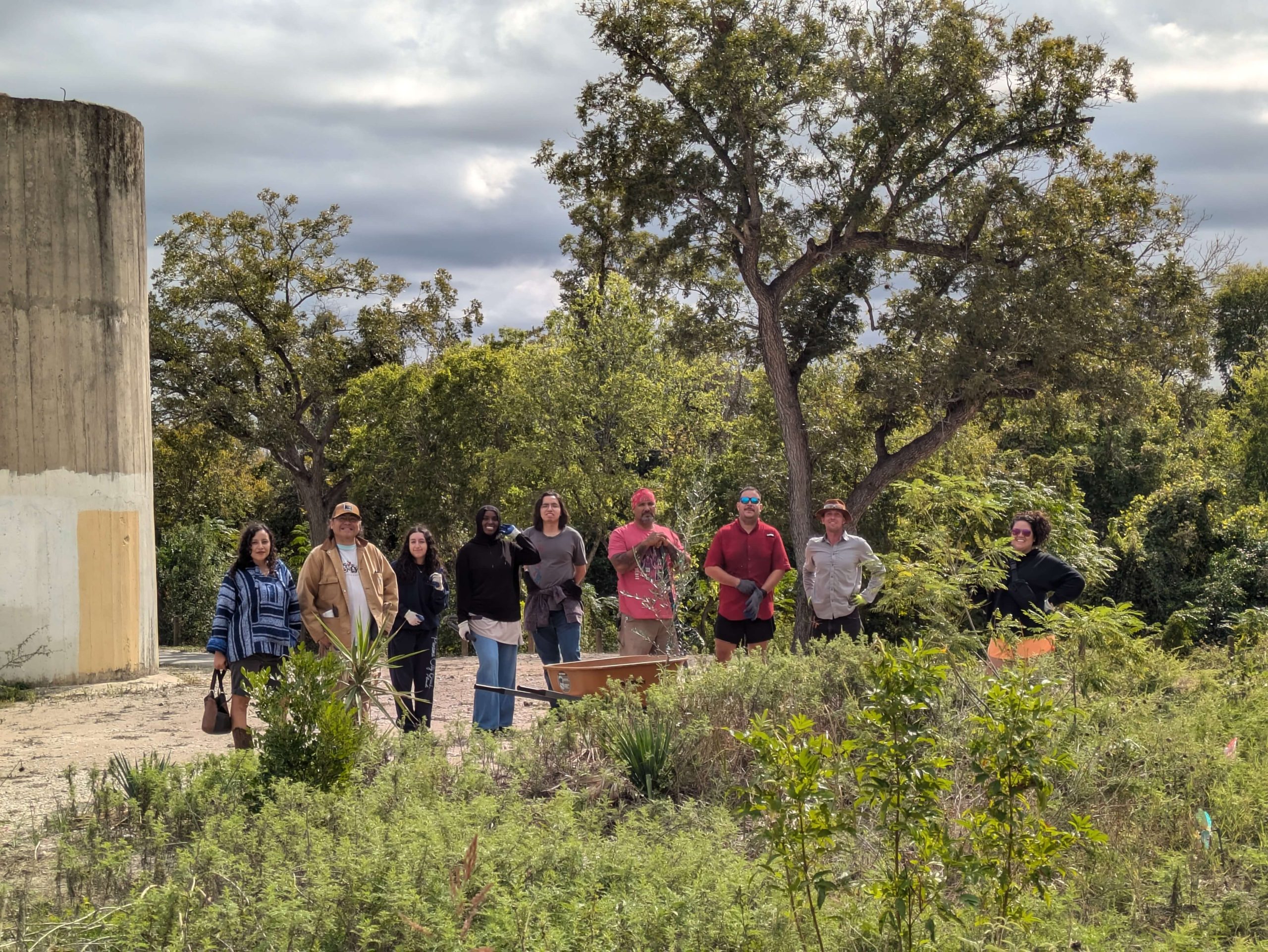
To joggers along the Acequia Trail in San Antonio, the garden looked abandoned after a spurt of summer rains. Lush and overrun by pigweed, or amaranth, it bore little resemblance to the arid plot it had been just last March, when apocalyptic winds swept up a cloud of sun-scorched dirt during the spring equinox. Undeterred, members of the Tāp Pīlam Coahuiltecan Nation visited to bless the new planting season and showered a crowd of volunteers with incense from the estafiate, or white sagebrush, that grows just steps away.
With the arrival of another brutal summer, Tamōx Talōm sounded like an apt name for this 4-acre regenerative agriculture project. The phrase means “fire spirit” in the pajalate language spoken by the ancestors of Jesse Reyes, a representative at the urban farm. “The sun is a fire spirit. The plants take its energy through photosynthesis, and it feeds the fire within us,” Reyes says. Although Reyes was raised nearby in Mission San José, his family has been in the area well before there was a San Antonio—which they have always known as Yanaguana, or water spirit.

The Tamōx Talōm Food Forest took root in 2021 when the Food Policy Council of San Antonio gathered to brainstorm ways to take advantage of Bexar County floodplain property along the San Antonio River. After community input, the group settled on a name that honored the original caretakers of Yanaguana. Its philosophy of Indigenous-led permaculture—working with the natural habitat rather than subduing it—is rare outside of Native American reservations, which comprise less than .01% of Texas land.
After the new Tamōx Talōm executive committee selected Padre Park, planting began in 2022 with native trees that produce fruits that Reyes’ ancestors have foraged here for centuries, including Mexican plum and red mulberry. The goal is for the trees to eventually provide both food and protective canopy.
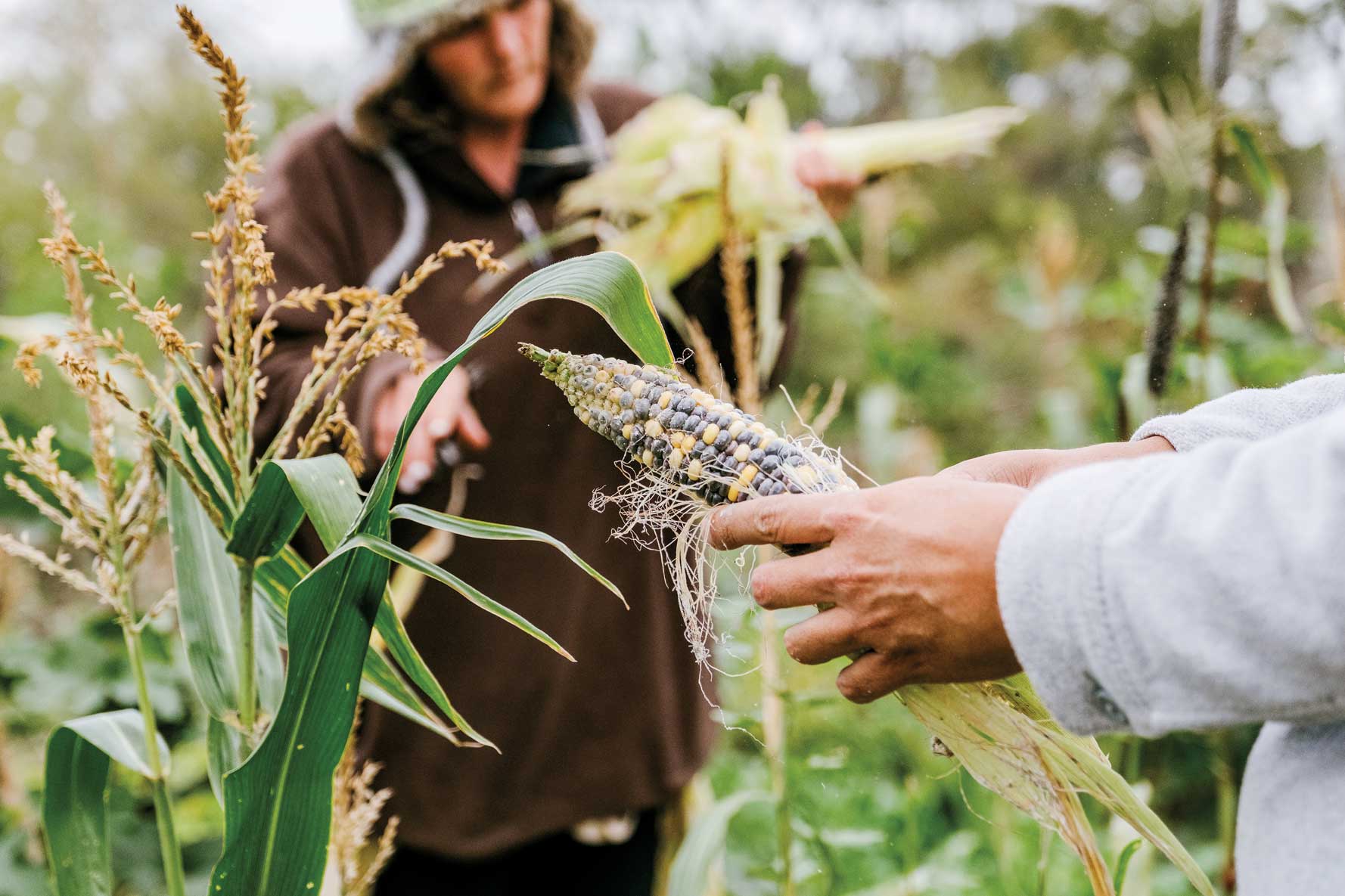
Those plots, planted in 2023, are modeled after the ancient Mesoamerican milpa, a system of agriculture whereby corn, beans, and squash are planted together to each play a symbiotic role: corn providing shade, beans giving nitrogen to the soil, and squash delivering ground cover.
This year, two new milpas were spearheaded by Alexas Ramírez and Maya Soto of the Traditional Center for Indigenous Knowledge and Healing. They met in Ithaca, New York, and share roots to the Caribbean’s Taíno people, the first natives that Columbus encountered and named “Indians.”
During a summer solstice event in June, Ramírez and Soto used a ladle to serve guests black tepary beans that they had just harvested. They then led the guests on a tour, pointing out the bounty of the new harvest: Guatemalan red amaranth, blue pearl millet, Chapalote corn, and red okra, all standing in stalks above a floor of melons and squash.
“What surprised us the most this season was the Mohawk red,” Soto says. “Corn usually grows in a single straight stalk, but here it was stunted by the Texas sun and grew in Y-shaped stalks that still produced seed. We’re most curious about seeing what grows out of those seeds next time.”
The diversity of plants from natives and newcomers, like Mohawk red corn from Upstate New York, may seem random. But this is partly the function of the variety of leaders, partners, and volunteers involved with the project. In addition to Tāp Pīlam, the food forest is often joined by other nonprofits, such as the Bexar Branches Alliance, which plants native trees.
With its foundations firmly rooted, Tamōx Talōm is navigating its early stages through experimentation and community connection. Though it does not yet produce a large enough volume—unlike the nearby Mission San Juan Farm that supplies food for the San Antonio Food Bank—its honor system of harvesting aims to attract members of the underserved Southside plagued by food deserts. “This is a truly community garden because anybody is free to harvest,” says Eva Bravo, who sits on the executive committee. “Only take what you need and use what you take.”
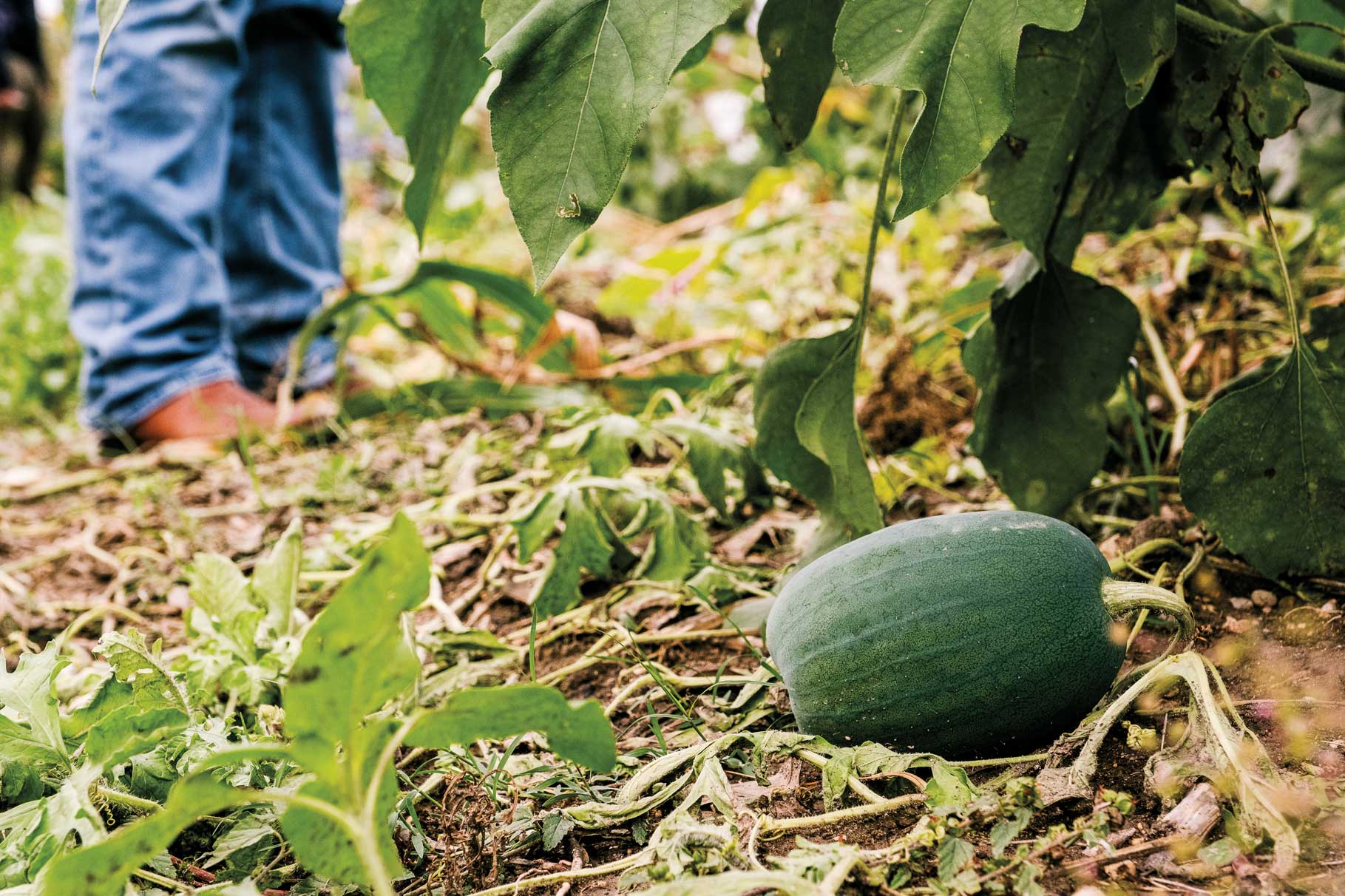
So far, the honor system has worked. Recently, volunteers found mysterious chiles and watermelons in the milpas. Nadia Gaona, a key organizer at Tamōx Talōm, likes to think the group is slowly building up its volunteer farmer base—whether intentionally or just from a passerby spitting out seeds. She herself took a similar path when her grandfather bestowed an appreciation for agriculture through his harvesting of wild chile pequins when she was a child in Elmendorf.
“We don’t necessarily have a lack of food here in San Antonio; we lack a connection to food,” she says. “One of the things we do here is just leave things alone. The earth is going to take care of itself—we need to take care of each other.