
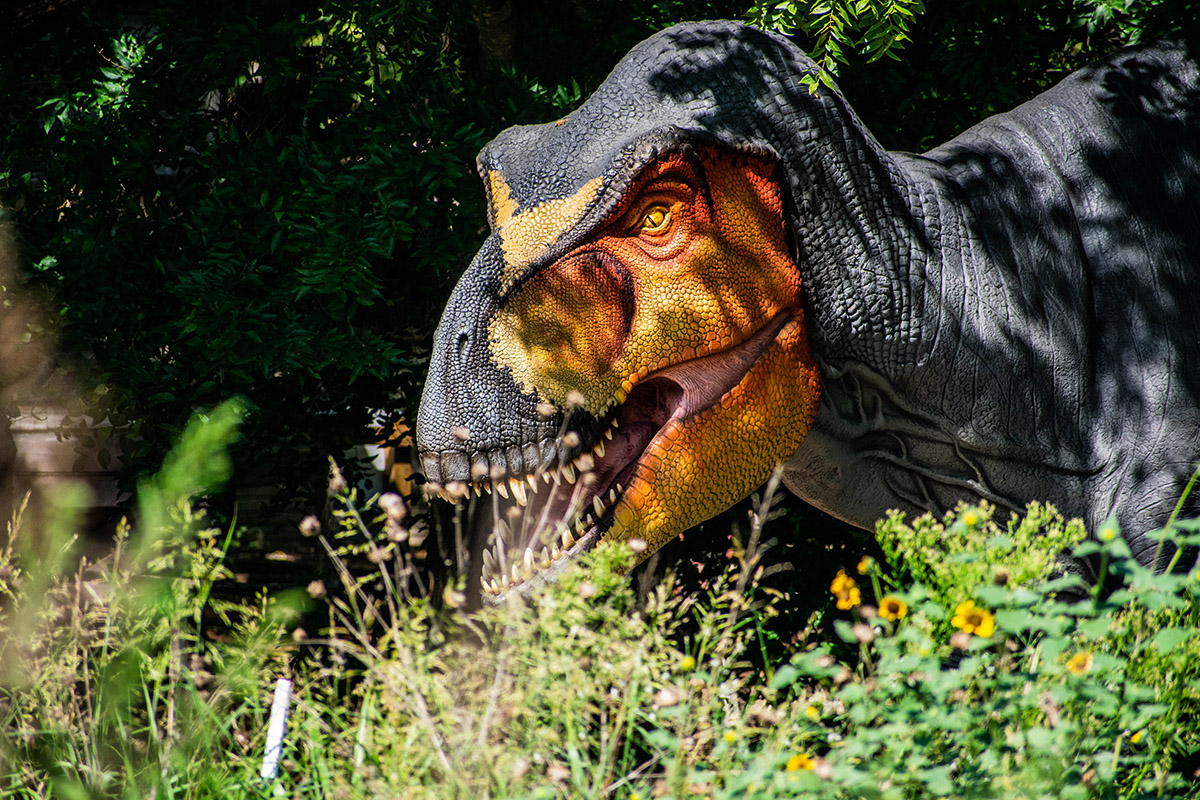
Lauren Billings’ biggest critics are kids. They’ll call her out if she refers to a Quetzalcoatlus as a dinosaur—it’s a prehistoric flying reptile, thank you very much. They’ll notice if one of her projects lacks feathers. Or if its hands are misshapen. Luckily, she rarely slips up. She can’t risk losing the respect of her most ardent fans.
You see, Billings works in the niche world of constructing animatronics—specifically dinosaurs, bugs, and prehistoric beings. It’s her job to bring to life to creatures that kids love, or sometimes fear, in a way they’ve never experienced before.

“It’s one thing to see your favorite dinosaur in a movie or in a book or in a cartoon,” she says. “It’s another thing to see it actually as a model, moving and making noises.”
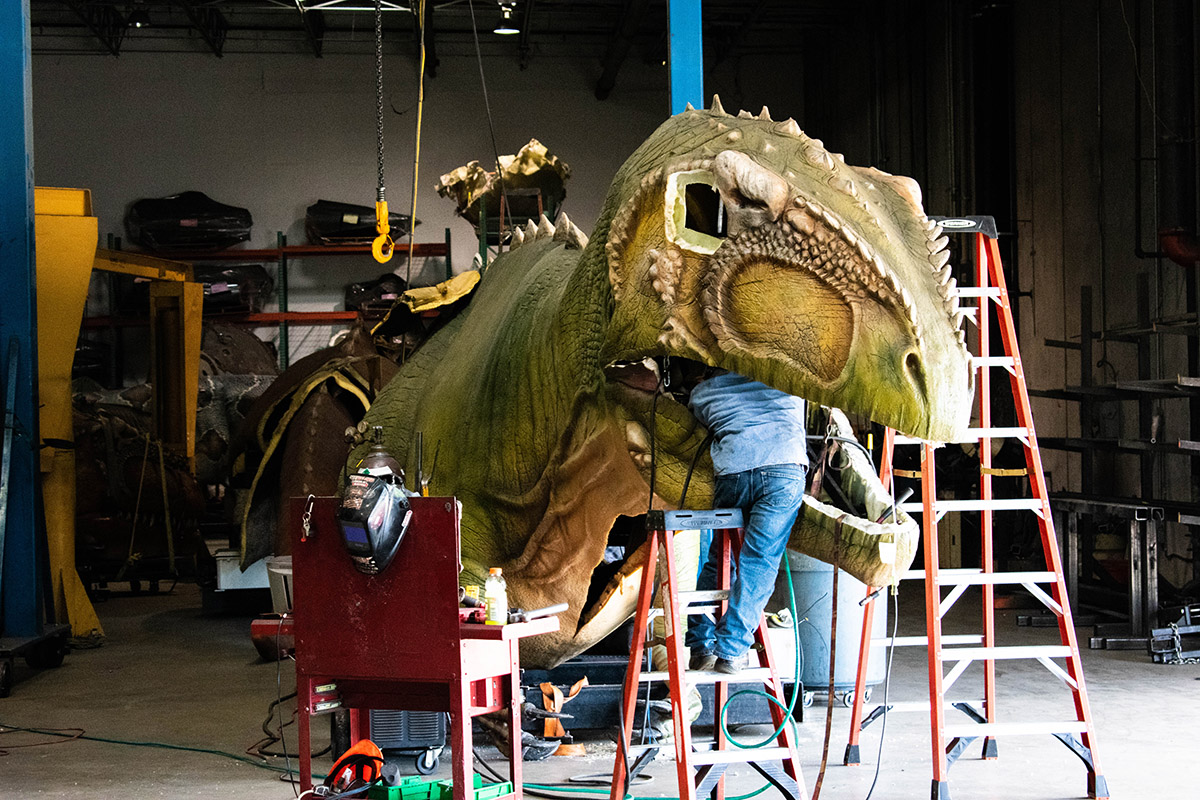
Billings is vice president of operations at Billings Productions, established by her parents, Sandra and Larry, and headquartered in Allen. The company creates animatronics housed all over the world—from the Taronga Zoo in Australia to Denmark’s Six Flags-esque theme park, Djurs Sommerland. The company is the only manufacturer of its kind in America.
According to Billings, dinosaurs are the company’s “bread and butter.” They make everything from the tiny Compsognathus—the chicken-size dinosaur that attacked a little girl in The Lost World: Jurassic Park—to a 30-foot-tall Brachiosaurus. But they can also big-ify almost any bug, and they’ve created a line of other prehistoric creatures including saber-toothed tigers and the megalodon.
The Billings products are all made of a steel structure fabricated in the company’s welding department. Then they’re outfitted with a urethane rubber skin, a detailed coat of paint, and animatronic engineering.
Most importantly, all projects are carefully designed for accuracy. It’s a process that requires significant research—reading scientific papers, and sometimes even speaking directly to paleontologists.
“We’re all a bunch of nerds here,” Billings says.
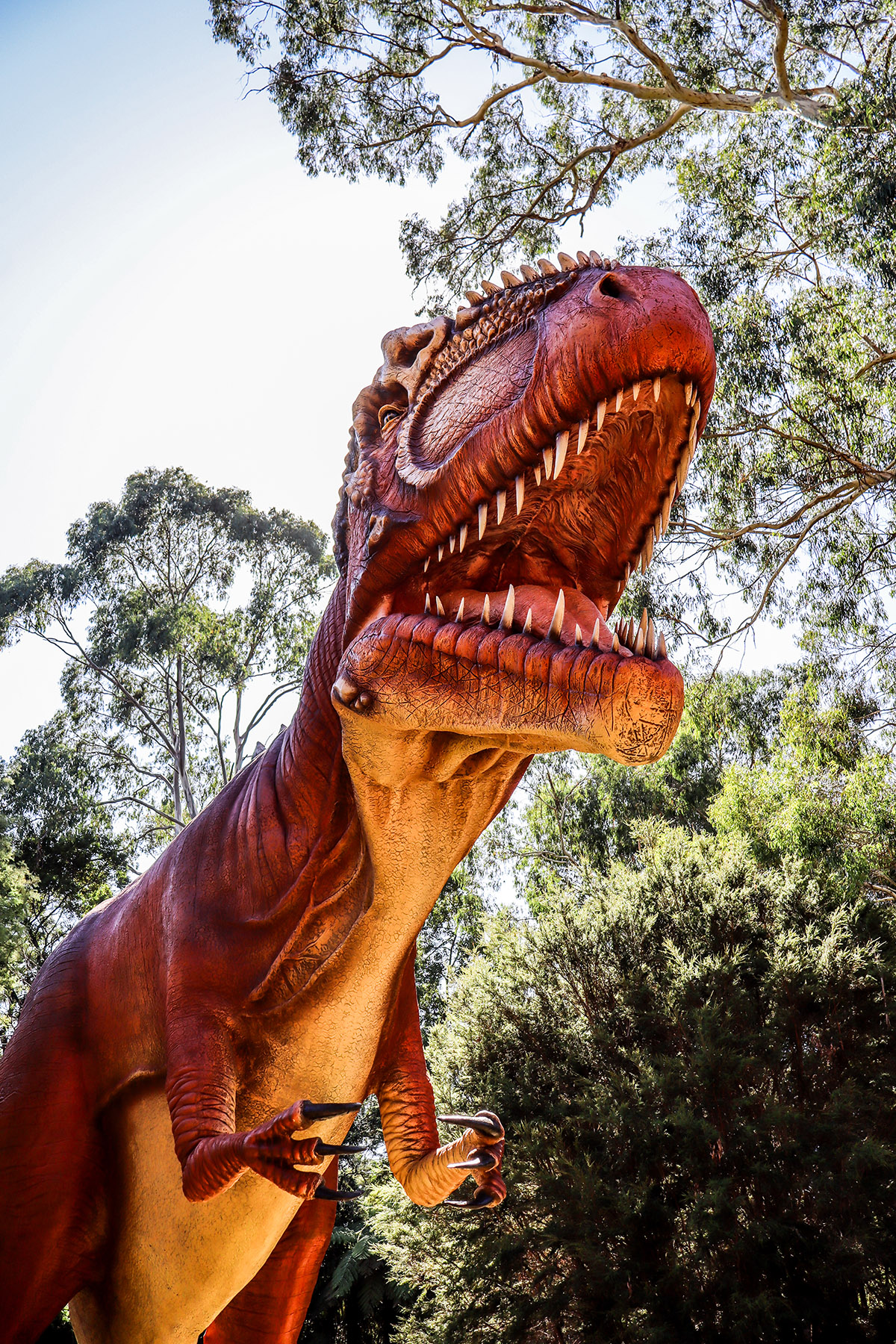
The construction process is meticulous. When creating teeth for their dinosaurs, the company looks at real fossils—either making a mold out of the prehistoric tooth or sculpting a model. That way the serrated teeth of a Giganotosaurus don’t end up on a Tyrannosaurus Rex. It’s a key part of the Billings mission: education. Each small aspect of their dinosaurs derives a lesson about ecology and evolution—about the Earth and its creatures. Even dinosaur teeth.
“A Giganotosaurus has serrated teeth for a very distinct reason, which is that they would tear the flesh apart of their prey,” programs and events coordinator Livy Poirier says. “We want to show that.”
Because the more realistic the dinosaurs, the better the reactions.
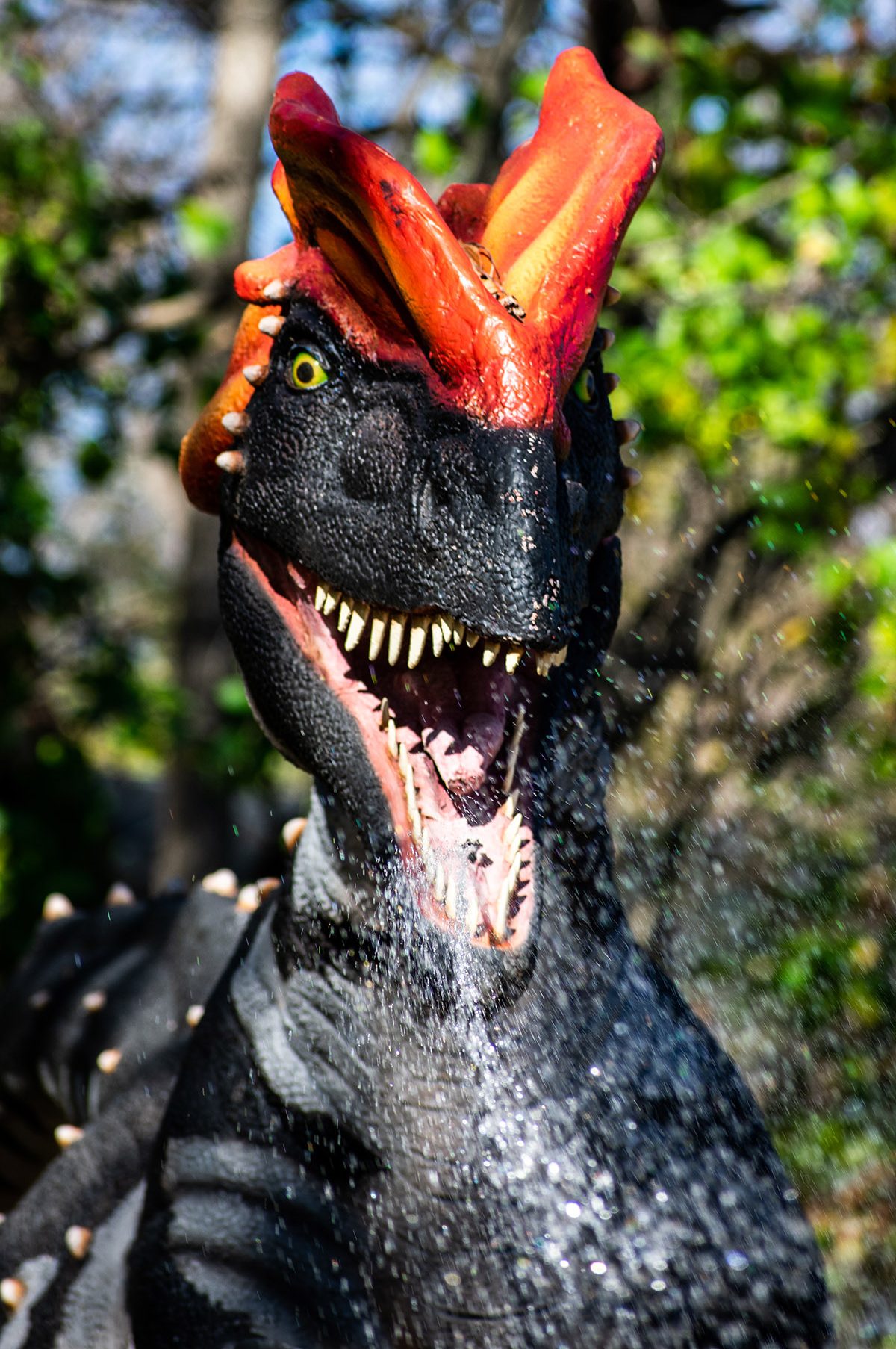
“The expressions on the kids’ faces once they come around the corner and they have a Dilophosaurus that’s spitting water at them—that’s my favorite part about the job,” adds project manager Stephen Yanus.
That’s always been the company’s goal, Billings says—to inspire and excite kids. That’s why, in addition to creating animatronics, Billings Productions visits schools to present about dinosaurs and fossils. During these events, kids can examine parts from company’s animatronic dinosaurs, including an eye socket and replica teeth.
The presentations are designed to get kids thinking about dinosaurs, with the hope that an appreciation for prehistoric creatures inspires similar feelings about animals still roaming Earth today.
“That love for the imagination and education just never goes away,” Billings says.