
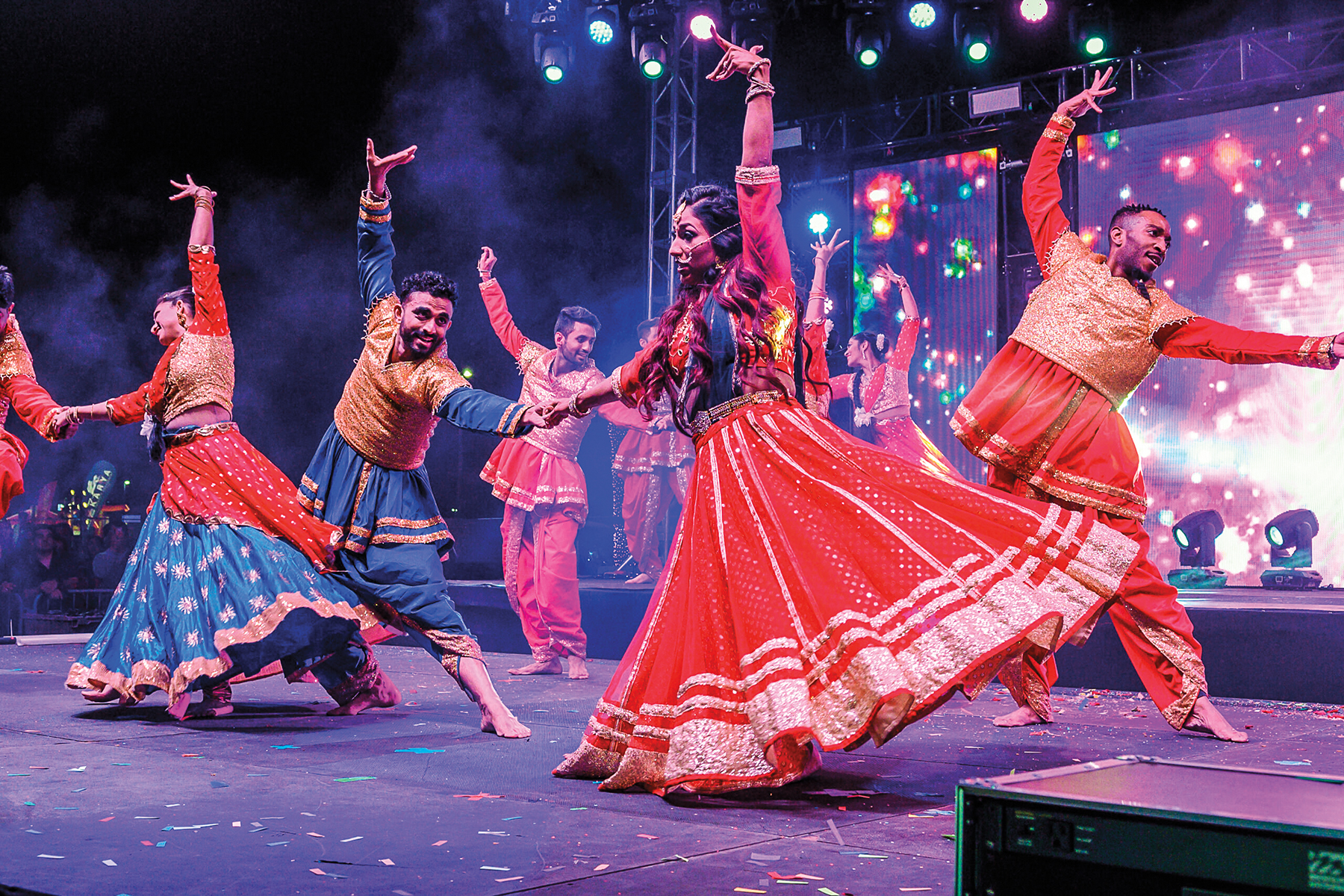
When Pondicheri chef-owner Anita Jaisinghani moved to Houston in 1990, Diwali was more of a personal holiday, something typically observed at home. Even then, Thanksgiving preparations often took precedence in the fall so that her children would feel more “American.” As multiculturalism became more valued in the mainstream over the next decade, however, Jaisinghani had a growing desire to openly publicize the five-day holiday known as the Festival of Lights. “I wanted to express my culture, and I wanted to be proud of it,” Jaisinghani says.

After opening her first restaurant, Indika, in 2001, she started promoting Diwali with celebratory dishes such as mithai, the bite-size sweets, and undhiyu, a five-vegetable stew from her birthplace in Gujurat. She set out votive candles, multicolored roses, golden marigolds, and blooming lotus flowers in puddles of water held by copper thali plates. They’re all customs she continues today at Pondicheri in Houston’s elegant River Oaks District.
Since opening her modern Indian restaurant in 2011, Jaisinghani’s public advocacy of the holiday has proven a success in a state where Indian Americans are the fastest-growing group. Now that Texas boasts more than 430,000 residents—the second largest Indian American population in the country—Diwali festivals have become a major attraction. Places like south Houston suburb Rosenberg and Fair Park in Dallas draw as many as 15,000 attendees every year.
In her preparations for Pondicheri’s 15th annual Diwali feast, Jaisinghani says she’s also embracing the changing demographics around her, as larger and more culturally diverse crowds attend the restaurant’s celebratory victory of light over darkness. The holiday—which will be observed by more than a billion people around the globe on Oct. 20—is similar to the Fourth of July, with fireworks displays. Some in the community have even called it “Hindu Christmas” for its customs of exchanging presents and wearing new clothes.
But the highlight for many Diwali celebrants are those brightly colored boxes of mithai. Because India is so eclectic, with 424 native languages coming from thousands of small tribal groups, it’s impossible to narrow down the main types of treats eaten throughout the subcontinent. Yet Raja Sweets in Houston’s Mahatma Gandhi District is a good place to parse the breadth of options. Owner Sharan Gahunia’s late father, Joginder “Yogi” Gahunia, opened the shop in 1985 and is now considered the father of the city’s Little India District. Today, when preorders open three weeks before Diwali, the store’s dining area transforms into a packing station, as cooks from India work around the clock preparing approximately 25,000 pounds of mithai from hundreds of gallons of milk and sugar.
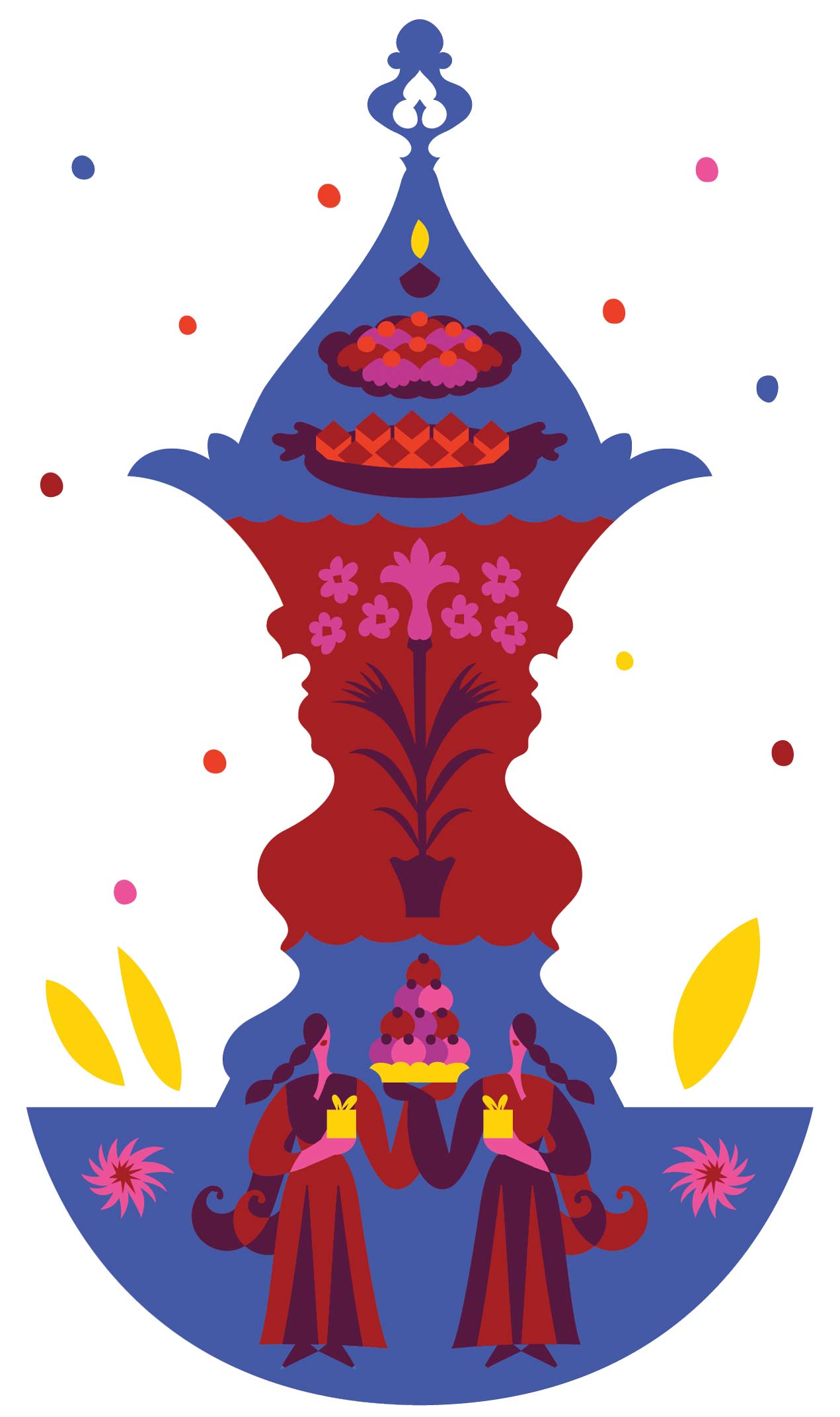
Gahunia says bringing a box of sweets to Diwali parties is the Indian equivalent to bringing a bottle of wine to Thanksgiving dinner. For Punjabi Sikh families like hers, Diwali honors Guru Hargobind, who formed the Sikh army after returning from captivity following his father’s execution by the Mughal Empire. Gahunia never has time to personally celebrate the holiday, though, due to her tireless preparations of badana, chum chum, pehra, and Raja Sweets’ most requested mithai, gulab jamun.
“Everybody has to come to me to get sweets for their own parties,” Gahunia explains. “So, I always joke that I throw the biggest Diwali party in all of Houston.”
Mithai to Try
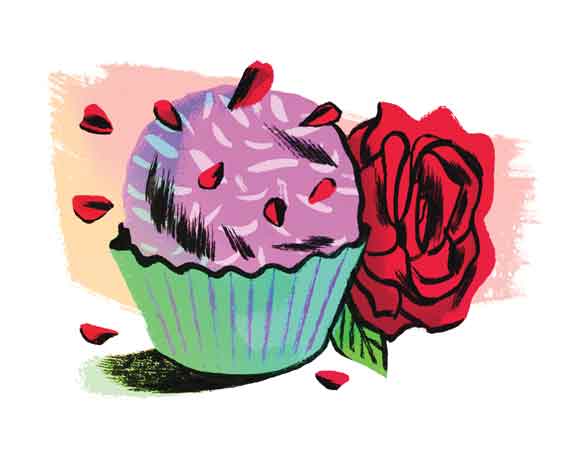
LADDU
These bite-size orbs made from ghee, sugar, and flour come in a wide array of flavors, including mango, coconut, peanut, and chickpea.
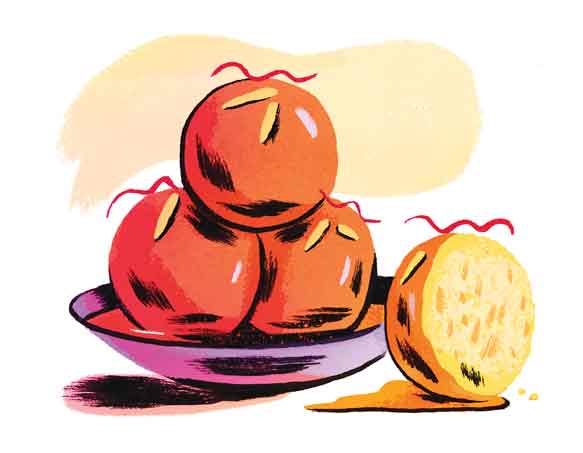
GULAB JAMUN
Raja Sweets serves three variations of these milk balls soaked overnight in sugar syrup: plain; a cream-filled sandwich; and a deep-fried version, beloved by Texans, called kala jamun.
.
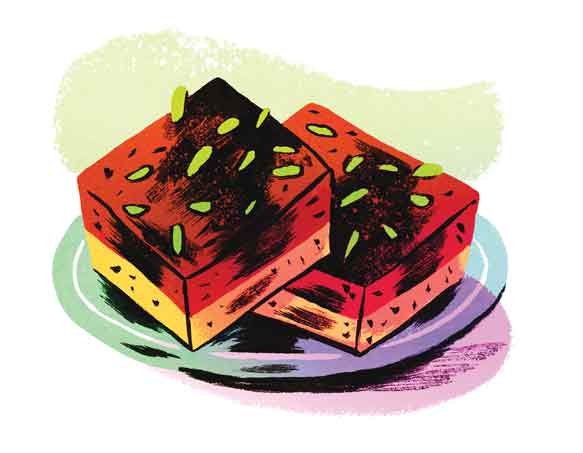
BURFI
Popular in North India, this fudge-like bar starts with a base of sweetened condensed milk. Expect flavors like chocolate and badam with almonds and kewra water, a flower extract similar to rose water.