
Throughout Texas, steak is serious business, but there are few places where beef is more intensively evaluated—and revered—than at Raider Red Meats. A program at Texas Tech University’s Davis School of Agricultural Sciences & Natural Resources in Lubbock, it offers an educational opportunity to students in the agricultural industry—while also selling some of the state’s finest cuts of beef, pork, and lamb.
As one might expect, the cost of running a program centered around premium proteins can be staggering. According to Tate Corliss, the executive director of Raider Red Meats, Texas Tech began thinking about how to offset these costs in the early 1980s. “They were really just trying to recoup the cost of teaching,” Corliss says. “We did catering, we tried a little bit of everything, wanting to be self-sufficient. This program has a history of scrappiness and tenacity.”

Throughout the 1980s and ’90s, there was also a growing desire from the agricultural industry for college graduates who had more hands-on work experience. Tech invested in building that workforce. By 2005, the year that the school completed the Animal Sciences building, they also opened a retail store, and Raider Red Meats as it currently exists was brought to life as both a financial opportunity and a way for the university to give its students a more well-rounded education. Today, the program says it processes around 500,000 pounds of meat each year. (Other schools, including Texas A&M, have taken a similar approach, launching their own retail markets to help pay for the cost of meat purchased for instruction.)
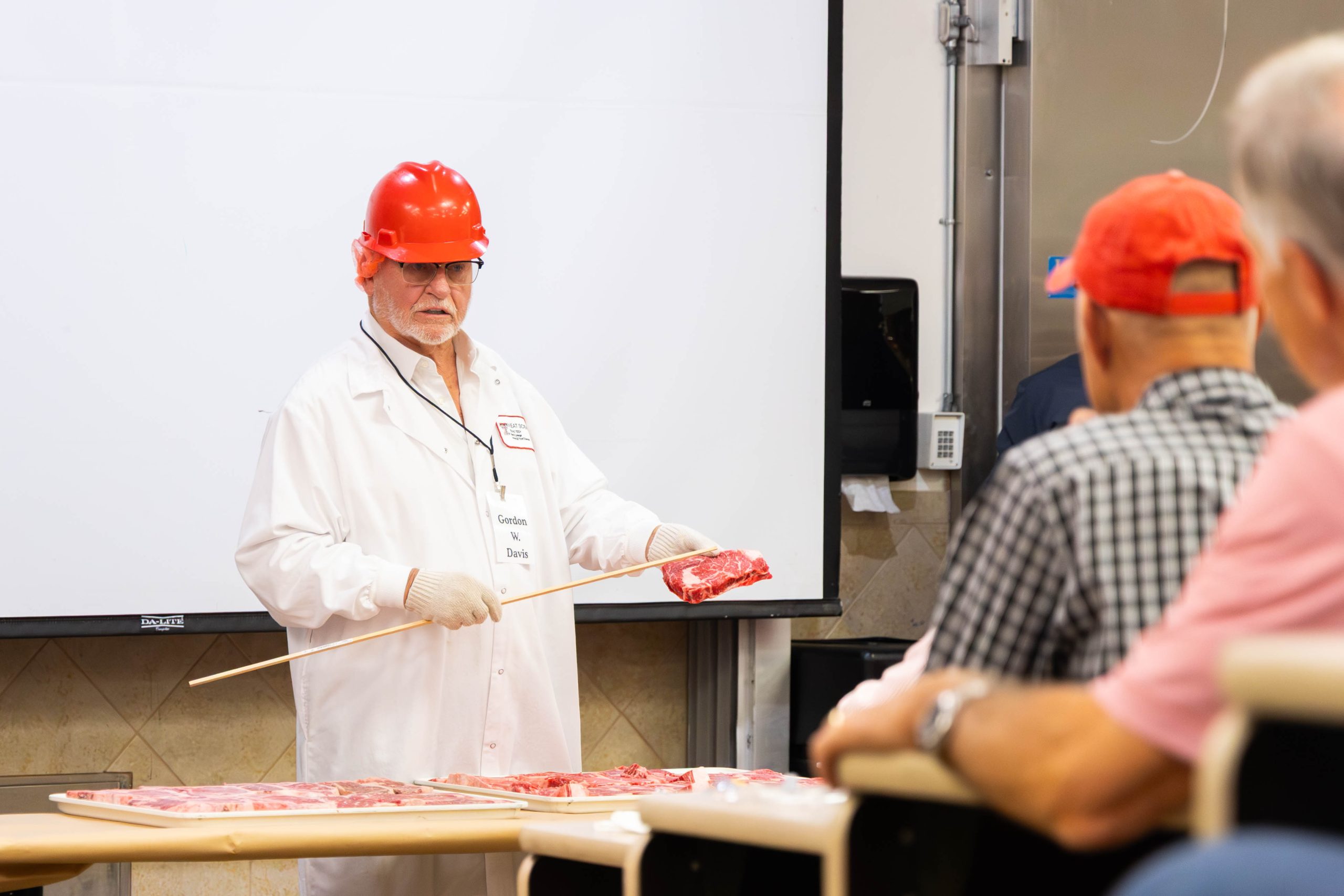
For their first semester at Raider Red Meats, students are assigned according to program needs. That could mean working in production, harvesting and processing whole animals, or working as a cashier in the storefront. After that, students are able to transfer into the department that best suits their interests.
“These students are really handling a little bit of everything, from meat on hoof to getting the product into a package,” Corliss says, “learning how to interact with customers and work in sales, and even learning how to cook and prepare the meats themselves.”
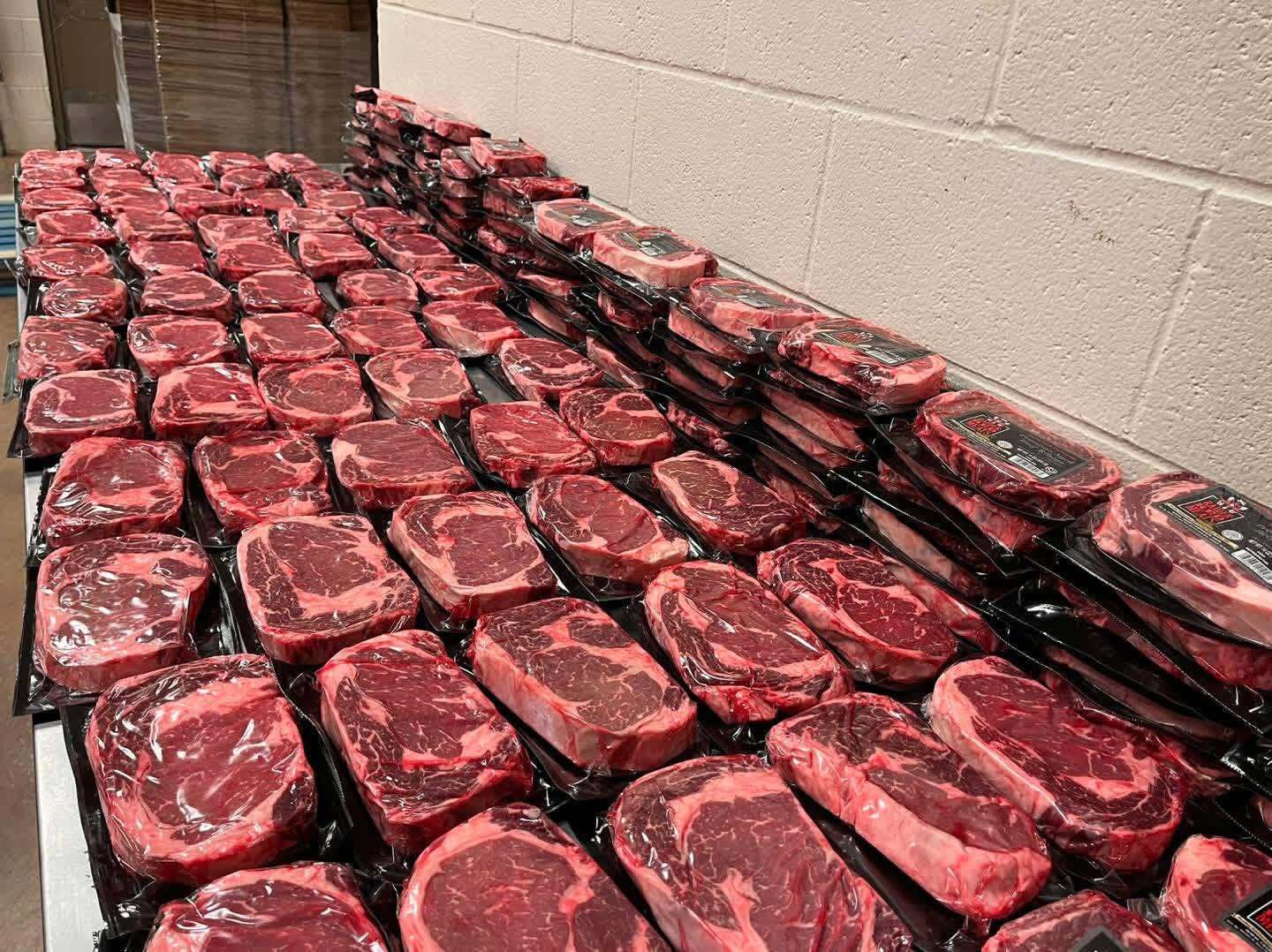
Because these steaks, roasts, and chops are coming from students who are being trained to evaluate only the best cuts of beef, Raider Red Meats’ products are of decidedly higher quality than what you might find in a grocery store. There are juicy ribeyes, tender filets, and sausages that are smoked on-site, along with peppered bacon and smoked briskets, all of which are prepared by students held to exacting educational standards.
West Texas has always been cattle country, so it isn’t surprising that Tech is home to one of the country’s most elite meat judging teams, a sport in which students compete to most accurately evaluate cuts. Since 1989, the university’s meat judging team has taken home 15 national championships, attracting top competitors from all over the world. Leah Elsey, a senior set to earn her degree in animal sciences with a concentration in industry, came to Tech from Capitan, New Mexico, after Corliss recruited her.
Elsey began her education at Clarendon College, earning an All-American title in meat judging there, joining Texas Tech in 2024. She’s worked at Raider Red Meats ever since, and spent her final semester in the sales department.
“I went to school initially to be an ag teacher. Then I took an intro to animal science class and I loved it, and knew that this was what I wanted to do,” she says. “Now, I’m thinking I want to go into sales and logistics, because I like to work with the customers and help them get what they need.”
Elsey views her work at Raider Red Meats—and her agricultural studies at Texas Tech—as more of a calling than just a job. She points to the dwindling numbers of farms and ranches across the country, and wants to emphasize the protein industry’s role as an essential part of the American food system. (A 2025 USDA analysis found that the number of family-owned farms has declined steadily since the 1970s. Between 2017 and 2024, the total number of acres farmed in the United States dropped by 8%.)
“We have to be in this industry or it’s going to go away,” she says. “ We have to be here to feed the world.”
And now, Raider Red Meats is hoping to get more of its top-quality beef into the hands of even more people. For the first 15 years of its life, the company was mostly a local enterprise. It sold its prime steaks and other cuts, along with some pork and goat, to Lubbock locals, and served them during catered meals at university functions. When the pandemic arrived in 2020, Red Raider Meats launched its online storefront, which Corliss says has helped the business reach a new audience.
“Pre-COVID, meat was not something most consumers felt comfortable purchasing online, and that’s changed,” he says. “We were forced into it, but it’s worked out really well.”
Unlike a for-profit business, Raider Red Meats re-invests all of its proceeds back into the program. The money is used to pay for operational needs like equipment upgrades or hiring staff, but it’s also used to fund more than a dozen scholarships for students in the Davis College of Agriculture. Like Elsey, Corliss feels that same drive to steward the growth of the agricultural industry, one ag student at a time.
“A lot of businesses are looking at ways to reduce their labor force,” he says. “I’m always looking at ways to expand ours so that we can impact more students. This work is so essential to everybody’s lives, and we need more people doing it.”