
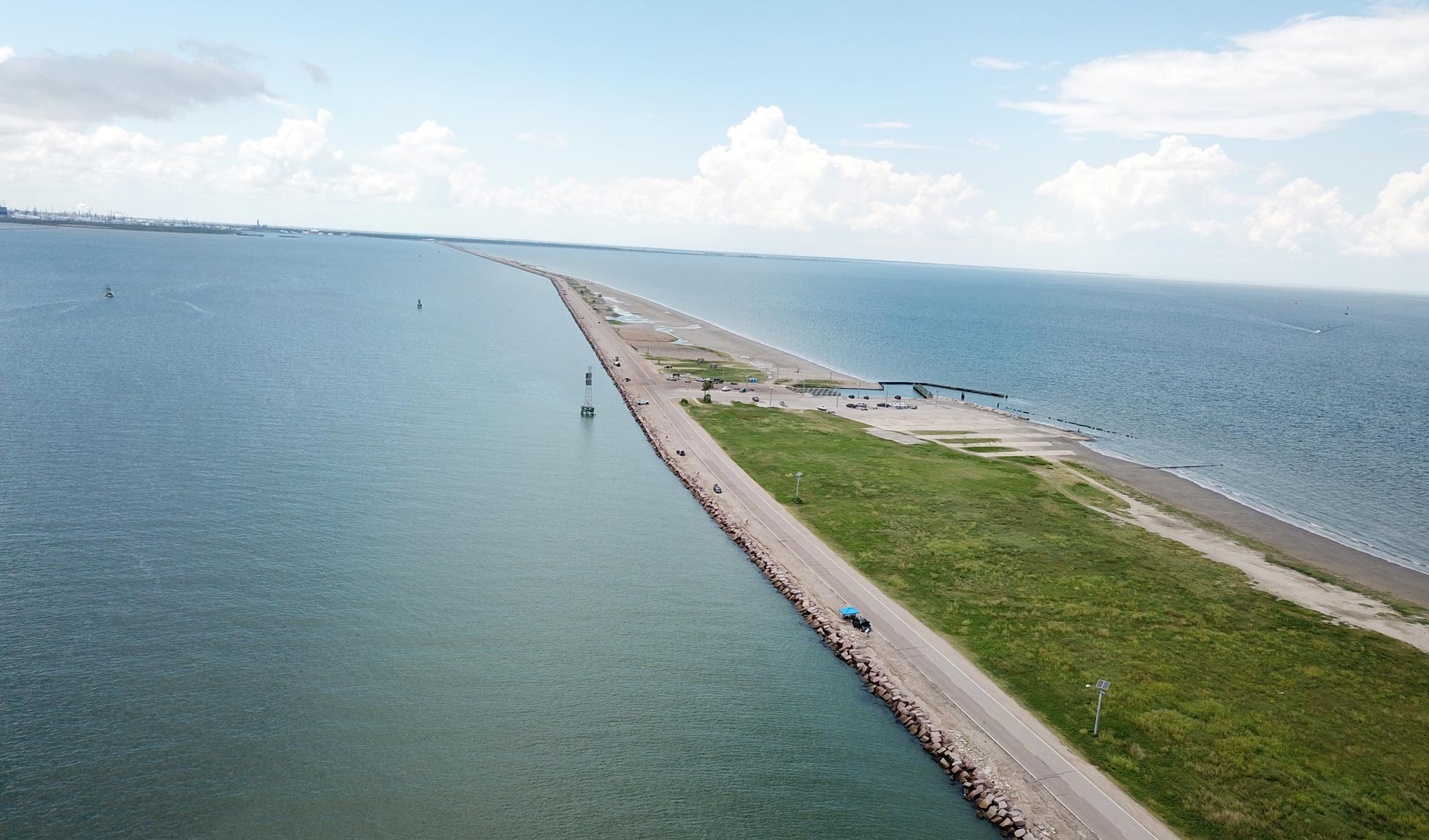
As we drive onto the Texas City Dike, the land falls away on both sides, exposing a 180-degree view of Galveston Bay. To the south, I can see the old hulk of the SS Selma, a 1919 freighter—constructed of cement in place of steel due to rationing during World War I—abandoned on Pelican Flats in 1922. Beyond that sits the port of Texas City, the largest privately owned port in the nation, with tankers rolling down the deep-water channel to meet the railroad. To the north, beyond a section of beach, container ships ply the waters of the Houston Ship Channel.
In all directions, including directly in front of me and on either side of the roadway that travels the length of the dike, anglers are casting. In a state where size matters, it’s notable that the 5.3-mile long Texas City Dike claims to be the longest human-built fishing pier on the planet. Year-round, anglers drive its length to secure spots in pursuit of many prized sportfish: massive redfish and black drum, hard-fighting jack crevalle, flounder, and speckled trout.

Constructed of wood in 1915, and extended and reinforced by granite in the 1960s, Texas City Dike is less than an hour from downtown Houston via Interstate 45. Access to the dike is free in the winter, but from the first weekend in March to the last weekend in October from 6 a.m. to 9 p.m., it costs visitors $10 to drive its length. Many serious anglers will set up lights and stake out a spot overnight. On holiday weekends, such as the Fourth of July, the rate rises to $20. Overnight camping on the dike is not allowed, but Texas City as well as nearby cities like League City and Galveston have RV parks or tent sites, and Galveston Island State Park is just 25 miles away.
My guide on a bright and breezy morning in mid-March is David Fremont. He grew up a mile from the base of the dike and is now based in League City. With bristling white hair and a friendly South Texas demeanor, Fremont retired from working at the local petroleum refineries a few years back, and in his spare time administers the Texas City Dike Fishing page on Facebook, which has nearly 45,000 members. He also handles marketing for Boyd’s One Stop, a seafood shack that also happens to be one of the state’s largest crawfish processors, sorting and selling mudbugs for grocery stores and restaurants.
Fremont has been coming here since he was a child. On weekends and all summer long, Fremont and his brothers spent a lot of time moving up and down the dike.
“The Texas City Dike was part of my backyard growing up,” Fremont says. “I still come down every other day. I like to do a bit of fishing during the flounder run, and this time of year as the water warms up, we will break out the long rods and fish the Texas City channel for big black drum.”
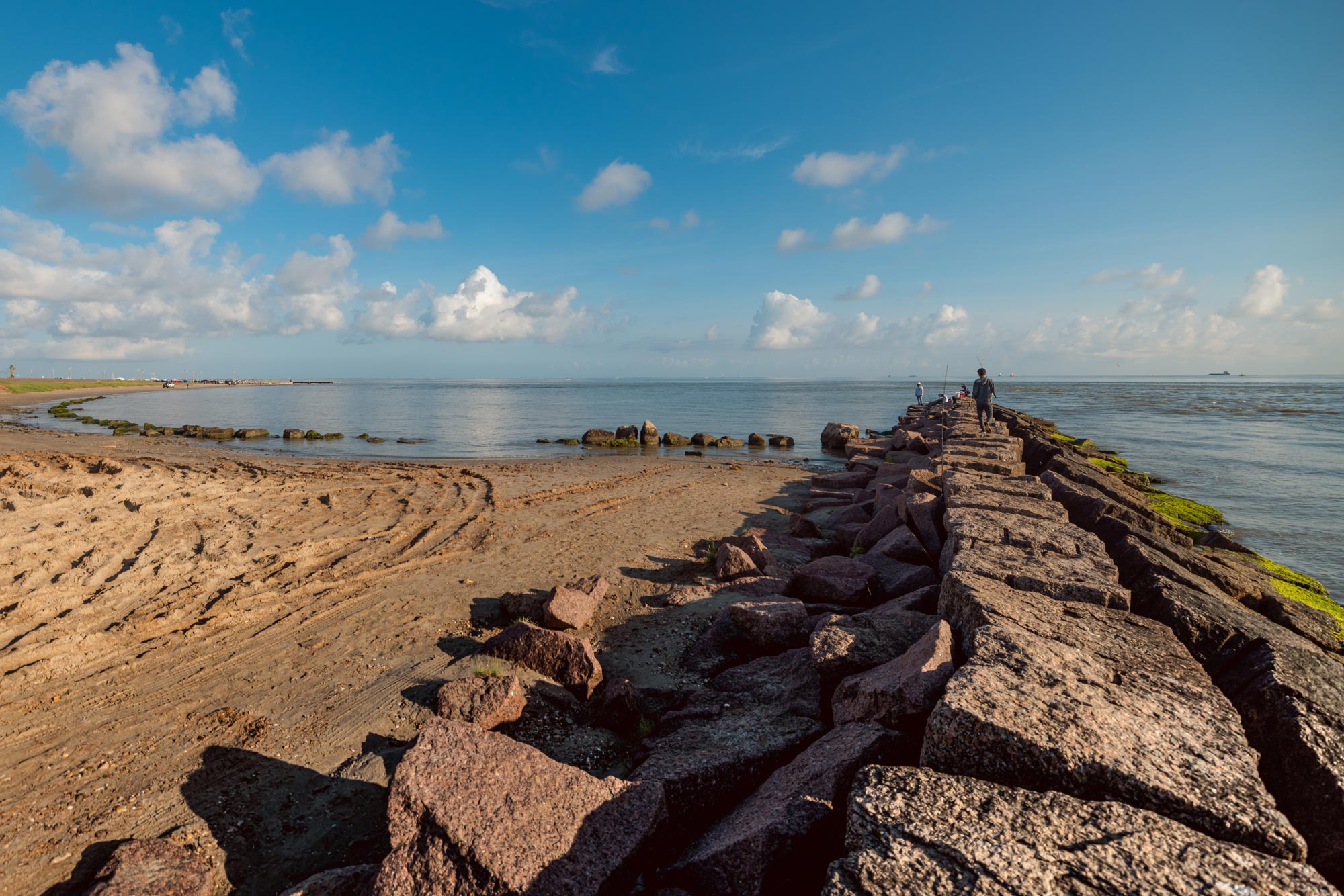
The length of the dike contributes mightily to its popularity as a fishing destination, allowing shorebound anglers access to a scenic swath of Galveston Bay. The beachfront, which extends about three-quarters of a mile, opens up onto broad flats where you can wade to reefs and target speckled trout. There are several boat ramps, as well—the Samson/Yarbrough is the busiest boat ramp in the Galveston Bay—plus fishing piers and huge granite blocks along its length provide rocky casting areas above the reef-like structure below. The nearby deep water ports and proximity to the Gulf Intracoastal Waterway add dynamic structure, some of which, as Fremont notes, can be reached with long rods and heavy tackle.
Opportunities therefore exist for all sorts of fishing enthusiasts. Bait anglers can stop by Boyd’s or Lee’s Bait and Tackle across the way, and pick up mullet, shrimp, or crab chunks to send into the deep cuts from the dike. Waders who prefer to cast artificial lures can also chase fish in the bay, while fly-fishing enthusiasts will want to explore below the Skyline Drive levee north of the dike.
Unfortunately, Fremont had places to be, and I wasn’t prepared to spend my afternoon alone sorting out the best strategy for the “big ugly” black drum that were beginning to show up.
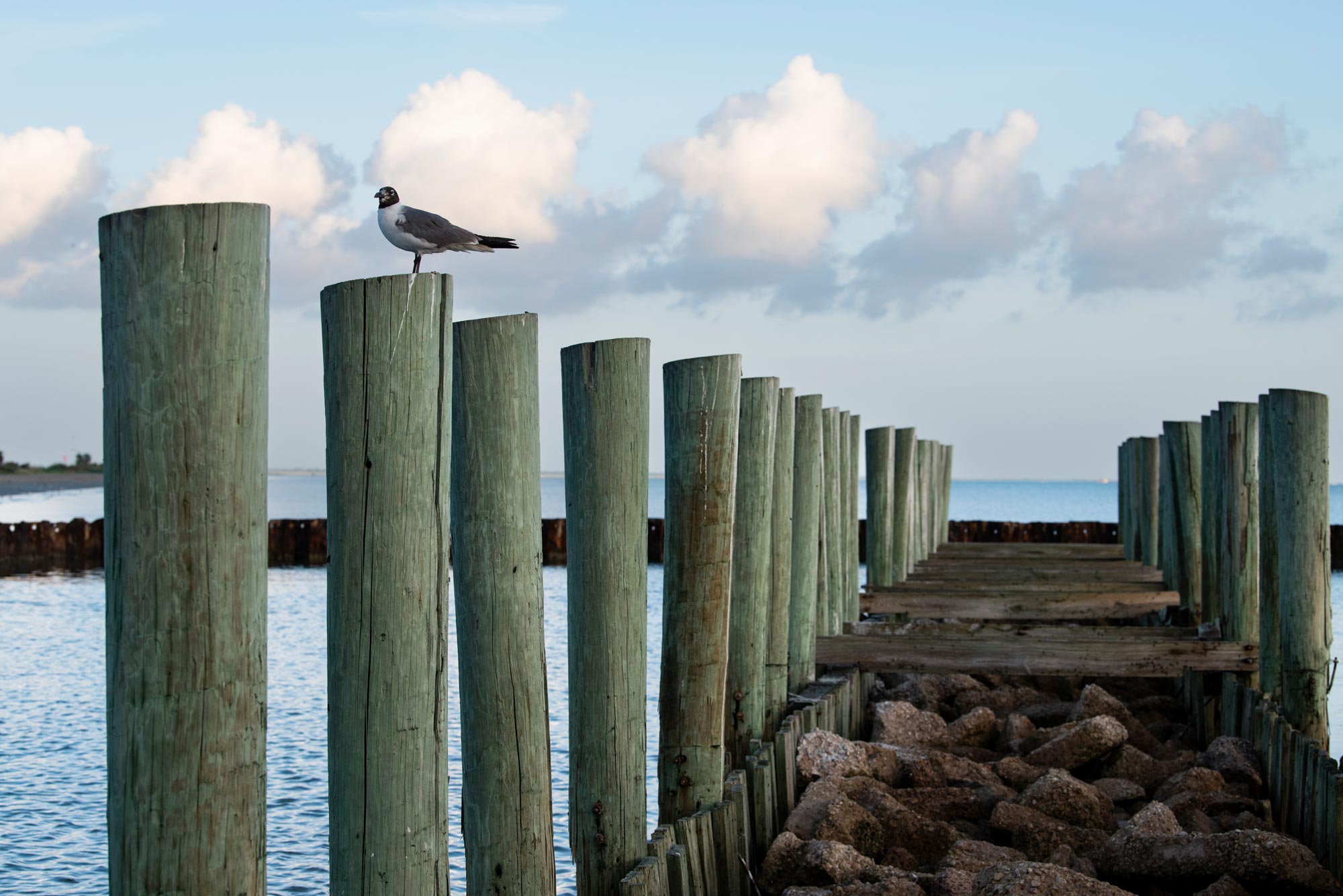
Either way, fun along the dike doesn’t stop with the fishing. Before I returned home, I chatted with some birders who had their scopes on a rare red-necked loon. I noted groups of gulls and turns and willets in the spoil sands as well. There is a large playground at the base of the dike, and parklands crisscrossed by hike and bike trails extending for miles.
As I headed back to Houston, I made note of the best approach points and the shallow sandbars that extend north toward Moses Lake. I told Fremont to call me when he had time to take me fishing. You can bet I’ll be ready when that day comes.