

Five Architectural Styles That Define Texas
THE STATE’S MULTICULTURAL HISTORY SHINES THROUGH ITS ARCHITECTURE
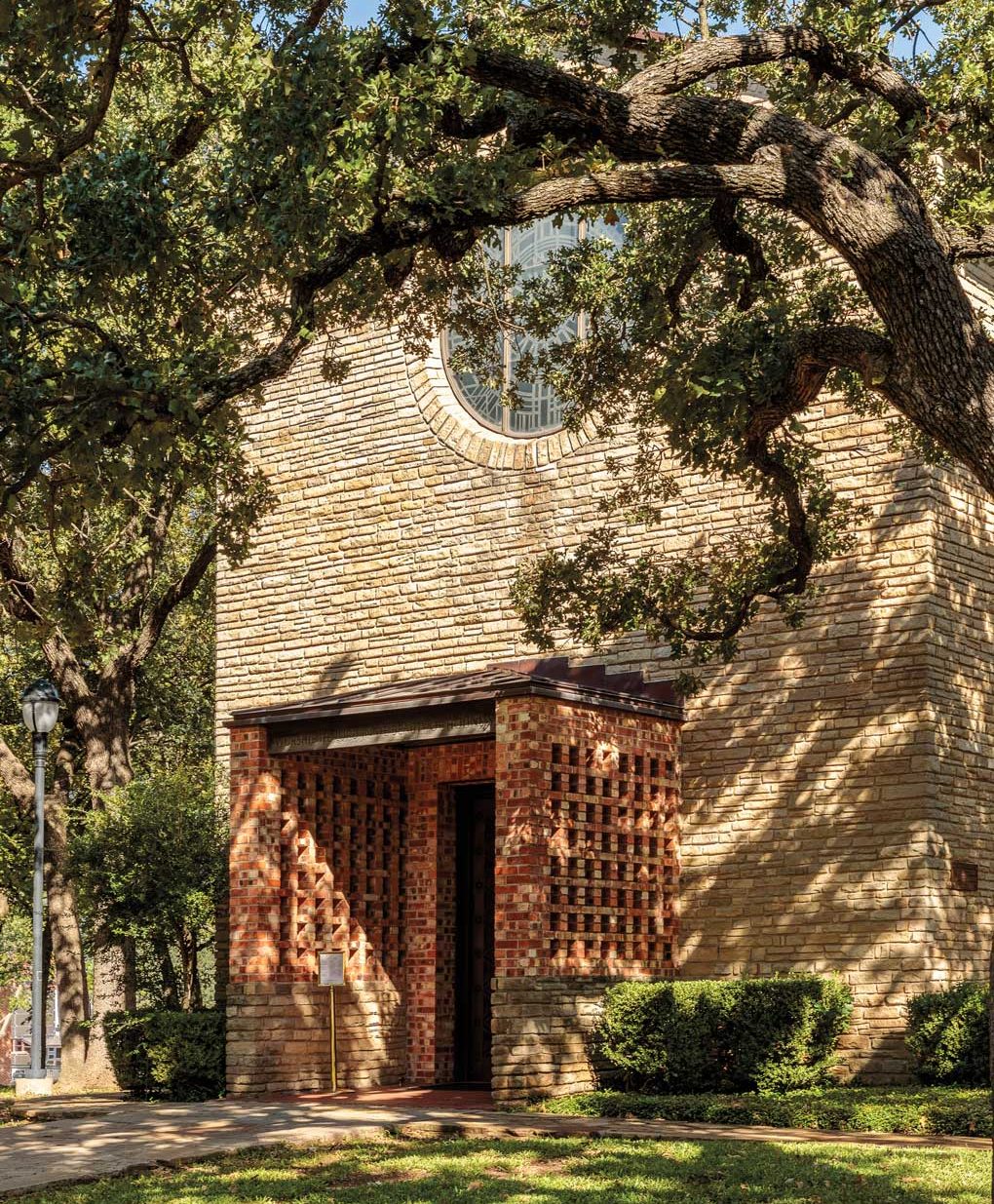
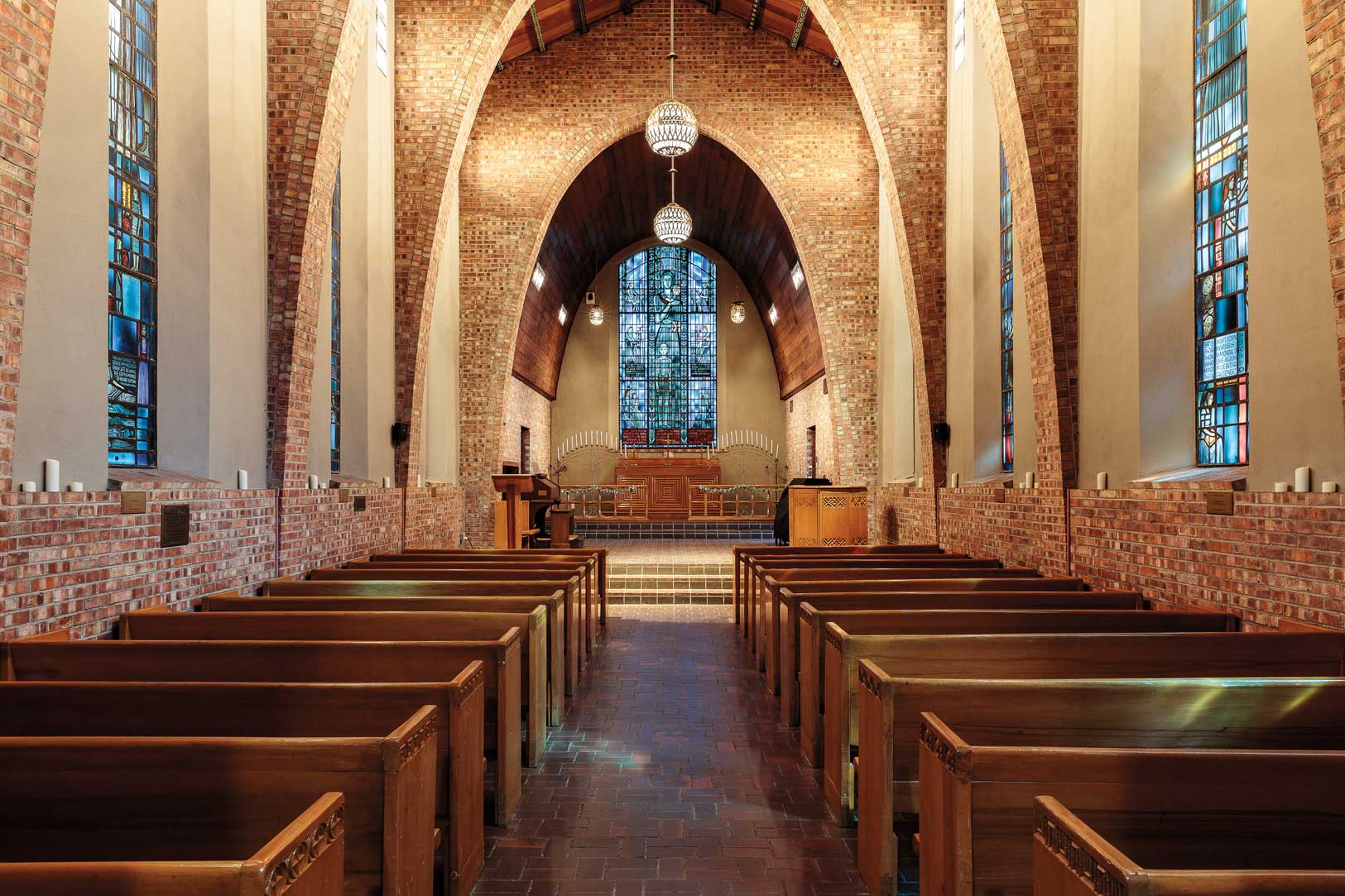
On a recent visit to the Little Chapel in-the-Woods, a small modernist sanctuary on the leafy campus of Texas Woman’s University in Denton, I run my fingers along the smooth oak of the pews. Sitting among them, I have a clear view of the chapel’s graceful brick arches and 11 striking stained-glass windows showing women at work in science, social service, and the arts. Designed by Texas architect O’Neil Ford in the late 1930s, the building was constructed in collaboration with the young men of the Works Progress Administration and the 300-plus women undergraduate students who carved its wooden pews and designed the glowing windows. Pausing for a moment to study their work, it’s hard not to feel a touch of awe.
You don’t have to be well-versed in architecture to know how a building makes you feel. Throughout Texas, treasures like the Little Chapel in-the-Woods cast light upon our state’s history, people, land, and even ourselves—if we pay attention. “Texas is a big, geographically diverse state, and when you travel with your eyes open, you start to see its landscapes and history and the buildings that emerge from them in new ways,” says architectural historian and Wellesley College professor Kathryn O’Rourke.
There is an impressive array of architecture styles in Texas, including five that offer a window into Texans’ evolving relationship with the shelter, land, and economy of our state: adobe, vernacular, Victorian, Spanish Colonial Revival, and modernism.
Adobe
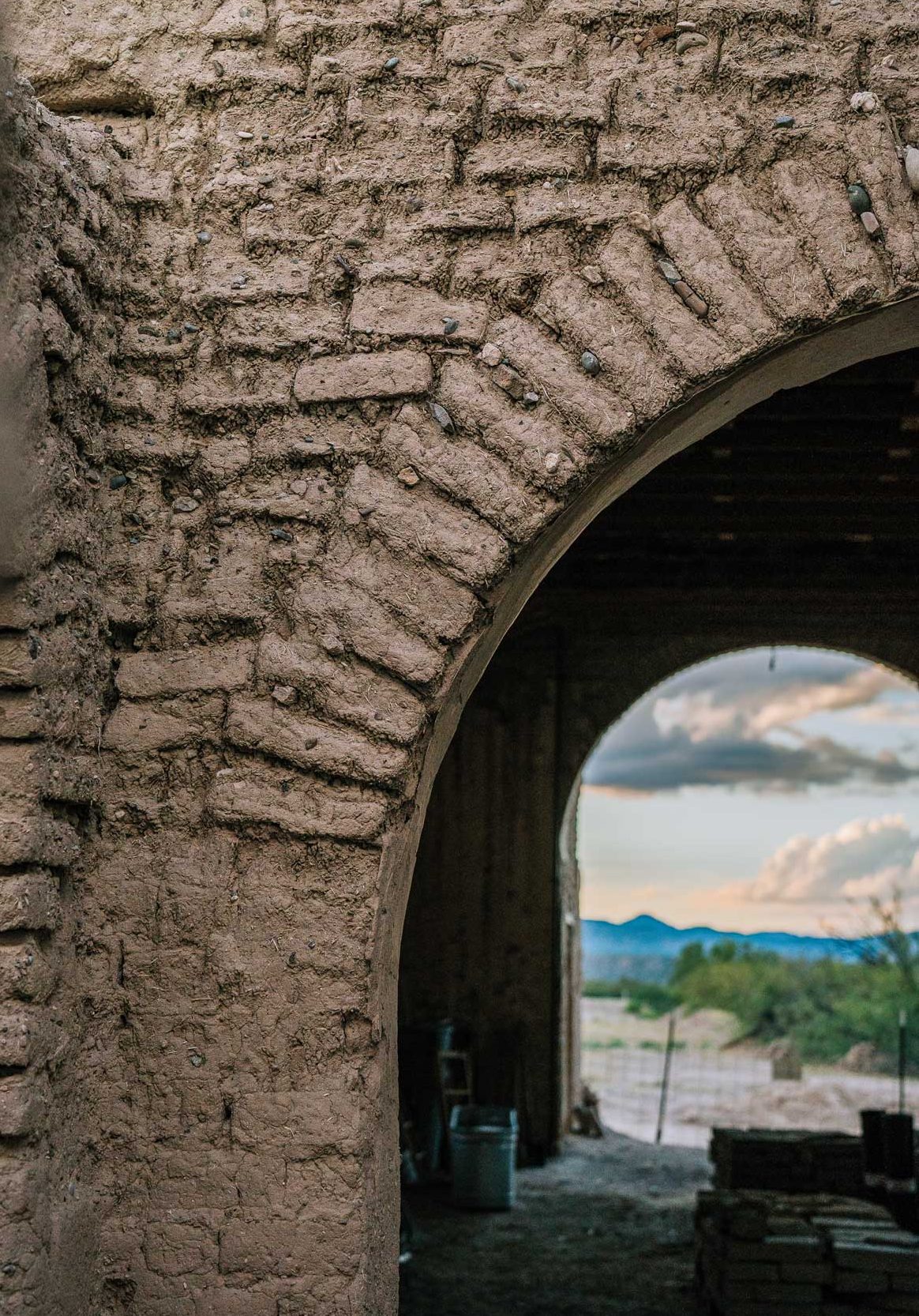
When the shipwrecked Spanish explorer Álvar Núñez Cabeza de Vaca arrived at the crossing of the Concho River and Rio Grande near present-day Presidio in 1535, he was overjoyed to finally find people living in permanent dwellings—houses made of mud. After seven years of stumbling across Texas and surviving among its many nomadic tribes, Cabeza de Vaca had found people whose homes stayed in one place. According to the account Cabeza de Vaca would later write of his experience, he and his three fellow castaways were ecstatic for a home-cooked meal and a roof over their heads, all made possible by this Indigenous group’s use of sunbaked mud for housing.
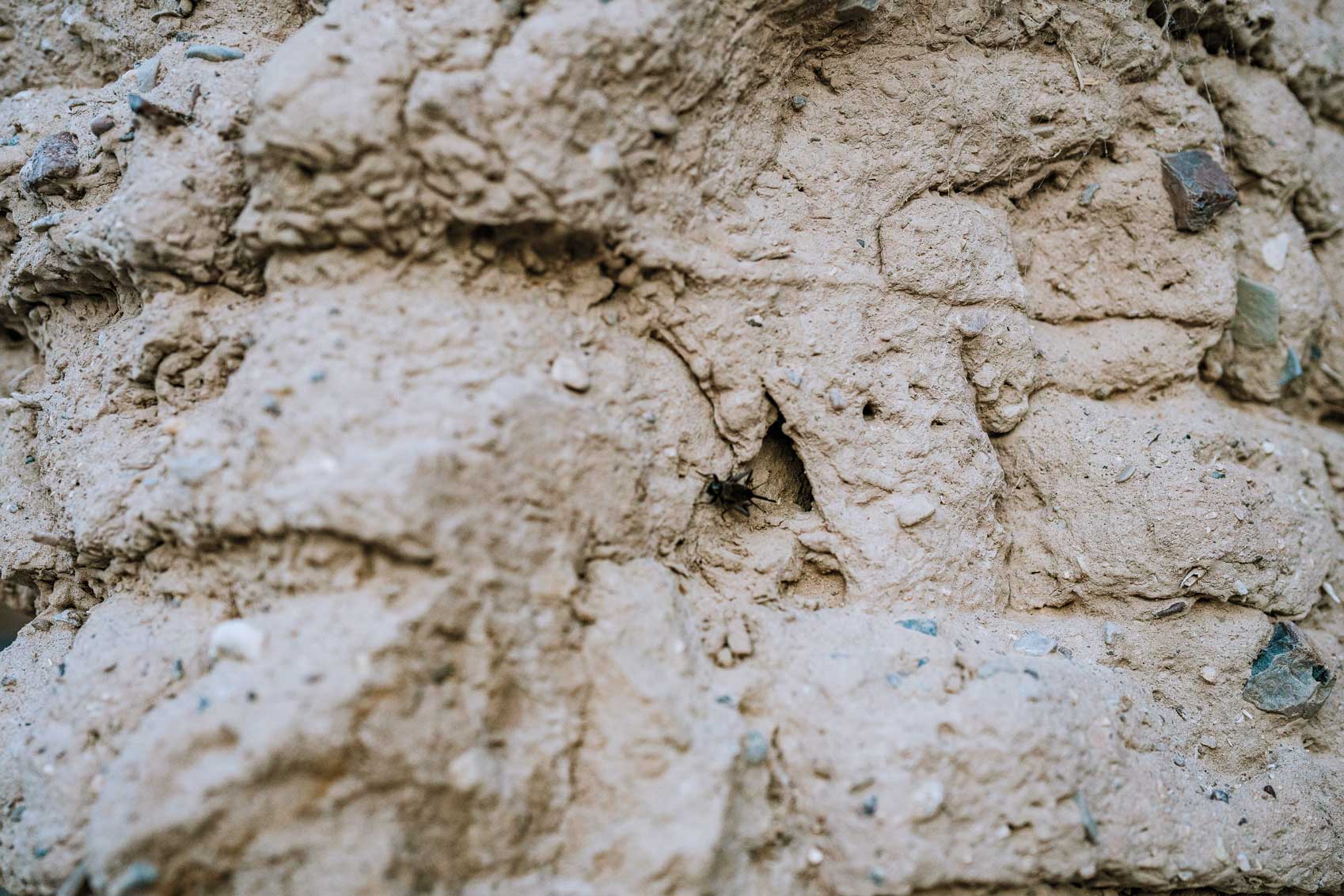
Almost 500 years later, people in Presidio and the surrounding region of West Texas remain ecstatic about mud—specifically adobe, a simple mixture of dirt, water, and straw, sometimes with horsehair and other fibers thrown in. Once considered the construction method of the poor, adobe is now prized by the design-savvy and affluent. Consider Marfa, the small art enclave about 60 miles north of Presidio, where a building made of adobe is so preferred by the newcomer crowd that it can be taxed higher than one made of wood or cinder block.
“Adobe has always been the building material of choice throughout everything west of the Pecos,” says Joey Benton, whose design company, Silla Marfa, has been restoring adobe buildings throughout West Texas, including in Big Bend National Park and Big Bend Ranch State Park, for decades. “Before the railroad, all of the forts and large family homes were built of adobe. It was the available building material. You could purchase the bricks, something that was available to many, or you could build your own brick, and it was tied to a labor rate that was either free or so low it didn’t matter.”
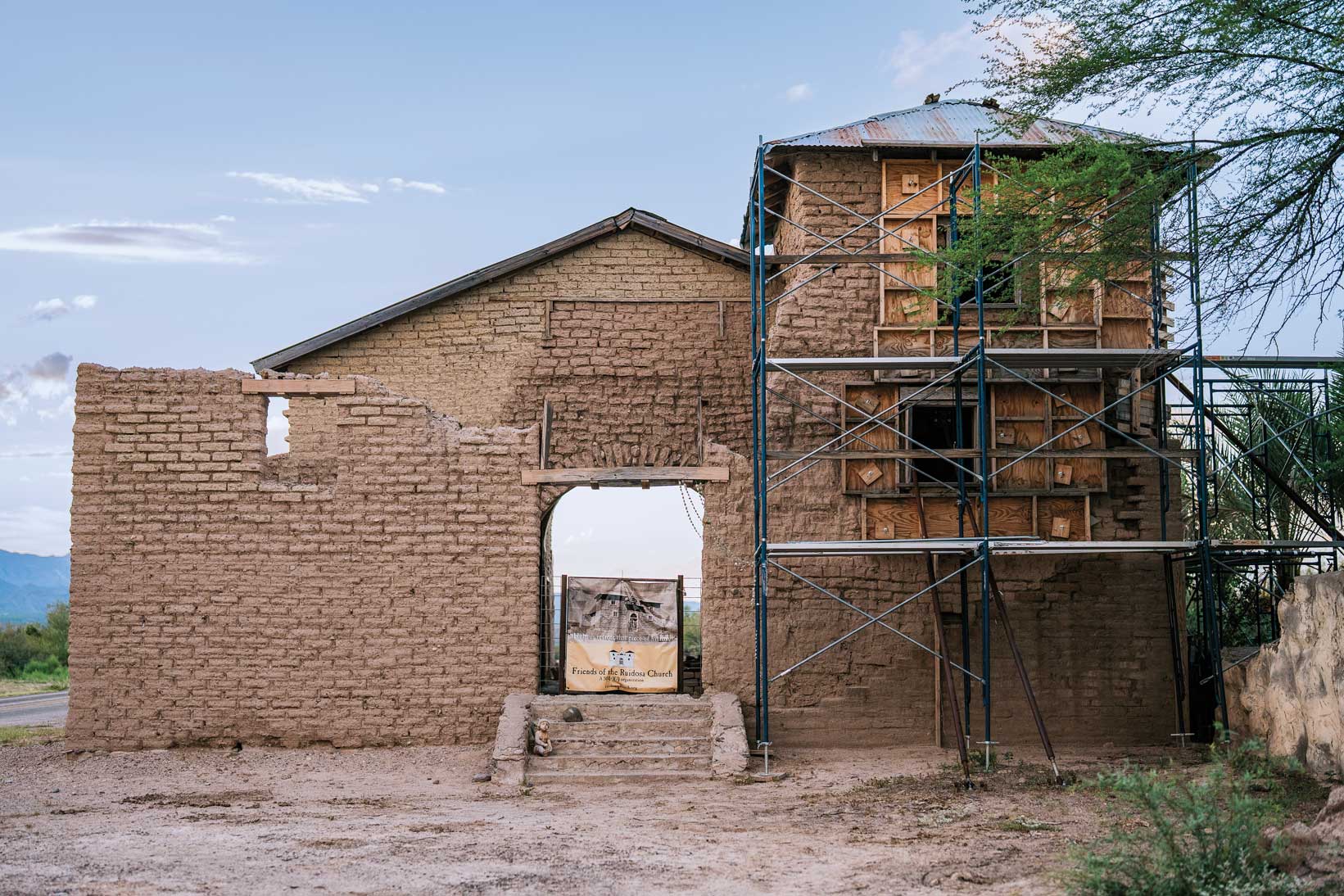
These days, the cost of labor makes adobe pricey, but the buildings are so loved that people like Benton work to keep the existing ones intact. He bought and is restoring the vaulted adobe house of the late West Texas adobe enthusiast Simone Swan located on the edge of Big Bend Ranch. He and his friends are also helping to restore a church in the tiny town of Ruidosa. “You could spend days in Marfa touring adobes,” Benton says. “I think we have over 400 adobe buildings in a town of 1,500 people. Adobe is really respected here.”
Where to See It
El Corazón Sagrado
de la Iglesia de Jesús
Ruidosa
Fort Leaton
Presidio
The Alvino House
Big Bend National Park
The Magoffin Home
State Historic Site
El Paso
Casa Navarro State
Historic Site
San Antonio
Victorian
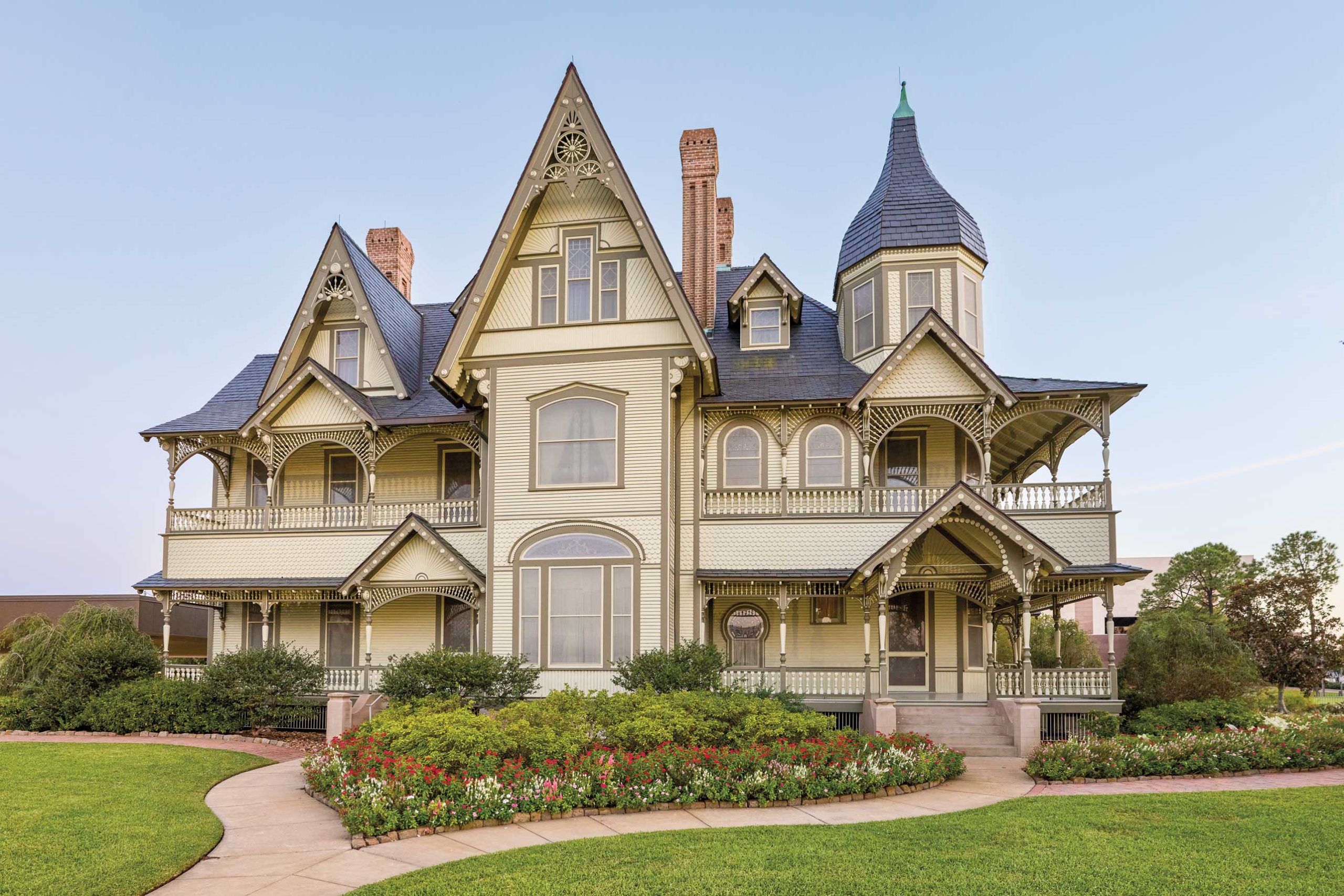
A Saturday stroll down Sealy Street in Galveston’s historical East End is a sensory feast. Sweet-smelling magnolia, oleander, and palm trees exude an Old South ambiance, as do the roots of the giant oaks that burst through sidewalk cracks. Seagulls and salty air remind visitors the Gulf of Mexico is only a few blocks away. But the stars of the show in the East End are the historical Victorians, colorful two-story grande dames of the late 1800s with wraparound porches, turrets, and floor-to-ceiling windows.
“Architecture follows money,” says Denise Alexander, the chief of museums at the Galveston Historical Foundation. And in the late 1800s, the money was flowing in Galveston, then known as the Wall Street of the South. “Galveston was trendy,” Alexander says. “They had pretty much the first and best of everything in Texas. … Catalog shopping was huge at the time. People ordered the finest fixtures, the nicest marble.”
These Victorians, built with 19th-century craftsmanship, sturdy cedar windows, and longleaf pine, are survivors. They predate the Hurricane of 1900, which washed away much of the island and is still the most fatal natural disaster in U.S. history. To walk among them is to time travel to Galveston in the decades before the storm, in its heyday of wealth and revelry, when the city was the most important port in Texas and home to more saloons than grocers.
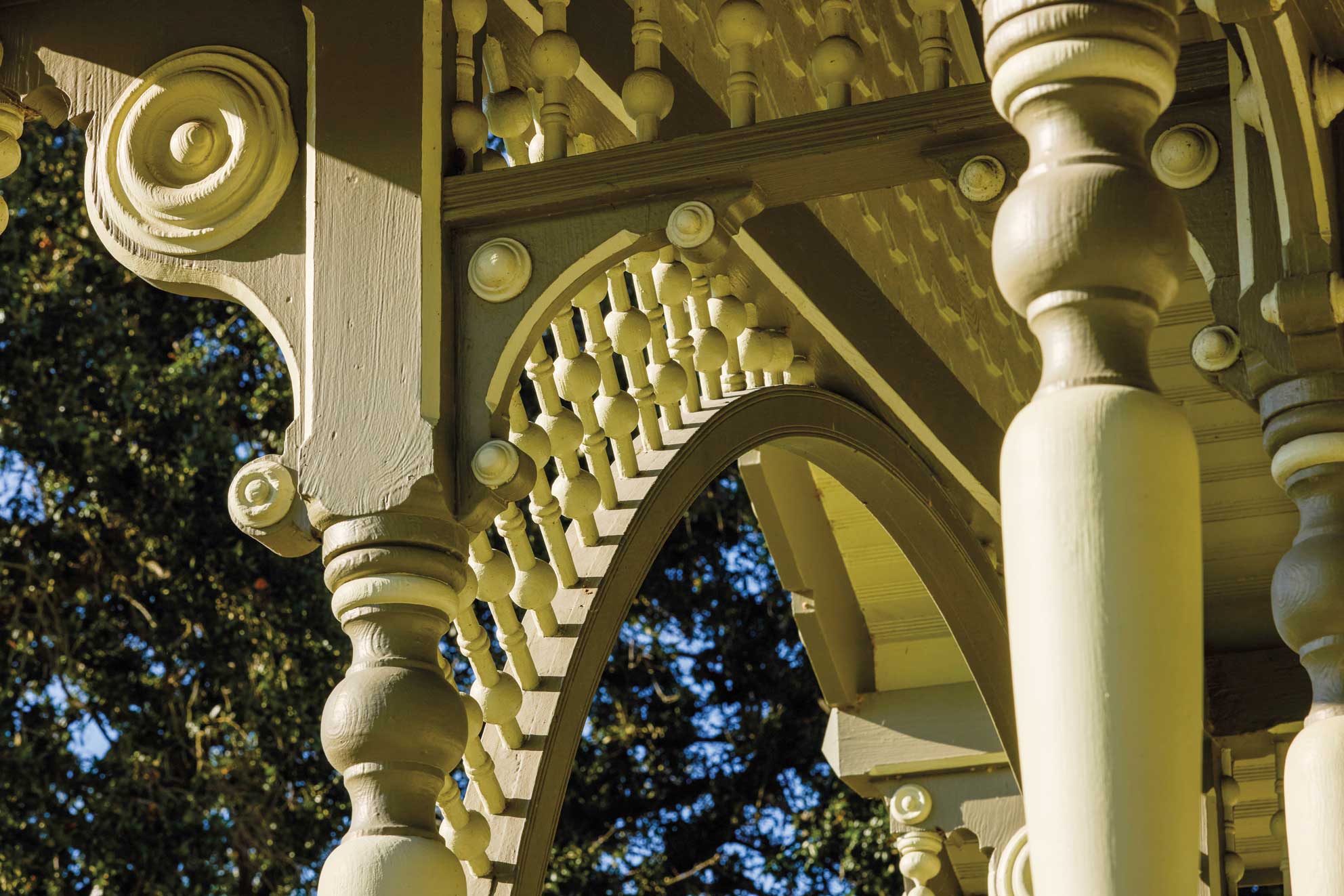
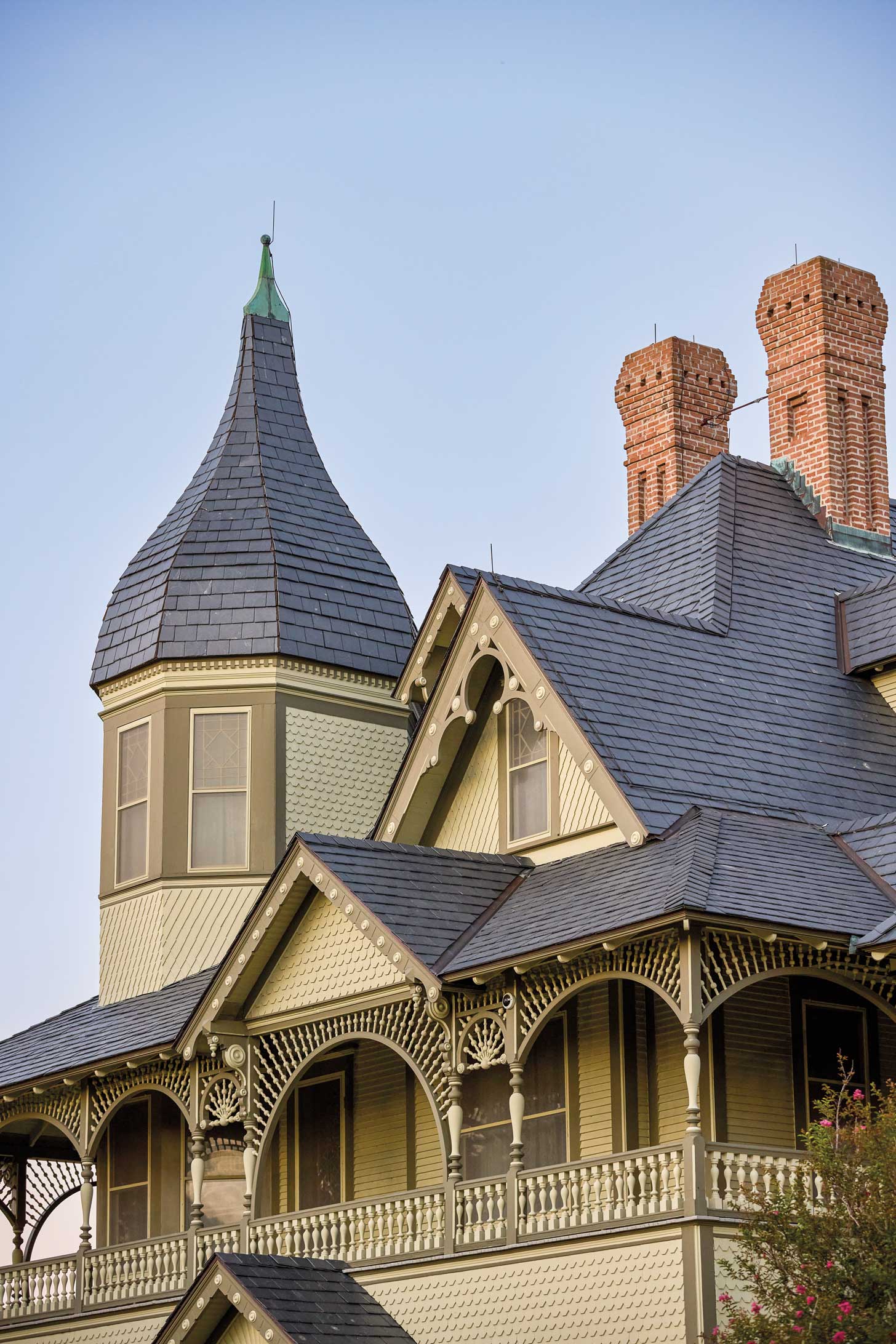
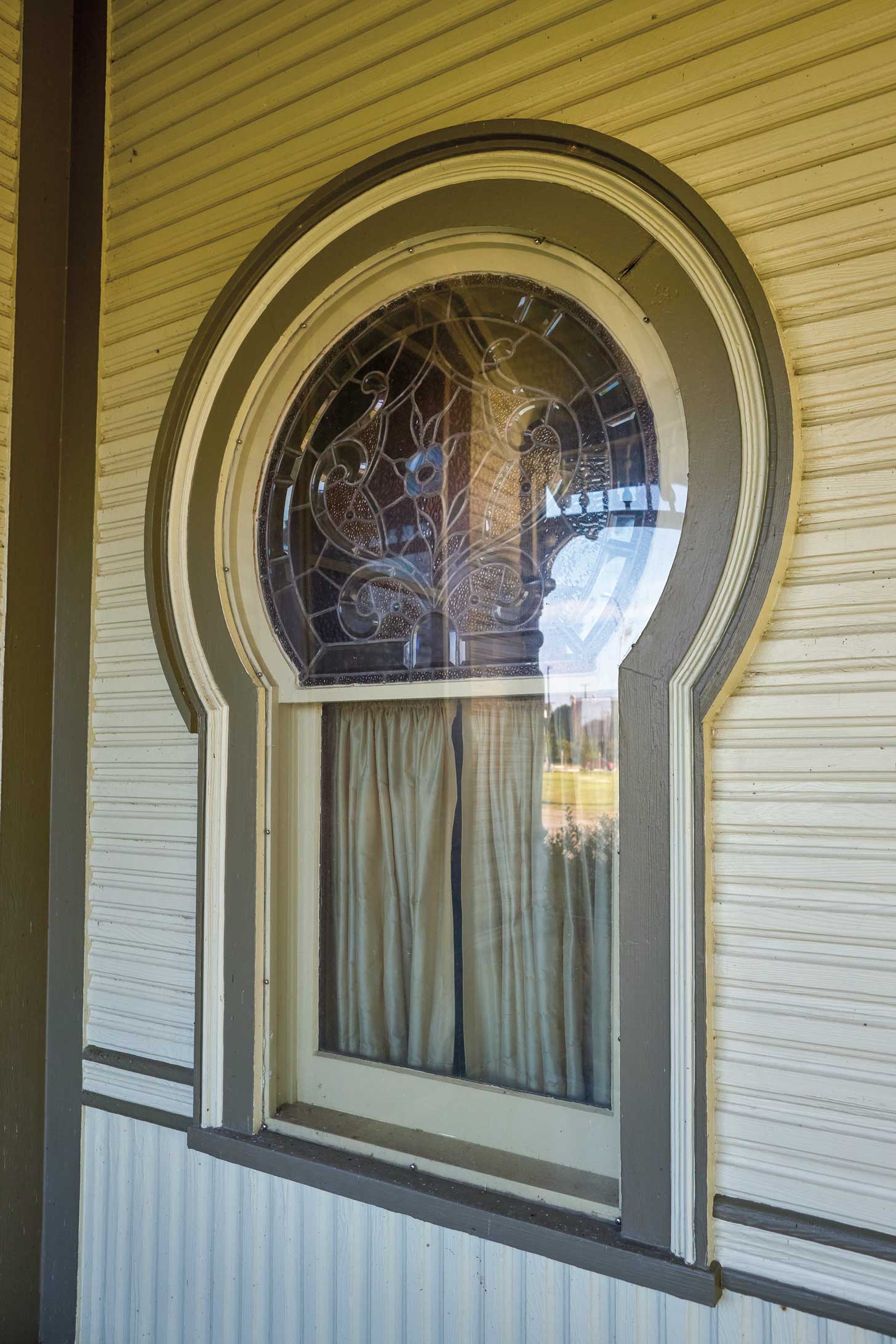
Galveston’s elite wanted to show off their finery in fancy Victorian homes, a style that corresponds with the time period of Queen Victoria’s reign in England and is characterized by steep gabled roofs, double gallery porches, and intricately carved wooden details.
Unlike ancient adobes or scrappy vernacular architecture, Victorians were designed by architects. In Galveston, the architect who ran the show was Nicholas Clayton, an Irish immigrant who built more than 150 Victorians in the city. This included the Bishop’s Palace, the crown jewel of Galveston’s Broadway Avenue, which had so many lavish mansions it was known as “The Castle District.” Clayton, who worked as a stonecutter and draftsman before he designed his own buildings, shaped Galveston’s structural environment so much that the period from 1870 to 1900 is called the “Clayton Era.” He, too, built for a pre-air-conditioned Texas, taking it up a notch from the pioneers: At the Bishop’s Palace, big windows face the Gulf, and balconies jut out from second-story bedrooms to maximize ocean breezes.
Where to See It
The Bishop’s Palace Galveston
The Driskill
Austin
The Fulton Mansion Rockport
W.H. Stark House
Orange
The Charles and Mary Ann Goodnight Ranch State Historic Site
Goodnight
Spanish Colonial Revival
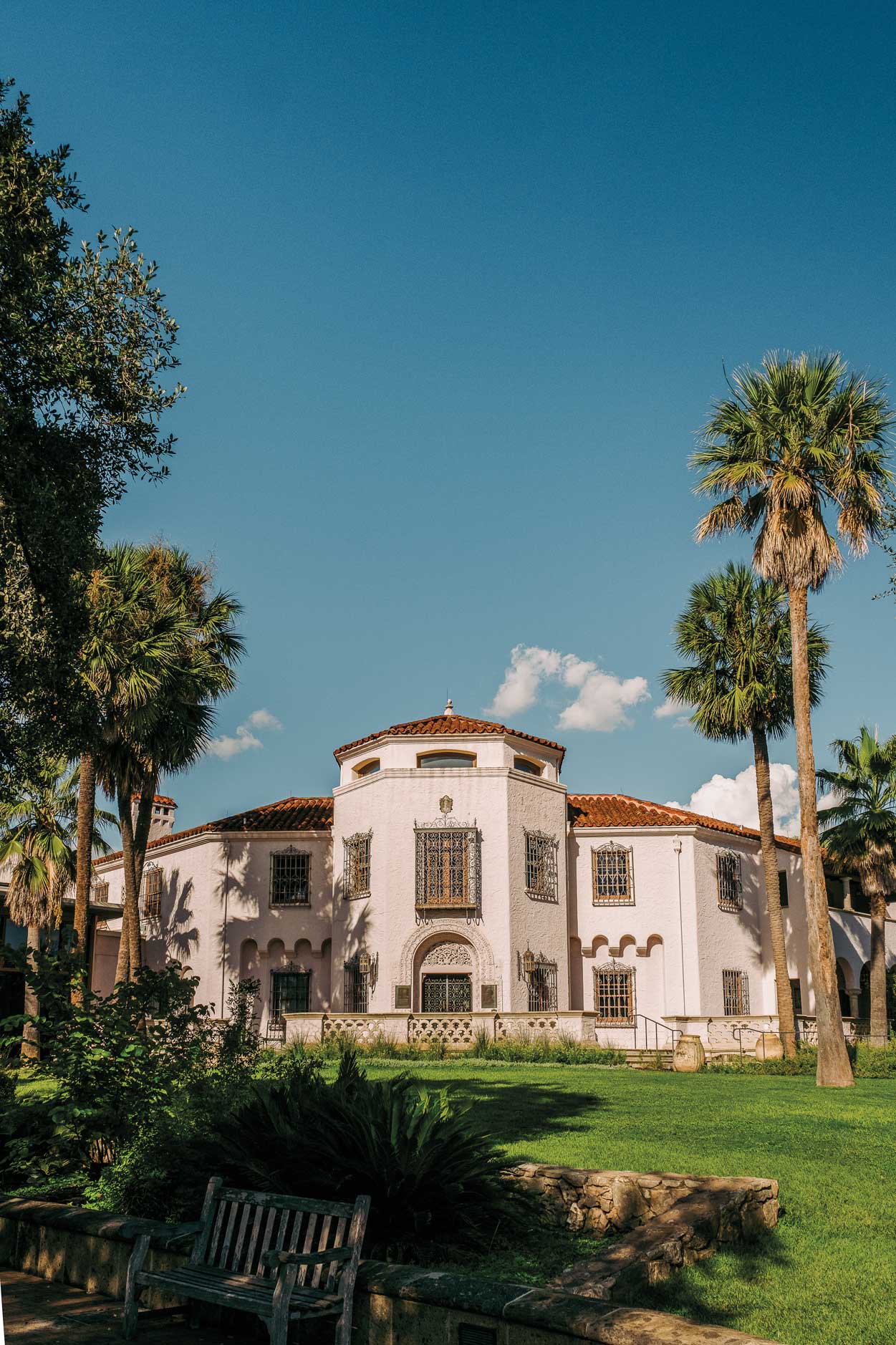
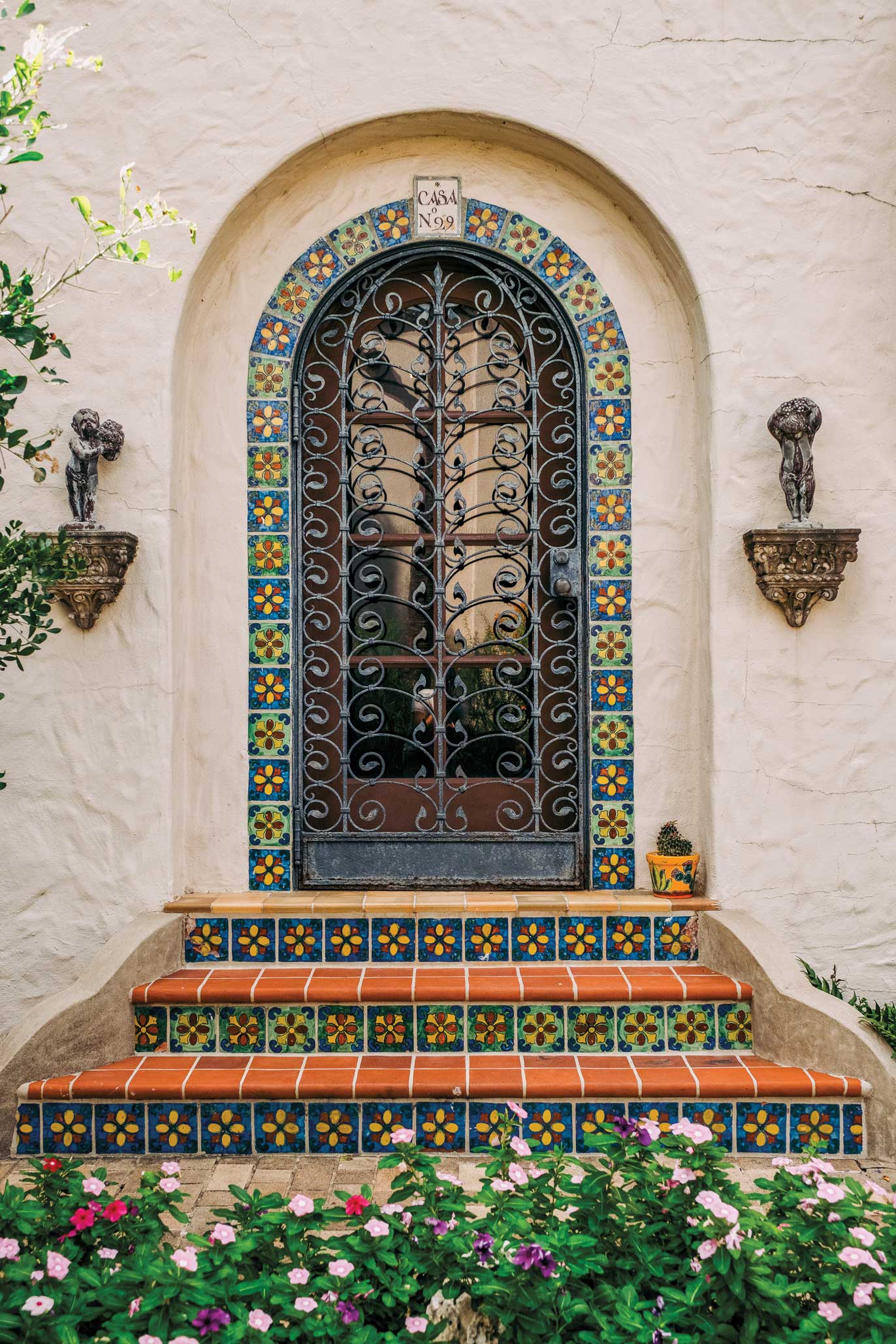
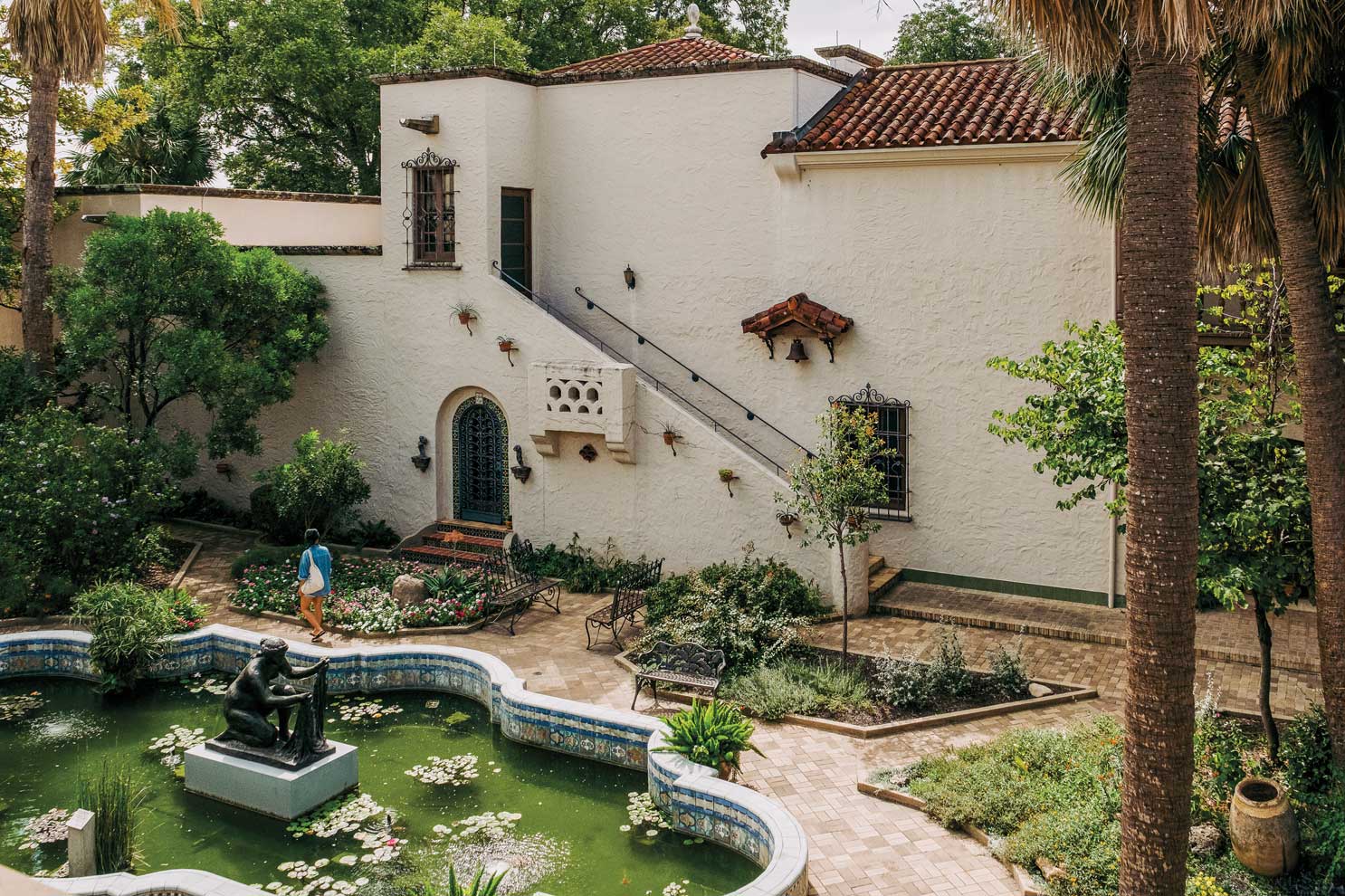
In warmer months, the interior courtyard of San Antonio’s McNay Art Museum, with its lily pad fountain, talavera tiles, and shade trees, is a cool oasis. The building drips with details typical of colonial Mexico: wrought-iron railings that curve along staircases to second-story loggias, textured stucco walls, and red clay roof tiles. Designed by architect Atlee Ayres—the Texas state architect from 1914 to 1917—in the late 1920s, the museum is the former home of art collector Marion Koogler McNay, sometimes called the Gertrude Stein of San Antonio. According to Kenneth Hafertepe, a cultural historian and professor at Baylor University, “the McNay is the greatest hit of Texas’ Spanish Colonial Revival style.”
In the 1920s, a broad regional Spanish Colonial movement boomed throughout the sunbelt states that had once been part of New Spain. Texas’ original Spanish architecture dates to the missions and forts of the 18th and 19th centuries that have captivated the imaginations of Texans for centuries: San Antonio’s San José and Concepción missions and Goliad’s Presidio la Bahía are but a few. The Spanish Colonial Revival buildings of the 1920s arose from a romantic reimagination of that past, which is common to all Revival styles, from Colonial to Greek to Neoclassical.
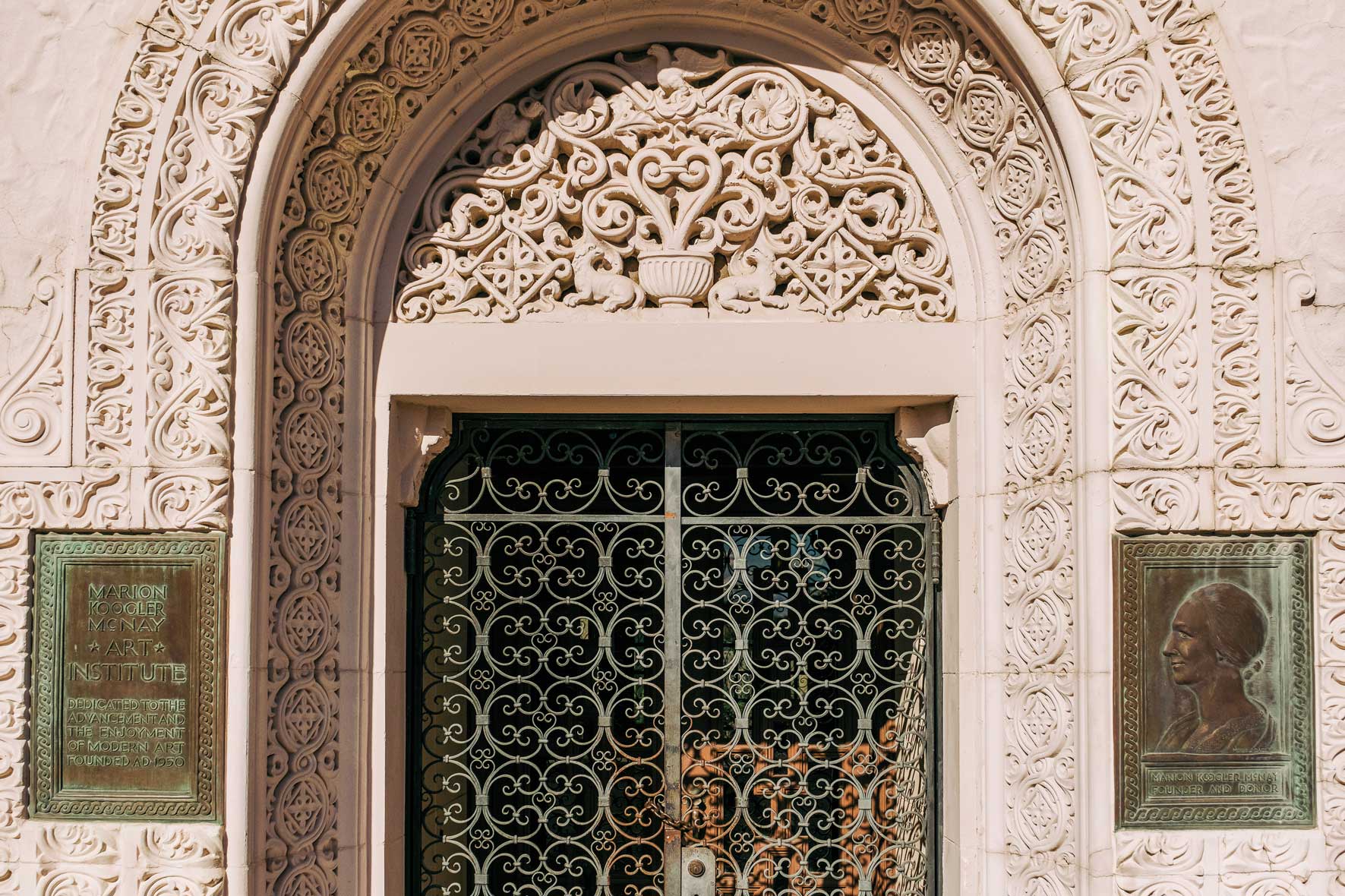
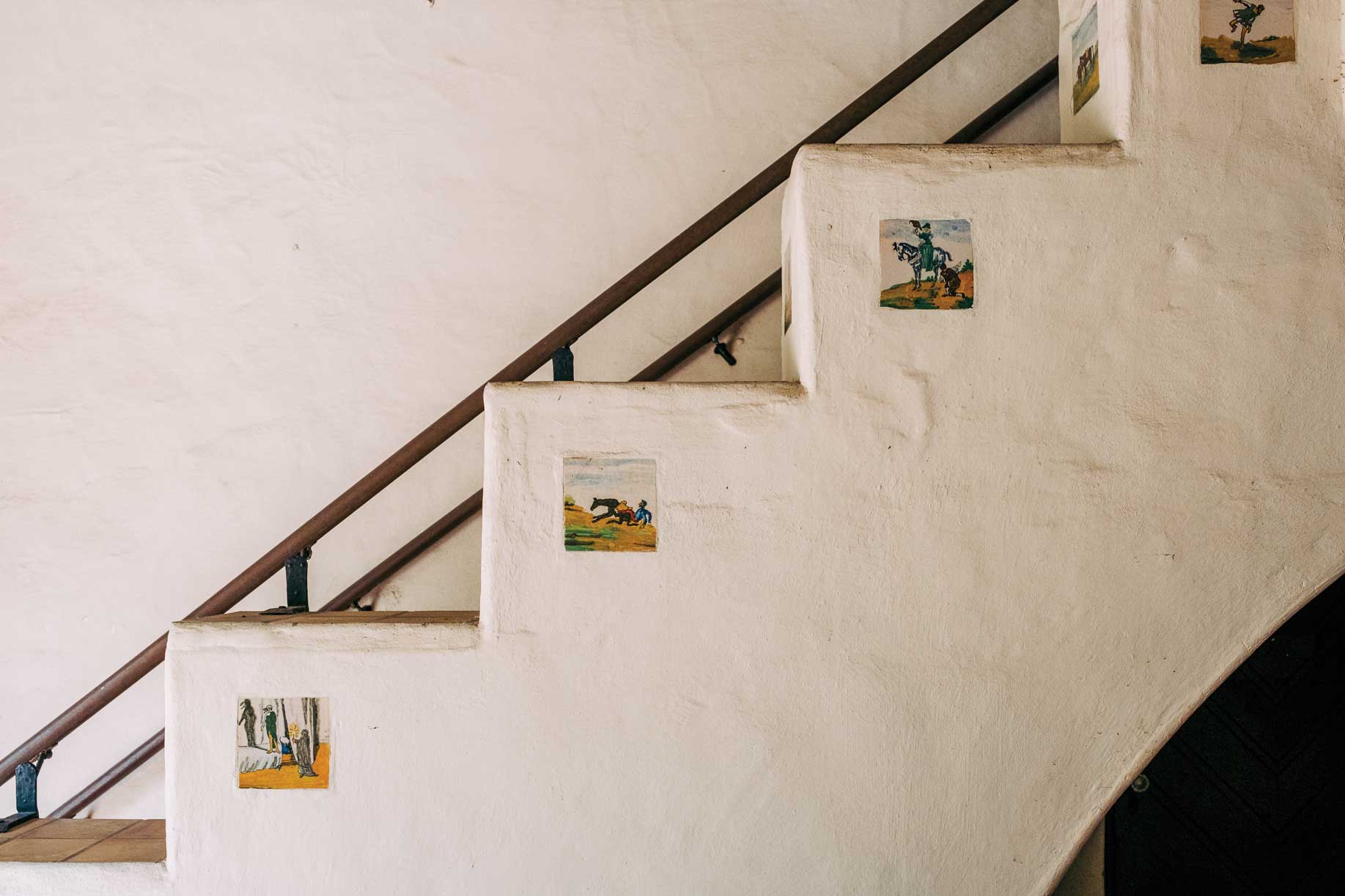
Ayres brought his own authentic embrace of colonial Mexico into his Spanish Revival buildings. “Ayres approached Spanish Colonial Revival as someone who’s not copying Southern California, but as a Texas architect being a leader in the style,” Hafertepe says.
Like many revival architects in the first half of the 20th century, Ayres was a master of many styles, taking elements of the original and adapting it to modern times. Even more prolific in revivalist styles was Henry Trost, the celebrated El Paso-based architect of the early 20th century whose talents brought us beloved West Texas hotels including The Paisano in Marfa, The Gage in Marathon, and The Holland in Alpine—all influenced by a Spanish Colonial aesthetic.
Spanish Colonial Revival also helped define a sense of place in West and South Texas during the 1920s, when motor travel was taking off. “In the early 20th century, with both Ayres and Trost and their clients, there was a strong urge to connect with regional roots,” Hafertepe says. “That regional identity gives a sense of belonging not only for the people who live there, but also for the tourists passing through.”
Where to See It
The McNay Art Museum
San Antonio
Hotel Paisano
Marfa
The Holland Hotel
Alpine
Corpus Christi Cathedral
Corpus Christi
Cathedral of the Immaculate Conception
Tyler
Vernacular Pioneer Homes
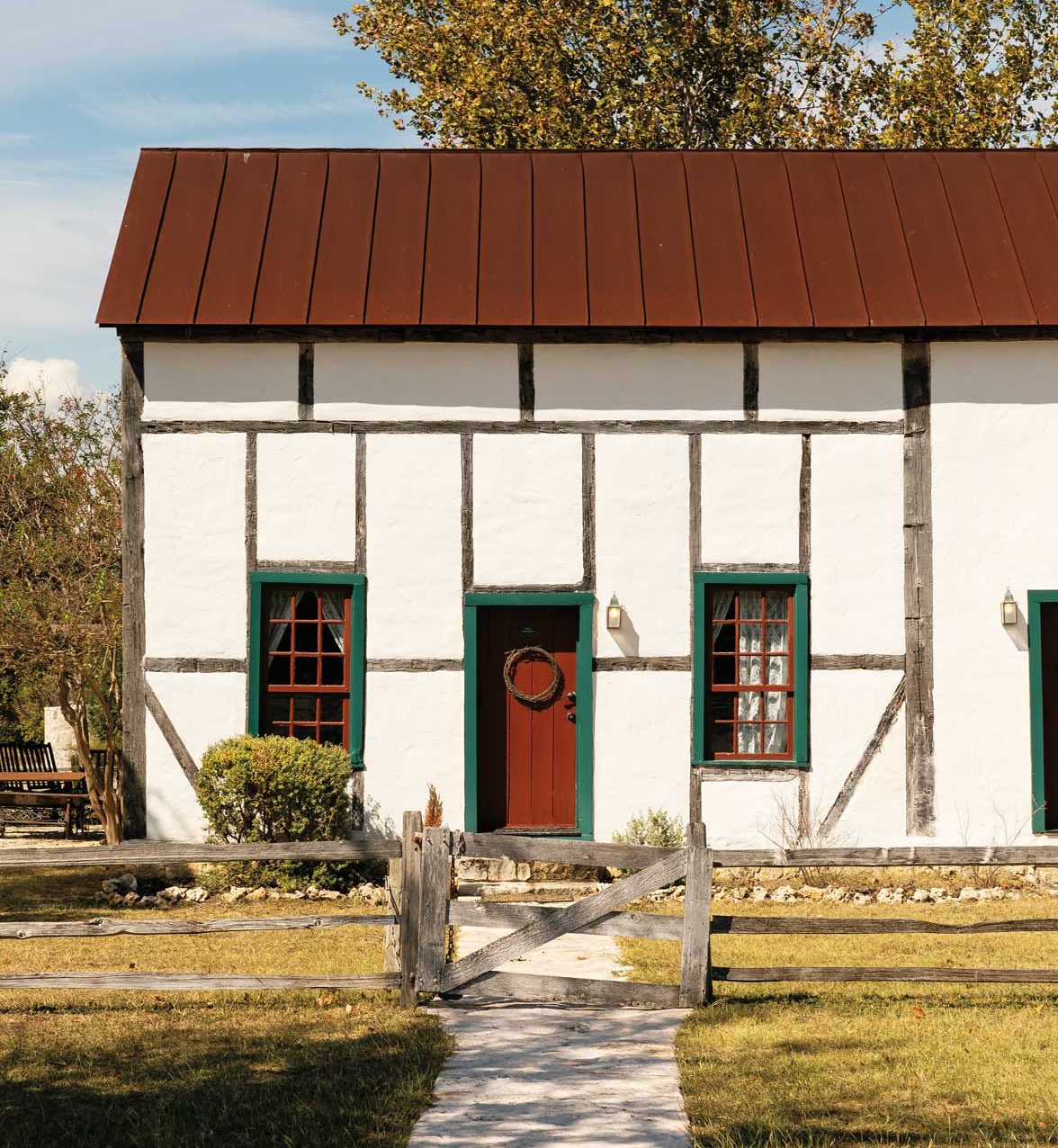
Upon entering Castroville’s limestone Biry House, now known as the Castro Colonies Living History Center, the smell of cypress floods the nose. It seems impossible that the original ceiling boards, installed in the mid-1800s, could still smell so fresh generations after the first wave of Alsatian immigrants hammered them into place. “Remember, the Alsatians didn’t trim up the boards. That’s called a living edge,” says Phil King, a board member and museum chairman at the history center, as he points out the rough cypress that frames this home. It’s considered one of the best preserved examples of the state’s vernacular pioneer architecture.
Spend time with architecture aficionados, and it’s likely the word “vernacular” will get tossed around. The Castroville settlers, like most home builders throughout history, built “in the vernacular,” meaning they constructed dwellings with the materials at hand and without the help of a trained architect.
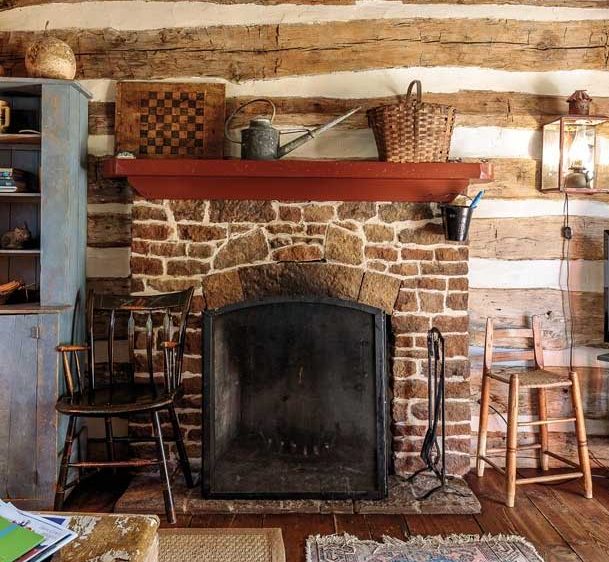
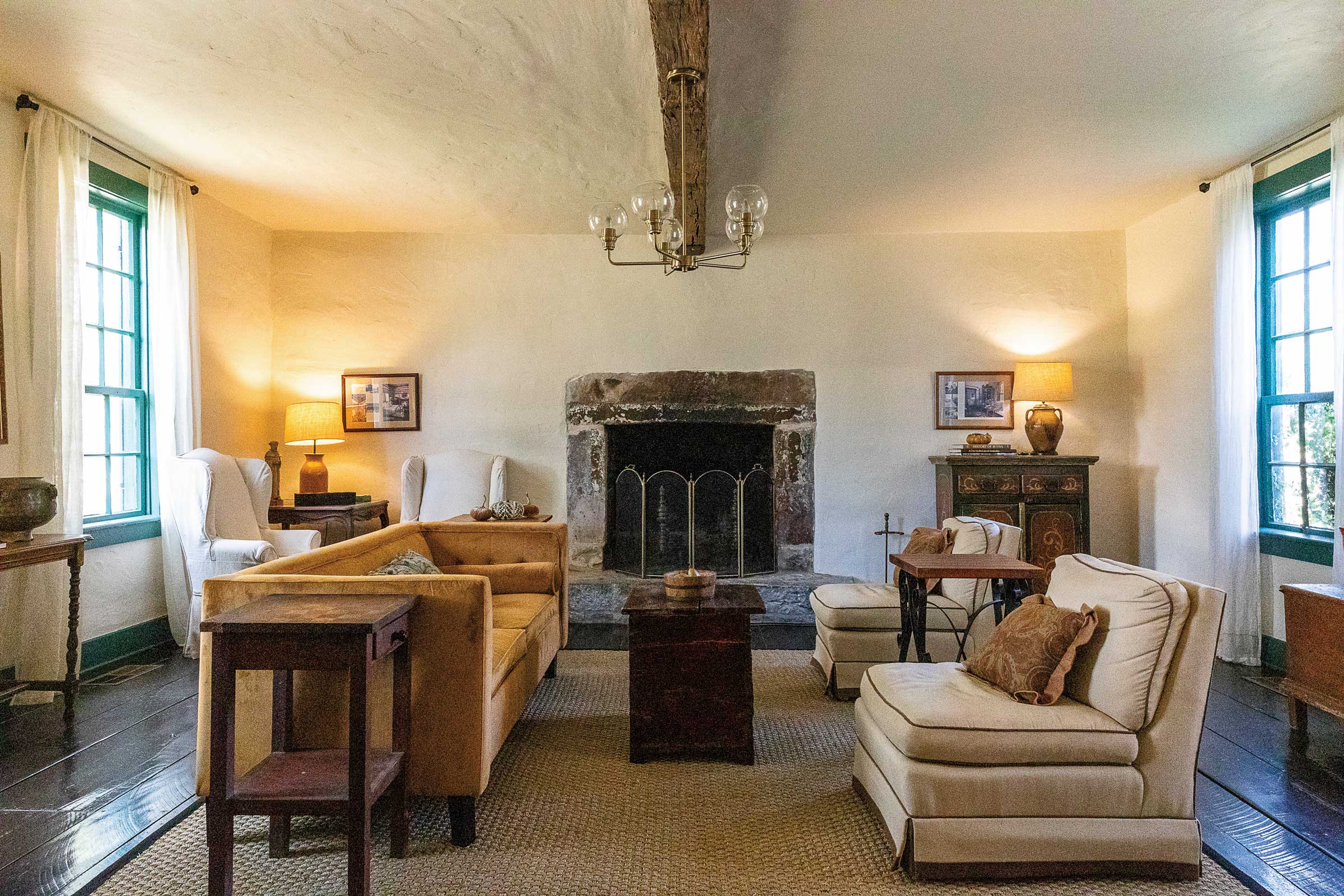
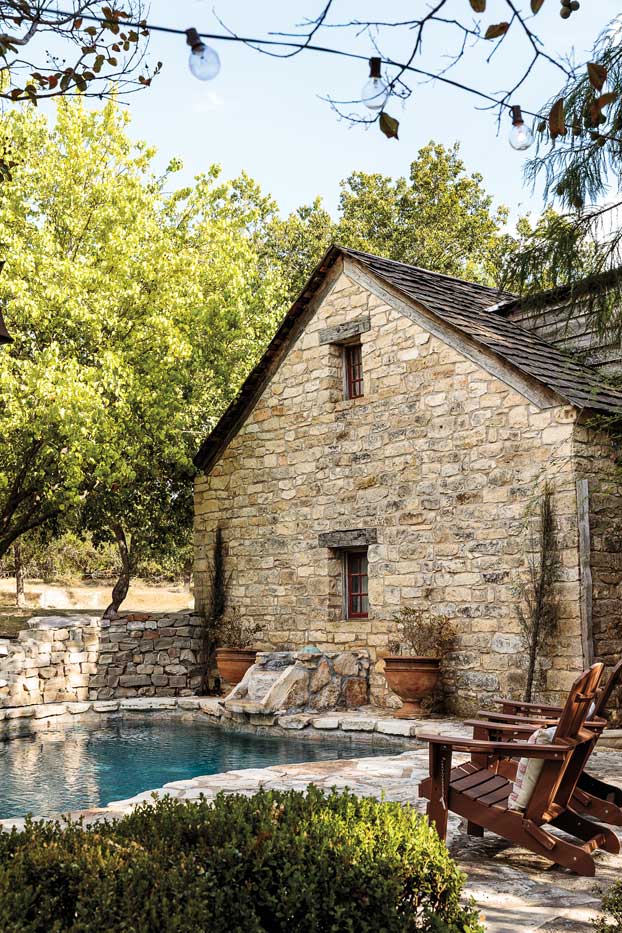
“Vernacular architecture is what people build because it makes sense,” O’Rourke says. “If it’s raining and hot and you need to be sheltered but outside, you build a porch. You’re responding to practical needs in a straightforward way and using materials that are easy to get, which is how most buildings have been made for most of time.”
The Biry House and others like it that line the quiet streets of Castroville tell us about how quickly the Alsatian settlers, who first arrived in Castroville in 1844, adapted to their new landscape. Upon arrival, they built one-room shelters using materials from the land around them. With time, they added on a kitchen, bedrooms, and—once they realized how hot it was—a porch for the breeze. The small, asymmetrical Alsatian homes, like most Texas pioneer vernacular structures, were built over time as people learned to understand the land and what was needed to survive on it. Other examples include dogtrots—two distinct living areas connected by a breezeway—and log cabins.
When Texas modernist architect O’Neil Ford visited Castroville in 1924, he was charmed by the simplicity and human scale of its buildings—qualities often associated with vernacular architecture. “There were no monuments and no foolishness,” Ford later said in an interview for The Architecture of O’Neil Ford: Celebrating Place by David Dillon. “But it wasn’t dour either: The baker’s house was the same size as the judge’s house. It was just beautiful.”
Where to See It
Castro Colonies Living History Center
Castroville
The Winedale Historical Center Winedale
Settlers Crossing Bed and Breakfast
Fredericksburg
The Kammlah House at the Pioneer Museum
Fredericksburg
The Lindheimer House
New Braunfels
Modernist
Spend some time among the second-story galleries of Fort Worth’s Kimbell Museum and it becomes clear why architecture fans across the world gush about the building. Designed by architect Louis Kahn in 1972, its slender skylights encased in vaulted concrete barrels filter light throughout the galleries while the simple travertine walls showcase the European and Ancient masterpieces that hang upon them. With clean lines, materials like glass and concrete, and design that prioritizes purpose over showy aesthetics, the Kimbell offers its visitors the best of modernism, an architectural design most prominent in Texas between 1930 and 1990.
After oil money began flowing and the state emerged as a major economic and political force, the newly wealthy hired the world’s most acclaimed modernist architects to lift their cities’ cultural cachet, building world-class museums and chapels like the Kimbell, Renzo Piano’s Menil in Houston, and Houston’s Rothko Chapel. “Texas was a good fit for modernist architecture,” O’Rourke says. “You had LBJ, the first president from Texas; a booming economy; and this willingness to adapt and try new things.”
But when writing her 2024 book, Home, Heat, Money, God: Texas and Modern Architecture, O’Rourke discovered it wasn’t just the cities that embraced modernism during its prime decades in Texas. “While the best examples of it may be in the big cities, smaller towns were bringing in modernism in really inventive, interesting ways,” she says.
No one brought this style to small towns better than O’Neil Ford, the father of Texas’ own regional modernism, who adapted the clean lines and functionality of global modernism to suit the Texas landscape, materials, and craftsmanship. His many modernist buildings in Denton, including the inimitable Little Chapel in- the-Woods on the Texas Woman’s University campus, are esteemed for their simple beauty almost 90 years after he designed them. In the late 1960s, Johnson selected Ford, by then a sought-after architect, to design the post office for his hometown of Johnson City. With a long porch, ample limestone, and a flank of wood-framed windows, it’s a handsome spot to mail a package. In 1974, the National Endowment for the Arts declared Ford a National Historic Landmark—the only person ever to receive this designation.
Where to See It
Little Chapel
in-the-Woods
Denton
U.S. Post Office Johnson City
Fredonia Hotel Nacogdoches
Fort Worth Water Gardens
Fort Worth
Texas Tech Library Lubbock