
If there’s one food group you are as likely to see at wedding receptions as at gas stations in Southeast Texas, it’s boudin. Whether it’s cut into bite-size portions for passed apps or served by the pound with crackers in a white paper bag, this sausage stuffed with pork and rice has been a staple of the Cajun community along the Texas Gulf for decades, with a level of import that rivals gumbo and jambalaya.
The popular cased meat—its name derives from an Anglo-Norman word meaning “sausage”—arrived in Louisiana when the Acadians were jettisoned from modern-day Nova Scotia in the mid-18th century. A blending of cultures and economics changed the traditional French dish that for centuries had stayed similar to its medieval French roots, according to Marcelle Bienvenu’s 2005 book Stir the Pot: The History of Cajun Cuisine.

In the late 19th century, as large-scale rice production began in Louisiana, Cajuns started filling their boudin—long made with pork, onions, parsley, green onions, and other aromatics—with the grain. Popular Cajun spices like cayenne pepper, which had arrived in southern Louisiana via the slave trade, gave the historical dish a new dimension.
As Cajuns and their cooking traditions migrated across the border into Texas in larger numbers in the early 20th century, the popular snack—originally created during communal hog slaughtering and cooking gatherings called boucheries—started proliferating throughout East Texas. Boudin was served at groceries and roadside restaurants, including Judice’s French Market in Port Arthur and Patillo’s Barbeque in Beaumont. Packages of precooked boudin from companies like Beaumont-based Zummo Meat Co. started appearing in refrigerated cases around the state in the 1960s.
With Texans’ adoption of the sausage came more evolutions, including in the cooking process. A dish historically made through steaming, boudin’s tough outer casing was typically discarded after the glutinous innards were spread on crackers or eaten with a fork. But that all changed with the introduction of barbecue smokers, which crisp up the skin and lead to easier, snappier whole-sausage consumption.
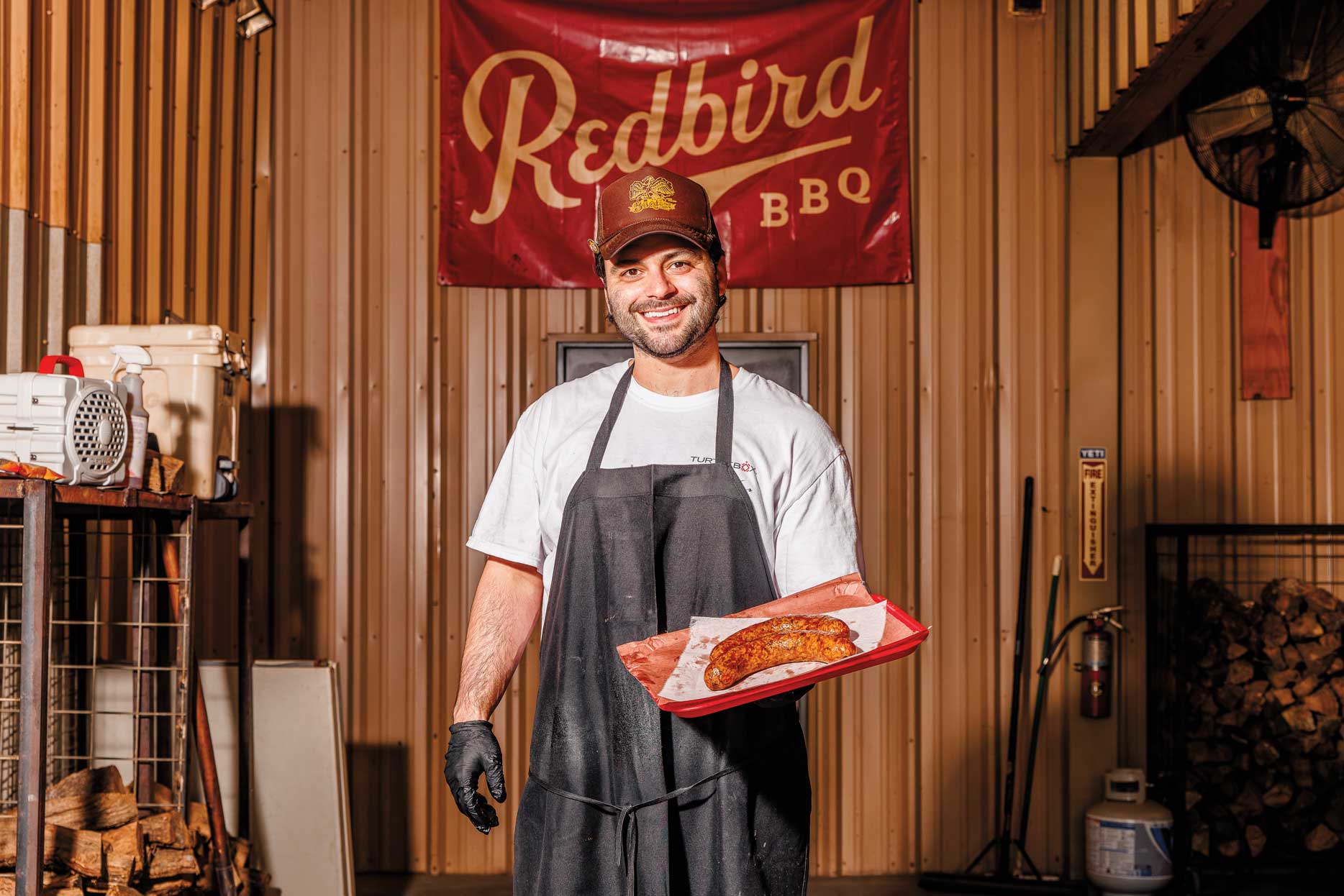
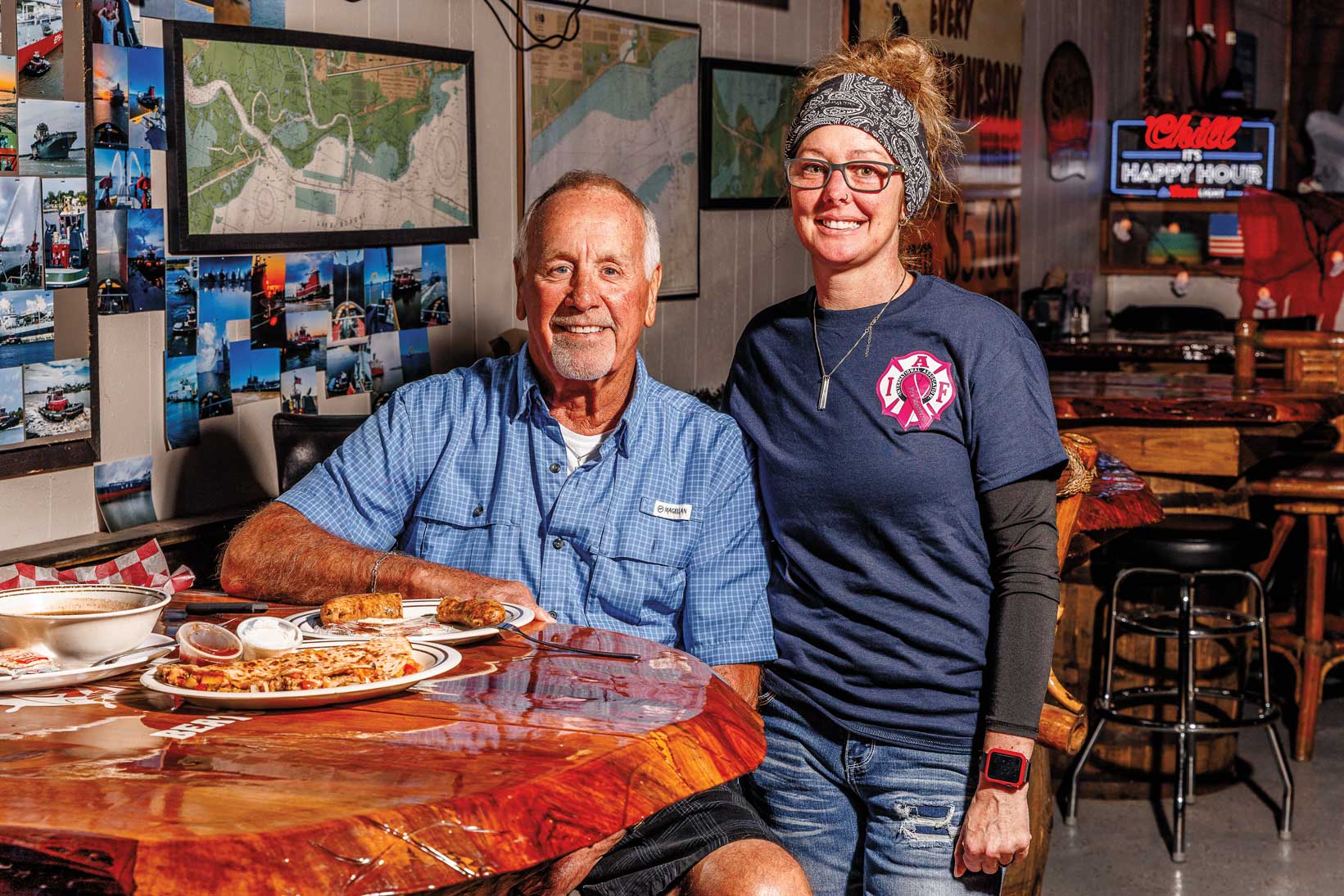
With so many premade options, several barbecue joints buy their boudin from local groceries and meat markets. But quite a few restaurants in Southeast Texas and the Greater Houston area are now making their own boudin from scratch. Amir Jalali, chef-owner of Redbird BBQ in Port Neches, grew up eating boudin in his hometown and remembers his mother talking reverently about the dish she was raised on from Nick’s Grocery in nearby Port Arthur.
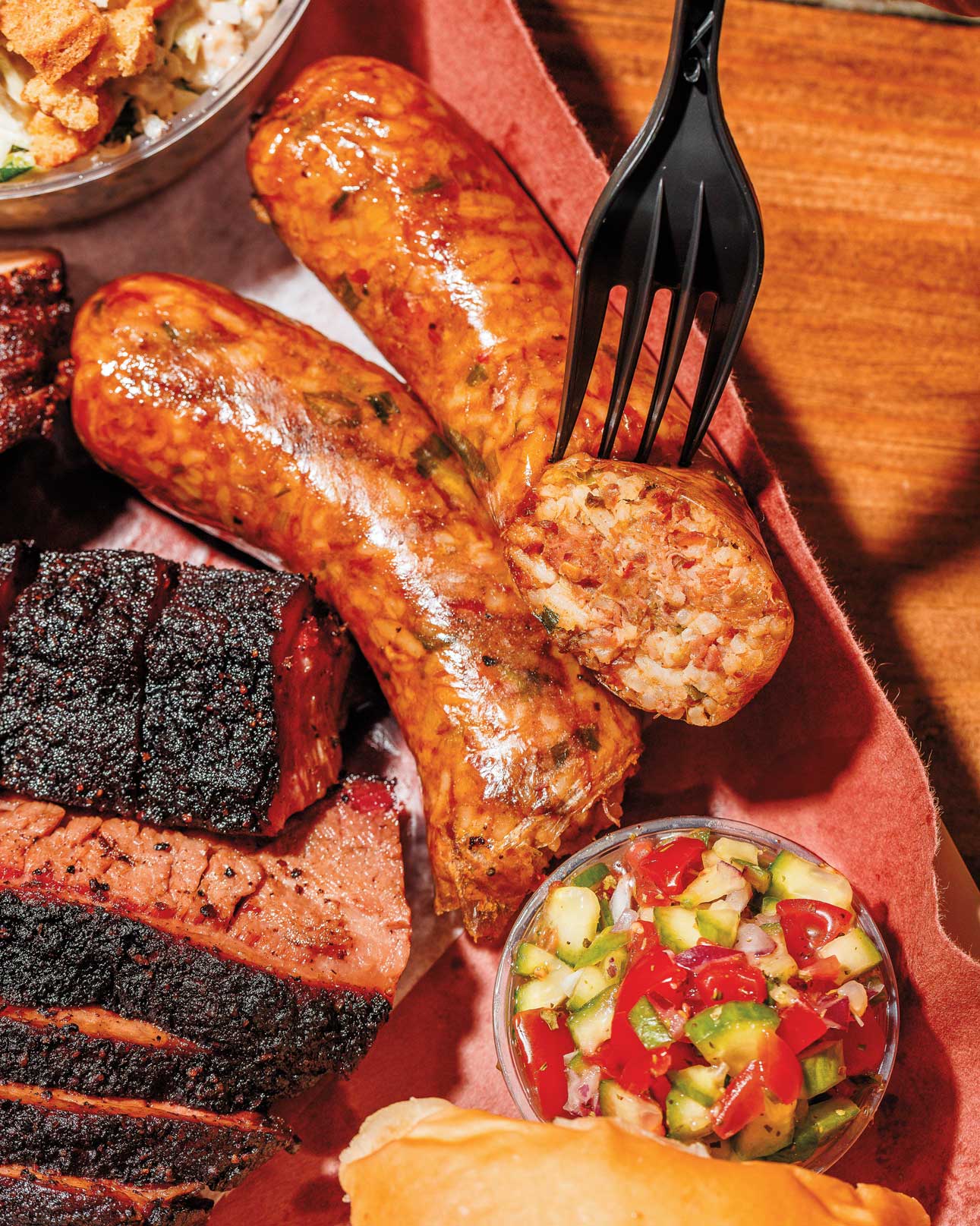
After training at the highly rated Goldee’s Barbecue in Fort Worth, Jalali returned home and opened his own restaurant in the summer of 2023.
“I always knew boudin deserved a spot on the menu,” Jalali says.
Despite the predominance of brisket in Texas, Jalali and fellow pitmaster Michael Boettger wanted to hew to tradition by serving boudin made only with pork. Redbird makes its own Cajun rub in-house and blends it with pork fat, roasted garlic, jasmine rice, and hand-shredded pork shoulder and spare rib meat. The result is a meatier blend that is then cold-smoked to achieve a richer and more aromatic barbecue restaurant flavor profile.
“Around here, people have high expectations,” Jalali says. “When we put it out, I was definitely confident. But everyone has their ideas of what boudin should be.”
Just as boudin changed more than a century after arriving in Louisiana, its evolution continues at the hands of barbecue pitmasters. In a state where brisket still takes top billing, trimmings from the beef are making their way into newfangled boudin, as traditions are cast aside or elevated.
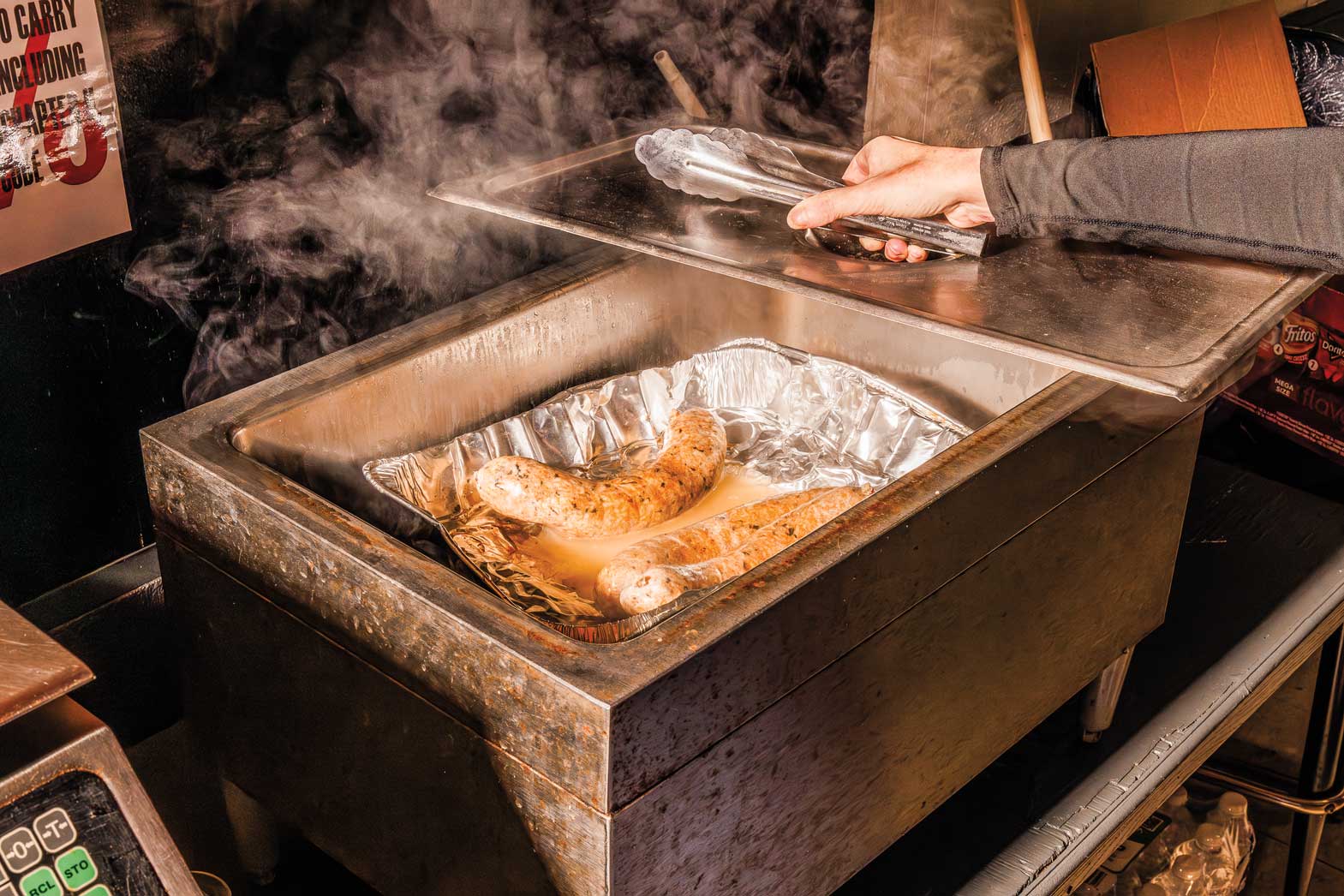
Lake Jackson native Leonard Botello IV, owner of Truth BBQ in Brenham and Houston, wanted to utilize every bit of the trim from the valuable prime briskets he serves in his restaurants. So, he decided to pay homage to the boudin he ate on the family road trips of his youth to Louisiana. In Truth’s version, Botello blends Cajun spices with cooked peppers and onions, chilled cubes of brisket, par-cooked rice for extra texture, and emulsified pork livers that give the sausage its trademark earthiness and minerality.
Botello says the painstaking process helps “bring the beauty out of something that’s not really supposed to be beautiful.” And, while he knows he’s pushing back a little on the classic Louisiana recipe, he lets his customers be the judge—including those picky ones from the Bayou State.
“When it comes to their criteria for boudin, I would say Louisianans are pretty harsh. After all, they did bring it over to us,” Botello concedes. “We try and create a traditional boudin—we just add brisket to it. But if you’re from Louisiana and you like it, I’ll take that as a win.”
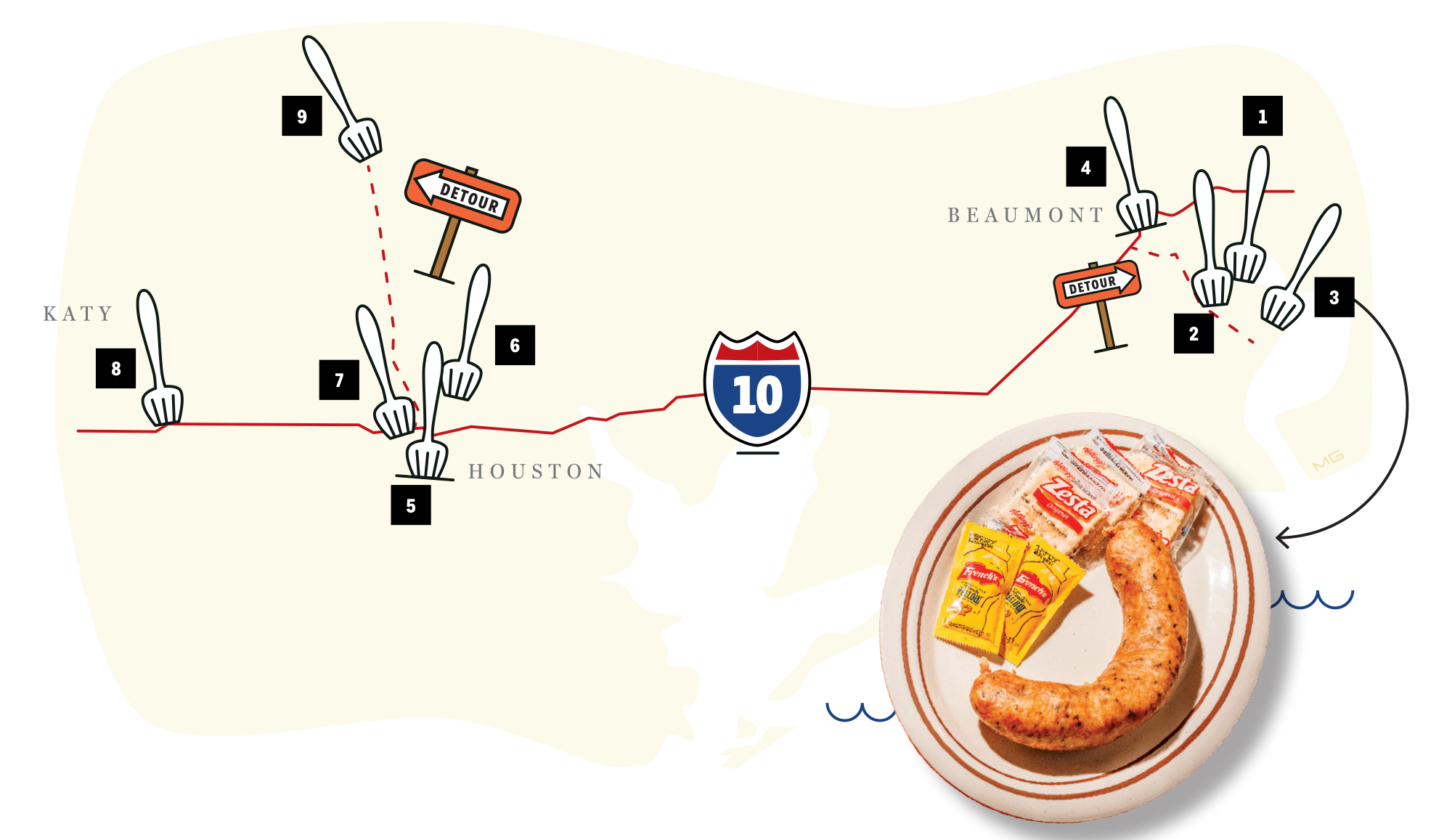
Port Neches
1 / Redbird BBQ
The hearty pieces of rice, roasted garlic, and pork rib and shoulder meat in this boudin make for more of a meal, especially when complemented by Amir Jalali’s creamy and tangy Caesar slaw. theredbirdbbq.com
Nederland
2 / Judice’s 1927
The Judice family has served Cajun specialties from their native Louisiana for almost 100 years. This upmarket restaurant is a far cry from the family’s grocery of the early 20th century, but the flavors of the boudin—seared to a golden finish and puffed up with black and bell peppers—are timeless. facebook.com/judices1927
Port Arthur
3 / The Boudain Hut
Esther Roch cooks about 100 pounds of boudin a week and takes pride in being able to efficiently stuff casings with their classic mixture of pork liver, white and green onions, cayenne, salt, and parsley. You can get the boudin fried into balls or made into patties for a sandwich—but purists prefer a link spread on crackers with yellow mustard.
Beaumont
4 / Uncle Henry’s Tamales
Hal Guillory, nephew of the restaurant’s eponymous founder, is renowned for serving hot cornmeal Creole tamales and pork cracklins. But his piquant boudin—blushed with cayenne pepper—makes for the perfect snack at this old-school drive-
thru operation. unclehenrystamales.com
HOUSTON
5 / Ray’s Real Pit BBQ Shack
The menu at this Houston institution reads Southeast Texas from top to bottom: fried ribs, catfish, and oxtails. But the fluffy boudin, with its snappy smoked casing, reminds you that Louisiana’s influence is always lingering.
raysbbqshack.com
HOUSTON
6 / Triple J’s Smokehouse
The family of the late Jarrett Scales, who founded this beloved Northeast Houston restaurant in 1994, has kept the post oak fires burning long after his passing in 2018. The saucy ribs and loaded baked potatoes are almost as much of a draw as the smoked boudin, whose heat and deeply packed texture set it apart. triplejsmokehouse.com
HOUSTON
7 / Truth BBQ
Leonard Botello IV knows that brisket isn’t traditional in boudin, but his cold-smoked links, which combine rice with emulsified pork livers and prime brisket trim sourced from Snake River Farms, make the case that sometimes tinkering with tradition is a good thing. truthbbq.com
Katy
8 / The Best Stop Cajun Market
Opened in Scott, Louisiana, in 1986, Best Stop now has two Texas outposts thanks to the efforts of longtime friends John Mendell and Robbie Abrusley. Just like its Louisiana cousin, the Katy and Baytown locations specialize in boudin links and fried balls oozing with pepper jack cheese. beststopinscott.com
The woodlands
9 / Goode Co. Fish Camp
At chef Levi Goode’s Woodlands restaurant, he serves creamy boudin prepared at his own butchery in Stafford. Inside you’ll find a mixture of ground pork shoulder, fresh-cut onions, bell peppers, and Cajun rice and spices—a combo he calls “the quintessential fishing and hunting camp snack.” goodecompanyfishcamp.com